Fernweh: Home
    ExploreTravel GuidesPlan a tripMy tripLast visited
    de|en
    All Places & RegionsAll highlightsAbout FernwehFAQPrivacy PolicyImprint
    ExploreTravel GuidesPlan a tripMy tripLast visited
    • Neighborhoods & highlights
    • Walking tours
    • Eat & drink
    • Food culture
    • Culture
    • Getting around
    • Accommodation
    • Plan trip
    • Nearby
    Yamadera

    Japan

    Yamadera

    City

    Yamadera, a mountain temple in Yamagata Prefecture, combines spirituality, history, and impressive nature.

    by Felix Gillen

    1. Home
    2. Destinations
    3. Japan
    4. Tohoku
    5. Yamadera
    Yamadera, a mountain temple in Yamagata Prefecture, combines spirituality, history, and impressive nature. You should visit this place to experience the hike through ancient cedar forests to the high-lying temple halls while enjoying the view over the valley.

    Sights in Yamadera

    Discover the most important sights and attractions

    Risshaku-ji Temple Complex

    1Risshaku-ji Temple Complex

    The heart of Yamadera is the impressive Risshaku-ji Temple Complex, dramatically clinging to the mountain cliffs. Since its foundation in 860, this place has been a center of worship and spiritual retreat. Your ascent of over a thousand steps, flanked by ancient cedars and moss-covered stone statues, is a pilgrimage in itself, immersing you deeper into a world of tranquility and devotion with every step. Venture upwards and discover the numerous smaller shrines and halls scattered across various levels, each telling a fascinating story.

    Open in Google Maps
    Konponchudo Hall

    2Konponchudo Hall

    At the foot of the ascent, you are welcomed by the Konponchūdō, Yamadera's main hall. The current building, rebuilt in 1356, is Japan's oldest beech wood structure and is registered as an Important Cultural Property. Inside the hall burns the 'inextinguishable Dharma light,' brought here over 1,000 years ago from Enryaku-ji Temple near Kyoto. When Oda Nobunaga destroyed Enryaku-ji in 1571, the flame there went out and was later restored from Yamadera. Take a moment for the hall before dedicating yourself to the actual climb.
    Open in Google Maps
    Kaisando and Nokyo-do Hall

    3Kaisando and Nokyo-do Hall

    After a challenging but rewarding ascent, you will reach Kaisando Hall, dedicated to the temple's founder, Jikaku Daishi. Right beside it perches the iconic Nokyo-do Hall, a small, vibrant red building picturesquely balanced on a rocky outcrop. This frequently photographed ensemble is one of Yamadera's most recognizable motifs and exudes a unique aesthetic. The surrounding cedars and the view into the valley create a sublime backdrop that will captivate you.
    Open in Google Maps
    Godai-do Hall

    4Godai-do Hall

    The Godaidō is not at the very top, but at a left turn just before the Niō-mon Gate, near the Kaisandō and the Nōkyōdō. The open hall extends over the cliff and is Yamadera's most famous viewing platform, with expansive views over the valley and the surrounding mountains. It is the perfect spot to pause after the ascent. Here you understand why the stillness of this place inspired Matsuo Bashō in 1689 to one of his most famous haiku.
    Open in Google Maps
    Oku-no-in

    5Oku-no-in

    At the end of the approximately 1,000 steps, you reach the Oku-no-in ("Inner Sanctuary," also Nyohōdō), the highest point of the temple complex. The current hall dates from 1872. Right next to it stands the Daibutsuden with an approximately five-meter-high golden statue of the Amida Buddha. The view here is less spectacular than at the Godaidō, which you reach on the way back via a detour, but the tranquility makes the Oku-no-in a worthy conclusion to the ascent.
    Open in Google Maps

    City walks in Yamadera

    Curated walking tours through the city's highlights, handpicked by experienced travel journalists.

    The Ascent to Heaven: Yamadera's Mountain Temple Hike

    Experience the spiritual beauty and breathtaking views of Yamadera. This 2-hour hike takes you up a thousand steps to Risshakuji Temple, nestled in the rock face. Discover ancient halls and mystical shrines, and enjoy an unforgettable panoramic view of the surrounding landscape.

    ~2 Std.
    Open in Google Maps
    Stops (7)

    Restaurants & Cafés

    Daimon

    At the base of the temple, you'll find Daimon, a cozy, traditional eatery ready to fortify you with hearty Japanese dishes after your ascent. Particularly recommended are the local soba noodles, often handmade here and served with fresh regional ingredients. Its simple yet inviting atmosphere makes it a perfect spot to savor local cuisine while reflecting on the spiritual energy of the place.
    Show on Google Maps

    Yamadera Kissa-ten

    For a quick break or a coffee before your climb, Yamadera Kissa-ten is ideal. This charming café offers you not only a selection of Japanese teas and good coffee but also light snacks and traditional sweets like dango or konnyaku jelly, a local specialty. The relaxed atmosphere invites you to linger peacefully and watch the bustling activity of visitors.
    Show on Google Maps

    Kasho-an

    Located directly on the path to the temple, Kasho-an is renowned for its delicious konnyaku dishes, a regional delicacy prepared in various ways here. In addition to these savory snacks, this small restaurant also offers refreshing drinks and simple meals, perfect for a boost upon arrival or a small reward after your descent. The authentic, rural hospitality is sure to charm you.
    Show on Google Maps

    Food and Drink in Yamadera

    After the ascent to Risshaku-ji Temple, the Yamaderas Gastronomy offers a fitting culinary experience, often focusing on regional products. In restaurants like Daimon or Yamadera Kissa-ten, you can enjoy typical local specialties. These places offer an authentic stopover.

    Tama-Konnyaku

    Round konjac balls, cooked in soy sauce, skewered and eaten with hot mustard. They are sold at stalls before the ascent and are considered a fortifying snack for the approximately thousand steps.

    Soba

    Yamagata is one of Japan's most famous Soba prefectures. Typical is Ita-Soba: The noodles are served on a flat wooden board for several people.

    Cherries

    Yamagata harvests most Japanese cherries; the season's June and July. In town, find them fresh, as soft serve, and as juice.

    Imoni

    In autumn, a stew of taro, beef, and leek in soy broth is cooked in Yamagata. Local eateries around the station offer it seasonally.

    Culture & History

    Nestled in the forested mountains of Yamagata Prefecture, Yamadera, officially known as Risshakuji (立石寺), awaits—a place of profound cultural and historical significance. Here, you'll immerse yourself in the rich history of Japanese Buddhism and the landscape that has inspired poets and pilgrims for centuries. Founding and Buddhist Roots Yamadera's origins date back to 860 AD, when the Buddhist monk Jikaku Daishi (Ennin) founded this sacred site. Jikaku Daishi was a central figure of the Tendai sect, which he significantly propagated in Japan after his return from China. The temple's establishment marked an important milestone for the spread of Buddhism in northern Japan and solidified Yamadera as a significant spiritual stronghold. Founding Year: 860 AD by Jikaku Daishi (Ennin). Sect: Tendai Buddhism. Historical Role: One of the oldest and most important Buddhist sites in the Tōhoku region. Cultural Heritage and Literary Significance Beyond its religious function, Yamadera is inextricably linked to Japan's literary heritage. The haiku poet Matsuo Bashō visited Yamadera in 1689 during his journey, which he documented in his work "Oku no Hosomichi" (The Narrow Road to the Deep North). The verse he composed here, capturing the site's stillness, has secured Yamadera a permanent place in Japanese literary history. Matsuo Bashō: Visited in 1689. Famous Haiku: "Silence—seeping into the rocks, cicada's cry." (Original: 閑かさや岩にしみ入る蝉の声) "Oku no Hosomichi": Literary significance of the travelogue. Architecture and Symbolism of the Temple Complex The entire temple complex showcases the harmonious blend of architecture and nature. The buildings cling to the steep mountainsides and are accessible via a challenging yet scenic stairway. Each structure, from the main hall Konponchūdō at the base to the observation deck Godaidō, contributes to the spiritual journey you experience here. Konponchūdō: The main hall, dating back to 1356, is considered Japan's oldest beech wood structure and preserves a flame brought here over 1,000 years ago from Enryaku-ji. Niō-mon Gate: The gate is flanked by two guardian statues (Niō), said to ward off evil spirits. Okunoin and Daibutsuden: The highest point of the pilgrimage route, featuring an approximately five-meter-tall Amida statue within the Daibutsuden. Godaidō: An open observation hall offering expansive views of the valley and surrounding mountains. Yamadera is thus not only a place of prayer and contemplation but also a living testament to the intertwining of Japanese Buddhism with art and literature.

    Exploring Locally

    Getting to Yamadera is usually done via the JR Senzan Line to Yamadera Station, which is accessible from both Sendai and Yamagata. Within the village, there are no subways or trams; its charm lies in its rural character and exploration on foot.From the station, the temple is about a five to ten-minute walk. The subsequent ascent to Oku-no-in involves around 1,000 steps and requires sturdy footwear. Local bus connections are sparse, taxis are only available in limited numbers; ride-sharing services are hardly widespread in this rural area. Whether you can pay with an IC card at Yamadera Station is best checked beforehand; if in doubt, have cash ready for your ticket.

    Accommodations in Yamadera

    Find perfect stay in Yamadera

    Booking.com* (Affiliate link)
    Search Hotels
    Agoda* (Affiliate link)
    Search Hotels
    Airbnb
    Vacation Rentals

    * Affiliate link: if you book through it, we earn a small commission. The price stays the same for you.

    Plan your trip to Yamadera

    Save places, build a route and plan your city trip, all in one place.

    1. 1
      Sunrise over alpine peaks and a sea of clouds
      1234

      Round trip

      12 days · 4 stops

      Saved

      Pick a route

      Pick a ready-made one or save places and plan your own.

      Open bookmarks
    2. 2

      Trip to Yamadera

      Live
      • 1Risshaku-ji Temple Complex3 days
      • 2Konponchudo Hall4 days
      • 3Kaisando and Nokyo-do Hall5 days
      Budget

      Plan your trip

      The planner sorts stops, days and budget. Plan together in real time.

      Start trip planning
    3. 3
      9:41 No signal
      Yamadera
      Available offline

      Use it on the road

      Download the guide to your phone and use it on site, even offline.

    Nearby

    Sendai

    As the "City of Trees," Sendai presents a harmonious blend of urban life and expansive green spaces. Founded by the influential samurai Date Masamune, the city preserves his legacy at several sites. Visit the historical remains of Aoba Castle, offering panoramic city views, and the richly decorated Zuihoden Mausoleum, Masamune's final resting place. The Osaki Hachiman Shrine, an impressive example of Azuchi-Momoyama architecture, is another cultural highlight. Gastronomically, be sure to try the local specialty, Gyutan (grilled beef tongue), at one of the many specialized restaurants. For a vibrant experience, a visit during the colorful Tanabata Festival in August is recommended, transforming the city into a sea of decorations.

    Tohoku

    Die Region Tohoku, im Norden Honshus gelegen, ist ein Landstrich von atemberaubender Naturschönheit, reicher Geschichte und einzigartiger Kultur. Sie lädt dich ein, die unberührte Wildnis, traditionelle Feste und eine tief verwurzelte Gastfreundschaft abseits der bekannten Touristenpfade Japans zu erleben.

    Dewa Sanzan

    The Dewa Sanzan in Yamagata Prefecture form a spiritual center of Japan and have been a significant pilgrimage site for Shugendō practice for centuries. Here you find the three sacred mountains Haguro, Gassan, and Yudono, symbolizing birth, death, and rebirth. Particularly impressive is the ascent of Mount Haguro via 2,446 stone steps, lined with centuries-old cedars: Right at the start, you pass the Five-Story Pagoda, and at the top awaits the main shrine Sanjin Gosaiden. While Mount Gassan, the highest peak, is only accessible in summer, Mount Yudono offers a unique spiritual experience, though photography is discouraged. For a full experience, visit between July and mid-September when all three mountains are open, and stay overnight in a traditional Shukubo.

    Matsushima Bucht

    Matsushima Bay is one of Japan's three most beautiful landscapes, known for its over 260 small, pine-covered islands. You can best explore the scenery on a boat trip; some near-shore islands like Fukuura-jima and Oshima can be reached on foot via bridges. Key attractions include the Zen temple Zuigan-ji, a national treasure, and the small temple hall Godaidō, located on a tiny island and accessible via red bridges. The place is also historically significant due to its connection to the haiku poet Matsuo Bashō, who visited the bay in 1689. For an overview, Saigyō-Modoshi-no-Matsu-Park is recommended, especially during cherry blossom season in spring. A visit in the early morning or late afternoon often offers the best light for photos and fewer crowds.
    Nikkō

    Nikkō

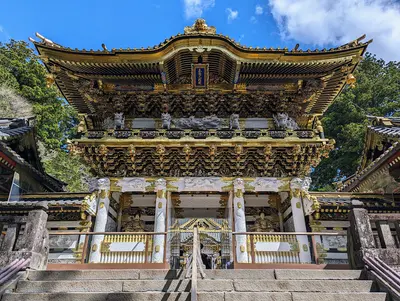
    Located in the mountains north of Tokyo, Nikkō combines two distinct aspects: In the valley lie the magnificent shrines and temples surrounding the Tōshō-gū, the mausoleum of Shogun Tokugawa Ieyasu, which together form a UNESCO World Heritage Site. Further up, within the National Park, are Lake Chūzenji and Kegon Waterfall.

    Sources & method

    • Photos: Unsplash. Each photo carries its credit.
    • The content is based on web research from public, traceable sources. How the content is made · The role of AI