Experience the pristine nature and charming villages in the Regional Natural Park Vexin français, a green refuge northwest of Paris.
Places in Regional Natural Park Vexin français
The Vexin français Regional Nature Park was established in 1995 and covers 71,000 hectares with 99 communes in the departments of Val-d'Oise and Yvelines. The limestone plateau lies approximately 100 meters above the surrounding area and is bordered by four rivers: the Seine to the south, the Oise to the east, the Epte to the west – a historic border with Normandy – and the Troësne and Esches to the north.What is remarkable about this park is its location. It begins less than an hour's drive from Paris, yet here you find agricultural fields stretching to the horizon, villages of light limestone, and valleys where little has changed for decades. In 2014, the Vexin was the first French Regional Park ever to be awarded the Pays d'art et d'histoire designation.The main point of contact is the Maison du Parc in Théméricourt, housed in the local castle. It combines tourist information, temporary exhibitions, and a museum on the region's geology, natural spaces, and rural traditions.
Sehenswürdigkeiten
Discover the most important sights and attractions
Lavoir de Gouline
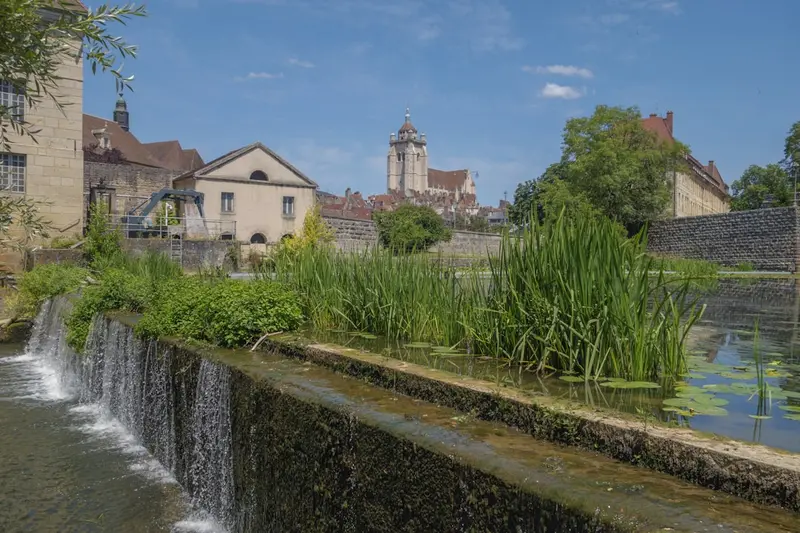
The Lavoir de Gouline in the Vexin français Regional Natural Park is a well-preserved testament to rural history. For centuries, this traditional washhouse served as a central place for laundry and a meeting point for the residents of the surrounding villages. Here you'll find a characteristic, covered basin, fed by a natural spring. Its architecture is functional and reflects the needs of that era, when running water was still a rarity in homes. It is a tranquil place that offers a glimpse into the daily life of past generations. Our Tip: The best time to visit the Lavoir is in the early morning to fully appreciate its unique atmosphere undisturbed and to capture the soft light for photos. Combine your visit with a walk on one of the park's numerous hiking trails to explore the picturesque landscape of the Vexin français.
The Musée de la Moisson (Harvest Museum), situated in the heart of the Vexin français Regional Nature Park, offers an authentic insight into the history of grain harvesting and rural life in this French region. Here, you discover an extensive collection of historical agricultural machinery, traditional tools, and everyday objects that meticulously document the development of agriculture from the 19th to the mid-20th century. The exhibitions illustrate the hard work of farmers and the central importance of the harvest for the local economy and culture.Particularly noteworthy are the detailed reconstructions of traditional harvesting methods and the portrayal of progressive mechanization. You gain a deep insight into the techniques and social structures that shaped life in the Vexin for generations. Our tip: Visit the museum on a weekend to potentially experience demonstrations of old craft techniques or thematic events. Combine your visit with a hike through the surrounding picturesque landscape of the Nature Park to gain an even better understanding of the historical connection to agriculture.
Mansion of the Regional Natural Park of French Vexin
The French Vexin Regional Nature Park House is the central information and administrative building of the French Vexin Regional Nature Park. Located in an often historic estate, it offers deep insights into the rich cultural history, diverse biodiversity, and unique landscapes of this protected region of France. It serves as an important point of contact to convey the park's goals – the protection of natural and cultural heritage – and to inform visitors about the special features of the French Vexin. Here you will find thematic exhibitions on local traditions, crafts, and the geology of the area, which deepen your understanding of the region.Our Tip: Start your visit to the park here to equip yourself with maps and up-to-date information on hiking and cycling trails. The staff can also provide valuable tips on lesser-known sights. Plan your visit in the morning to explore the exhibitions at your leisure and make the most of the advice, before you experience the park's nature for yourself.
The Lavoir de Courcelles, nestled in the picturesque landscape of the Parc Naturel Régional du Vexin Français, is an authentic testament to rural history. This traditional wash house once served as a central meeting point for the village women, who washed their laundry here and exchanged news. Here you'll find a well-preserved structure, typical of the region: a covered basin fed by a natural spring, surrounded by the characteristic washstones. It offers a direct glimpse into the daily life of past centuries, before running water became standard in homes. The architecture is simple yet functional and blends harmoniously into its surroundings. It is a place of peace and reflection, recalling the importance of community and manual labor. For an undisturbed experience and the best lighting conditions for photos, we recommend a visit in the early morning or late afternoon. Take the opportunity to enjoy the peaceful atmosphere and observe the details of the construction. It is an ideal spot to understand the cultural landscape of the Vexin.
The Vexin is farmland: cereals, fruits, and vegetables define the landscape and village inn menus. Many farms sell directly from the farm.
Farm Shops and Direct Sales
Throughout the park, businesses directly sell vegetables, fruit, honey, and juice. The Nature Park has its own label for regional producers.
Cider and Apple Juice
Plateau orchards supply apples for juice and cider. Yield, less than Normandy's, is mostly artisanal.
Country Inns
In the village centers, you'll find auberges with rotating lunch menus made from regional ingredients. Evenings and off-season, many are closed.
Bread bakeries
Several businesses bake with flour from the Vexin itself, some in wood ovens. A good basis for a picnic on the go.
Art and rural heritage
The Land of the ImpressionistsThe Vexin is the landscape depicted in the paintings. Van Gogh spent the last weeks of his life in Auvers-sur-Oise, painting a rapid succession of works there; Pissarro, Daubigny, and Dupré worked in the Oise Valley, while Monet stayed in Vétheuil, creating around 150 pieces. The motifs can still be explored today – fields, church scenes, river bends often bear a strikingly precise resemblance to the originals.Beyond the painting, two heavyweights shape the region: the Villarceaux Estate with its Renaissance gardens and manor house, and La Roche-Guyon, officially one of France's most beautiful villages. In the 4th century, people still lived in caves in the chalk cliffs there; an underground passage connects today's castle with the keep of the predecessor complex high up on the slope.The Small HeritageMore influential than the grand buildings is what the French call "petit patrimoine": washhouses, dovecotes, wayside crosses, mills, and fountains. Every village has at least one listed building, and the park considers their preservation a key task. Additionally, there are older layers: the Gallo-Roman cult site of Genainville and the Chaussée Jules César, a Roman road that crosses the plateau in a straight line.
Exploring on site
Travel from ParisThe Vexin starts northwest of Paris and is under an hour away. By train, the line leads into the Oise Valley; Auvers-sur-Oise has its own station – the most convenient entry without a car. Villages on the plateau and west towards Epte, however, are poorly served by public transport.On Foot and By Bike800 kilometres of marked trails crisscross the park, many of them as circular routes from village to village. The landscape is well suited for cycling: the plateau is flat, elevation gain only occurs when descending and ascending into the valleys of Viosne, Sausseron, and Seine. The steep slopes above the Seine near La Roche-Guyon and Vétheuil offer the best views.In summer, river cruises operate from Auvers-sur-Oise and La Roche-Guyon. If you want to see the area in a day, take the car and connect three or four villages – if you want to understand it, go on foot.
Trips in the Park
Auvers-sur-Oise
Van Gogh's last home, home to the Auberge Ravoux, the church from his famous painting, and the cemetery where he lies with brother Theo. It's the park's most visited spot and train-accessible.
La Roche-Guyon
One of France’s officially most beautiful villages, perched on the chalk cliffs above the Seine. The castle is connected to the keep on the hillside via an underground passage; the vegetable garden is specially designed.
Villarceaux Estate
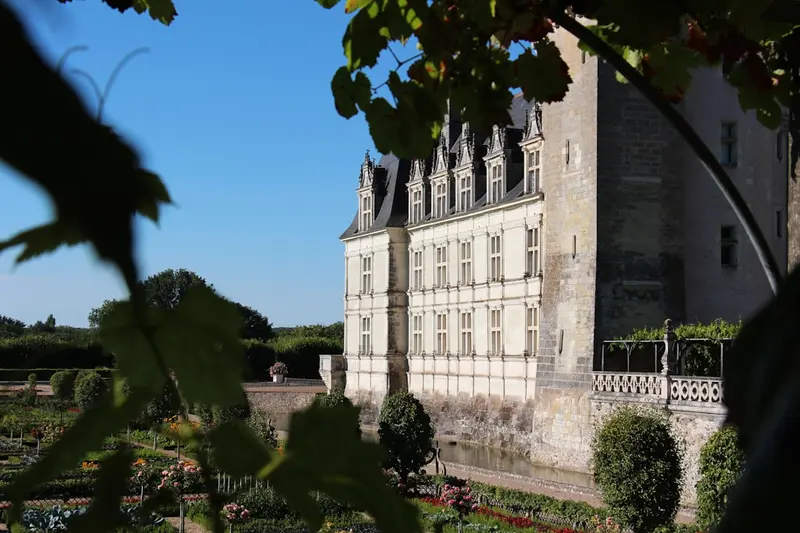
18th-century manor house and château with a Renaissance water garden, situated in the Aubette valley. Considered the most significant ensemble of its kind in the Île-de-France.
The Gallo-Roman site of Genainville
The remains of a Gallo-Roman sanctuary with a theatre and temple precinct, on the border with Normandy. Little visited, yet one of the region's oldest layers.
Maison du Parc, Théméricourt
The park's information center at Théméricourt Castle, with a museum covering geology, nature, and rural traditions. A sensible first stop to sort out your hiking and village routes.
Accommodations in Regional Natural Park Vexin français
Accommodations in Regional Natural Park Vexin français
Find perfect stay in Regional Natural Park Vexin français
These places are nearby — perfect for additional days or a day trip.
Saint-Germain-en-Laye
Located west of Paris, Saint-Germain-en-Laye combines royal history with an elegant atmosphere and extensive green spaces. The Château de Saint-Germain-en-Laye, once a royal residence and birthplace of Louis XIV, now houses the Musée d'Archéologie Nationale with significant collections. Adjacent to the château, the Grande Terrasse, designed by Le Nôtre, offers breathtaking panoramic views over the Seine loop all the way to Paris. The adjacent Forest of Saint-Germain-en-Laye invites visitors for extensive walks and relaxation, offering a welcome change from city life. Stroll through the charming streets of the old town, such as the Rue du Vieil Abreuvoir, and discover small boutiques and traditional shops. Ideally, plan your visit for a weekday to best experience the tranquility of the town and the château. Take the RER A connection, which brings you directly from central Paris to Saint-Germain-en-Laye, making for a convenient day trip.
Giverny
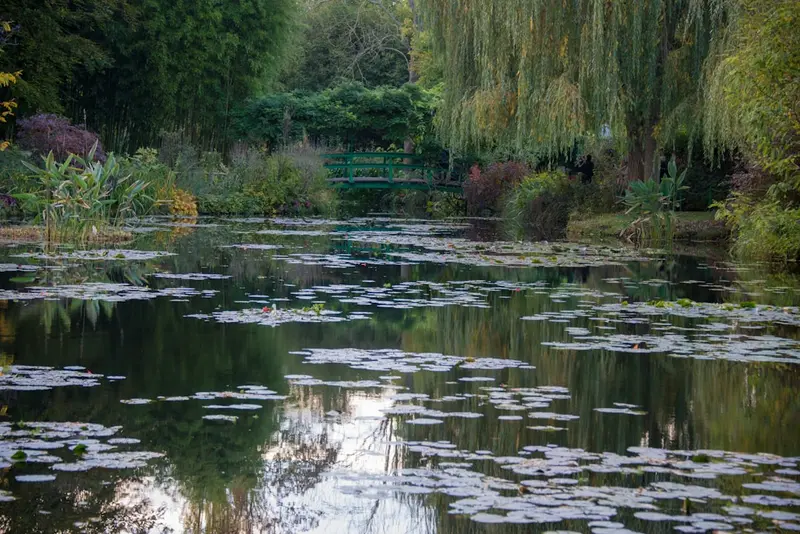
Giverny, a picturesque village in Normandy, is inextricably linked to the life and work of the Impressionist Claude Monet. Here you'll find the famous House and Gardens of Claude Monet, where the artist lived for over 40 years and created his iconic Water Lilies paintings. The meticulously preserved gardens, especially the Water Garden with its Japanese bridge and water lily ponds, reflect Monet's artistic vision and served as direct inspiration for his masterpieces. The neighboring Musée des Impressionnismes Giverny complements your visit with rotating exhibitions on the history of the Impressionist movement. To fully enjoy the floral splendor and avoid larger crowds, a visit in late spring or early summer is recommended. Be sure to book tickets for Monet's House and Gardens online in advance, especially on weekends and public holidays.
Versailles
Versailles is inextricably linked with the Palace of Versailles, a symbol of the French monarchy and absolutist power. Here you'll discover the opulent Hall of Mirrors, the royal apartments, and the impressive gardens designed by André Le Nôtre. The estate bears witness to the vision of Louis XIV and was the center of France's political power for over a century. Beyond the main palace, the Grand Trianon, the Petit Trianon, and the Hameau de la Reine invite exploration. Plan at least a full day to visit the entire estate to fully grasp its diversity. To avoid crowds, a visit right after opening or in the late afternoon is recommended. You should always book tickets online in advance to minimize waiting times.
Île-de-France
The Île-de-France is the pulsating heart of France, where history and modernity uniquely merge. Here you'll find not just the iconic city of Paris, but also a wealth of royal castles, impressive landscapes, and charming small towns waiting for you to discover them.
Paris
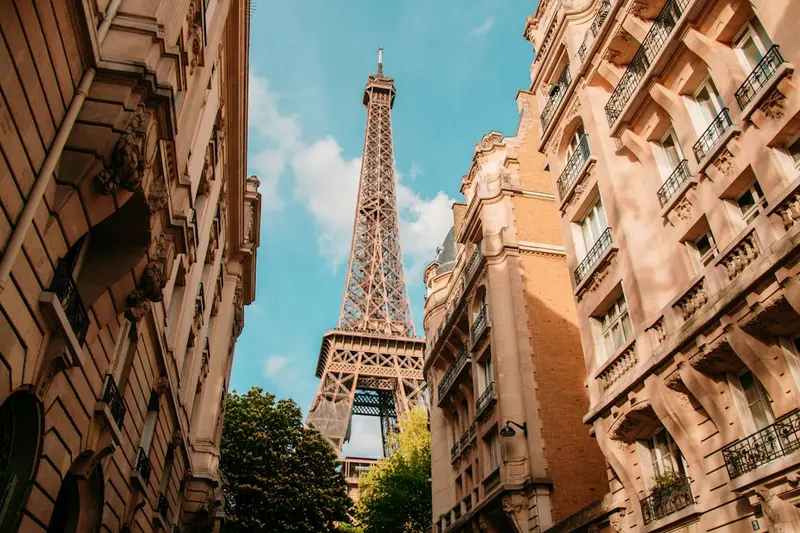
Paris presents itself as a world-class city, uniquely combining art, culture, and exquisite gastronomy. Here you'll discover iconic landmarks like the Eiffel Tower, the Louvre Museum with its treasures, and the historic Notre-Dame Cathedral on the Île de la Cité. The banks of the Seine, a UNESCO World Heritage site, invite strolls, while districts like Le Marais offer an authentic flair with their alleys and boutiques. Historically, Paris was always a hub of European intellectual history and fashion. For a pleasant travel experience, a visit in spring or autumn is recommended to avoid the large tourist crowds. A practical tip is to use the Métro to efficiently reach the widespread attractions and observe city life.