Fernweh
    ExploreTravel GuidesMy Trips
    de|en
    About FernwehImprintFAQPrivacy Policy
    ExploreTravel GuidesMy Trips
    Aomori

    Aomori

    CityCulture
    1. Home
    2. Destinations
    3. Japan
    4. Tohoku
    5. Aomori
    Aomori im äußersten Norden ist bekannt für sein Nebuta-Matsuri-Festival, seine köstlichen Äpfel und seine Nähe zur spektakulären Natur der Präfektur.
    • Neighborhoods & highlights
    • Eat & drink
    • Culture
    • Getting around
    • Accommodation
    • Plan trip
    • Nearby
    • Neighborhoods & highlights
    • Eat & drink
    • Culture
    • Getting around
    • Accommodation
    • Plan trip
    • Nearby

    Overview

    Aomori, the northernmost prefectural capital on Honshu, is renowned for its maritime culture and globally esteemed apples. The annual Nebuta Matsuri, held every August and one of Japan's largest lantern festivals, shapes the city's identity and can be experienced year-round at the Nebuta Museum WA-RASSE. The Sannai-Maruyama archaeological site, one of the most significant Jomon settlements, offers deep insights into Japan's prehistoric history. Culinary delights include fresh seafood, which you can custom-assemble at the Aomori Gyosai Center (Nokkedon), as well as apple products at A-Factory. The surrounding Hakkoda Mountains and Lake Towada also offer diverse nature experiences for hikers and winter sports enthusiasts. Early August is ideal for the Nebuta Matsuri; apple lovers and autumn foliage enthusiasts should plan for September to November.

    Places in Aomori

    Discover the most important sights and attractions

    Sights in Aomori

    1龍神之水

    In der Präfektur Aomori, versteckt in einer naturbelassenen Umgebung, findest du die Quelle 龍神之水, übersetzt 'Drachengotts Wasser'. Diese Quelle ist seit Jahrhunderten für die außergewöhnliche Reinheit und den erfrischenden Geschmack ihres Wassers bekannt. Lokal wird ihr eine besondere spirituelle Bedeutung zugeschrieben, die eng mit den Mythen um den Drachengott Ryujin verbunden ist, der als Herrscher über die Gewässer gilt und Segen sowie Wohlstand spenden soll. Viele Besucher kommen hierher, um das Quellwasser zu probieren oder in Flaschen abzufüllen, oft in Verbindung mit einem Besuch des nahegelegenen kleinen Schreins, der dem Drachengott geweiht ist. Der Ort strahlt eine tiefe Ruhe aus und lädt zur Besinnung ein, umgeben von dichtem Grün. Unser Tipp: Besuche 龍神之水 am frühen Morgen, um die besondere Atmosphäre in Stille zu erleben und die besten Fotos ohne große Menschenmassen zu machen. Achte auf die kleinen, kunstvoll geschnitzten Drachenfiguren, die oft am Quellaustritt zu finden sind und als Fotomotiv dienen.
    Open in Google Maps

    2San'nai-Maruyama iseki Special Historical Site

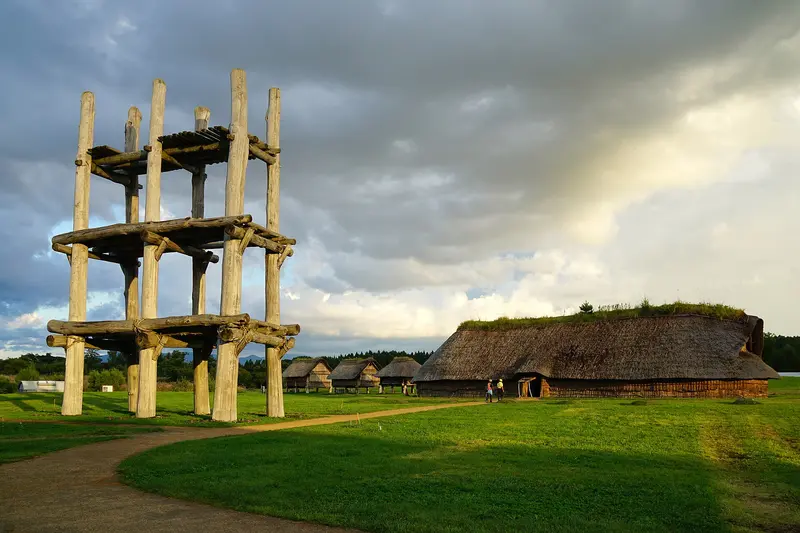
    Das San'nai-Maruyama iseki in Aomori ist eine der bedeutendsten archäologischen Stätten Japans aus der Jomon-Zeit (ca. 10.000 v. Chr. bis 300 v. Chr.). Du entdeckst hier die Überreste einer großen Siedlung, die belegt, dass die Jomon-Menschen bereits vor Tausenden von Jahren einen sesshaften Lebensstil pflegten. Die Ausgrabungen haben beeindruckende Funde wie komplexe Keramik, Lackwaren und Jadeobjekte zutage gefördert, die auf fortschrittliche Handwerkskunst und weitreichende Handelsbeziehungen hinweisen. Die Stätte ist Teil des UNESCO-Weltkulturerbes "Jomon Prehistoric Sites in Northern Japan".Vor Ort kannst du rekonstruierte Grubenhäuser und erhöhte Gebäude besichtigen, die dir einen lebhaften Eindruck vom damaligen Leben vermitteln. Besonders markant ist die Rekonstruktion eines großen, sechs-säuligen Gebäudes, dessen genaue Funktion – ob Wachturm oder zeremonielle Stätte – noch diskutiert wird. Das angeschlossene Jomon Jiyukan Museum zeigt eine Vielzahl der originalen Artefakte, die hier entdeckt wurden, und bietet tiefere Einblicke in die Jomon-Kultur. Unser Tipp: Plane deinen Besuch für den Vormittag an einem Wochentag, um die Stätte in Ruhe zu erkunden. Für eine umfassende Erfahrung solltest du mindestens zwei bis drei Stunden für das Gelände und das Museum einplanen. Die beste Aussicht für Fotos der gesamten Anlage hast du vom Hügel nahe der sechs-säuligen Rekonstruktion.
    Open in Google Maps

    3Aomori Museum of Art

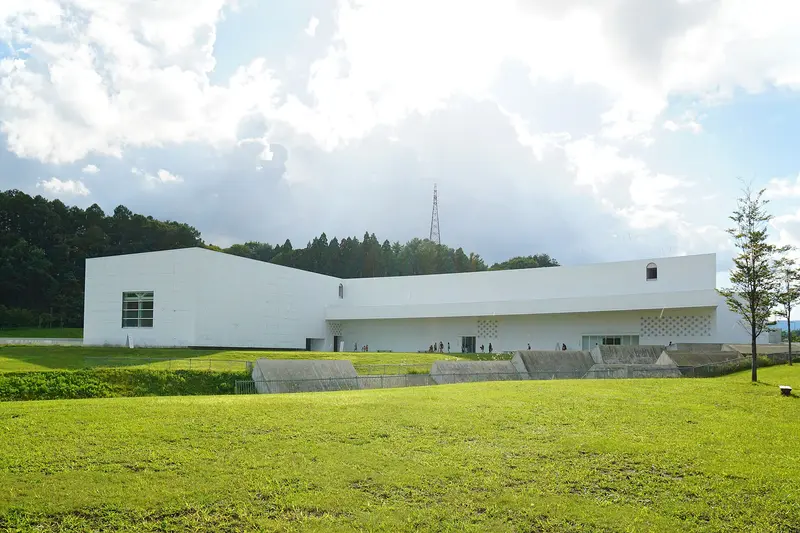
    Das Aomori Museum of Art, eröffnet 2006, beeindruckt durch seine von Jun Aoki & Associates entworfene Architektur, die an die nahegelegene prähistorische Sannai-Maruyama Jomon-Stätte erinnert und wie eine moderne Ausgrabung wirkt. Diese Gestaltung schafft eine faszinierende Brücke zwischen Aomoris alter Geschichte und zeitgenössischer Kunst. Im Inneren beherbergt das Museum eine bedeutende Sammlung von Künstlern aus der Präfektur, darunter der international gefeierte Yoshitomo Nara mit seiner riesigen Skulptur 'Aomori-ken' (Aomori-Hund) im Außenbereich – ein unverzichtbares Fotomotiv. Auch Werke von Shiko Munakata und Tohl Narita sind hier zu finden, ergänzt durch wechselnde Sonderausstellungen. Für einen ruhigen Besuch empfiehlt sich ein Wochentag, um die Menschenmassen zu umgehen. Tipp: Nutze die Gelegenheit und besuche die angrenzende Sannai-Maruyama Jomon-Stätte, um das kulturelle Erlebnis abzurunden.
    Open in Google Maps

    4Hirota shrine

    Der Hirota-Schrein in Aomori ist ein lokal bedeutendes Heiligtum, das sich durch seine ruhige Atmosphäre und traditionelle Architektur auszeichnet. Er ist der Sonnengöttin Amaterasu Omikami sowie weiteren Gottheiten gewidmet und dient der lokalen Gemeinschaft seit langer Zeit als Ort für Gebete um Glück, Schutz und gute Beziehungen. Bei deinem Besuch erwartet dich eine klassische Shinto-Anlage mit einem markanten Torii-Tor am Eingang, einer Wasserstelle zur rituellen Reinigung und der Haupthalle (Honden), die oft mit schlichten, aber detailreichen Holzschnitzereien verziert ist. Das Gelände ist überschaubar und lädt zu einem Moment der Besinnung ein. Unser Tipp: Um die friedliche Stimmung optimal zu erleben und die Architektur in Ruhe zu betrachten, empfiehlt sich ein Besuch am frühen Vormittag. Für ein stimmungsvolles Foto des Schreins in seiner natürlichen Umgebung kannst du den Blickwinkel vom Torii-Tor zur Haupthalle nutzen.
    Open in Google Maps

    5Utou Shrine

    Der Utou Schrein in Aomori ist ein traditioneller Shinto-Schrein, dessen Geschichte eng mit der maritimen Kultur der Region verbunden ist. Er ist primär den Schutzgöttern des Meeres und der Fischerei geweiht und dient seit jeher als spiritueller Ankerpunkt für Fischer und Seeleute, die hier um sichere Reisen und reiche Fänge bitten. Du findest hier eine ruhige und besinnliche Anlage, die einen authentischen Einblick in die lokale Shinto-Praxis bietet, abseits der großen Touristenströme. Die typische Schreinarchitektur mit ihrem bescheidenen Torii-Tor und der Haupthalle lädt zur Kontemplation ein.Unser Tipp: Besuche den Utou Schrein am besten frühmorgens. Zu dieser Zeit herrscht eine besonders friedliche Atmosphäre, und du kannst die Anlage in aller Ruhe erkunden. Die Morgenstunden bieten zudem optimales Licht für stimmungsvolle Aufnahmen der traditionellen Holzstrukturen. Achte auf die kleinen, handgeschriebenen Gebetstäfelchen (Ema), die oft maritime Motive tragen und die Verbundenheit der Einheimischen mit dem Meer widerspiegeln.
    Open in Google Maps

    Restaurants in Aomori

    Aomori's cultural heritage

    Aomori's cultural identity is deeply rooted in its rich history, stretching back to the prehistoric Jōmon period. The Sannai-Maruyama archaeological site, with its preserved postholes and settlement remains, bears witness to a highly developed Jōmon civilization over 5,000 years ago, offering insights into early Japanese architecture. As Honshū's northernmost prefecture, Aomori developed a unique culture over the centuries, shaped by both its geographical location and historical exchange.The annual Aomori Nebuta Matsuri is a central element of local art and tradition, with giant, intricately lit floats reflecting the spirit of the region. Musically, Aomori is known for the powerful Tsugaru Shamisen style, a dynamic and improvisational regional variation of the traditional Japanese lute. The cultural spectrum is further complemented by local crafts such as the detailed Tsugaru-nuri lacquerware and the geometric Kogin-zashi embroideries, which keep Aomori's artistic heritage alive and illustrate the deep connection between its people and their environment.

    Getting Around Here

    Aomori, despite lacking a subway or tram system, offers straightforward transportation for visitors. The backbone of the city's public transit consists of efficient buses, connecting major sights and districts. For hassle-free travel, it is highly recommended to acquire a rechargeable IC card like Suica or Pasmo. These cards are accepted nationwide and simplify payments on the Aomori City Bus; single journeys can, of course, also be paid for for in cash. For shorter distances or exploring the flat city center, a bicycle is an excellent choice, with rental stations available to explore the city at your own pace. E-scooters, however, are less common. Taxis are easily found, especially at train stations and busy locations, offering a comfortable, albeit more expensive, alternative; ride-sharing services are less prevalent in Japan and mostly limited to standard taxis. Aomori's city center, surrounding the train station and harbor promenade, is also designed to be very pedestrian-friendly, inviting leisurely walks to soak in the city's relaxed atmosphere and conveniently access numerous attractions.

    Accommodations in Aomori

    Accommodations in Aomori

    Find perfect stay in Aomori

    Booking.com
    Search Hotels
    Agoda
    Search Hotels
    Airbnb
    Vacation Rentals
    Hotels.com
    Hotels Worldwide
    Hostelworld
    Hostels

    Plan your trip to Aomori

    Save places, build a route and plan your city trip — all in one place.

    Save places

    Bookmark sights, restaurants and neighborhoods you're interested in.

    Build your route

    Turn your bookmarks into a route — define order, days and budget.

    Refine with AI

    Let Mein Fernweh suggest experiences and put together a tailored daily plan.

    Start trip planningOpen bookmarks

    Locations nearby

    These places are nearby — perfect for additional days or a day trip.

    Shirakami Sanchi

    Shirakami Sanchi

    The Shirakami Sanchi is a UNESCO World Natural Heritage site in northern Honshu, home to one of East Asia's last untouched primeval beech forests. Here you'll find unique flora and fauna, including rare species like the Japanese Serow and the Golden Eagle. The area exemplifies Japan's pristine forest ecology, which has remained undisturbed for millennia. Explore the well-marked hiking trails that lead deep into the forest, for instance, to the impressive Anmon Waterfalls. Sturdy footwear is essential for a visit, and it's recommended to come during peak season in autumn for the vibrant foliage or in late spring. Note that parts of the core area are only accessible with a permit or in the company of a guide, while other sections can be freely explored.
    Hakodate

    Hakodate

    The port city of Hakodate in southern Hokkaido fascinates with its unique blend of historic charm and maritime atmosphere. The influence of Western cultures is particularly defining, visible in the elegant buildings of the Motomachi district and the former consulates. An absolute highlight is the ride up Mount Hakodate, whose spectacular night view is considered one of Japan's three most beautiful. The star-shaped fortress Goryokaku, a national historical landmark, tells of the Boshin War era and is especially impressive during cherry blossom season. Experience fresh fish and seafood at the lively Hakodate Morning Market (Asaichi), where you can sample local specialties. The historic Kanemori Red Brick Warehouses by the harbor now offer shops and restaurants in an atmospheric setting. For a relaxed exploration, a visit in spring or autumn is recommended to avoid crowds and enjoy clear views.
    Toya-See & Noboribetsu

    Toya-See & Noboribetsu

    The region around Lake Toya and Noboribetsu in Hokkaido offers a fascinating blend of volcanic landscapes and relaxing onsen culture. At Lake Toya, a crater lake, you can enjoy picturesque views, explore Nakajima Island, or take a ropeway up active Mount Usu to observe its geological activity. Noboribetsu is renowned for its Jigokudani, the "Hell Valley", where you'll experience sulfurous steam and bubbling springs up close, a testament to the region's intense volcanic activity. The hot springs here are among Japan's best, offering perfect relaxation after a day in nature. It's best to visit Noboribetsu in the cooler months to enjoy the full onsen experience, while Lake Toya entices with daily fireworks in summer. Plan at least one full day for both locations to truly appreciate their uniqueness.
    Niseko

    Niseko

    Niseko, located on Hokkaido, is a world-renowned ski resort, celebrated for its exceptional powder snow and diverse winter sports opportunities. The four main resorts – Hirafu, Hanazono, Niseko Village, and Annupuri – are connected under Niseko United, offering not only groomed slopes but also extensive off-piste and backcountry options. The majestic Mount Yotei always accompanies your view. After a day on the snow, traditional Onsen invite you to relax, a fundamental part of Japanese bathing culture. The culinary scene ranges from local Ramen to international restaurants featuring fresh regional produce. For the best snow conditions, ideally visit between January and mid-February. Practical tip: Utilize the local shuttle buses for convenient travel between resorts and restaurants.
    Sapporo

    Sapporo

    Sapporo, Hokkaido's capital, presents itself as a modern metropolis with wide avenues and unique European city planning. You'll discover a rich history of beer brewing here, extensively documented in the Sapporo Beer Garden & Museum. The central Odori Park forms the city's green heart and hosts the famous Snow Festival in winter, while the Sapporo TV Tower offers panoramic views. Hokkaido's historic Government Building, known as the "Red Brick Office," testifies to the city's early development. In the evening, the lively entertainment district of Susukino invites exploration. For a pleasant exploration, visiting in the summer months of July and August is recommended, when the climate is mild. Be sure to try the local specialty Soup Curry or the famous Miso-Ramen, offered in many small eateries.