Fernweh: Home
    ExploreTravel GuidesPlan a tripMy tripLast visited
    de|en
    All Places & RegionsAll highlightsAbout FernwehFAQPrivacy PolicyImprint
    ExploreTravel GuidesPlan a tripMy tripLast visited
    • Neighborhoods & highlights
    • Walking tours
    • Eat & drink
    • Food culture
    • Culture
    • Nightlife
    • Getting around
    • Accommodation
    • Plan trip
    • Nearby
    Fukuoka

    Japan

    Fukuoka

    City

    Fukuoka, a vibrant port city on Kyushu, blends modern urbanity, rich history, and a relaxed atmosphere, distinguishing it from other Japanese metropolises.

    by Felix Gillen

    1. Home
    2. Destinations
    3. Japan
    4. Kyushu
    5. Fukuoka
    Fukuoka, a vibrant port city on Kyushu, blends modern urbanity, rich history, and a relaxed atmosphere, distinguishing it from other Japanese metropolises. Renowned for its vibrant culinary scene, the city boasts Yatai food stalls along the Naka River in Nakasu, offering local specialties like Hakata Ramen by the water. Historical insights await at the Dazaifu Tenmangu Shrine in nearby Dazaifu, a significant cultural heritage dedicated to scholar Sugawara no Michizane. For relaxation and strolls, the expansive Ohori Park offers a large pond and an adjacent Japanese garden. Canal City Hakata's modern shopping district offers diverse entertainment and architecture. The best time to visit is spring or autumn, leveraging the pleasant climate and smaller crowds for relaxed city exploration.

    Sights in Fukuoka

    Discover the most important sights and attractions

    1Our Lady of Victory Cathedral

    The Cathedral of Our Lady of Victory, also known as Daimyōmachi Church, is the episcopal seat of the Diocese of Fukuoka. The Catholic community has existed here since the late 19th century; the current church building in the Daimyō district was consecrated in 1986 and is a modern structure that distinctly differs from the city's temples and shrines.Our Tip: Visit the cathedral outside of service hours. Respect the church as a place of prayer, wear appropriate clothing, and do not photograph during Mass.
    Open in Google Maps
    Ohori Park

    2Ohori Park

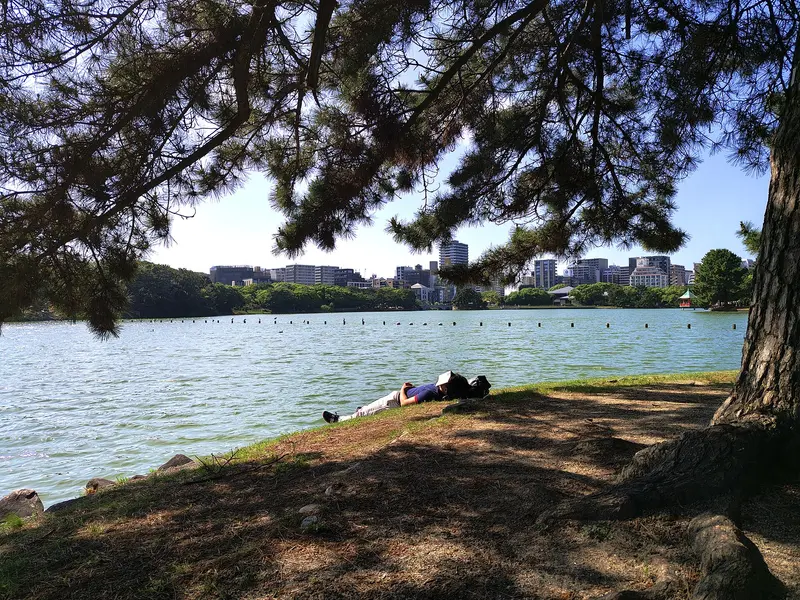
    Ohori Park in Fukuoka was originally the outer moat of Fukuoka Castle and opened as a city park in 1929. Its name "Ōhori" literally means "large moat" and reflects its historical function. Here you'll find a large central pond surrounded by a path approximately two kilometers long, ideal for walking or jogging. Bridges connect small islands in the center of the pond.On the southern edge of the park lies the Japanese Garden, opened in 1984, featuring a pond, dry landscape garden, and tea house. Adjacent is the Fukuoka Art Museum. For a tranquil atmosphere, we recommend a visit in the early morning.
    Open in Google Maps
    Hakozaki-gū

    3Hakozaki-gū

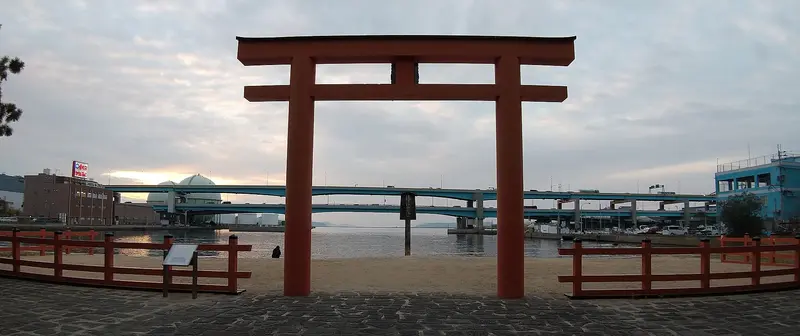
    The Hakozaki-gū in Fukuoka is one of Japan's three great Hachiman shrines and a place of significant historical importance. Founded in 923, it is dedicated to Emperor Ōjin, his mother Empress Jingū, and Tamayori-hime. The shrine is well-known for its role during the Mongol invasions in the 13th century, when prayers for divine assistance against the invaders were offered here. The inscription 'Tekikoku Kōfuku' (Submission of the Enemy Country) on the tower gate commemorates this.The main hall and prayer hall were rebuilt by Lord Ōuchi Yoshitaka in 1546, while the two-story tower gate was donated by Kobayakawa Takakage in 1594; all three are designated as important cultural properties. A large stone Torii at the entrance dates back to the early 17th century. Our tip: Arrive early on a weekday morning, when the grounds are quiet.
    Open in Google Maps

    4Tōchō-ji

    The Tōchō-ji in Fukuoka was founded in 806 by Kūkai, also known as Kōbō Daishi, after his return from China, and is considered one of Japan's oldest Shingon temples. Inside the main hall awaits the Fukuoka Daibutsu, a 10.8-meter-tall seated wooden Buddha statue, considered the largest of its kind in Japan. Behind the statue, a short, dark passage leads, representing the symbolic path through hell to enlightenment.The grounds also feature a traditionally designed five-story pagoda, completed in 2011 for the temple's 1200th anniversary. Our Tip: Visit Tōchō-ji in the morning to enjoy its serene atmosphere. Photography is usually prohibited inside the buildings.
    Open in Google Maps
    Fukuoka Castle Ruins (Maizuru Park)
    Park

    5Fukuoka Castle Ruins (Maizuru Park)

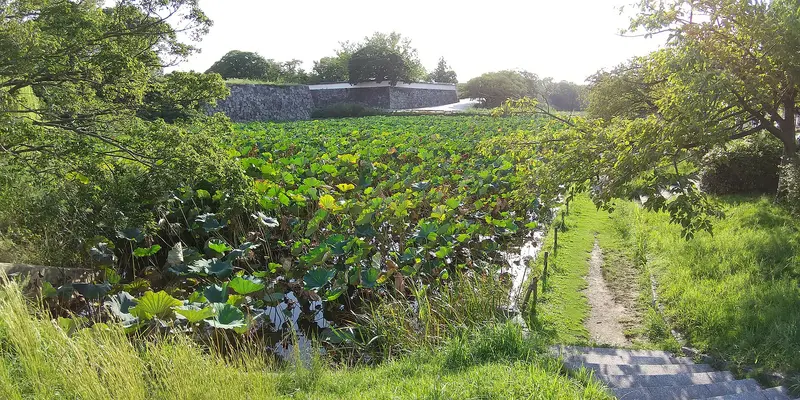
    Maizuru Park is home to the remains of Fukuoka Castle, which Lord Kuroda Nagamasa had built in the early 17th century. While the main keep is not preserved, powerful stone walls, several gates, and watchtowers remain.From the base of the former main keep, you can gaze out over the city and the neighboring Ōhori Park. Around a thousand cherry trees bloom here in late March and early April, illuminated at night.
    Open in Google Maps
    Kushida Shrine
    Place of Worship

    6Kushida Shrine

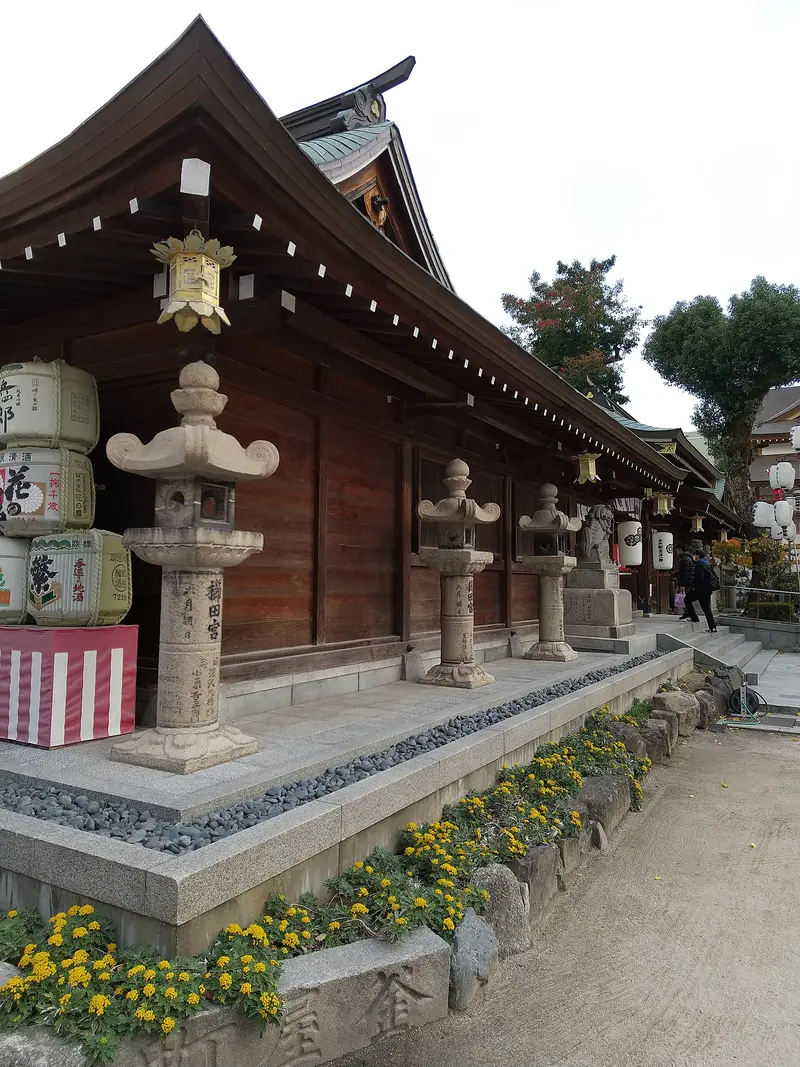
    The Kushida Shrine in Hakata Ward is the guardian shrine of the old merchant city and the starting point of the Hakata Gion Yamakasa festival, where in early to mid-July, teams of men race multi-ton festival floats through the streets.On its grounds, one of the richly decorated ornamental floats (Kazari-yamakasa), over ten meters high, is displayed year-round. The shrine is just a few minutes' walk from Canal City and Gion Station.
    Open in Google Maps

    City walks in Fukuoka

    Curated walking tours through the city's highlights, handpicked by experienced travel journalists.

    Facets of Fukuoka: A Walk Through Tradition and Innovation

    On this walk of about two hours, discover the many faces of Fukuoka. From the venerable shrines of the Hakata district to futuristic architecture and lively shopping streets, experience the perfect blend of tradition and urban flair. Immerse yourself in the soul of this dynamic city.

    ~2 Std. 25 Min.
    Open in Google Maps
    Stops (7)

    Restaurants in Fukuoka

    1

    Fontana

    Restaurant in 4-chōme-8-28 Watanabedōri.
    Show on Google Maps
    2

    Hakata Meidai Yoshizuka Unagiya

    Restaurant in 2-chōme-8-27 Nakasu.
    Show on Google Maps
    3

    Noka No Ippuku

    Restaurant in 6-140 Kamikawabatamachi.
    Show on Google Maps
    4

    Tensho (Ukokkei Soup)

    Restaurant in 2-chōme-1-8 Maizuru.
    Show on Google Maps
    5

    Kiwamiya Fukuoka Parco Store

    Restaurant in Japan.
    Show on Google Maps

    Food & Drink in Fukuoka

    Fukuoka is a culinary hub, famous for Hakata Ramen and fresh seafood. Explore the authentic Yatai food stalls in the Nakasu district or enjoy specialties like Unagi, such as at the renowned Hakata Meidai Yoshizuka Unagiya, and discover the rich local cuisine.

    Hakata-Ramen

    Thin, straight noodles in milky Tonkotsu broth. You decide your noodles' doneness, and with 'Kaedama', order a second portion for the remaining broth.

    Yatai

    The mobile food stalls are a hallmark of the city. In the evenings, they primarily open on Nakasu Island and in Tenjin, serving ramen, skewers, and oden at a few counter seats.

    Motsunabe

    A stew of beef or pork offal with cabbage and garlic chives in soy or miso broth. Noodles are added to the pot to finish.

    Mizutaki

    Bone-in chicken is cooked in a clear, slow-cooked broth and eaten with Ponzu. First, you drink a cup of the broth plain.

    Mentaiko

    The spicy marinated pollock roe is the most famous souvenir from Fukuoka. It is eaten with rice or incorporated into onigiri, pasta, and bread.

    Fukuoka's Cultural Heritage: History, Art, and Traditions

    Fukuoka, once known as Hakata, is a city rich in history and cultural depth, drawing its identity from a millennia-old role as Japan's gateway to Asia. Since ancient times, the city was an important trading hub, early receiving influences from Korea and China that profoundly shaped its art, architecture, and customs.An architectural testament to these deep roots is Shofukuji Temple, Japan's first Zen temple, founded in 1195 and marking the introduction of Zen Buddhism to the country. The remnants of Fukuoka Castle, once one of the largest on Kyushu, also speak of the city's importance during feudal times. Local traditions such as the Hakata Gion Yamakasa, celebrated with colossal festival floats and an energetic procession, and part of UNESCO's intangible cultural heritage of Japanese float festivals, reflect the deeply rooted community spirit and time-honored rituals.Cultural specificities also manifest in traditional handicrafts, including the exquisite Hakata Dolls (Hakata Ningyo) and Hakata-Ori textiles, known for their delicate patterns and durability. These artisanal crafts are living testaments to Fukuoka's history and offer insights into the region's artistic heritage. The blend of historical depth, religious architecture, and vibrant festivals shapes Fukuoka's cultural landscape.

    Nightlife

    Fukuoka's nightlife primarily centers around the vibrant districts of Tenjin and Nakasu, offering a diverse mix of options. Here you'll find energetic clubs like Happy Cock, relaxed shisha bars, and specialized music venues, such as for jazz at ニューコンボ.
    1

    LE CLUB DE FUKUOKA

    Japan, 〒810-0801 Fukuoka, Hakata Ward, Nakasu, 2-chōme−3, 博多区中洲2丁目3−1 中洲Fビル6F
    Show on Google Maps
    2

    Happy Cock

    Bar in Japan.
    Show on Google Maps
    3

    80's MUSIC BAR reflex

    Bar in Japan.
    Show on Google Maps
    4

    Donna Selvatica

    Bar in Japan.
    Show on Google Maps
    5

    CB LOUNGE ~Shisha & Bar~

    Bar in 2-chōme-5-24 Imaizumi.
    Show on Google Maps
    6

    Records Cafe & Bar Tao

    Bar in Japan.
    Show on Google Maps
    7

    MAIN DINING cotton.|WITH THE STYLE FUKUOKA

    Bar in Japan.
    Show on Google Maps
    8

    New Combo

    Bar in 5-chōme-1-22 Watanabedōri.
    Show on Google Maps
    9

    Lounge and Bar Hakatagawa

    Bar in Japan.
    Show on Google Maps

    Exploring locally

    Fukuoka is easy to explore thanks to its excellent transport network. The subway is the backbone of urban mobility, connecting key districts and the airport quickly and smoothly. It is complemented by an extensive bus network that also reaches more remote areas; there is no tram in Fukuoka.On the subway, trains, and city buses, you can pay with rechargeable IC cards like Hayakaken, Nimoca, or Sugoca; nationwide cards such as Suica are also accepted. Alternatively, day passes for the subway or bus can be cost-effective. Fukuoka is also a very pedestrian-friendly city, especially in central areas like Tenjin and Hakata, which are great for exploring on foot.Bicycles are a popular option for shorter distances; there are numerous rental stations and often e-scooter services available. Taxis are available everywhere and can also be ordered via app, which is particularly practical late at night. Whether you're looking for the city's hustle and bustle or quieter corners, Fukuoka's transport options will get you to your destination comfortably.

    Accommodations in Fukuoka

    Find perfect stay in Fukuoka

    Booking.com* (Affiliate link)
    Search Hotels
    Agoda* (Affiliate link)
    Search Hotels
    Airbnb
    Vacation Rentals

    * Affiliate link: if you book through it, we earn a small commission. The price stays the same for you.

    Plan your trip to Fukuoka

    Save places, build a route and plan your city trip, all in one place.

    1. 1
      Sunrise over alpine peaks and a sea of clouds
      1234

      Round trip

      12 days · 4 stops

      Saved

      Pick a route

      Pick a ready-made one or save places and plan your own.

      Open bookmarks
    2. 2

      Trip to Fukuoka

      Live
      • 1Our Lady of Victory Cathedral3 days
      • 2Ohori Park4 days
      • 3Hakozaki-gū5 days
      Budget

      Plan your trip

      The planner sorts stops, days and budget. Plan together in real time.

      Start trip planning
    3. 3
      9:41 No signal
      Fukuoka
      Available offline

      Use it on the road

      Download the guide to your phone and use it on site, even offline.

    Nearby

    Kumamoto

    Kumamoto

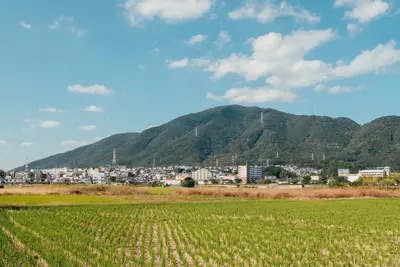
    Kumamoto in Kyushu blends rich history with modern dynamism. Its landmark is the imposing Kumamoto Castle, a significant cultural property whose reconstruction after the 2016 earthquake demonstrates resilience. The picturesque Suizenji Jojuen Garden invites you to relax amidst its miniature landscapes. In the lively shopping streets like Kamitori and Shimotori, you'll discover local life and specialties like Kumamoto Ramen. For an optimal experience, a visit in spring during cherry blossom season or in autumn is recommended.
    Kyushu

    Kyushu

    Kyushu, the southernmost of Japan's four main islands, charms you with a captivating blend of seething volcanoes, healing hot springs, and a deeply rooted culture. You'll find a landscape of dramatic natural beauty, from lush mountains to subtropical coasts, paired with excellent regional cuisine that pampers both palate and soul.
    Beppu

    Beppu

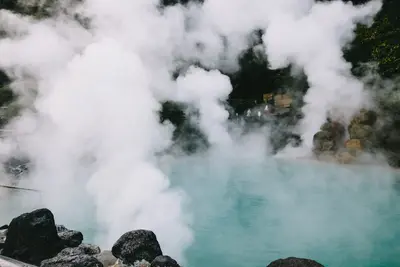
    Beppu, an onsen town on Kyushu, is world-renowned for its diverse hot springs and the culture associated with them. Here you'll find over 2,000 hot springs, divided into eight main areas, each with its own character. A highlight is the "Jigoku Meguri", a tour of the seven Hells of Beppu, thermal springs unsuitable for bathing, featuring unusual colors and geysers. Particularly famous are the cobalt-blue "Umi Jigoku" (Sea Hell) and the blood-red "Chinoike Jigoku" (Blood Pond Hell). Take the opportunity for a traditional sand bath at Beppu Kaihin Sunayu or try Jigoku Mushi, dishes cooked in the steam of the hot springs. For a comprehensive experience, it's recommended to visit the Jigoku Meguri in the morning to avoid the afternoon crowds. A stroll through the various onsen districts, such as Kannawa, offers insights into local life and the steaming landscapes.
    Nagasaki

    Nagasaki

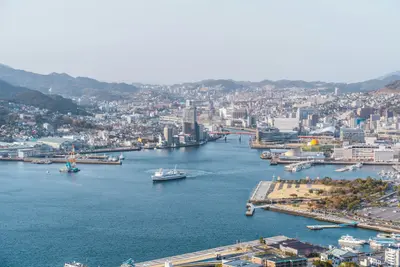
    Nagasaki lies on a deeply indented bay in western Kyūshū, with houses climbing steep hillsides. During Japan's isolation, the city was for over two centuries the only gateway to Europe and China – this shapes its churches, cuisine, and cityscape to this day. On August 9, 1945, Nagasaki was destroyed by an atomic bomb; the Peace Park and Atomic Bomb Museum commemorate this.
    Miyajima

    Miyajima

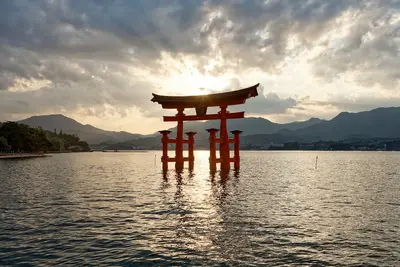
    Itsukushima Island, known as Miyajima, is a short ferry ride from Hiroshima. Its landmark is Itsukushima Shrine's great red Torii, appearing to float in the sea at high tide. Behind the shrine, forested Mount Misen rises, with a cable car and hiking trails to its summit.

    Sources & method

    • Photos: Wikimedia Commons, Unsplash. Each photo carries its credit.
    • Place data such as addresses and ratings comes from Google Maps.
    • The content is based on web research from public, traceable sources. How the content is made · The role of AI