W. Bulach / Wikimedia Commons / CC BY-SA 4.0, mod.
Round trip · Antarctica
Classic Peninsula Expedition from Ushuaia
by Felix Gillen
- 11 Days / 10 Nights
- Half Moon Island → Petermann Island
Typical 10 to 14-day expedition route: approximately two sea days across the Drake Passage to the South Shetland Islands, then along the west coast of the peninsula to Neko Harbour and Paradise Harbour, continuing to Port Lockroy and through the Lemaire Channel to Pleneau and Petermann Island, with another two sea days for the return. Landings are never guaranteed.
At a glance
- Duration
- 11 Days / 10 Nights
- Stops
- 8 · Half Moon Island → Petermann Island
- Arrival
- Ferry · Ushuaia (Hafen)
- Best Time to Go
- November to March
8 stops
Why This Route?
The route connects the main landing sites of the South Shetland Islands and the west coast of the Antarctic Peninsula. Weather and ice determine the exact sequence, and the expedition team re-plans daily.
Hidden Gems
- Danco Island in the Errera Channel with Gentoo penguins
- Damoy Point with the turquoise Damoy Hut near Port Lockroy
- Jougla Point opposite Port Lockroy with whale bones on the shore
Getting there and back
Round trip, returning to where you started
- Arrival
- Ferry · Ushuaia (Hafen)Expedition ships depart from the port of Ushuaia in Tierra del Fuego (Argentina). The Drake Passage to the South Shetland Islands takes about two days. Plan your arrival in Ushuaia with a buffer, so a flight delay doesn't cost you the departure.
- Departure
- Ferry · Ushuaia (Hafen)Back we go across the Drake Passage to Ushuaia, about two days at sea.
Itinerary
Half Moon Island
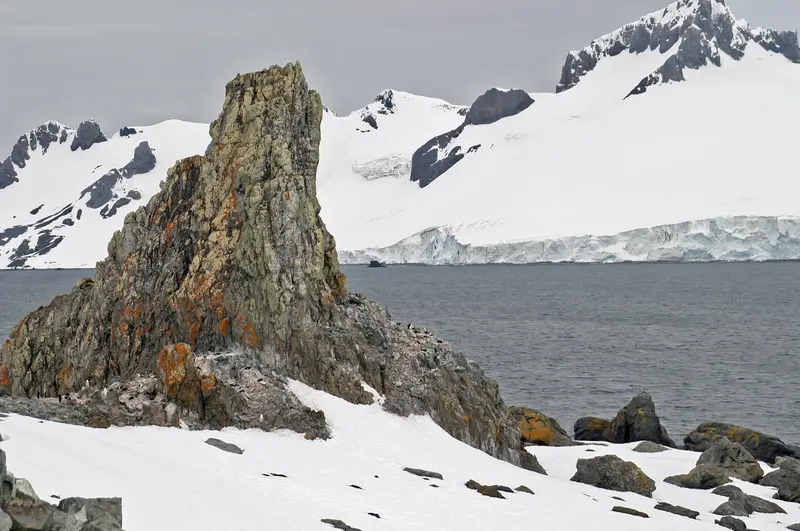
Half Moon Island is a small, crescent-shaped island in the McFarlane Strait off Livingston Island in the South Shetland Islands. Chinstrap penguins breed on the hill with the navigation tower, while fur seals and Weddell seals lie on the beach. Landings are made at the southeast tip, where an old whaling boat lies on the shore. The Argentine summer station Cámara is located on the island.
After about two sea days across the Drake Passage; Chinstrap penguins
2 Sights
Deception Island
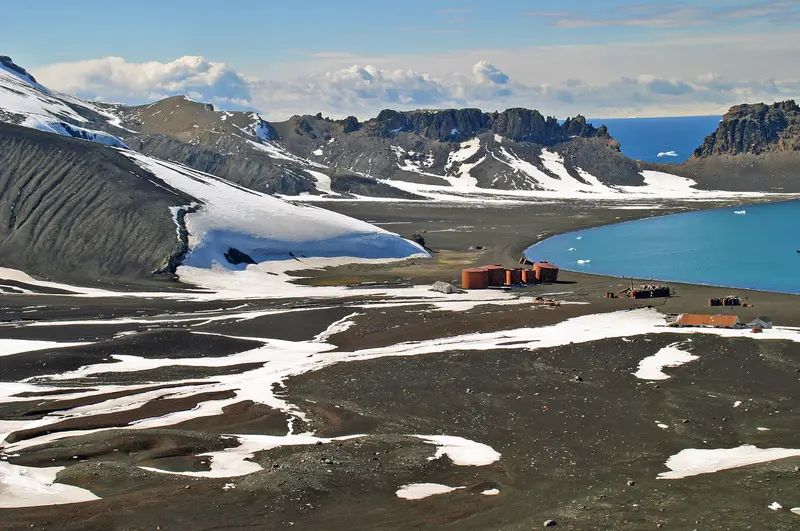
Deception Island is an active volcano in the South Shetland Islands, its collapsed caldera flooded by the sea. Ships navigate through the narrow Neptune's Bellows entrance into the sheltered Port Foster bay, where the remains of a whaling station and a British research base stand. Eruptions between 1967 and 1970 destroyed the previous stations; today, the island is a specially managed area under the Antarctic Treaty, with landing sites at Whalers Bay, Telefon Bay, and the chinstrap penguin colony of Baily Head.
Whalers Bay, Telefon Bay or Baily Head
3 Sights
Whaling and Research
Hektor Whaling StationFrom 1906, whalers used Whalers Bay; the Norwegian land station Hektor operated until 1931. Its tanks, boilers, and a cemetery are protected as Historic Site No. 71.Base B and the EruptionsDuring World War II, the British established Base B here. Volcanic eruptions between 1967 and 1970 destroyed the research stations of that time, including the Chilean station Pedro Aguirre Cerda at Pendulum Cove, whose ruins are now protected as Historic Site No. 76. The island remains an active caldera with considerable volcanic risk.Stations TodayIn summer, two stations operate on the island: the Argentinian Base Decepción in Primero de Mayo Bay, founded in 1948 and occupied only during summer since the 1967 eruptions, and about one kilometer away, the Spanish station Gabriel de Castilla, which was established as a refuge in 1989 and is operated by the Spanish Army.
Neko Harbour
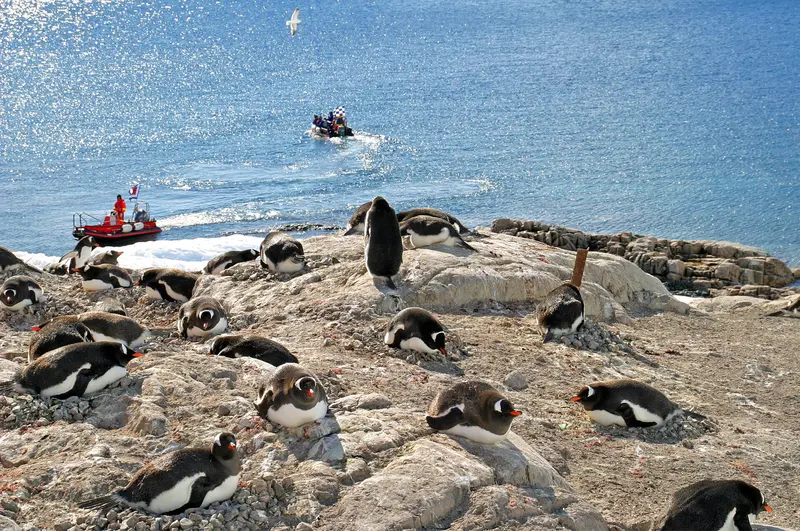
Neko Harbour is a bay in Andvord Bay on the west coast of the Antarctic Peninsula, making it a landing site on the Antarctic mainland. Gentoo penguins breed above the pebble beach, and behind them, glaciers calve into the water. The bay is named after the whaling ship Neko, which operated here in the early 20th century.
Mainland disembarkation
1 Sight
Paradise Harbour
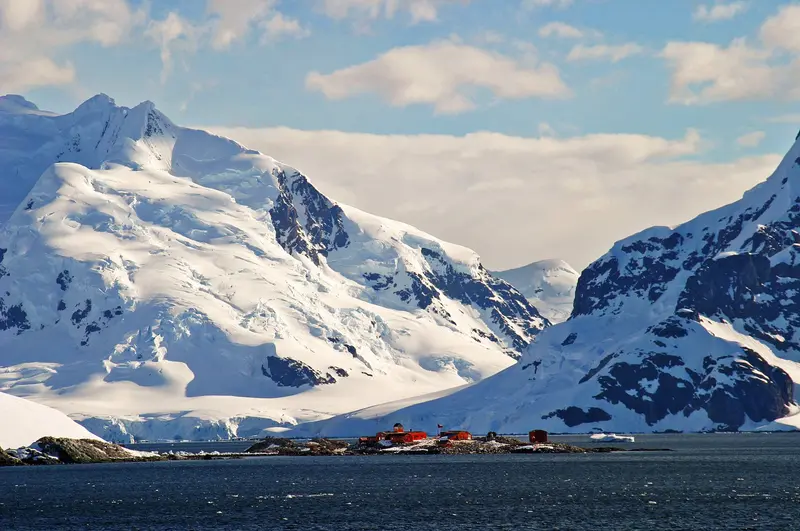
Paradise Harbour, also known as Paradise Bay, is a wide bay on the Danco Coast in the west of the Antarctic Peninsula, protected by the offshore islands Lemaire Island and Bryde Island. It was named by whalers, and the name became common around 1920. On its shore lies the Argentine Station Brown, which has been operated as a summer station since 1965.
2 Sights
Port Lockroy
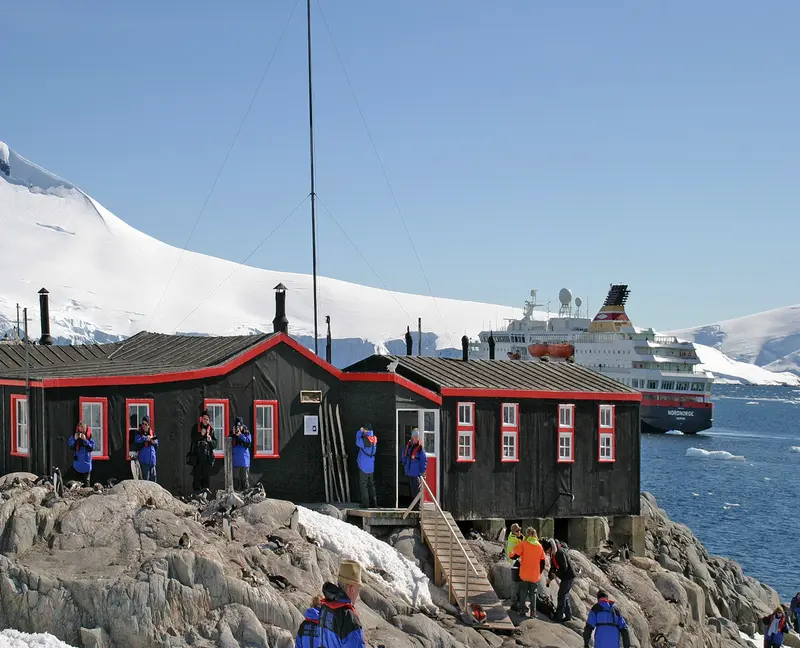
Port Lockroy is a protected natural harbor off Wiencke Island. On the small island of Goudier Island stands British Base A, founded on February 11, 1944 during Operation Tabarin and today, as Historic Site No. 61, a museum with a shop and post office, managed by the UK Antarctic Heritage Trust. Between the buildings, Gentoo penguins breed; opposite, at Jougla Point, whale bones lie on the shore.
Museum and Post Office, visit by arrangement with the station
2 Sights
History of Base A
Operation TabarinThe base was founded on February 11, 1944, as part of the secret British Operation Tabarin. It was later operated by the Falkland Islands Dependencies Survey and the British Antarctic Survey until January 1962. Since 1995, it is Historic Site and Monument No. 61, and a museum since 1996.Museum, Shop and PostBransfield House displays the station's interior, along with a 1957 boat shed and a replica Nissen hut. The Post Office hand-stamps every card, totaling 72,459 according to the Trust in the 2024/25 season. The Gentoo penguins on Goudier Island are counted every year.
Lemaire Channel
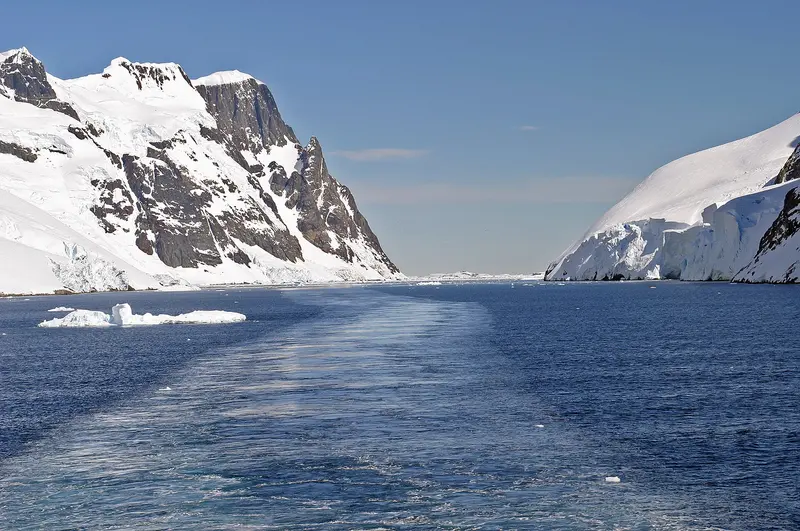
The Lemaire Channel is a narrow strait between Booth Island and the Kyiv Peninsula on the mainland of the Antarctic Peninsula. Steep, glaciated rock faces rise out of the water on both sides; on calm days, they reflect in the smooth surface. Ships navigate the channel heading south to Pleneau Island and Petermann Island, provided ice and weather conditions permit.
Passage through, if the ice allows it
1 Sight
“Pleneau Island Icebergs (46422187335)” by Gary Bembridge / Wikimedia Commons / CC BY 2.0, mod.
Stop 7 • 1 Night
Pleneau Island
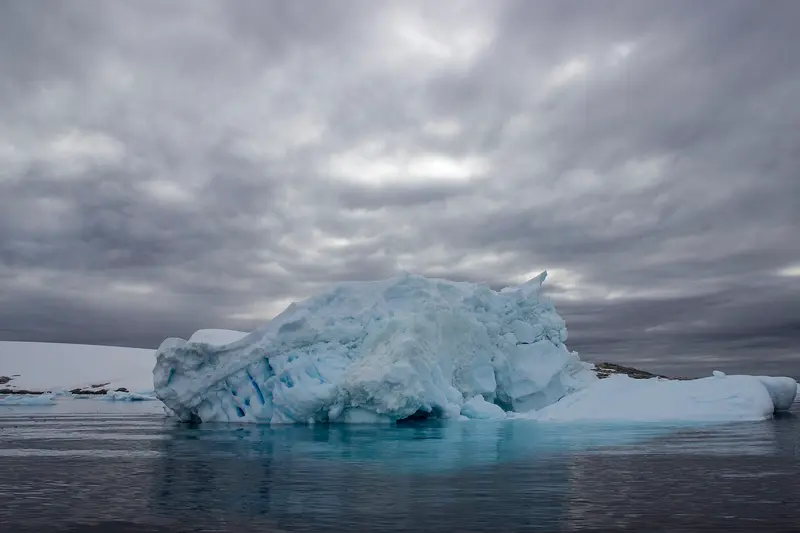
Pleneau Island is a small island just south of the Lemaire Channel, opposite Booth Island. Landings are made on rocks at the northeast end. On the island, Gentoo penguins, blue-eyed shags, Antarctic terns, kelp gulls, and skuas breed; Weddell seals and elephant seals rest on the shores; and leopard seals hunt offshore.
Petermann Island
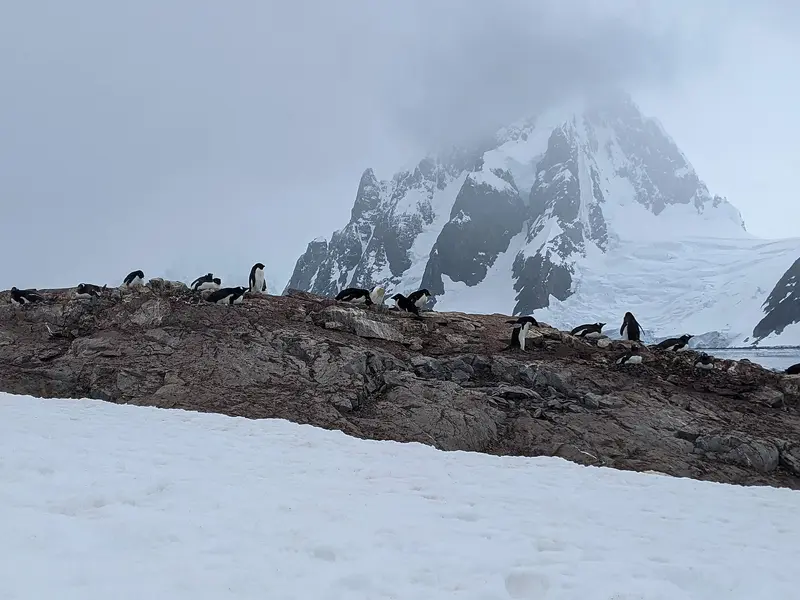
Petermann Island is located in the Wilhelm Archipelago, south of the Lemaire Channel. Here, Gentoo and Adélie penguins breed side by side, along with blue-eyed shags, skuas, and Wilson's storm petrels. In Port Circumcision Bay, where landings are also made, Jean-Baptiste Charcot wintered in 1909 with the Pourquoi-Pas; a cairn on the island is now protected as Historic Site No. 27.
Then about two sea days back to Ushuaia.
1 Sight
Plan this route as your trip
All stops, trains and nights go into your trip planner. You adjust dates and places to stay afterwards.
This route is a suggestion from our research. Please check timetables, times in port, opening hours and prices before you book – what your tour operator or carrier says is what counts.
Fernweh is a free travel guide and trip planner: routes researched by people, taken over in one click, used day by day on the road. More about Fernweh
8 stops
Route Summary
Duration11 Days
Stops8 Places
TypeAdventure