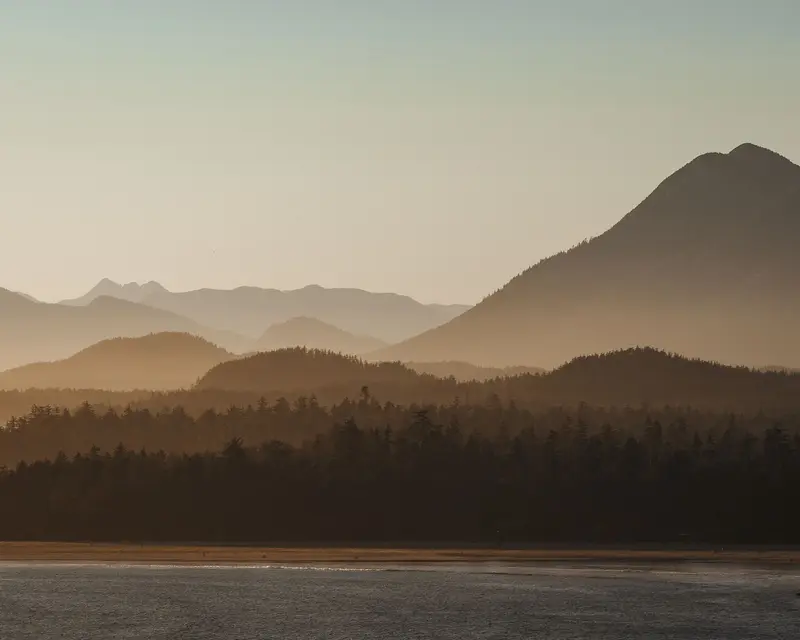
From Vancouver, take the Tsawwassen ferry to Swartz Bay near Victoria. Next, cross the island to the west coast for Ucluelet and Tofino; the Pacific Rim National Park Reserve, featuring Long Beach and the Rainforest Trail, is between both towns, about 20 minutes away. Finally, drive to the east coast to Campbell River. The Victoria to Ucluelet drive takes four to five hours.
20 Days / 19 Nights
May–September
RV Friendly
5 stops
Why This Route?
For travelers who want to combine rainforest, beaches, and wildlife viewing at a slow pace.
Hidden Gems
Chesterman Beach at Tofino for sunset
Wild Pacific Trail in Ucluelet along the rocky coast
Elk Falls Provincial Park near Campbell River with a suspension bridge over the gorge
Itinerary
Stop 1 • 2 Nights
Vancouver
Region
Route highlight
Vancouver is nestled between the Coast Mountains and the Pacific, making it Canada's third-largest metropolitan area. Stanley Park, city beaches, and the North Shore mountains are just a few kilometers from downtown, making hiking, kayaking, and winter skiing part of everyday life. The city's cuisine is strongly influenced by its Asian immigrant population.
20 Sights
16 Restaurants
Culture & History
Unceded TerritoryVancouver is located on the traditional, unceded land of the Musqueam, Squamish, and Tsleil-Waututh. Their art is present in the cityscape: in the totem poles in Stanley Park, at the Museum of Anthropology, and the Bill Reid Gallery of Northwest Coast Art in Downtown.A Young CityThe city only emerged in the 1880s as the western terminus of the Canadian Pacific Railway. In Gastown and Chinatown, brick buildings from that early period are preserved; Chinatown is one of the largest in North America. Expo 86 and the 2010 Winter Olympics shaped the cityscape with Canada Place, the Seawall, and the Olympic Village.Multicultural PresentAlmost half of the population in Metro Vancouver has Asian roots, primarily Chinese, South Asian, and Filipino. This is evident in festivals like Lunar New Year and Vaisakhi, as well as in a cuisine that is among Canada's most diverse.
Victoria, the capital of British Columbia, is located at the southern tip of Vancouver Island. Around the Inner Harbour are the Parliament and the Fairmont Empress; plus gardens, a compact old town with Chinatown, and Canada's mildest climate.
5 Sights
4 Restaurants
Culture & History
Victoria, the capital of British Columbia, is a destination where rich history and diverse culture are deeply rooted in the city's landscapes and buildings. Here, you'll discover a fascinating blend of Indigenous past, British colonial heritage, and a vibrant modern art scene, reflected in numerous museums, galleries, and historic sites.Victoria's Indigenous RootsLong before European settlers arrived in the region, present-day Victoria was home to the Coast Salish peoples, particularly the Songhees and Esquimalt Nations. These Indigenous communities inhabited and stewarded the land for thousands of years. Their history, traditions, and profound connection to nature remain an integral part of the city's cultural identity.Visit the Royal BC Museum to see an impressive collection of artifacts and exhibits on First Nations history and culture.Learn about the efforts of local First Nations to preserve their language and heritage, for example, through public artworks and cultural centers.Colonial Era and the Gold RushVictoria's European history began in 1843 with the establishment of Fort Victoria by the Hudson's Bay Company. This trading post played a central role in the fur trade route.The Fraser Canyon Gold Rush in 1858 led to an explosive growth of the settlement, as Victoria served as the main supply and embarkation port for thousands of gold seekers.The city became the capital of the Colony of Vancouver Island and later, after its amalgamation, the capital of British Columbia.Characteristic architecture from this period shapes the cityscape, including the magnificent British Columbia Parliament Buildings and the historic Fairmont Empress Hotel.Cultural Institutions and HeritageVictoria offers a variety of institutions that preserve and make accessible the region's cultural and historical heritage.The aforementioned Royal BC Museum offers comprehensive insights into the natural and human history of British Columbia, from the Ice Age to the present.Discover Craigdarroch Castle, a Victorian mansion that offers a glimpse into the lives of the wealthy elites of the late 19th century.Stroll through Chinatown, the oldest in Canada, and admire the unique architecture and historic alleyways that bear witness to the immigration history of the Chinese community.Learn about the diverse art scene in the city's numerous smaller galleries and studios, which present both contemporary and traditional works.
Immerse yourself in the wild beauty of Canada's West Coast in Ucluelet, a charming coastal town situated on the edge of the Pacific Rim National Park Reserve. Here, you'll discover a unique blend of rugged nature, maritime charm, and a relaxed, adventurous community. Whether you're exploring dramatic coastal trails or simply enjoying the fresh ocean breeze, Ucluelet promises unforgettable experiences.
4 Sights
2 Restaurants
Culture & History
Origins and Indigenous RootsUcluelet, whose name comes from the language of the Nuu-chah-nulth First Nation and means "safe harbour," boasts a history of millennia of Indigenous settlement. The traditional territories of the Yuulu?il?ath First Nation encompass the area around modern-day Ucluelet and its surrounding coastlines.Here, you will find a deep connection to nature and the sea, fostered by the First Nations over generations and rooted in the local culture to this day.The history of the Indigenous peoples is closely linked to the rich maritime environment, which was both a source of livelihood and cultural heritage.Maritime Past and Resource ExtractionWith the arrival of European settlers in the 19th century, a new era began for Ucluelet, marked by the exploitation of rich natural resources. The region quickly became a hub for:The logging industry, which utilized the dense coastal forests.Fishing, particularly for salmon and halibut, which still plays a role today.Walrus and whale hunting, which was significant in early times but has since been discontinued.The dangerous coast off Ucluelet is also known as part of the "Graveyard of the Pacific," a region where countless ships ran aground or sank. Here you will find numerous stories and relics that bear witness to this maritime past.Shift to Tourism and Present-day CultureOver the course of the 20th century, Ucluelet underwent a transformation from a pure resource extraction site to a popular travel destination. The natural beauty of the surroundings, especially the Pacific Rim National Park Reserve and the impressive coastal landscapes, came to the forefront.Ucluelet's present-day culture is a blend of the tradition of its fishing and logging community and burgeoning ecotourism.You will experience a relaxed atmosphere that emphasizes environmental protection and living in harmony with nature.Local arts and crafts, galleries, and community events reflect this unique identity, which celebrates both the rugged beauty of the coast and the hospitality of its residents.
Welcome to Tofino, the rugged gem on the west coast of Vancouver Island, where the Pacific Ocean meets ancient rainforest. This charming coastal town beckons with a unique blend of adventurous spirit, laid-back surf culture, and breathtaking nature that will instantly captivate you. Whether you're seeking wild waves, pristine beaches, or the tranquility of the forest, Tofino promises unforgettable experiences.
3 Sights
4 Restaurants
Culture and History
Tofino, located on the west coast of Vancouver Island, is a place whose identity is deeply rooted in the history and cultures that have shaped its landscape over millennia. When you visit this coastal town, you will encounter a complex blend of Indigenous tradition, early European settlement, and a modern culture dedicated to nature conservation and a relaxed lifestyle.Indigenous Heritage of the Nuu-chah-nulthTofino's history begins long before the arrival of European settlers. The area is the traditional, unceded territory of the Tla-o-qui-aht First Nation, a branch of the Nuu-chah-nulth people. Their presence dates back thousands of years and profoundly shaped the landscape and its use. They lived here in harmony with the rich marine and forest resources.Cultural Significance: To this day, the Tla-o-qui-aht maintain a strong connection to their land and the sea. Their culture, languages, and traditions are an integral part of the region.Traditional Way of Life: Fishing, hunting, and gathering were the foundations of their society. Their knowledge of the region's flora and fauna is extensive.Present-Day Presence: The Tla-o-qui-aht are important actors in the local community and active in the fields of tourism and environmental protection. They offer cultural tours and experiences that provide insights into their history and customs.European Settlement and IndustrializationWith the arrival of European explorers and settlers in the 18th and 19th centuries, a new era began for Tofino. The name Tofino itself derives from the Spanish hydrographer Vicente Tofino de San Miguel. Initially established as an isolated trading post and fishing village, the town developed in the 20th century into a center for:Whaling and Walrus Hunting: In the early 20th century, a whaling station was established in nearby Millstream Bay, operating until 1947 and bringing economic prosperity to Tofino.Forestry and Fisheries: Logging and commercial fishing became the most important industries, shaping the local economy for decades. The Pacific was both a rich food source and a transport route for timber.Isolation: For a long time, Tofino was only accessible by water. It was not until the construction of the Pacific Rim Highway (Highway 4) in the late 1950s and early 1960s that the town was connected to the rest of Vancouver Island, ushering in an era of accessibility.From Logging Camp to Surf ParadiseThe completion of the road fundamentally changed Tofino. What was once a remote place for hard labor now attracted adventurers and nature lovers. In the 1980s, Tofino began to establish itself as a surf paradise, drawn by the powerful waves of the Pacific.Surf Culture: Tofino is now Canada's surf capital, attracting surfers from all over the world. The relaxed atmosphere and strong community define local life.Environmental Protection: With the advent of tourism, awareness for the protection of the unique natural environment also grew. The Pacific Rim National Park Reserve and local initiatives play a central role in preserving coastal ecosystems and the rainforest.Artistic Scene: The inspiring landscape attracts numerous artists. They find here a vibrant community that produces local crafts, art galleries, and music events. This is reflected in numerous boutiques and studios.
Welcome to Campbell River, the unofficial heart of northern Vancouver Island and the self-proclaimed “Salmon Capital of the World”! You'll love this coastal city, nestled picturesquely along the Discovery Passage, offering the ideal starting point for unforgettable outdoor adventures.Whether you're looking to explore legendary salmon runs, hike through lush rainforests, or experience Canada's maritime culture, Campbell River promises you an authentic and invigorating Pacific getaway.
5 Sights
1 Restaurant
Culture & History
Campbell River, on Vancouver Island's east coast, is a place deeply rooted in the rich history of Indigenous peoples and European settler development. Here, you'll find a fascinating blend of tradition and industrial growth that has shaped the region over centuries.The Rich History of the First NationsThe Campbell River region is the traditional territory of the Kwakwaka’wakw Nations, who have lived here for millennia. Their culture, art, and language are still vibrant today, profoundly shaping the city's cultural landscape. You can gain deep insight into the history and way of life of these Indigenous communities.Visit Nuyumbalees Cultural Centre on Quadra Island (short ferry trip). It holds a vast collection of Kwakwaka’wakw artifacts, totem poles, and art.Observe the many totem poles and art installations city-wide, celebrating Indigenous presence and art.Look for local events offering Indigenous dances, songs, and crafts.Pioneers, Salmon, and LoggersWith the arrival of European settlers in the 19th century, a new era began, shaped by fishing and the logging industry. These industries gave Campbell River its moniker as the “Salmon Capital of the World” and its economic significance.The Campbell River Maritime Heritage Centre details the city's maritime history, especially salmon fishing, with historic boats and exhibits.The logging industry left deep marks. The Museum at Campbell River highlights logging camps, mining, and early settlements, showing how these shaped the land and lives.Discover iconic angler Roderick Haig-Brown. His former estate, the Haig-Brown Heritage Site, is publicly open, revealing his bond with nature and salmon.Cultural Life and EventsCampbell River also offers a vibrant cultural life today that extends beyond historical sites. Numerous galleries showcase local artists, and the community engages in various cultural projects.The Campbell River Art Gallery features rotating exhibitions by regional and national artists.The Tidemark Theatre hosts regular performances, concerts, and film screenings, enriching the city's cultural scene.Local summer festivals and markets offer crafts, food, and live music.