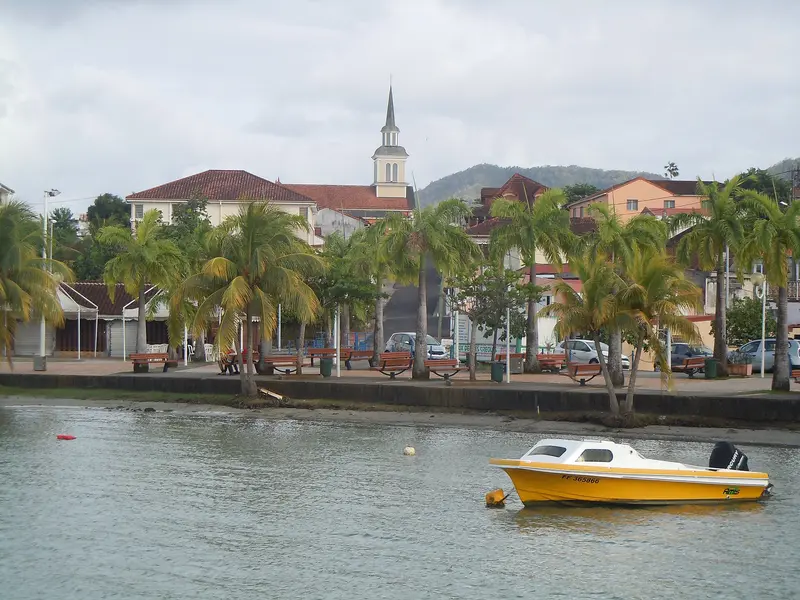
Patrice78500 / Wikimedia Commons / CC BY-SA 4.0, mod.
Round trip · Martinique
Island Hopping by Ferry: Martinique between Dominica and St. Lucia
by Felix Gillen
- 6 Days / 5 Nights
- Les Trois-Îlets → Le Diamant
The third leg of island-hopping Guadeloupe, Dominica, Martinique, and St. Lucia by regular ferry. On Martinique, you'll stay in Les Trois-Îlets, opposite Fort-de-France, and reach the capital with the Navettes across the bay. From here, you'll visit the south with Le Diamant and Sainte-Anne, and in the north, Saint-Pierre at the foot of Montagne Pelée.
At a glance
- Duration
- 6 Days / 5 Nights
- Stops
- 3 · Les Trois-Îlets → Le Diamant
- Arrival
- Ferry · Fort-de-France, Terminal Inter-Îles (aus Roseau, Dominica)
- Departure
- Ferry · Fort-de-France, Terminal Inter-Îles (nach Castries, St. Lucia)
- Best Time to Go
- February to April
3 stops
Why This Route?
The ferry days from Dominica (Sunday) and to St. Lucia (Friday) leave five nights on Martinique, enough for South, North & Fort-de-France without a domestic flight.
Getting there and back
Open jaw: start and end are in different places
- Arrival
- Ferry · Fort-de-France, Terminal Inter-Îles (aus Roseau, Dominica)Scheduled ferry from Roseau, Sunday 4:45 PM, arriving Fort-de-France 7 PM (approx. 2 hours 15 minutes).
- Departure
- Ferry · Fort-de-France, Terminal Inter-Îles (nach Castries, St. Lucia)Scheduled ferry Friday 1:15 PM from Fort-de-France, arrives Castries 2:45 PM (approx. 1.5 hrs). Passport needed for St. Lucia. Ferry less frequent in maintenance months (June, September, January).
Itinerary
Les Trois-Îlets
Les Trois-Îlets lies in the southwest on the Bay of Fort-de-France and is connected to the capital by ferry in about 20 minutes. You come for the birthplace of Empress Joséphine, the Village de la Poterie, and the beaches and hotels of Anse Mitan and Pointe du Bout.The commune takes its name from three islets in the bay and has been independent since 1849. It includes the town center, Anse Mitan, the marina at Pointe du Bout, and Anse à l'Âne.
Base opposite Fort-de-France, accessible by shuttle across the bay.
2 Sights
2 Restaurants
Joséphine and Pottery Art
La PagerieEmpress Joséphine was born on this estate in 1763. The museum in the former kitchens shows family portraits and Napoleon's letters, and since 2021, an exhibition about the enslaved people of the plantation.Village de la PoterieSince 1783, clay has been processed here on the grounds of a former Jesuit monastery; artisans work in the Creole cottages, and admission is free.
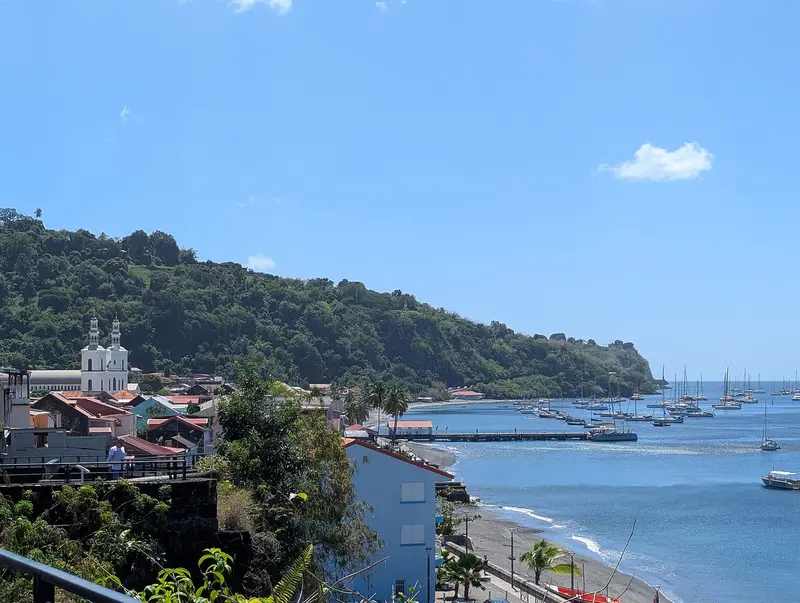
Saint-Pierre
Saint-Pierre is located on the northwest coast north of Fort-de-France at the foot of Montagne Pelée. Until 1902, it was the island's economic and cultural center, the "Petit Paris" of the Antilles. You come for the ruins left by the volcanic eruption of May 8, 1902, and for the Mémorial that documents the catastrophe.The town was founded in 1635 by Belain d'Esnambuc as the first permanent French settlement on Martinique. The glowing cloud killed almost the entire population. Today, Saint-Pierre holds the "Ville d'art et d'histoire" label.
Day trip to the Ruins of 1902 and to Montagne Pelée.
4 Sights
The 1902 Disaster and World Heritage
The 1902 EruptionOn May 8, 1902, a pyroclastic cloud from Montagne Pelée destroyed the island's then economic and cultural capital in minutes; Lonely Planet reports 28,000 deaths. Among the survivors was the prisoner Cyparis, whose cell near the theater ruins remains intact.Ruins and MuseumVisitors can see the ruins of the theater, the Quartier du Fort, and the 18th-century stone Pont de Pierres, which survived the eruption. The Mémorial de la catastrophe de 1902 (Musée Frank A. Perret) was founded in 1933.World HeritageIn 2023, UNESCO inscribed the volcanoes and forests of Montagne Pelée and the Pitons in northern Martinique onto the World Heritage List as natural heritage.
Plan this route as your trip
All stops, trains and nights go into your trip planner. You adjust dates and places to stay afterwards.
This route is a suggestion from our research. Please check timetables, times in port, opening hours and prices before you book – what your tour operator or carrier says is what counts.
Fernweh is a free travel guide and trip planner: routes researched by people, taken over in one click, used day by day on the road. More about Fernweh
3 stops
Route Summary
Duration6 Days
Stops3 Places
TypeMixed