From Cancún, you travel by bus and ferry from Chiquilá to Isla Holbox, then to the Caribbean coast to Tulum and inland to Valladolid. From there, it's a good 40 kilometers to Chichén Itzá: If you stay a night in Pisté, you'll be at the pyramid for its 8 AM opening. After that, the route continues to Mérida and the Puuc site of Uxmal. The longest leg, from Holbox to Tulum, takes about three hours by ferry and around 170 kilometers of road; you can also reach Chichén Itzá and Mérida with the Tren Maya. For Uxmal and the Ruta Puuc, a rental car is worthwhile; you fly back from Mérida.
20 Days / 19 Nights
November–April
7 stops
Why This Route?
For your first Mexico trip: it combines Maya sites, colonial cities, cenotes, and Caribbean coast on good routes.
Hidden Gems
Punta Mosquito, sandbank east of the village on Isla Holbox
Cenote Oxman near Valladolid in the early morning
Kabah on the Ruta Puuc, a good 20 kilometers south of Uxmal
Getting there and back
Open jaw: start and end are in different places
Arrival
Flight · Cancún (CUN)From Cancún Airport, you travel to the city by bus or taxi; the Tren Maya station Cancún Aeropuerto is connected by a free shuttle.
Departure
Flight · Mérida (MID)From Uxmal, it's about 80 kilometers back to Mérida and to the airport.
Itinerary
Stop 1 • 2 Nights
Cancun
City
Perfect for unwinding and relaxation. For adventure seekers and Perfect for an exciting city trip.
Planned as a 1970s resort, Cancún is now Quintana Roo's largest city, home to nearly 900,000. Its two worlds: the Zona Hotelera, on a narrow isthmus between the Caribbean and the lagoon, and El Centro (downtown), where residents live and work. The airport is the most important gateway to the peninsula.
11 Sights
14 Restaurants
History and Daily Life
A Planned CityUntil the late 1960s, only a few fishermen lived on the headland. The Mexican government selected the location via computer analysis as a new tourism hub, and the first hotels opened in 1974. Workers came from all over the country, many from Yucatán, Tabasco, and Chiapas.Maya HeritageWithin the hotel zone are the small sites of El Rey and San Miguelito; to the north is El Meco. The Museo Maya showcases regional finds.
Dreamy beaches. Stunning nature and outdoors and Perfect for unwinding and relaxation.
Holbox is a narrow island, approximately 40 kilometers long, off the north coast of Quintana Roo, between the Caribbean and the Gulf of Mexico. In its only village, golf carts and bicycles travel over sand roads instead of cars. The island belongs to the Yum Balam protected area and is known for its shallow beaches, flamingos, and the summer whale shark season.
4 Sights
3 Restaurants
Culture & Character
From Fishing Village to Tourist DestinationHolbox once thrived on fishing; today, tourism shapes the island. Cars are not permitted on the island; travel is by golf carts and scooters on sandy roads. The island is part of the Yum Balam protected area, established in 1994; since the early 2000s, whale sharks off the coast have attracted visitors.MuralsMany house walls are adorned with murals, some of which were created during an international festival for public art.
Rich in culture and history. Perfect for unwinding and relaxation and For adventure seekers.
Tulum is located on the Caribbean coast of the Yucatán Peninsula, south of Cancún on the Riviera Maya. It is known for its Maya ruins on a cliff directly above the sea, for cenotes in the hinterland, and a long beach lined with boutique hotels and beach clubs. Tulum has grown significantly in recent years, with prices increasing accordingly.
5 Sights
7 Restaurants
Chronicle
The Maya Port CityTulum was formerly called Zamá, "Dawn." The city was a trading port in the Late Maya period, protected by a wall on three sides and the cliff to the sea. It was still inhabited when the Spanish reached the coast in the early 16th century.From Village to ResortTulum was long a small village with a few simple cabañas on the beach. Beginning in the 1990s, tourism grew, followed by boutique hotels. This rapid expansion strains groundwater and mangroves; electricity and wastewater are issues in many places.
Rich in culture and history. Perfect for an exciting city trip and Stunning nature and outdoors.
Valladolid, located in the east of the state of Yucatán, is a colonial city with nearly 57,000 inhabitants, colorfully painted houses, and a lively main square. It lies approximately 40 kilometers from Chichén Itzá and is surrounded by cenotes, making it a peaceful base between Cancún and Mérida. Valladolid holds the title of Pueblo Mágico.
7 Sights
5 Restaurants
Culture & Character
HistoryThe Spanish founded Valladolid in 1543 by the Chouac-Ha lagoon and relocated the city in 1545 to the Maya settlement of Zací. The execution of Maya leader Manuel Antonio Ay in Valladolid in 1847 marked the beginning of the Caste War, a decades-long uprising of the Maya against Creole rule. 1910 saw one of the first uprisings of the Mexican Revolution here. To this day, the region is heavily influenced by Maya culture; you'll hear a lot of Yucatec in the market.
Rich in culture and history. Rich in history and historical sites and routes.tagDescriptions.archaeologie.
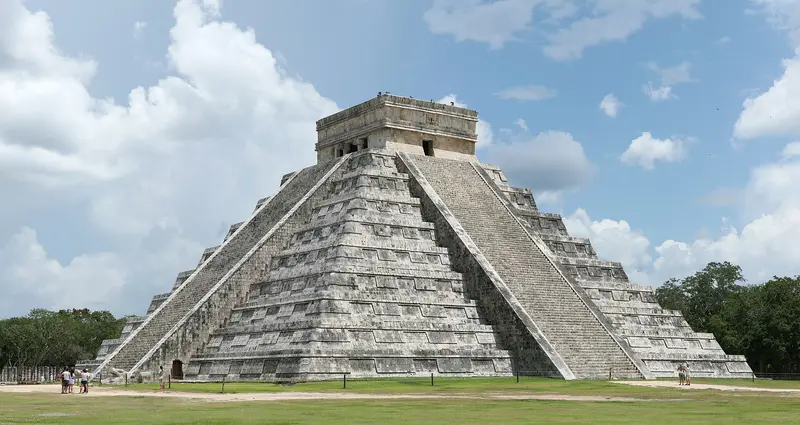
Chichén Itzá, in eastern Yucatán, 120 km from Mérida and over 40 km from Valladolid, was one of the Maya's most powerful centers from the 9th-12th centuries. You come for the stepped pyramid El Castillo, the 168m Great Ball Court, and the Sacred Cenote, a day trip doable from Mérida, Valladolid, or Cancún. Since 1988, it's been a UNESCO World Heritage Site; in 2007, El Castillo was chosen in a private vote as one of the New Seven World Wonders. Around the equinoxes, the afternoon light on the pyramid's north staircase casts the shadow of a descending snake.
Overnight in Pisté, visit for the 8 AM opening.
6 Sights
4 Restaurants
History & Significance
Rise of a Maya MetropolisThe settlement's origins date back to the Classic Period, though most visible structures today were built in the Late Classic and Early Postclassic periods, roughly between 800 and 1100. During this time, Chichén Itzá was the dominant power in the northern part of the peninsula. Between 1100 and 1200, the city lost its supremacy, but the Sacred Cenote remained a pilgrimage site until after the Spanish conquest.Architecture and AstronomyEl Castillo, also known as the Temple of Kukulcán, stands approximately 24 meters tall. Each of its four staircases has 91 steps; combined with the step to the upper temple, this totals 365, the same number as days in the solar year. Around the equinoxes, in the late afternoon, the edges of the steps cast triangular shadows onto the north staircase, appearing like a descending serpent. From the circular structure of El Caracol, the Maya observed solstices, equinoxes, and the path of Venus.World Heritage and World WonderUNESCO inscribed Chichén Itzá onto its World Heritage List in 1988. On July 7, 2007, El Castillo was named one of the New Seven Wonders of the World in a privately organized poll, a title without official status.
Rich in culture and history. Perfect for an exciting city trip and Culinary highlights.
Mérida, capital of the state of Yucatán in the northwest of the peninsula, was founded in 1542 on the ruins of the Maya city T'hó. You come here for the colonial center with churches, plazas, and colorful townhouses, for the Yucatecan cuisine, and for a rich, often free cultural program in the plazas. The city is also a good base for excursions to Maya sites like Uxmal, to cenotes and haciendas.
9 Sights
4 Restaurants
Culture & Essence
White City and Green GoldAfter its conquest by Francisco de Montejo, Mérida became the center of Spanish rule on the peninsula. In the late 19th century, the greatest prosperity came from henequen, an agave fiber for ropes and cords, cultivated on haciendas around the city. The villas on Paseo de Montejo date from this period.Maya culture is present in everyday life: Many people speak Yucatec, and older women wear the embroidered hipil. Every evening, free events take place in the squares, such as the Serenata in Santa Lucía on Thursdays or the Pok-ta-Pok ball game in front of the Cathedral.
Rich in culture and history. routes.tagDescriptions.archaeologie.
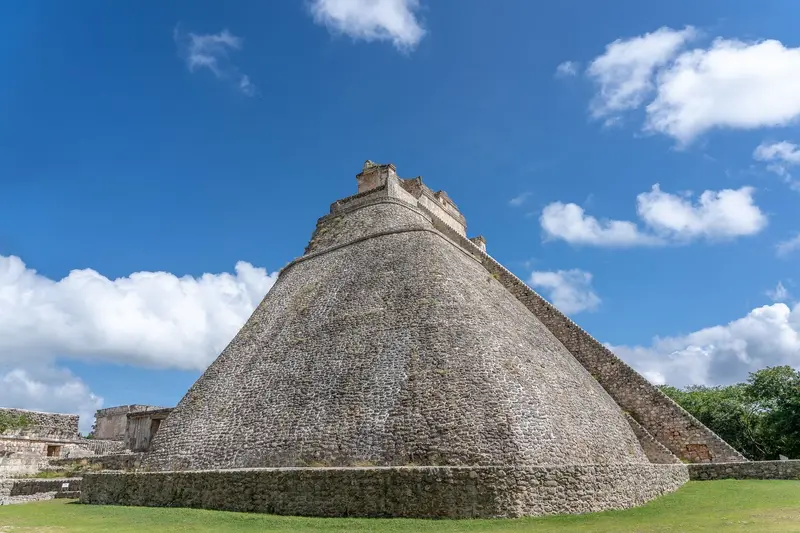
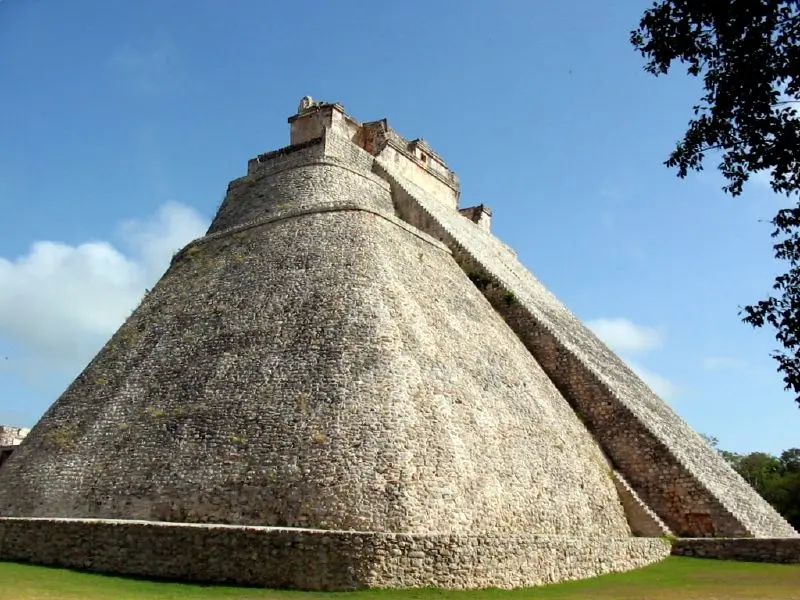
Uxmal, about an hour's drive south of Mérida, was the political center of the Puuc region in western Yucatán from the 8th to 10th centuries. The site is known for its oval Pyramid of the Soothsayer and the finely decorated stone friezes of the Governor's Palace. It has been a UNESCO World Heritage site since 1996.
5 Sights
3 Restaurants
The Story
HistoryUxmal enjoyed its heyday in the Late Classic period, when the Puuc cities in the hills of western Yucatán relied on agriculture and cisterns (chultunes), as rivers and cenotes are absent here. Characteristic of the Puuc style are plain lower facades and richly decorated upper friezes with mosaics. A paved causeway (sacbé) connected Uxmal with the neighboring city Kabáh.