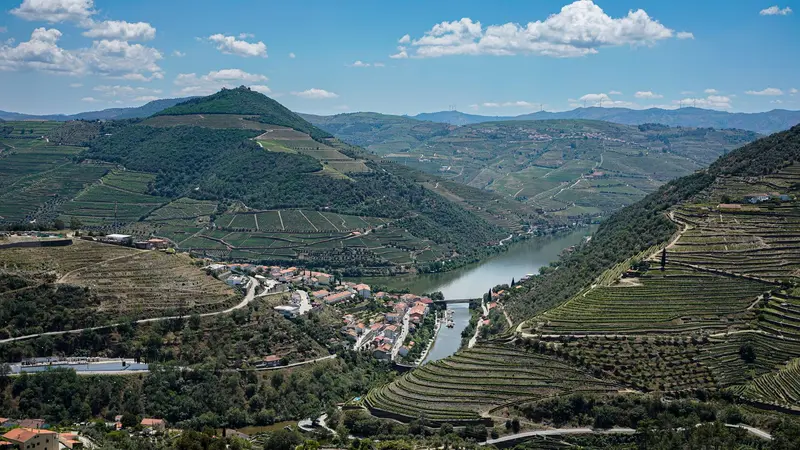
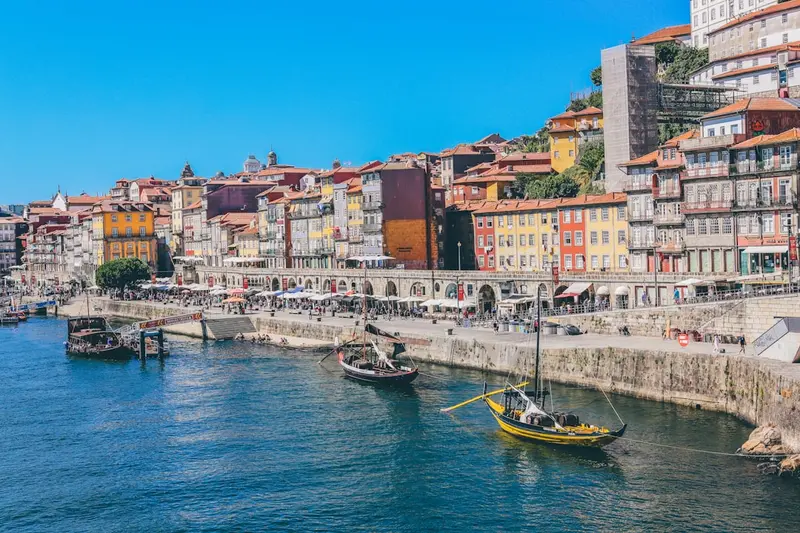
From Porto upstream into the Douro Valley: via Lamego with its pilgrimage staircase to Peso da Régua and Pinhão, amidst the UNESCO World Heritage wine terraces. Short stages allow time for wineries, viewpoints, and a boat trip on the Douro. With ten overnight stays, about one and a half weeks.
11 Days / 10 Nights
April–June & September–October
RV Friendly
4 stops
Why This Route?
For wine enthusiasts who want to combine Porto with the terraces and Quintas of the Douro at a leisurely pace.
Hidden Gems
Miradouro de Casal de Loivos above Pinhão with views of the river bend
Miradouro de São Leonardo de Galafura north of Peso da Régua
Mosteiro de São João de Tarouca near Lamego, an early Cistercian monastery off the pilgrimage route
Itinerary
Stop 1 • 3 Nights
Porto
City
Rich in culture and history. Culinary highlights and Perfect for an exciting city trip.
Porto is Portugal's second-largest city, on the steep banks of the Douro shortly before its mouth. Porto's Old Town, its Ribeira district, the Ponte Dom Luís I, and Serra do Pilar Monastery are UNESCO World Heritage since 1996. Opposite in Vila Nova de Gaia, Port wine houses store their wine. Plan time for the hills: Many paths lead steeply uphill.
12 Sights
4 Restaurants
Culture and History
Porto was a port and trading city, the country's name deriving from the Roman settlement Portus Cale. From the 17th century, the port wine trade with England shaped the city; many wineries still carry British names today. In the 18th century, Baroque master builder Nicolau Nasoni designed the Torre dos Clérigos, which became its landmark.The residents jokingly call themselves Tripeiros, tripe-eaters, after the dish Tripas à moda do Porto. The biggest festival is the Night of São João from June 23rd to 24th, when the city celebrates until morning, playfully taps heads with plastic hammers, and a fireworks display lights up the Douro at midnight. You'll find modern architecture in Rem Koolhaas' Casa da Música and in buildings by Álvaro Siza, such as the museum in Serralves.
Lamego is located in the hills south of the Douro, about twelve kilometers from Peso da Régua. Its landmark is the Sanctuary of Nossa Senhora dos Remédios, ascended by a long baroque staircase with azulejos and fountains. Other attractions include a cathedral with a Romanesque tower, a good art museum, and a small castle. The region is also known for its sparkling wine.
4 Sights
5 Restaurants
Culture and History
Lamego is one of Portugal's oldest episcopal cities. According to legend, the first Cortes convened here in 1143 and proclaimed Afonso Henriques king, although historians consider the document to be a later forgery.The highlight of the year is the Romaria de Nossa Senhora dos Remédios from late August to early September, featuring processions, concerts, and a fair. Typical for the city is the Bola de Lamego, a bread dough filled with meat.
Peso da Régua is the largest city on the middle Douro and the gateway to the wine region. Since the 18th century, it has been a center of the Port wine trade; today, the Museu do Douro explains the history and landscape of the valley. The city itself is rather functional, but very practical as a starting point for boat trips, Quintas, and viewpoints.
5 Sights
4 Restaurants
Culture and History
After the Marquês de Pombal had the wine region demarcated in 1756, Régua developed into the most important trading post on the river. From here, Rabelo boats carried wine downstream to Gaia; later, the railway took over transport. The Museu do Douro is housed in a former warehouse, and the Casa do Douro building commemorates the institution that controlled the region's viticulture in the 20th century.September and October are harvest months, when the surrounding estates are bustling with activity.
Pinhão is a small town at the confluence of the Pinhão and Douro rivers, amidst the vineyards of the Upper Douro Valley. It's home to some of the most renowned Port wine Quintas, many situated right on the river. Its train station is famous for its Azulejo tile panels illustrating winemaking. Pinhão is quiet and an excellent base for winery visits, boat tours, and walks through the terraced vineyards.
3 Sights
5 Restaurants
Culture and History
Pinhão grew as a hub for wine, transported from here by Rabelo boat and later by rail to Vila Nova de Gaia. The railway reached the town in the 19th century. The Azulejos at the 20th-century station depict the grape harvest, transport, and the Douro landscape.For the grape harvest in September and October, the Quintas are particularly active; on some estates, the grapes are still trodden by foot in granite vats.