Photo by Jakob Stöberl on Pexels
Night train trip
By night train to Stockholm, back via Gothenburg and Malmö
by Felix Gillen
- 8 Days / 7 Nights
- Berlin → Berlin
In the evening, the Snälltåget departs from Berlin, traveling via Hamburg through Denmark and over the Great Belt and Öresund bridges to Sweden, arriving in Stockholm in the early afternoon. After three nights in the capital, you travel across the country to the west coast, to Gothenburg, and then on to Malmö. From there, the same night train brings you back to Berlin in the evening. Two overnight journeys, three cities, and two archipelagos, entirely flight-free.
At a glance
- Duration
- 8 Days / 7 Nights
- Stops
- 5 · Berlin → Berlin
- Countries on the route
- Sweden, Germany, Denmark
- Arrival
- Train · Berlin Hbf
- Nights on a night train or ferry
- 2
- Best Time to Go
- May to September. The Snälltåget runs from Easter until early January, almost daily in summer
More on when to go
It pauses in winter.
5 stops
Why This Route?
The route links Stockholm to the relaxed West Coast and Malmö, a bridge from Copenhagen. You'll ride the trains, ferries, and trams Swedes use, reaching the archipelago on a standard transit ticket. The night train turns the long journey into a night in bed.
Hidden Gems
- The Djurgården ferry from Slussen, included with the Stockholm public transport ticket
- the southern Gothenburg archipelago like Styrsö and Vrångö, accessible by tram and ferry at city rates and car-free
- the Ribersborgs Kallbadhus in Malmö, a wooden bathhouse on stilts in the Öresund with sauna
Getting there and back
Round trip, returning to where you started
- Arrival
- Train · Berlin HbfThe Snälltåget departs from Berlin Hbf and stops at Hamburg Hbf, where you can also board. It does not run daily: In November and December 2026 from Berlin on Mondays, Thursdays, Fridays, and Sundays, and almost daily in summer. Tickets are available at snalltaget.se. Alternatively, the RDC Euronight travels from Hamburg to Stockholm; however, its service for November 2026 was only bookable until mid-December.
- Departure
- Train · Berlin HbfThe night train from Malmö reaches Hamburg around 5 AM and Berlin Hbf in the morning. Departures from Malmö in Nov/Dec 2026 on Wednesdays to Fridays and Sundays, almost daily in summer; plan the nights in Gothenburg and Malmö accordingly.
Itinerary
Start
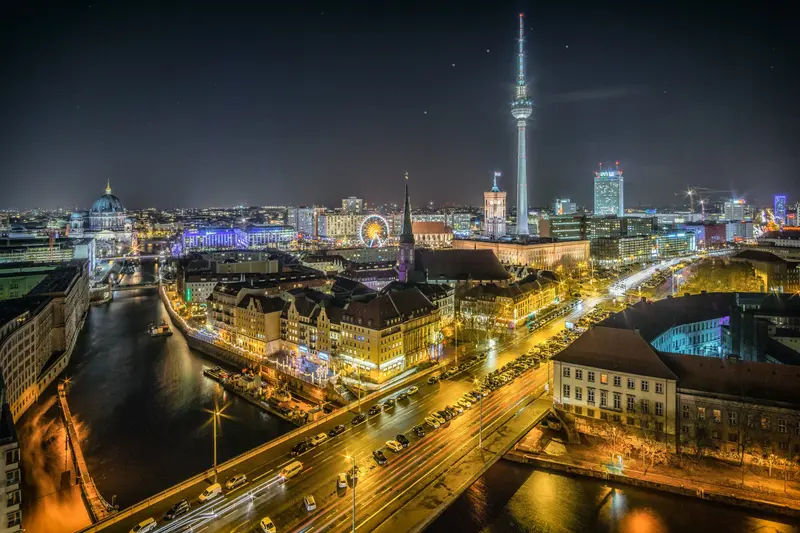
Berlin
Evening departure at the main station. It's best to bring your own provisions for the night and breakfast.
Night train
Snälltåget D 300 Berlin Hbf 21:06 → Stockholm C 13:17, via Hamburg and Malmö. Easter to January, not daily (Autumn 2026: Mon, Thu, Fri, Sun).
Stockholm
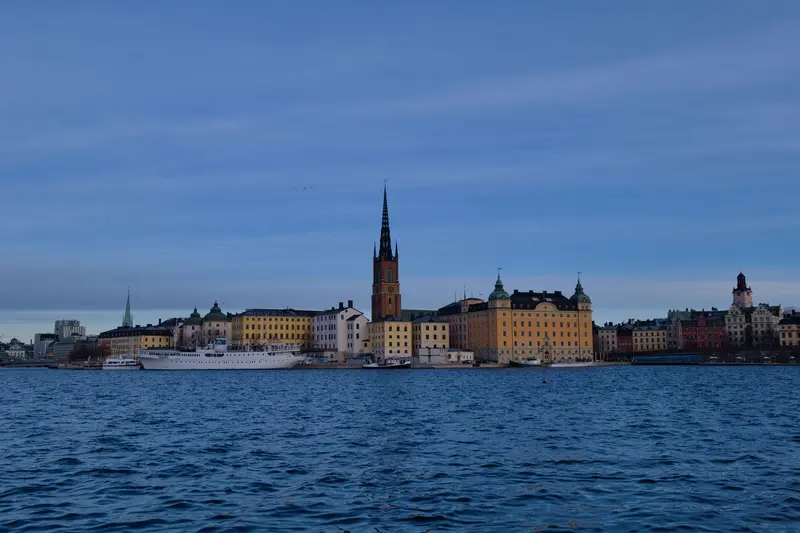
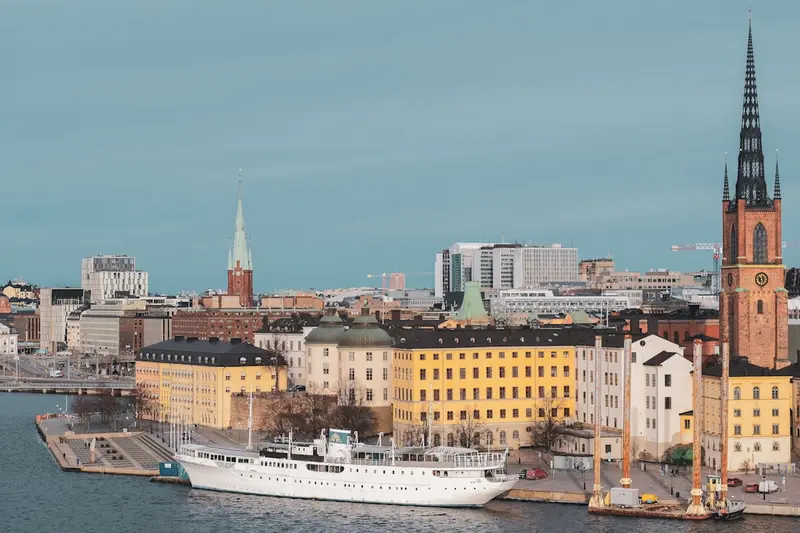
Stockholm, the capital of Sweden, stretches across 14 islands where Lake Mälaren flows into the Baltic Sea, and is often called the "Venice of the North". The city combines the medieval alleyways of Gamla Stan with modern architecture, a rich museum landscape on Djurgården, and plenty of greenery by the water. Directly in front of the city, the archipelago begins, which can be easily explored by ferry as a day trip.
Stay in Södermalm instead of Gamla Stan; that's where you'll find the cafés, second-hand shops, and waterfront viewpoints where Stockholmers gather in the evenings. Eat vegetarian with a harbor view at Hermans and enjoy Fika every afternoon. For a day in the archipelago, take the Waxholmsbolaget ferry to Vaxholm.
7 Sights
6 Restaurants
Culture and History
City Founding and Royal HouseThe official founding year is considered to be 1252, when statesman Birger Jarl first mentioned the city. The baroque Royal Palace in Gamla Stan was built after the Tre Kronor Castle fire in 1697, while Drottningholm Palace, a UNESCO World Heritage site since 1991, is the residence of the royal family.Nobel PrizeThe prizes are awarded at Konserthuset, and the subsequent Nobel Banquet takes place in Stadshuset, inaugurated in 1923. You can visit the City Hall on guided tours.Museums and Underground ArtSkansen on Djurgården is considered the world's oldest open-air museum, and the Vasa Museum displays the warship Vasa, which sank in 1628.Around 100 subway stations are adorned with mosaics, sculptures, and paintings, which is why the Tunnelbana is also known as the world's longest art exhibition.
Train
SJ Express train Stockholm C – Göteborg C, approx. 3 to 3.5 hours, several times daily.
Göteborg
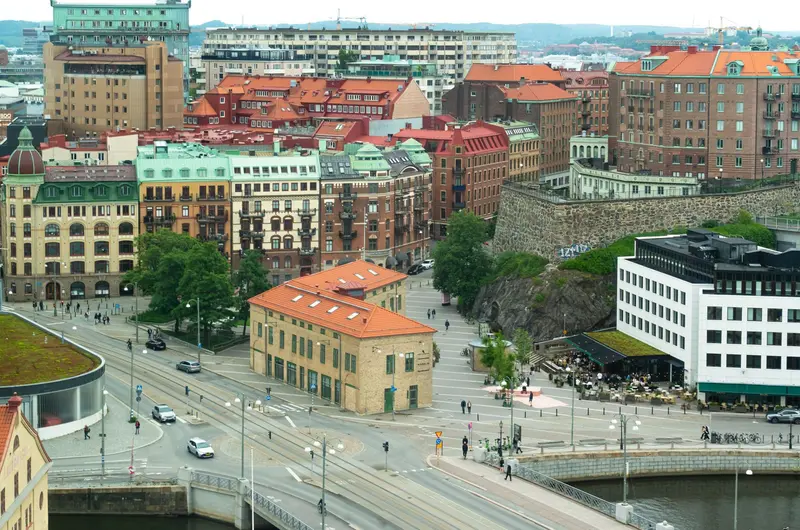
Gothenburg, Sweden's second-largest city, is shaped by its maritime heritage and characteristic canals. Here, you'll discover a mix of historic charm and modern city life. The Haga district, with its cobblestone streets and well-preserved wooden houses, invites you to a traditional Fika. Along the grand boulevard Avenyn, you'll find numerous shops, restaurants, and cultural institutions. The Feskekôrka, a fish market hall shaped like a church, offers fresh seafood. For a glimpse into nature and the archipelago landscape, it's best to take a ferry to the nearby islands. Exploring the city on foot or with the efficient trams is recommended to experience Gothenburg's diverse facets.
Stroll through Haga with its wooden houses and on to Majorna, where the Gothenburgers live and have flea markets and cafés. The West Coast thrives on the sea: try a shrimp sandwich (räksmörgås) or head to Fiskekrogen for fish and shellfish. You can reach the car-free southern archipelago by tram and ferry at the regular public transport fare.
5 Sights
3 Restaurants
Gothenburg's Cultural Heritage
Göteborg, 1621 von König Gustav II. Adolf gegründet, verdankt seine Stadtstruktur und frühe Architektur maßgeblich niederländischen Ingenieuren und Siedlern. Das zeigt sich bis heute in den Kanälen und den Steinbauten entlang des Stora Hamnkanalen. Die Stadt entwickelte sich schnell zu einem bedeutenden Handelszentrum, was ihren weltoffenen Charakter prägte.Im 19. Jahrhundert erlebte Göteborg durch Industrialisierung und Hafenausbau einen starken Aufschwung. Diese Zeit zeigt sich in Neorenaissance- und Jugendstilbauten, aber auch in den typischen Landshövdingehus: dreigeschossigen Häusern mit steinernem Erdgeschoss und Holzetagen darüber. Die maritime Vergangenheit prägt die Stadt bis heute, sichtbar etwa im Seefahrtsmuseum.Das kulturelle Leben wird von zahlreichen Galerien und dem Göteborgs konstmuseum am Götaplatsen geprägt, das eine bedeutende Sammlung nordischer Kunst beherbergt. Fest verankert ist die Kaffeepause Fika, besonders in Vierteln wie Haga mit seinen Holzhäusern und Kopfsteinpflastergassen.
Train
Öresundståg or SJ train Göteborg C – Malmö C, approximately 2.5 to 3 hours.
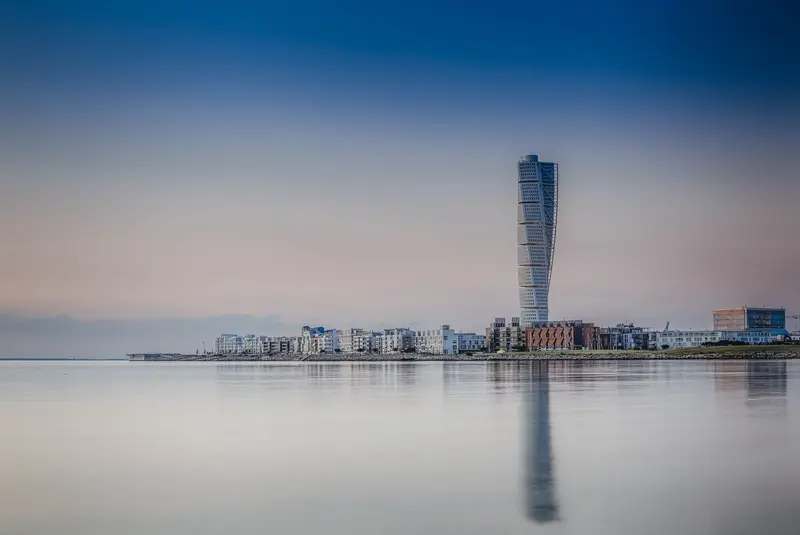
Malmö
Malmö has a good 360,000 inhabitants, making it Sweden's third-largest city, and lies on the Öresund, about 40 minutes by train from Copenhagen. The old town around Stortorget and Lilla Torg, the Renaissance castle Malmöhus and the Turning Torso residential tower in the Västra Hamnen harbour district show the range of the city. More than a third of residents were born abroad, which is clearly noticeable in its markets, snack bars and restaurants.
Möllevången is the district with a market on Möllevångstorget and global cuisines. For lunch, head to Malmö Saluhall near the station, or for Swedish home cooking, Wirtshaus Bullen on Storgatan. In the evening, bathe at Kallbadhus on Ribersborgsstrand.
7 Sights
4 Restaurants
Culture and History
From Herring City to Bridge CityMalmö was a Danish trading city in the Middle Ages, sustained by herring fishing. The brick Gothic of Sankt Petri kyrka dates from this era, and the merchant houses around Lilla Torg from the following centuries of Danish rule. In 1658, the city fell to Sweden. In the 20th century, the Kockums shipyard shaped the cityscape until civil shipbuilding ended in 1986. With the Öresund Bridge (2000) and the redevelopment of the shipyard area into Västra Hamnen, Malmö reinvented itself.Cultural LifeModerna Museet Malmö and the Konsthall showcase contemporary art, while Malmö Live Konserthus presents classical and pop music. In August, the Malmöfestivalen city festival transforms the city centre for a week into an open-air stage with free admission.
Night train
Snälltåget D 301 Malmö C 21:55 → Berlin Hbf 8:35 (Hamburg 5:05). Not daily (Autumn 2026: Wed–Fri and Sun).
Plan this route as your trip
All stops, trains and nights go into your trip planner. You adjust dates and places to stay afterwards.
This route is a suggestion from our research. Please check timetables, times in port, opening hours and prices before you book – what your tour operator or carrier says is what counts.
Fernweh is a free travel guide and trip planner: routes researched by people, taken over in one click, used day by day on the road. More about Fernweh
5 stops
Route Summary
Duration8 Days
Stops5 Places
TypeMixed