Photo by Fabricio Rivera on Pexels
Round trip · Uruguay
Classic Uruguay: Montevideo, Colonia and the Atlantic Coast
by Felix Gillen
- 11 Days / 10 Nights
- Montevideo → Cabo Polonio
The tour connects the capital with the World Heritage site Colonia del Sacramento and then leads to the Atlantic coast, from Punta del Este via José Ignacio to Cabo Polonio. All stages are doable by long-distance bus; for detours to wineries and small coastal towns, a rental car is practical.
At a glance
- Duration
- 11 Days / 10 Nights
- Stops
- 5 · Montevideo → Cabo Polonio
- Arrival
- Flight · Montevideo Carrasco (MVD)
- Best Time to Go
- December to March
5 stops
Why This Route?
It covers Uruguay's three facets: the capital with its Old Town and Mercado del Puerto, colonial Colonia on the Río de la Plata, and the Atlantic coast from glamorous Punta del Este to the village without a road.
Hidden Gems
- Sundays, the Feria de Tristán Narvaja in Montevideo
- sunset at Casapueblo in Punta Ballena
- on foot from Barra de Valizas across the dunes to Cabo Polonio
Getting there and back
Round trip, returning to where you started
- Arrival
- Flight · Montevideo Carrasco (MVD)Carrasco Airport is about 19 km from the center; by bus 45 minutes, by taxi 20 to 30 minutes. Those coming from Buenos Aires can alternatively take the ferry to Colonia or Montevideo.
- Departure
- Flight · Montevideo Carrasco (MVD)From Rocha, the bus trip back to Montevideo takes about 3 hours; allow ample time for your return to Carrasco Airport.
Itinerary
Montevideo
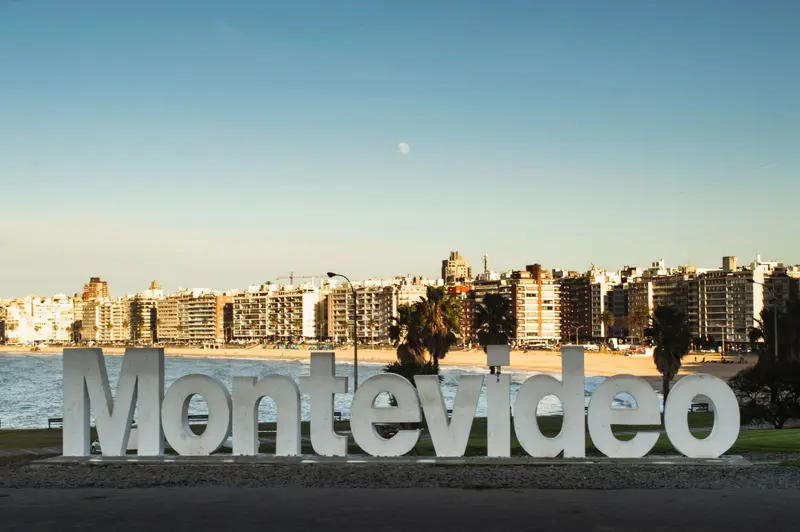
Montevideo is the capital of Uruguay and, with around 1.3 million inhabitants in the Departamento, by far the country's largest city. The colonial Ciudad Vieja is located on a peninsula on the Río de la Plata; from there, the Rambla stretches approximately 22 km along the waterfront, passing through Pocitos and Punta Carretas to Carrasco. You come for the Old Town with Teatro Solís and Mercado del Puerto, for Candombe and Carnival, the football history at Estadio Centenario, and the waterfront promenade.
Ciudad Vieja, Teatro Solís, Mercado del Puerto, Rambla; Half-day trip to a nearby winery.
14 Sights
4 Restaurants
Culture & Events
Candombe and CarnivalThe Candombe, a UNESCO Cultural Heritage since 2009, is at home in the neighborhoods of Barrio Sur and Palermo; according to Lonely Planet, drum groups gather there on Sunday late afternoons. Carnival lasts from late January into March and is considered the longest in the world. It begins with a parade on Avenida 18 de Julio, while the Murga competitions take place at the Teatro de Verano. During the Llamadas in early February, Comparsas parade through Barrio Sur and Palermo for two nights.FootballThe Estadio Centenario, opened in 1930, hosted the first World Cup final; Uruguay won 4:2 against Argentina. The Primera División season runs from May to December, according to Lonely Planet.Semana Criolla and Noche de la NostalgiaDuring Holy Week, also known as Semana de Turismo, the Semana Criolla featuring rodeo takes place at Rural del Prado. On August 24th, the eve of the national holiday, the city celebrates the Noche de la Nostalgia.
Colonia del Sacramento
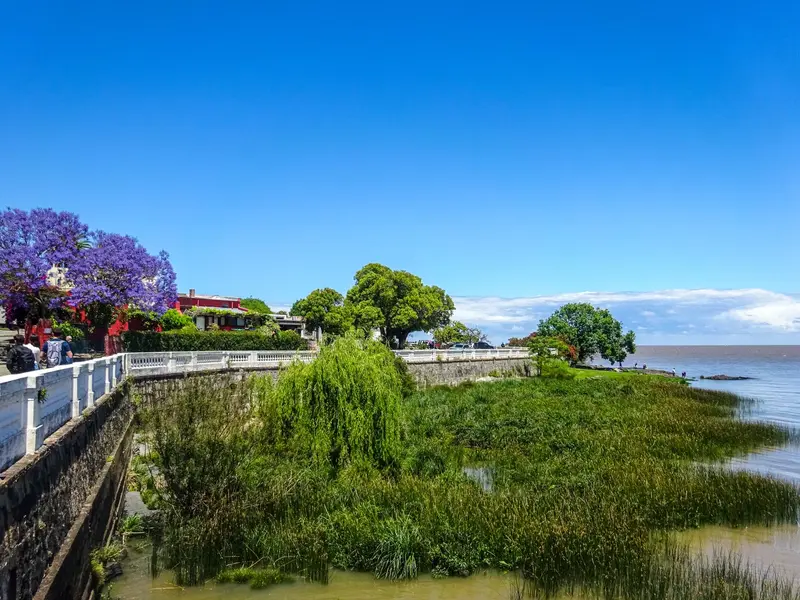
Colonia del Sacramento is located approximately 180 km west of Montevideo on the Río de la Plata, opposite Buenos Aires. Portuguese founded the city in 1680; its Barrio Histórico, with cobblestone streets, city gate, and lighthouse, has been a UNESCO World Heritage site since 1995. UNESCO recognizes the city plan, adapted to the terrain and defense, which deviates from the Spanish grid pattern, and the blend of Portuguese and Spanish architecture.
Bus from Tres Cruces Terminal, approx. 2.5 hrs. Historic Quarter, Lighthouse, Real de San Carlos.
5 Sights
3 Restaurants
History and Culture
Bone of Contention Between Two Colonial PowersManuel Lobo founded Colonia in 1680 for Portugal as an outpost opposite Buenos Aires. The city subsequently changed hands multiple times between Portugal and Spain; both architectural traditions still shape the Barrio Histórico today.Real de San CarlosIn the north of the city lies Real de San Carlos, home to the bullring opened in 1910, where bullfighting was already banned in 1912. After several years of restoration, it has been an event venue since December 2021, with a museum on the arena's history from February 2026.Wine and EstanciasThe Departamento Colonia is Uruguay's second most important wine region after Canelones. Approximately 30 minutes away is the Los Cerros de San Juan winery, according to La Nación the oldest Bodega in the country, founded in 1854.
Punta del Este
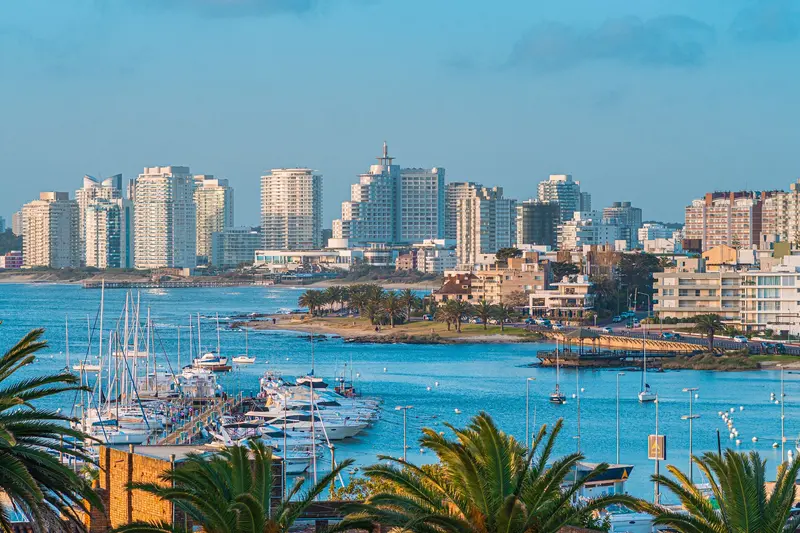
Punta del Este is Uruguay's most famous seaside resort, located about 140 km east of Montevideo on a peninsula at the transition from the Río de la Plata to the Atlantic. The peninsula separates the calm Playa Mansa on the bay from the open Playa Brava, featuring the sculpture La Mano. Popular excursions include Casapueblo in Punta Ballena, the sea lions of Isla de Lobos, and the Wavy Bridge of La Barra.
Back to Montevideo (around 2.5 hours), then by bus to Punta del Este (about 1.5 to 2.5 hours). La Mano, Casapueblo, Harbor.
7 Sights
3 Restaurants
Art and Season
Kunst an der KüstePunta del Este ist eng mit bildender Kunst verbunden: Die Hand am Strand La Brava schuf der Chilene Mario Irarrázabal 1982, Casapueblo in Punta Ballena baute der Künstler Carlos Páez Vilaró ab 1958. Lonely Planet empfiehlt außerdem die Fundación Pablo Atchugarry und das Arboretum Lussich in der Umgebung.HochsaisonJanuar und Februar sind Hochsaison an der Küste, mit dem Höhepunkt in der ersten Februarhälfte. Außerhalb des Sommers ist es deutlich ruhiger.WaleVon Juli bis Oktober ziehen Südkaper an der Küste vorbei; Lonely Planet nennt Punta Ballena als guten Beobachtungspunkt.
José Ignacio
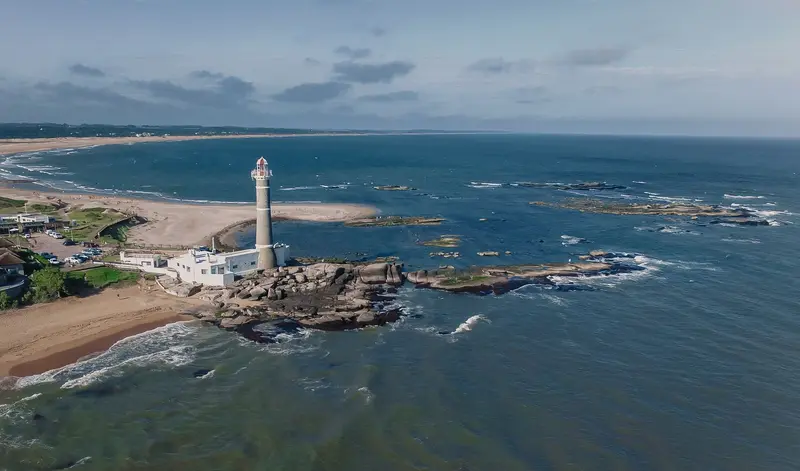
José Ignacio is a former fishing village on a small headland about 30 minutes east of Punta del Este. Lonely Planet describes the place as a seaside resort with casual luxury. At its tip stands a climbable lighthouse from 1877, and to the east, a circular bridge crosses the Laguna Garzón.
Around 30 minutes east of Punta del Este. Lighthouse, Laguna Garzón.
2 Sights
1 Restaurant
Site and Season
From Fishing Village to Summer DestinationThe former fishing village is now a quiet, upscale summer resort. Its most famous spot is Parador La Huella on Playa Brava, open since 2001 and ranked 83rd on Latin America's 50 Best extended list in 2025.SeasonActivity peaks mainly in January and February; according to El Observador, La Huella serves over 1,000 guests a day during peak season; Fodor's recommends a reservation. Outside of summer, many establishments are closed.
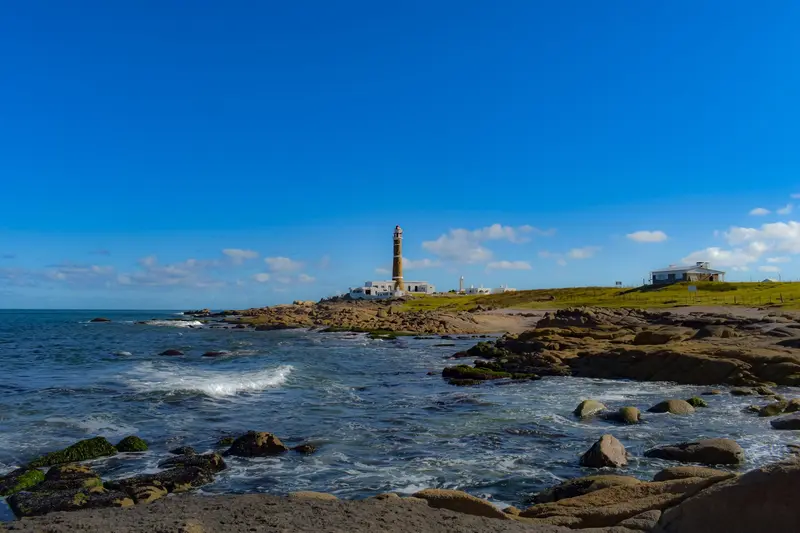
Cabo Polonio
Cabo Polonio is a small village on a headland on Rocha's Atlantic coast, surrounded by dunes, and a National Park since 2009. No road exists: you reach it by 4x4s over the dunes. The 1881 lighthouse hosts a sea lion colony, and with no central power, homes and businesses use solar panels.
On Ruta 10 to Terminal Puerta del Polonio, then 20 to 30 minutes by 4x4 through the dunes. Lighthouse and sea lions.
1 Sight
Living without roads or power
National ParkCabo Polonio has been a National Park since July 2009, covering approximately 25,800 ha. The park has neither an electricity nor a water network; camping is forbidden. Many establishments are only open during summer.ShipwrecksOn the coast between Barra de Valizas and Cabo Polonio lies the wreck of the "Don Guillermo", stranded in 1952.
Plan this route as your trip
All stops, trains and nights go into your trip planner. You adjust dates and places to stay afterwards.
This route is a suggestion from our research. Please check timetables, times in port, opening hours and prices before you book – what your tour operator or carrier says is what counts.
Fernweh is a free travel guide and trip planner: routes researched by people, taken over in one click, used day by day on the road. More about Fernweh
5 stops
Route Summary
Duration11 Days
Stops5 Places
TypeMixed