Fernweh: Home
ExploreGuideDestinationsMy tripsMy trip
de|en
All Places & RegionsRound tripsNight trains in EuropeAll highlightsAbout FernwehFAQPrivacy PolicyImprint
Download on the App StoreGet it on Google Play
ExploreGuideDestinationsMy tripsMy trip
    • Places & highlights
    • Tours
    • Eat & drink
    • Culture
    • Getting around
    • Accommodation
    • Nearby
    Batad

    CEphoto, Uwe Aranas / Wikimedia Commons / CC BY-SA 4.0, mod.

    Philippines

    Batad

    Point of Interest

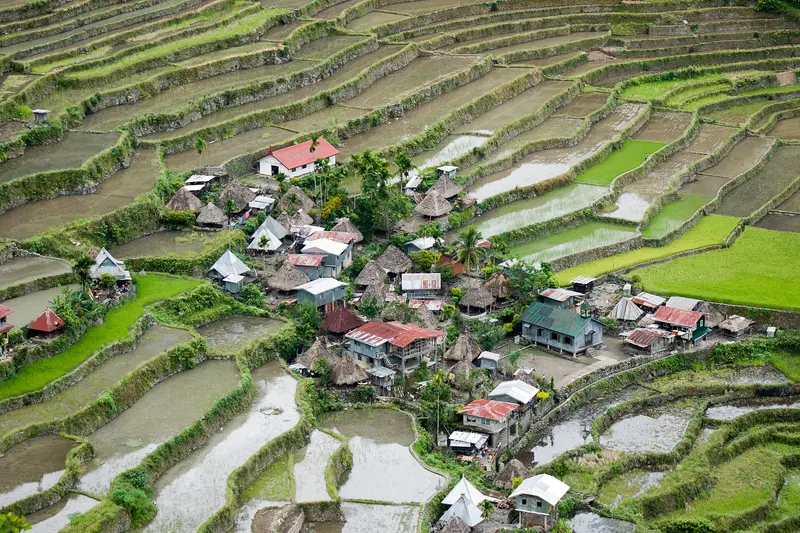
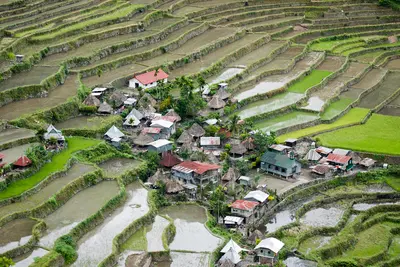
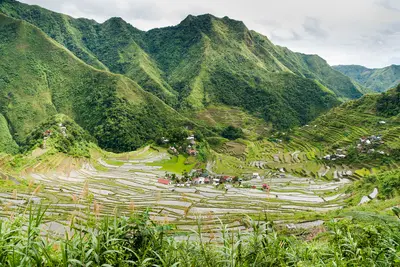
    Batad is an Ifugao village in the mountains of Northern Luzon, whose rice terraces semicircularly embrace the valley basin like an amphitheater.

    by Felix Gillen

    1. Home
    2. Destinations
    3. Philippines
    4. North Luzon
    5. Batad
    Batad is an Ifugao village in the mountains of Northern Luzon, whose rice terraces semicircularly embrace the valley basin like an amphitheater. The terraces are among the five groups of the UNESCO World Heritage Rice Terraces of the Philippine Cordilleras and are only accessible on foot.From the Batad Saddle above the village, you descend in about 20 minutes. The terraces are greenest from August to November; between December and March, many fields lie fallow.
    Philippines travel guideRound trips in PhilippinesPlan a trip with Batad

    Contents

    • Places & highlights
    • Tours
    • Eat & drink
    • Culture
    • Getting around
    • Accommodation
    • Nearby

    Sights in Batad

    Discover the most important sights and attractions

    1Tappiya Falls

    The waterfall below Batad is the classic hiking destination in the valley. The hike from the village takes 1 to 1.5 hours each way over terrace walls and stairs, a local guide costs about 600 Pesos.
    Open in Google Maps
    Natural Feature

    2Batad Rice Terraces

    The amphitheater-like terraces of Batad belong to the UNESCO World Heritage Rice Terraces of the Philippine Cordilleras. From Batad Saddle, descend 20 minutes to the village; paths lead over the terrace walls from there. Greenest from August to November, the environmental fee is about 50 Pesos.
    Open in Google Maps

    Tours & experiences in Batad

    Search tours for Batad on GetYourGuide* (Affiliate link)On GetYourGuide, with reviews from other travellers

    * Affiliate link: if you book through it, we earn a small commission. The price stays the same for you.

    Restaurants in Batad

    Amphitheater Village

    World Heritage TerracesUNESCO describes Batad as a semicircular, amphitheater-like terrace system with a village at the foot of the fields. The Ifugao cultivate the terraces to this day; paths lead over the narrow terrace walls.Respect in the VillageBatad is an inhabited farming village. Stay on the paths, do not enter the fields, and ask before you photograph people.

    Practical

    Trekking to BatadFrom Banaue, a tricycle takes you to Batad Saddle, from there, you descend to the village in about 20 minutes. Allow more time for the uphill return.Tappiya FallsThe path from the village to the waterfall takes 1 to 1.5 hours each way over terrace walls and stairs.A guide costs around 600 Pesos, good footwear is important, as the stones are slippery when wet.The environmental fee for Batad is approximately 50 Pesos.

    Accommodations in Batad

    Find perfect stay in Batad

    Booking.com* (Affiliate link)
    Search Hotels
    Agoda* (Affiliate link)
    Search Hotels
    Airbnb
    Vacation Rentals

    * Affiliate link: if you book through it, we earn a small commission. The price stays the same for you.

    Nearby

    Banaue

    Banaue

    Banaue in Ifugao Province is the gateway to the rice terraces of the Philippine Cordilleras. The Ifugao have cultivated their fields along the mountain slopes for generations; UNESCO estimates them at around 2,000 years old, though archaeological studies date many terraces significantly younger. Due to modern development, the famous terraces at Banaue's viewpoint are not part of the World Heritage site, but the neighboring villages of Batad and Bangaan are.Overnight buses travel from Manila to Banaue in about nine hours. From there, a tricycle takes you to Batad Saddle, and then it's a walk down into the amphitheater of Batad's terraces.

    CEphoto, Uwe Aranas or alternatively © CEphoto, Uwe Aranas·CC BY-SA 4.0

    North Luzon

    North Luzon

    Northern Luzon stretches from the Cordillera mountains to the west coast of the Ilocos Region. In Ifugao province, the rice terraces of Batad and Banaue climb the slopes; five terrace clusters have been UNESCO World Heritage Sites since 1995. On the coast lies Vigan, according to UNESCO the best-preserved example of a planned Spanish colonial city in Asia, and nearby stands the Baroque church of Paoay.From Manila, you can reach both destinations by overnight bus in about nine hours. For the terraces, August to November are the greenest months; for the Ilocos coast, the dry season is from December to May.

    CEphoto, Uwe Aranas·CC BY-SA 4.0

    Vigan

    Vigan

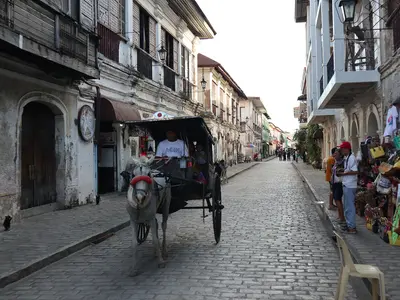
    Vigan, on the west coast of Northern Luzon, is a 16th-century Spanish colonial city and, according to UNESCO, the best-preserved example of a planned colonial city in Asia, a World Heritage site since 1999. On Calle Crisologo, stone houses with wooden upper floors line up, and horse-drawn carriages (Calesas) roll over the cobblestones.Around Plaza Salcedo and St. Paul Cathedral, you can explore the old town on foot, see the traditional Burnay jars being made at Pagburnayan pottery, and try Vigan Empanada. From Manila, you travel by bus for about eight to ten hours.

    Patrickroque01·CC BY-SA 4.0

    Manila

    Manila

    Manila is the capital of the Philippines and the heart of the Metro Manila metropolitan region on Manila Bay. This is where almost every journey begins: In the walled old city of Intramuros, Fort Santiago and the UNESCO World Heritage-listed San Agustin Church tell of over 300 years of Spanish colonial rule, and the National Museums at Rizal Park showcase the country's art and history with free admission.Just north of the Pasig River lies Binondo, founded in 1594 and touted as the world's oldest Chinatown. In Quiapo, the Basilica of the Black Nazarene draws hundreds of thousands every January 9th for the Traslación procession. The modern districts of Makati and Bonifacio Global City in the south of the metropolis are centers of the burgeoning restaurant scene, which the Guide Michelin first reviewed in 2026.

    Ralff Nestor Nacor·CC BY-SA 4.0

    Intramuros

    Intramuros

    Intramuros, "within the walls," is Manila's Spanish-fortified Old City on the Pasig's south bank. Behind bastions like Baluarte de San Diego stand Fort Santiago with dungeons, the cell of national hero José Rizal and the Wall of Martyrs; San Agustin Church, part of the UNESCO World Heritage Baroque Churches of the Philippines; the colonial house museum Casa Manila; and the Manila Cathedral.The district is easily walkable; a walking tour from Rizal Park to Fort Santiago is about 2.3 kilometers. The Intramuros Administration manages the attractions, offering free guided tours on weekends.

    Vyacheslav Argenberg·CC BY 4.0

    Your next steps

    Batad is in Philippines. Ways to carry on from here.

    • More in Philippines

      Highlights, areas, routes and the best time to travel for all of Philippines.

      Philippines travel guide
    • Round trips in Philippines

      Ready-made routes through Philippines, with stops, nights and a map.

      See the routes
    • Plan a trip with Batad

      The Guide asks about season, length and who is coming, and suggests a trip with Batad.

      Plan the trip
    Sources & method

    • Photos: Wikimedia Commons. Each photo carries its credit.
    • Place data such as addresses and ratings comes from Google Maps.
    • The content is based on web research from public, traceable sources. How the content is made · The role of AI