Fernweh: Home
ExploreGuideDestinationsMy tripsMy trip
de|en
All Places & RegionsRound tripsNight trains in EuropeAll highlightsAbout FernwehFAQPrivacy PolicyImprint
Download on the App StoreGet it on Google Play
ExploreGuideDestinationsMy tripsMy trip
    • Places in the region
    • Getting around
    • Nearby
    Karst

    JYB Devot / Wikimedia Commons / CC BY-SA 4.0, mod.

    Slovenia

    Karst

    Region

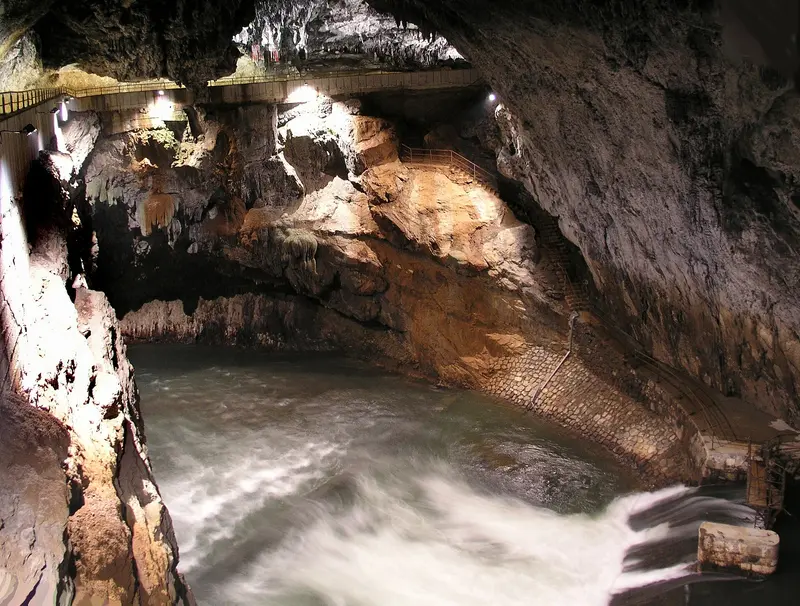
    In the Karst between Ljubljana and the Adriatic Sea lie Slovenia's most famous caves: Postojna Cave, with a railway operating since 1872, and the Škocjan Caves, featuring the underground canyon of the Reka River.

    by Felix Gillen

    1. Home
    2. Destinations
    3. Slovenia
    4. Karst
    In the Karst between Ljubljana and the Adriatic Sea lie Slovenia's most famous caves: Postojna Cave, with a railway operating since 1872, and the Škocjan Caves, featuring the underground canyon of the Reka River. Additionally, there's Predjama Castle and the Lipica Stud Farm, founded in 1580, home of the Lipizzaners.
    Slovenia travel guidePlan a trip with Karst

    Contents

    • Places in the region
    • Getting around
    • Nearby

    Sights in Karst

    Discover the most important sights and attractions

    Attraction

    Postojna Cave (Postojnska jama)

    The cave system is over 24 km long, with about 5 km accessible to visitors. Since 1872, a cave train travels about 2 km into the interior; the tour takes approx. 1.5 hours at around 10 °C. In the vivarium, you'll see the olm.
    Open in Google Maps
    Park

    Caves of Škocjan (Škocjanske jame)

    In the caves, the Reka flows through an underground canyon, crossed via the Cerkvenik Bridge. The guided tour is approx. 5 km long, features about 1,000 steps, and lasts 2-3 hours at around 12 °C. Admission 16-24 € depending on month; January and February tours at 10 AM and 1 PM.
    Open in Google Maps
    Castle

    Predjama Burg

    The castle can be combined with Postojna Cave, both are operated by the same company. Admission per operator: Adults €24, Children 6-15 years €14.40.
    Open in Google Maps
    Museum

    The Lipica Stud

    The stud farm, founded in 1580 by Archduke Charles II, is home to the Lipizzaners; over 300 horses reside here (Tourist Office). Since 2022, Lipizzaner breeding is UNESCO Intangible Cultural Heritage. Nov-March: Weekend guided tours at 10 AM, 12 PM, 2 PM.
    Open in Google Maps

    Exploring on site

    Postojna Cave and Predjama CastleBoth are marketed by the same operator and can be combined. Inside Postojna Cave, a train travels about 2 km into the interior; it's around 10 °C inside, so bring a jacket.Škocjan CavesThe caves can only be visited with a guided tour; the circuit is about 5 km long and has approximately 1,000 steps. In January and February, tours start at 10 AM and 1 PM; it is closed on January 1st and December 25th.LipicaIn winter (from November 2nd), guided tours at the stud farm are only available on weekends at 10 AM, 12 PM, and 2 PM.

    Nearby

    Trieste

    Trieste

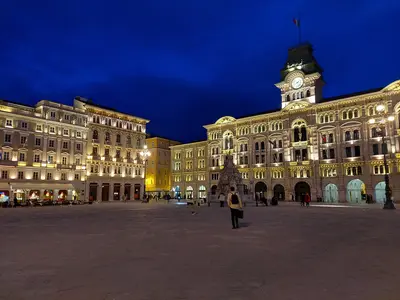
    Trieste is the capital of Friuli-Venezia Giulia and is located on the Gulf of Trieste, directly on the Slovenian border. From 1382 to 1918, the city belonged to Habsburg; from 1719, it was its free port, and you can still see this era today in the neoclassical palaces, on the Canal Grande in Borgo Teresiano, and in the traditional coffee houses.The city's heart is Piazza Unità d'Italia, open to the sea. Above it, on San Giusto hill, are the Cathedral, Castle, and Roman Theatre; along the coast is Miramare Castle. The tram to Opicina ascends to the Karst.
    Meri Valenti (TCI)·CC BY 4.0

    Slovenian Coast

    Slovenian Coast

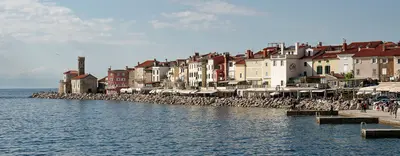
    Slovenia's nearly 47 km long Adriatic coast stretches from Koper, via Izola and the Strunjan Cliff, to Piran and Portorož. On the border with Croatia lies the Sečovlje Salina Landscape Park.

    Jakub Hałun·CC BY 4.0

    Piran

    Piran

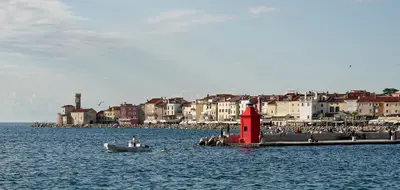
    Piran, on the Slovenian Adriatic, is considered by Marco Polo and Lonely Planet one of the country's highlights. Above the largely car-free old town is the 14th-century Church of St. George, with its 46 m high bell tower modeled on St. Mark's in Venice; you can walk along sections of the city walls.

    Jakub Hałun·CC BY 4.0

    Motovun

    Motovun

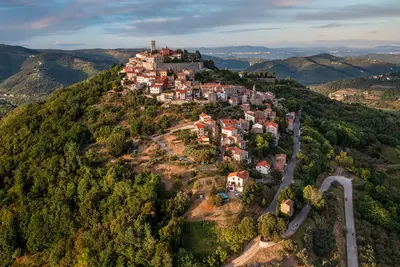
    Motovun is a walled hilltop town in inland Istria, high above the Mirna Valley. Via the preserved town walls, you can walk around the town and look out far over vineyards and the truffle forest in the valley.A few kilometers northwest lies Grožnjan, known since the 1960s as a city of artists with galleries and summer music events.

    Ekaterina Polischuk·CC BY-SA 4.0

    Opatija

    Opatija

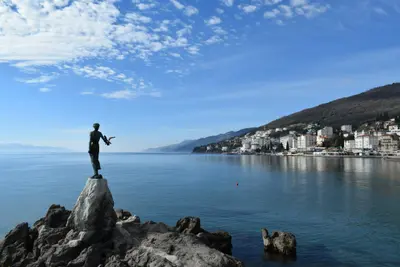
    Opatija is a seaside resort on the Kvarner Bay west of Rijeka, which became a spa town for the Habsburg society in the 19th century. Villas, grand hotels, and parks still define the waterfront today.The Lungomare coastal path stretches twelve kilometers along the water, from Volosko to Lovran.

    Kristina Kutleša·Unsplash

    Your next steps

    Karst is in Slovenia. Ways to carry on from here.

    • More in Slovenia

      Highlights, areas, routes and the best time to travel for all of Slovenia.

      Slovenia travel guide
    • Plan a trip with Karst

      The Guide asks about season, length and who is coming, and suggests a trip with Karst.

      Plan the trip

    Sources & method

    • Photos: Wikimedia Commons. Each photo carries its credit.
    • Place data such as addresses and ratings comes from Google Maps.
    • The content is based on web research from public, traceable sources. How the content is made · The role of AI