Fernweh: Home
ExploreGuideDestinationsMy tripsMy trip
de|en
All Places & RegionsRound tripsNight trains in EuropeAll highlightsAbout FernwehFAQPrivacy PolicyImprint
Download on the App StoreGet it on Google Play
ExploreGuideDestinationsMy tripsMy trip
    • Places in the region
    • Culture
    • Getting around
    • Nearby
    Wine Region Canelones

    Cristinabodega / Wikimedia Commons / public domain

    Uruguay

    Wine Region Canelones

    RegionCulinary

    The Departamento Canelones, north and east of Montevideo, is Uruguay's most important wine region; most of the production comes from here.

    by Felix Gillen

    1. Home
    2. Destinations
    3. Uruguay
    4. Wine Region Canelones
    The Departamento Canelones, north and east of Montevideo, is Uruguay's most important wine region; most of the production comes from here. Many wineries are less than an hour from the capital and offer tours, tastings, and lunches, with Tannat being the leading grape. On the coast of Canelones, in Atlántida, stands the Cristo Obrero Church by Eladio Dieste, a UNESCO World Heritage site since 2021.
    Uruguay travel guideRound trips in UruguayPlan a trip with Wine Region Canelones

    Contents

    • Places in the region
    • Culture
    • Getting around
    • Nearby

    Sights in Wine Region Canelones

    Discover the most important sights and attractions

    Bodega Bouza

    “Bodega Bouza - Montevidéu, Uruguai - panoramio” by Paulo JC Nogueira / Wikimedia Commons / CC BY-SA 3.0, mod.

    Bodega Bouza

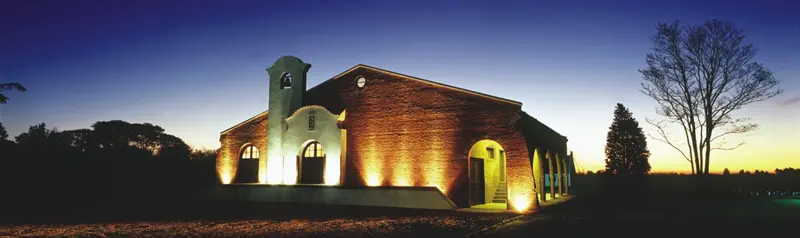
    According to Lonely Planet, the winery in the Melilla district on the northern edge of Montevideo is less than 30 minutes from the city center. It offers guided tours with tastings and a wine-paired lunch.
    Open in Google Maps

    Juanicó Establishment

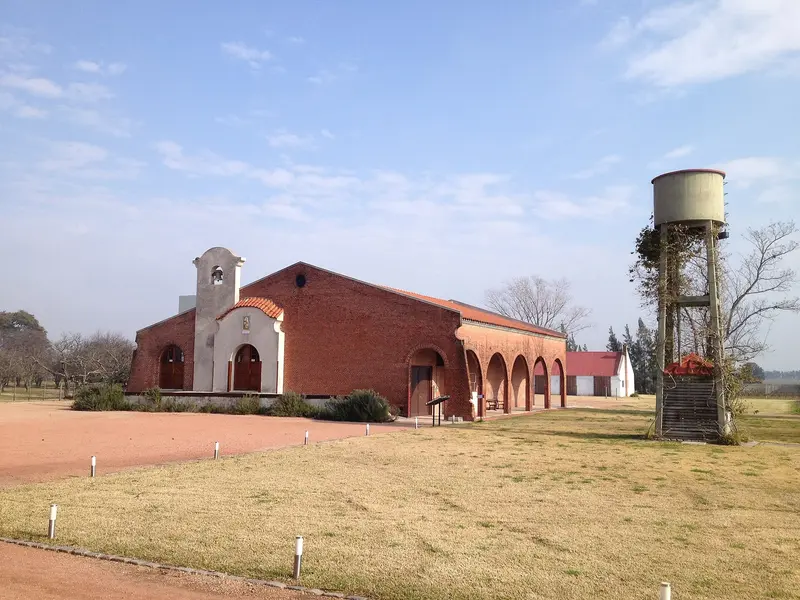
    The Deicas family winery in Juanicó was founded in 1930 on the grounds of a former Jesuit estancia. It offers tours and has its own restaurant.
    Open in Google Maps
    Christ the Worker Church (Atlántida)

    “Parroquia del Cristo Obrero - panoramio” by Andrés Franchi Ugart… / Wikimedia Commons / CC BY-SA 3.0, mod.

    Christ the Worker Church (Atlántida)

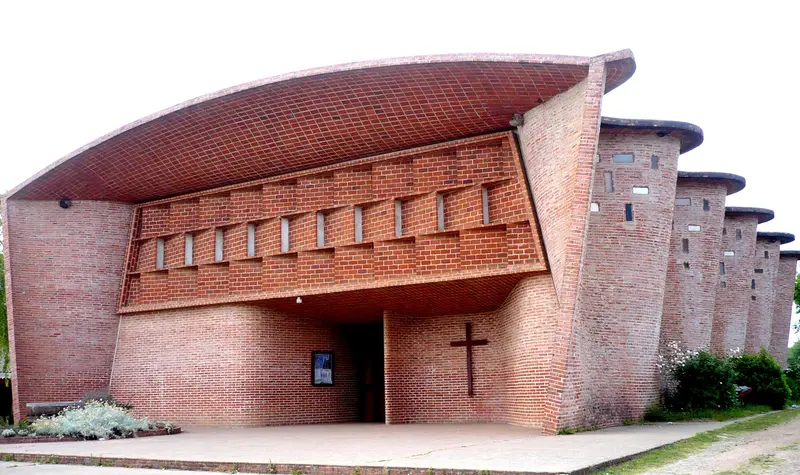
    The engineer Eladio Dieste built the Cristo Obrero Church in Estación Atlántida between 1958 and 1960. Since 2021, it is a UNESCO World Heritage site.
    Open in Google Maps

    Wine Culture

    Tannat from CanelonesMore than 60 percent of Uruguayan wine comes from Canelones. The leading grape is Tannat, which Pascual Harriague brought to Uruguay in 1870. March is the month for grape harvesting; Las Piedras hosts the national Vendimia parade, by law the capital of grape and wine.Winery VisitsAccording to La Nación, 54 bodegas nationwide are open to visitors, many in the Montevideo area. A typical visit includes a tour with tasting and lunch; book in advance.

    Arrival

    From MontevideoMany wineries are less than an hour from Montevideo, Bodega Bouza in Melilla less than 30 minutes according to Lonely Planet. The easiest way to reach them is by rental car or taxi; if you're tasting wine, 0.0 Promille applies in Uruguay.AtlántidaThe Cristo Obrero Church is located in Estación Atlántida on the coast of Canelones, east of Montevideo.

    Nearby

    Montevideo

    Montevideo

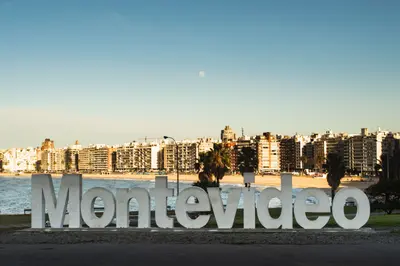
    Montevideo is the capital of Uruguay and, with around 1.3 million inhabitants in the Departamento, by far the country's largest city. The colonial Ciudad Vieja is located on a peninsula on the Río de la Plata; from there, the Rambla stretches approximately 22 km along the waterfront, passing through Pocitos and Punta Carretas to Carrasco. You come for the Old Town with Teatro Solís and Mercado del Puerto, for Candombe and Carnival, the football history at Estadio Centenario, and the waterfront promenade.

    Fabricio Rivera·Pexels

    Punta del Este

    Punta del Este

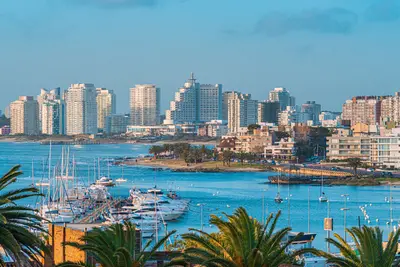
    Punta del Este is Uruguay's most famous seaside resort, located about 140 km east of Montevideo on a peninsula at the transition from the Río de la Plata to the Atlantic. The peninsula separates the calm Playa Mansa on the bay from the open Playa Brava, featuring the sculpture La Mano. Popular excursions include Casapueblo in Punta Ballena, the sea lions of Isla de Lobos, and the Wavy Bridge of La Barra.

    Sergio Arteaga·Pexels

    Colonia del Sacramento

    Colonia del Sacramento

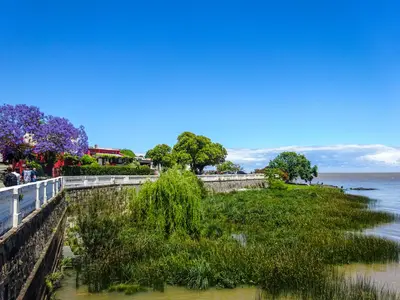
    Colonia del Sacramento is located approximately 180 km west of Montevideo on the Río de la Plata, opposite Buenos Aires. Portuguese founded the city in 1680; its Barrio Histórico, with cobblestone streets, city gate, and lighthouse, has been a UNESCO World Heritage site since 1995. UNESCO recognizes the city plan, adapted to the terrain and defense, which deviates from the Spanish grid pattern, and the blend of Portuguese and Spanish architecture.

    Nikolai Kolosov·Pexels

    José Ignacio

    José Ignacio

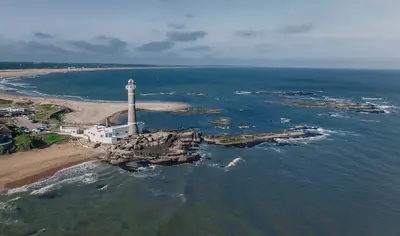
    José Ignacio is a former fishing village on a small headland about 30 minutes east of Punta del Este. Lonely Planet describes the place as a seaside resort with casual luxury. At its tip stands a climbable lighthouse from 1877, and to the east, a circular bridge crosses the Laguna Garzón.

    Murilo Fonseca·Pexels

    La Paloma and La Pedrera

    La Paloma and La Pedrera

    La Paloma is a year-round seaside resort on Cabo Santa María, featuring a harbor, an 1874 lighthouse, and a variety of very different beaches where surfing takes place year-round. A few kilometers northeast, La Pedrera is situated on a rocky cliff above the Atlantic. West of La Paloma stretches Laguna de Rocha, a protected area home to flamingos and black-necked swans.

    Igna·CC BY-SA 4.0

    Your next steps

    Wine Region Canelones is in Uruguay. Ways to carry on from here.

    • More in Uruguay

      Highlights, areas, routes and the best time to travel for all of Uruguay.

      Uruguay travel guide
    • Round trips in Uruguay

      Ready-made routes through Uruguay, with stops, nights and a map.

      See the routes
    • Plan a trip with Wine Region Canelones

      The Guide asks about season, length and who is coming, and suggests a trip with Wine Region Canelones.

      Plan the trip

    Sources & method

    • Photos: Wikimedia Commons. Each photo carries its credit.
    • The content is based on web research from public, traceable sources. How the content is made · The role of AI