Fernweh: Home
ExploreGuideDestinationsMy tripsMy trip
de|en
All Places & RegionsRound tripsNight trains in EuropeAll highlightsAbout FernwehFAQPrivacy PolicyImprint
Download on the App StoreGet it on Google Play
ExploreGuideDestinationsMy tripsMy trip
    • Neighborhoods & highlights
    • Recommendations
    • Eat & drink
    • Culture
    • Getting around
    • Accommodation
    • Plan trip
    • Nearby
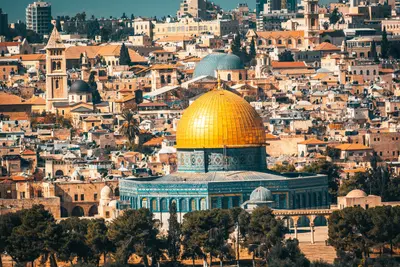
    Old City of Jerusalem

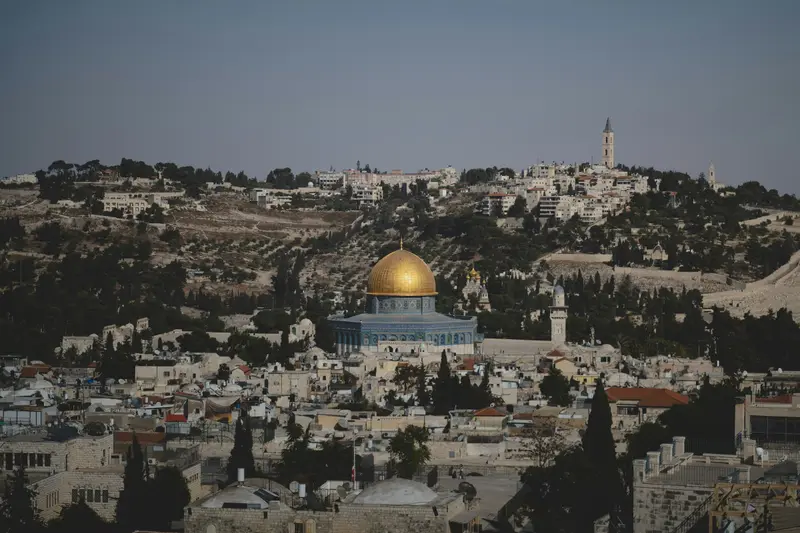
    Photo by Levi Meir Clancy on Unsplash

    Israel

    Old City of Jerusalem

    City

    The walled Old City in the east of Jerusalem packs the holiest sites of Judaism, Christianity and Islam into a tiny area.

    by Felix Gillen

    1. Home
    2. Destinations
    3. Israel
    4. Jerusalem
    5. Old City of Jerusalem
    The walled Old City in the east of Jerusalem packs the holiest sites of Judaism, Christianity and Islam into a tiny area. It is divided into the Jewish, Christian, Muslim and Armenian quarters, named after the affiliation of most of their residents, plus the Temple Mount/Haram al-Sharif. In 1981 the Old City and its walls were added to the UNESCO World Heritage List at the proposal of Jordan.For current travel and safety advice, see the UK Foreign Office (FCDO).
    Israel travel guideRound trips in IsraelPlan a trip with Old City of Jerusalem

    Contents

    • Neighborhoods & highlights
    • Recommendations
    • Eat & drink
    • Culture
    • Getting around
    • Accommodation
    • Nearby

    Sights in Old City of Jerusalem

    Discover the most important sights and attractions

    Synagogue

    1Hurva Synagogue and Cardo

    The Hurva Synagogue, with its prominently visible dome, defines the Jewish Quarter. It was built in 1864, destroyed in 1948, and rebuilt between 2000 and 2010. Very close by is the Cardo, the former Roman main street from the Damascus Gate to the Zion Gate. The section in the Jewish Quarter dates back to Byzantine times and has been restored with shops and cafés. Tip: From the synagogue's dome, you get a panoramic view of the Old City.

    Open in Google Maps
    Attraction

    2Damascus Gate

    The Northern City Gate is considered the Old City's most magnificent gate, built under Suleiman the Magnificent. Beneath the current structure, a 2nd-century gate from Emperor Hadrian's era remains preserved. Behind the gate, the lively market of the Muslim Quarter begins. Practical: The light rail stops directly before the gate.
    Open in Google Maps
    Place of Worship

    3Mount Zion with Cenacle and Dormition

    Gleich vor dem Zionstor liegt der Zionsberg. Im Obergeschoss eines Kreuzfahrerbaus befindet sich der Abendmahlssaal, darunter der Davidsgrab genannte Kenotaph aus dem 12. Jahrhundert. Daneben ragt die Dormitio-Abtei auf, die auf Initiative Kaiser Wilhelms II. entstand und 1910 geweiht wurde, sie erinnert an das Entschlafen Marias. Praxis: Das Dach über dem Abendmahlssaal ist ein wenig besuchter Aussichtspunkt mit Blick über die Altstadt.
    Open in Google Maps
    Point of Interest

    4Austrian Hospice (Rooftop Terrace)

    The Pilgerhaus on the Via Dolorosa dates back to the 1850s and houses a Viennese coffee house. From its rooftop terrace, you have, according to the Times of Israel and the Jerusalem Tourism Authority, one of the best views over the Old City's domes, a peaceful counterpoint to the hustle and bustle of the bazaar alleys.
    Open in Google Maps

    Restaurants in Old City of Jerusalem

    1

    Armenian Tavern

    Highlights: The restaurant in the Armenian Quarter serves Armenian cuisine in a Crusader-era vault, as described by Lonely Planet. It is located on Armenian Patriarchate Street near the Jaffa Gate.
    Show on Google Maps
    2

    Abu Shukri

    Typically: The small hummus place in the Muslim Quarter near the Via Dolorosa has few tables, the New York Times notes its hummus is mortar-made here. Ful and falafel are also served, cash only. Its First Station Cultural Center branch opens Saturdays too.
    Show on Google Maps

    Four Quarters, Three Religions

    Walls and GatesThe current city walls were built by the Ottoman Sultan Suleiman the Magnificent between 1537 and 1541. Seven gates are open: The Jaffa Gate in the west is the main entrance, named after the pilgrims who once came from Jaffa Port. The Damascus Gate in the north is considered the most magnificent, with a gate from Emperor Hadrian's time preserved beneath it. The Dung Gate in the south leads to the Western Wall.The QuartersIn the Jewish Quarter, a section of the Cardo, the Roman main street, runs today with shops and cafés. The Hurva Synagogue was built in 1864, destroyed in 1948, and rebuilt from 2000 to 2010. The Church of the Holy Sepulchre stands in the Christian Quarter; the bazaar alleys and Via Dolorosa lead through the Muslim Quarter. The Armenian Quarter in the southwest is the quietest.Shabbat and Dress CodeOn Shabbat, the Jewish Quarter is quiet, while the Arab bazaar and shops in the eastern part of the city remain open as usual. Photography and electronic devices are prohibited at the Western Wall on Shabbat. For all holy sites: Cover shoulders and knees.

    Arrival and exploring

    ArrivalThe tram stops at City Hall, from there it's a short walk to Jaffa Gate, and directly to Damascus Gate. Taxis can drive through Jaffa Gate into the Old City. If arriving by car, park in the Karta or Mamilla parking garages outside the walls.On Foot Through the AlleysWithin the walls, you walk; the alleys are narrow, winding, and often have steps. Jaffa Gate is the best starting point, both sections of the wall walk also begin there. Sturdy shoes and water are a must in summer; shade is primarily offered by the covered market alleys.

    Accommodations in Old City of Jerusalem

    Find perfect stay in Old City of Jerusalem

    Booking.com* (Affiliate link)
    Search Hotels
    Agoda* (Affiliate link)
    Search Hotels
    Airbnb
    Vacation Rentals

    * Affiliate link: if you book through it, we earn a small commission. The price stays the same for you.

    Plan your trip to Old City of Jerusalem

    Save places, build a route and plan your city trip, all in one place.

    1. 1
      Sunrise over alpine peaks and a sea of clouds
      1234

      Round trip

      12 days · 4 stops

      Saved

      Pick a route

      Pick a ready-made one or save places and plan your own.

      Open bookmarks
    2. 2

      Trip to Old City of Jerusalem

      Live
      • 1Hurva Synagogue and Cardo3 days
      • 2Damascus Gate4 days
      • 3Mount Zion with Cenacle and Dormition5 days
      Budget

      Plan your trip

      The planner sorts stops, days and budget. Plan together in real time.

      Start trip planning
    3. 3
      9:41 No signal
      Old City of Jerusalem
      Available offline

      Photo by Levi Meir Clancy on Unsplash

      Use it on the road

      Download the guide to your phone and use it on site, even offline.

    Nearby

    Jerusalem

    Jerusalem

    Jerusalem is sacred to Judaism, Christianity and Islam alike and the country's most important destination. Within less than a square kilometre, the walled Old City holds the Western Wall, the Church of the Holy Sepulchre and the Temple Mount with the Dome of the Rock, while outside the walls stand major museums such as Yad Vashem and the Israel Museum.The city lies in the hills, a good half hour by express train from Tel Aviv and Ben Gurion Airport. Besides the holy sites, the Mahane Yehuda market, cafés and districts such as Nachlaot shape daily life in the west of the city. The status of Jerusalem under international law is disputed. Bethlehem lies in the West Bank.For current travel and safety advice, see the UK Foreign Office (FCDO).

    Raimond Klavins·Unsplash

    West Jerusalem and Mahane Yehuda

    West Jerusalem and Mahane Yehuda

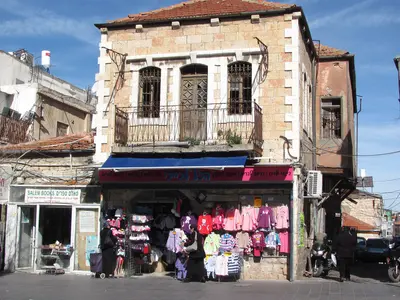
    West of the Old City walls lies modern Jerusalem with Jaffa Road, the Mahane Yehuda market and the lanes of Nachlaot. This is where Jerusalemites do their shopping, and in the evening the market lanes turn into a bar strip. Further south and west are quieter districts such as the German Colony and the village of Ein Kerem, the Knesset and the big museums.For current travel and safety advice, see the UK Foreign Office (FCDO).

    Yoninah·CC BY-SA 4.0

    Ein Gedi

    Ein Gedi

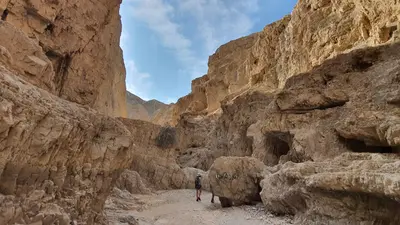
    Ein Gedi is an oasis on the western shore of the Dead Sea, where springs at the foot of the cliffs feed gorges with waterfalls. In the nature reserve of the Nature and Parks Authority you hike through the Nahal David and Nahal Arugot valleys and often meet ibex and rock hyraxes. The neighbouring Kibbutz Ein Gedi tends a botanical garden.For current travel and safety advice, see the UK Foreign Office (FCDO).

    Gil Goldman·Pexels

    Masada

    Masada

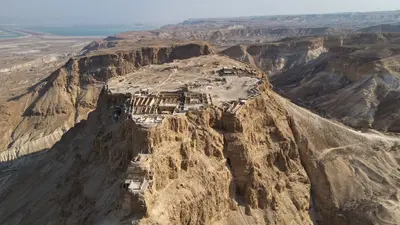
    Masada is King Herod's rock fortress on a mesa above the Dead Sea and has been a UNESCO World Heritage Site since 2001. During the Jewish War the last rebels against Rome held out here until the Roman legion took the fortress in 73 or 74 CE. You reach the plateau by cable car, up the steep Snake Path or from the west via the Roman ramp, and from the top you look out over the desert and the Dead Sea.For current travel and safety advice, see the UK Foreign Office (FCDO).

    Samir Smier·Pexels

    Tel Aviv-Jaffa

    Tel Aviv-Jaffa

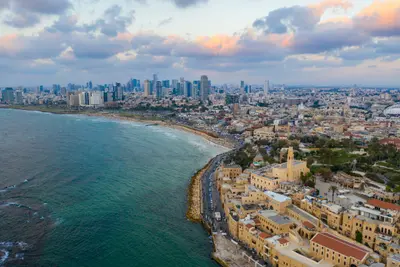
    Tel Aviv-Jaffa is Israel's Mediterranean metropolis: city beaches and a seafront promenade, markets, cafés and a busy nightlife. The White City, with around 3,700 Modernist buildings, is a UNESCO World Heritage Site, and the old port city of Jaffa adjoins it to the south. Ben Gurion Airport is only a short train ride away, which makes Tel Aviv the first stop in the country for most travellers.For current travel and safety advice, see the UK Foreign Office (FCDO).

    Shai Pal·Unsplash

    Your next steps

    Old City of Jerusalem is in Israel. Ways to carry on from here.

    • More in Israel

      Highlights, areas, routes and the best time to travel for all of Israel.

      Israel travel guide
    • Round trips in Israel

      Ready-made routes through Israel, with stops, nights and a map.

      See the routes

    Sources & method

    • Photos: Unsplash. Each photo carries its credit.
    • Place data such as addresses and ratings comes from Google Maps.
    • The content is based on web research from public, traceable sources. How the content is made · The role of AI