Fernweh: Home
ExploreGuideDestinationsMy tripsMy trip
de|en
All Places & RegionsRound tripsNight trains in EuropeAll highlightsAbout FernwehFAQPrivacy PolicyImprint
Download on the App StoreGet it on Google Play
ExploreGuideDestinationsMy tripsMy trip
    • Places in the region
    • Recommendations
    • Culture
    • Getting around
    • Round trips
    • Nearby
    Gobi Desert

    Bernard Gagnon / Wikimedia Commons / CC0

    Mongolia

    Gobi Desert

    Region

    The South Gobi is the destination for most Gobi trips: In Gobi Gurvan Saikhan National Park, established in 1993 and covering around 27,000 square kilometers since 2000, are the Khongoryn Els dunes and Yolyn Am gorge, with its ice…

    by Felix Gillen

    1. Home
    2. Destinations
    3. Mongolia
    4. Gobi Desert
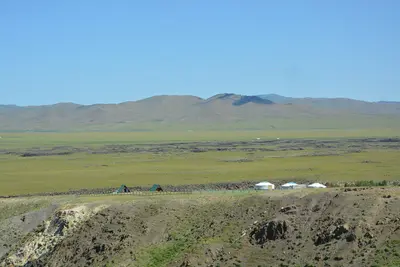
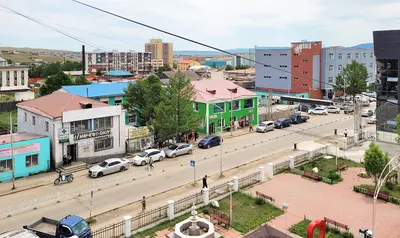
    The South Gobi is the destination for most Gobi trips: In Gobi Gurvan Saikhan National Park, established in 1993 and covering around 27,000 square kilometers since 2000, are the Khongoryn Els dunes and Yolyn Am gorge, with its ice persisting until summer. Northwest of Dalanzadgad glow the Flaming Cliffs of Bayanzag, where dinosaur eggs were found in 1923. On the way from Ulaanbaatar are the colorful cliffs of Tsagaan Suvarga.The starting point is Dalanzadgad, approximately 550 kilometers south of Ulaanbaatar and reachable via asphalt road, or by domestic flight in about 1 hour and 10 minutes. Between destinations, you largely drive on tracks; an off-road vehicle is necessary. Plan three to four days for the South Gobi; May, June, and September are most pleasant.
    Mongolia travel guideSee the round tripPlan a trip with Gobi Desert

    Contents

    • Places in the region
    • Recommendations
    • Culture
    • Getting around
    • Round trips
    • Nearby

    Sights in Gobi Desert

    Discover the most important sights and attractions

    Yolyn Am

    Bernard Gagnon / Wikimedia Commons / CC0

    Yolyn Am

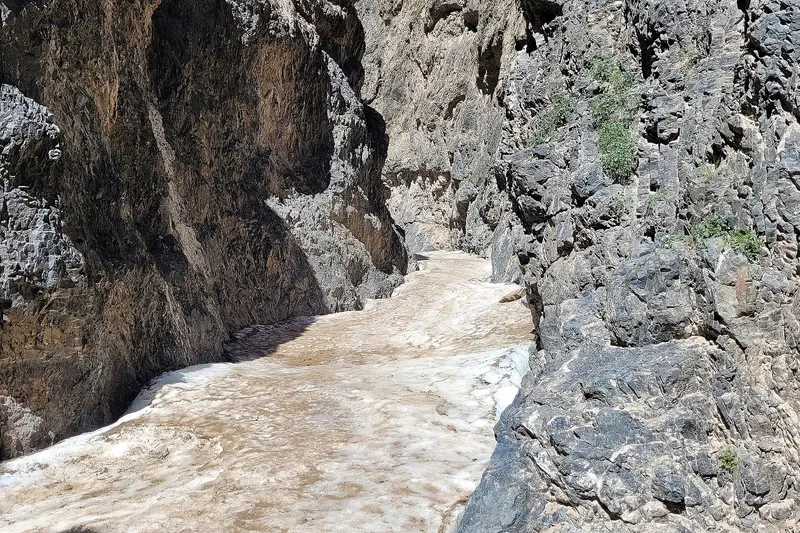
    You reach the gorge, named after the Bearded Vulture, in Gobi Gurvan Saikhan National Park from the parking lot via a path about two kilometers long. At the end of winter, a several-meter-thick ice field lies here, which used to last all year and now mostly disappears over the summer. On the rock walls, you can see the scratch marks of ibexes. If you have more time, you can hike about eight kilometers to the other side.
    Open in Google Maps
    Khongoryn Els

    Bernard Gagnon / Wikimedia Commons / CC0

    Khongoryn Els

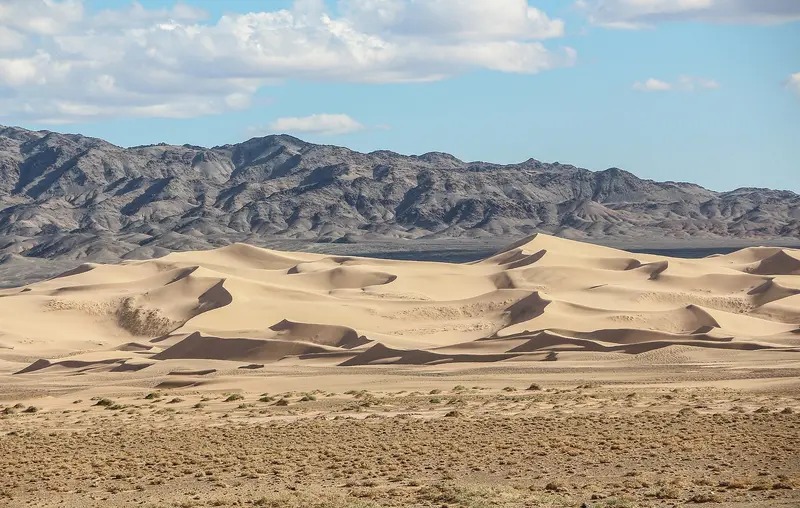
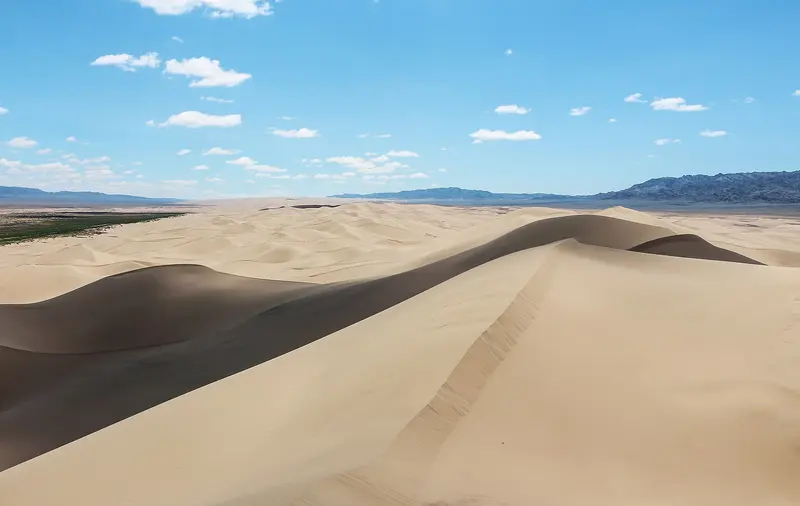
    The Khongoryn Els dunes stretch 100 km, 6-12 km wide. Typically 80m high, they reach 300m at their peak. Known as Duut Mankhan ('singing dunes'), wind and sandslides cause the sand to resonate. Local herder families offer camel rides. Plan 1-2 hours for a ridge climb, depending on fitness; late afternoon is best.
    Open in Google Maps

    Yolyn Am Nature Museum

    The small museum at the entrance to Yolyn Am displays dinosaur eggs and bones, stuffed birds, and a snow leopard. A short stop before you drive into the gorge.
    Open in Google Maps
    Bayanzag (Flaming Cliffs)

    Bernard Gagnon / Wikimedia Commons / CC0

    Natural Feature

    Bayanzag (Flaming Cliffs)

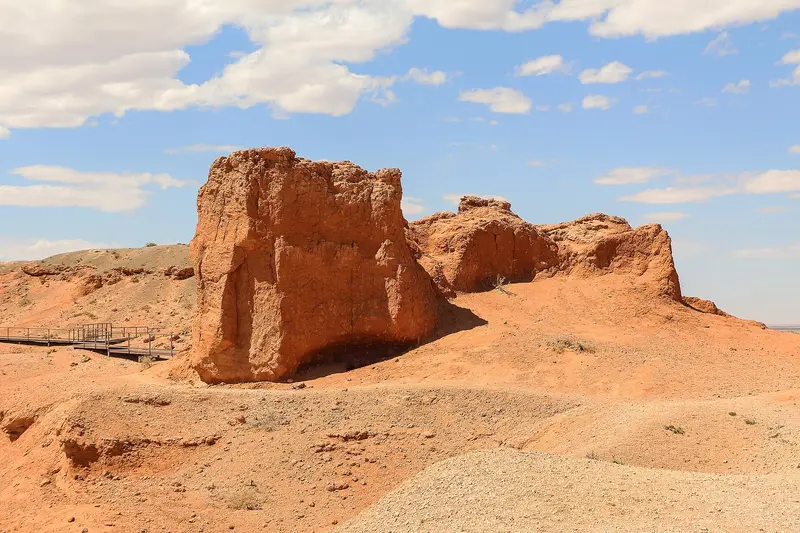
    The red cliffs of Bayanzag are about 100 kilometers northwest of Dalanzadgad. In 1923, Roy Chapman Andrews' expedition found dinosaur eggs here, then attributed to Protoceratops; the same layers also yielded Velociraptor finds. Only part of the route from Dalanzadgad is paved.
    Open in Google Maps
    Attraction

    Tsagaan Suvarga

    A roughly 400-meter long cliff face of white rock with purple, orange, and red stripes in the Dundgobi. Lonely Planet describes it as more colorful and less visited than Bayanzag. From Ulaanbaatar, it's about 426 kilometers, roughly seven to eight hours drive; the last stretch is via a dirt track.
    Open in Google Maps
    Place of Worship

    Ruins of Ongi Monastery

    Ongi Monastery in Dundgobi was founded in 1660 and housed over 1,000 monks at its peak. During the purges of 1939, it was completely destroyed, and more than 200 monks were killed. The ruins stand as a reminder of that era.
    Open in Google Maps

    Nature & Culture

    DinosaursThe American Museum of Natural History expeditions under Roy Chapman Andrews explored the Gobi from 1921 to 1930. In 1923, they discovered dinosaur eggs at the cliffs of Bayanzag. A Tarbosaurus skeleton and Protoceratops eggs are on display at the Natural History Museum in Ulaanbaatar.Camels and FestivalsHerder families by the dunes of Khongoryn Els offer camel rides. Every year, the Thousand Camel Festival takes place in Sum Bulgan, Aimag Ömnögovi. Until 2023, it was held in early March; since 2024, it's in winter before Tsagaan Sar, usually late January or February.

    Arrival and On the Go

    ArrivalFlight Ulaanbaatar to Dalanzadgad: approx. 1 hour 10 minutes.The road journey covers approx. 550 kilometers of asphalt, taking six to seven hours by car, or about eight by bus.Distances in the South GobiDalanzadgad to Khongoryn Els: approx. 180 kilometers.Bayanzag to Khongoryn Els: approx. 150 kilometers; Khongoryn Els to Yolyn Am: approx. 220 kilometers.Bayanzag is located approx. 100 kilometers northwest of Dalanzadgad.Practical InformationA small entrance fee is charged upon entry to Gobi Gurvan Saikhan National Park.Summers are very hot; Dalanzadgad has seen temperatures of nearly 40 degrees. Bring sufficient water, sun protection, and warm clothes for cool nights.

    Round trips through this region

    Ulaanbaatar, Gobi, and Karakorum in 11 days

    Ulaanbaatar, Gobi, and Karakorum in 11 days

    The circuit links the capital with Terelj National Park, the South Gobi by domestic flight, Hustai's Przewalski horses, and the Orkhon Valley World Heritage site with Karakorum. Travel is with a driver and 4x4; the Gobi is reached by flight to Dalanzadgad.

    11 Days
    6 stops

    Uuganbayar Otgonbayar·Pexels

    Nearby

    Kharkhorin (Karakorum)

    Kharkhorin (Karakorum)

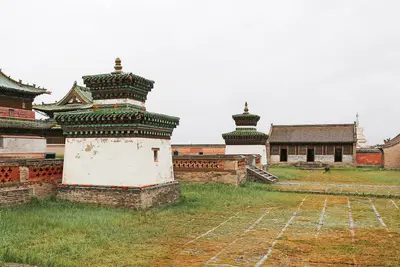
    Kharkhorin is located near the remains of Karakorum, which Ögedei, son of Chinggis Khaan, began to develop into the capital of the Mongol Empire from 1235 with walls and a palace. Little remains of the city, but next to it stands Erdene Zuu Monastery, founded in 1585 and, according to UNESCO, the oldest surviving Buddhist monastery in Mongolia. The Karakorum Museum displays finds and a model of the city around 1250.The site is the most important stop in the Orkhon Valley World Heritage Site and is about 360 kilometers from Ulaanbaatar, a good six to seven-hour drive, mostly on asphalt.

    Bernard Gagnon·CC0

    Orkhon Valley

    Orkhon Valley

    The Orkhon Valley Cultural Landscape has been a UNESCO World Heritage site since 2004. Spread across approximately 1,220 square kilometers of grassland along the Orkhon River are Turkic memorial sites from the 6th and 7th centuries, the Uighur capital of Khar Balgas, the remains of the imperial capital Karakorum, the Erdene Zuu Monastery, and the Tövkhön Hermitage. The valley begins approximately 360 kilometers southwest of Ulaanbaatar.The starting point is the town of Kharkhorin, which you can reach mostly on asphalt roads. To reach the Orkhon Waterfall and Tövkhön, you will need a 4x4 vehicle, as the tracks become muddy after rainfall in July and August.

    Jonashtand·CC BY-SA 4.0

    Hustai National Park

    Hustai National Park

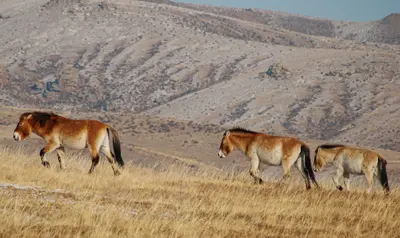
    In Hustai National Park (Khustain Nuruu), about 100 kilometers southwest of Ulaanbaatar, Przewalski's horses, known as Takhi in Mongolian, live here again. The first 16 animals arrived in 1992; by 2000, a Dutch foundation had brought a total of 84 Takhi in five transports. Today, several hundred wild horses live here.Designated a protected area in 1993, the 506 sq km territory became a national park in 1998. The drive is approx. two hours total: asphalt to the turn-off, then gravel. Lonely Planet suggests an overnight stay to observe the horses.

    Tengis Galamez·Unsplash

    Tsetserleg and Tsenkher

    Tsetserleg and Tsenkher

    Tsetserleg is the main town of the Arkhangai Aimag, located on the edge of the Khangai Mountains. Within the Zayain Gegeenii Süm temple complex, the Aimag Museum has showcased regional exhibits across six halls since 1947. The town serves as a stopover on the route from the Orkhon Valley to Lake Terkhiin Tsagaan Nuur.Approximately 27 kilometers to the south, at an elevation of about 1,850 meters, lie the Tsenkher hot springs. Their very hot water is channeled into the pools of the surrounding ger camps, so a natural bathing experience is not what you'll find.

    Bernard Gagnon·CC0

    Ulaanbaatar

    Ulaanbaatar

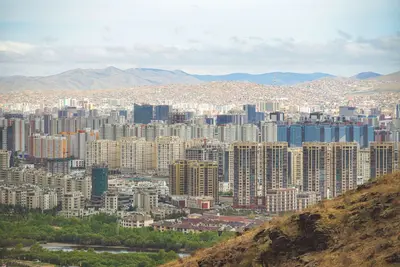
    Around half of Mongolia's population, about 1.7 million people, lives in Ulaanbaatar. For travellers the capital is the arrival point and the starting point of almost every trip across the country. Around Sükhbaatar Square you find the Government Palace, the State Opera and the main museums, to the west Gandan Monastery, and in the south the Winter Palace of the Bogd Khan and the Zaisan Memorial with its view over the city.You can explore the centre on foot; for the sights in the south take a bus or taxi. In winter the city's air is heavily polluted by smog. For current health and safety advice, see the UK FCDO travel advice linked on the country page.

    Uuganbayar Otgonbayar·Pexels

    Your next steps

    Gobi Desert is in Mongolia. Ways to carry on from here.

    • More in Mongolia

      Highlights, areas, routes and the best time to travel for all of Mongolia.

      Mongolia travel guide
    • Round trips with Gobi Desert

      One route passes through Gobi Desert, with stops, nights and a map.

      See the round trip
    • Plan a trip with Gobi Desert

      The Guide asks about season, length and who is coming, and suggests a trip with Gobi Desert.

      Plan the trip

    Sources & method

    • Photos: Wikimedia Commons. Each photo carries its credit.
    • Place data such as addresses and ratings comes from Google Maps.
    • The content is based on web research from public, traceable sources. How the content is made · The role of AI