Fernweh: Home
    ExploreTravel GuidesPlan a tripMy tripLast visited
    de|en
    All Places & RegionsAll highlightsAbout FernwehFAQPrivacy PolicyImprint
    ExploreTravel GuidesPlan a tripMy tripLast visited
    Giant's Causeway & Causeway Coast

    Ireland

    Giant's Causeway & Causeway Coast

    Point of Interest

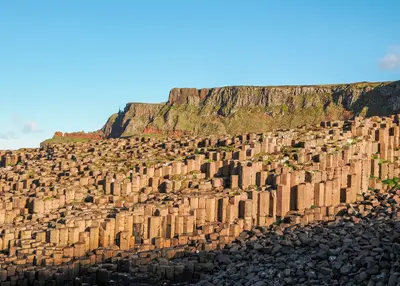
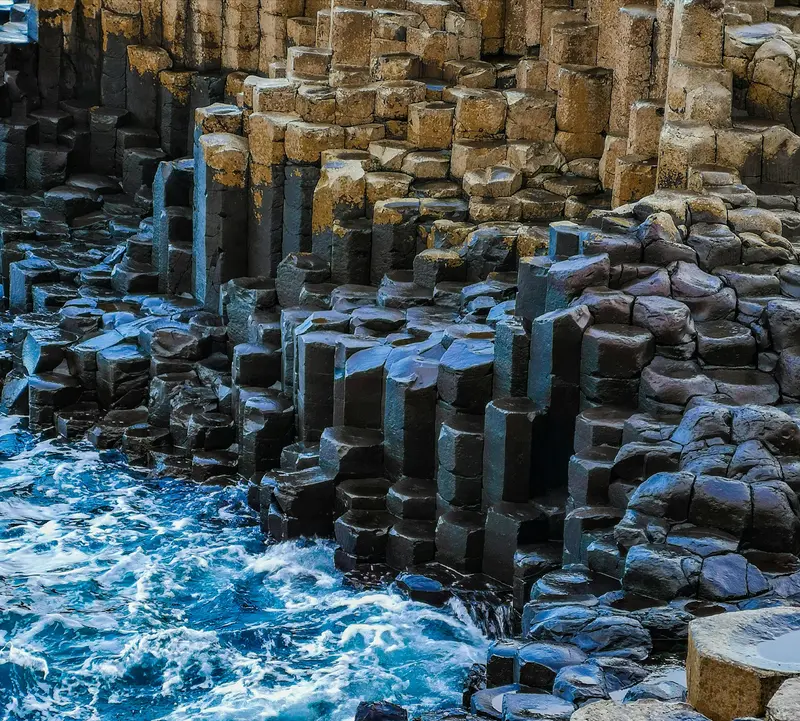
    The Giant's Causeway on Northern Ireland's north coast consists of around 40,000 regularly shaped basalt columns, formed 50 to 60 million years ago by volcanic activity.

    by Felix Gillen

    1. Home
    2. Destinations
    3. Ireland
    4. Giant's Causeway & Causeway Coast
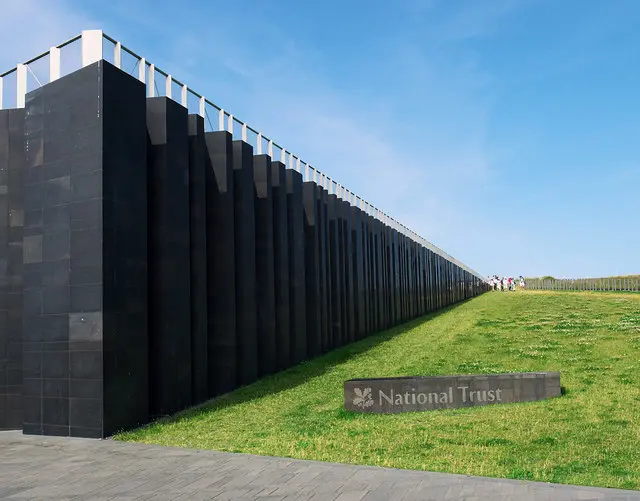
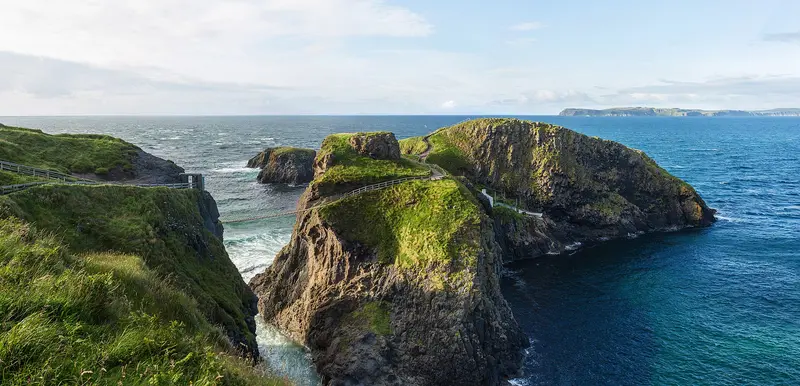
    The Giant's Causeway on Northern Ireland's north coast consists of around 40,000 regularly shaped basalt columns, formed 50 to 60 million years ago by volcanic activity. Together with the adjacent Causeway Coast, it has been a UNESCO World Heritage site since 1986; much of the area belongs to the National Trust, which operates a visitor centre with an exhibition.Along the coast are other well-known destinations: the Carrick-a-Rede rope bridge over a 20-meter-deep chasm, for which you must book a time slot in advance, and the ruins of Dunluce Castle on the cliffs between Portballintrae and Portrush. Inland stands the Dark Hedges beech avenue, which has been closed to vehicle traffic since 2017.

    Sights in Giant's Causeway & Causeway Coast

    Discover the most important sights and attractions

    Giant's Causeway Visitor Experience

    1Giant's Causeway Visitor Experience

    The National Trust Visitor Centre, with its exhibition and audio guide, is the starting point for exploring the approximately 40,000 basalt columns. Advance booking is strongly recommended; the on-site car park is reserved for ticket holders. If you only want to walk to the stones, park at the Causeway Coast Way Car Park.
    Open in Google Maps
    Carrick-a-Rede Rope Bridge

    2Carrick-a-Rede Rope Bridge

    The 20-meter rope bridge spans 30 meters above the rocks to a small island; fishermen have been building bridges here for over 350 years; today's dates from 2008. To cross, you must book a time slot in advance, even as a National Trust member.
    Open in Google Maps
    Dunluce Castle

    3Dunluce Castle

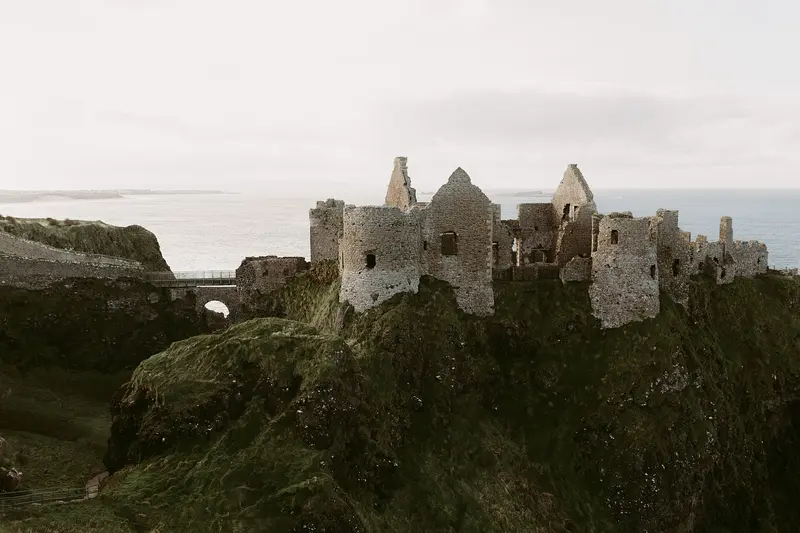
    The castle ruin on the basalt cliffs dates back to the 13th century, was captured by Sorley Boy MacDonnell in 1584 and abandoned after 1690. Its cannons come from the Armada ship Girona.
    Open in Google Maps
    Dark Hedges

    4Dark Hedges

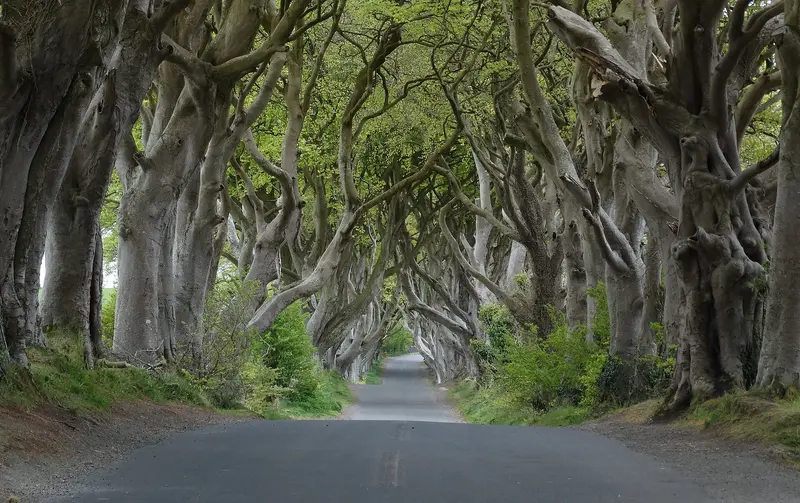
    The beech avenue planted around 1775 on Bregagh Road between Armoy and Stranocum became famous as the 'King's Road' in 'Game of Thrones'. It has been closed to cars since 2017; storms have felled several trees in recent years.
    Open in Google Maps

    Restaurants in Giant's Causeway & Causeway Coast

    Accommodations in Giant's Causeway & Causeway Coast

    Find perfect stay in Giant's Causeway & Causeway Coast

    Booking.com* (Affiliate link)
    Search Hotels
    Agoda* (Affiliate link)
    Search Hotels
    Airbnb
    Vacation Rentals

    * Affiliate link: if you book through it, we earn a small commission. The price stays the same for you.

    Campgrounds in Giant's Causeway & Causeway Coast

    Find perfect campground in Giant's Causeway & Causeway Coast

    Search via Google Maps
    Campgrounds nearby (15km)
    Camping.info
    Find Campgrounds
    Park4Night
    RV Parks & Camping

    Nearby

    Northern Ireland is part of the United Kingdom; here, you pay with Pound Sterling, and EU citizens need an electronic travel authorisation (ETA) for entry, even if there are no checks at the land border with the Republic. The capital Belfast tells of its shipyard history with the Titanic Belfast museum, and of decades of conflict through murals and peace walls.Along the Causeway Coast on the north coast are the basalt columns of the Giant's Causeway, the Carrick-a-Rede Rope Bridge, and the ruins of Dunluce Castle. From Dublin, you can reach Belfast by car, bus, or the Enterprise train, which crosses the border without changing.
    Belfast

    Belfast

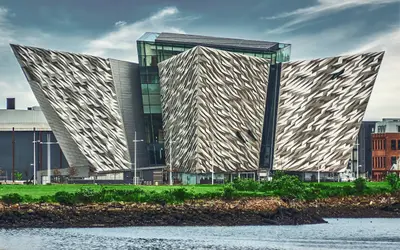
    Belfast is the capital of Northern Ireland and was once a shipbuilding hub: The Titanic was built at the Harland & Wolff shipyard. In the Titanic Quarter, the Titanic Belfast museum, opened in 2012, tells the story of the shipyard and the ship in nine galleries; nearby are the SS Nomadic, the last remaining White Star Line vessel, and the historic slipways.In the city center, Donegall Square is home to the City Hall, opened in 1906, with the lively Cathedral Quarter surrounding St Anne's Cathedral to its north. The Ulster Museum in the Botanic Gardens is free. The Peace Walls between Falls Road and Shankill and their murals recall the time of the Troubles; many visitors explore them on a Black Taxi Tour.
    Glenveagh National Park

    Glenveagh National Park

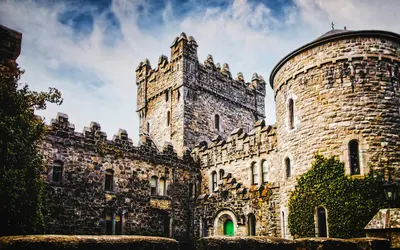
    Glenveagh National Park in northwest County Donegal spans approximately 16,000 hectares of mountains, moors, and lakes; golden eagles have been reintroduced here since 2000. At its heart lies Glenveagh Castle on the shore of Lough Veagh, a castle built between 1867 and 1873 with extensive gardens, which was later handed over to the state.Access to the park is free; a shuttle bus runs from the visitor centre to the castle, which you can visit with a guided tour. The castle is closed on some weekdays, so check opening hours in advance.
    Sligo & Donegal

    Sligo & Donegal

    The Northwest is the most remote and least visited part of the Republic. In County Sligo, the landscape is shaped by the flat-topped Benbulben, surf beaches, and the memory of poet W. B. Yeats; in Donegal, the Slieve League cliffs plunge over 600 meters down to the sea, and in Glenveagh National Park, a castle stands by a lonely lake.The distances are long and the roads are narrow, but beaches and viewpoints are often empty even in summer. Without a car, the region is difficult to explore.
    Slieve League (Sliabh Liag)

    Slieve League (Sliabh Liag)

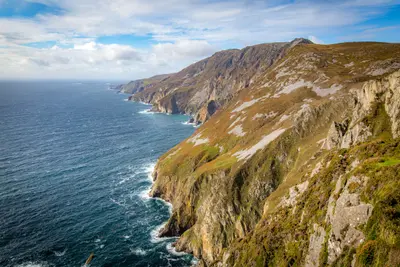
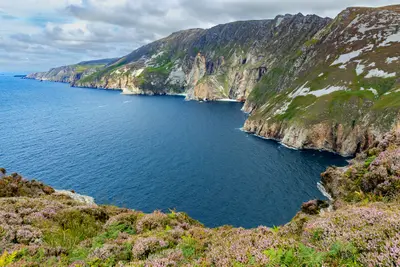
    The Cliffs of Slieve League (Sliabh Liag) on the southwest coast of County Donegal rise to 601 metres, making them among Europe's highest sea cliffs. From the Bunglass viewpoint, which you reach via a narrow road from Teelin, you overlook the entire cliff face extending to the Atlantic.Experienced hikers can continue along the narrow ridge of One Man's Path, which is dangerous in bad weather and temporarily closed. The visitor centre is located several kilometres from the cliffs; a shuttle bus operates in summer.

    Sources & method

    • Photos: Wikimedia Commons, Unsplash. Each photo carries its credit.
    • The content is based on web research from public, traceable sources. How the content is made · The role of AI