Fernweh: Home
ExploreGuideDestinationsMy tripsMy trip
de|en
All Places & RegionsRound tripsNight trains in EuropeAll highlightsAbout FernwehFAQPrivacy PolicyImprint
Download on the App StoreGet it on Google Play
ExploreGuideDestinationsMy tripsMy trip
    • Neighborhoods & highlights
    • Recommendations
    • Tours
    • Eat & drink
    • Culture
    • Getting around
    • Accommodation
    • Plan trip
    • Nearby
    Seoraksan National Park and Sokcho

    kallerna / Wikimedia Commons / CC BY-SA 4.0, mod.

    South Korea

    Seoraksan National Park and Sokcho

    City

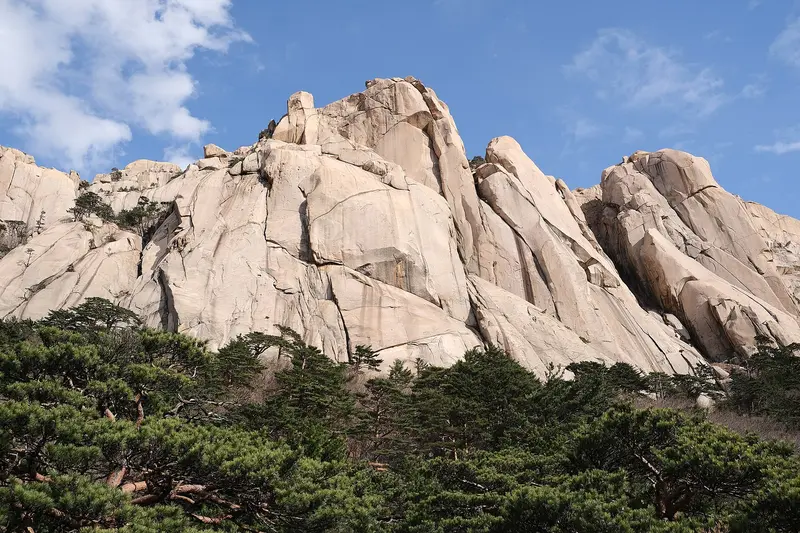
    Seoraksan on the east coast has been a National Park since 1970 and a UNESCO Biosphere Reserve since 1982. Its highest peak, Daecheongbong, is 1,708 m.

    by Felix Gillen

    1. Home
    2. Destinations
    3. South Korea
    4. Seoraksan National Park and Sokcho
    Seoraksan on the east coast has been a National Park since 1970 and a UNESCO Biosphere Reserve since 1982. Its highest peak, Daecheongbong, is 1,708 m. Park sights: Ulsanbawi Rock, Biseondae Rock Platform, Sinheungsa Temple. A cable car ascends to Gwongeumseong. The port city Sokcho is the starting point, its Abai Village home to North Korean war refugees (1950-53) and descendants.
    South Korea travel guideRound trips in South KoreaPlan a trip with Seoraksan National Park and Sokcho

    Contents

    • Neighborhoods & highlights
    • Recommendations
    • Tours
    • Eat & drink
    • Culture
    • Getting around
    • Accommodation
    • Nearby

    Sights in Seoraksan National Park and Sokcho

    Discover the most important sights and attractions

    Attraction

    1Seorak Cable Car (Gwongeumseong)

    The cable car reaches Gwongeumseong in ~5 minutes, with departures every 5-15 minutes. Return tickets cost 16,000 KRW for adults, 12,000 KRW for children; those under 36 months ride free. Parking is at the Sinheungsa car park. An alternative to hiking, even with kids.

    Open in Google Maps
    National Park

    2Seoraksan National Park

    National Park since 1970 and UNESCO Biosphere Reserve since 1982, its highest peak is Daecheongbong at 1,708 m. Due to wildfire risk, hiking trails nationwide will be closed from November 15 to December 15, 2026. In 2025, this affected high-altitude trails to Daecheongbong in Seoraksan, including those via Gongnyong Ridge and Hangyeryeong; Biseondae and Ulsanbawi remained open. For information on which trails are closed in 2026, contact the Korea National Park Service.
    Open in Google Maps
    Point of Interest

    3Ulsanbawi

    The path up the rock features over 800 steps. The round-trip hike is 7.6 km long. Check beforehand if the path is closed due to wildfire danger.
    Open in Google Maps
    Attraction

    4Biseondae

    A rock platform in the stream at the end of the National Park's main valley. Check beforehand if the trail is closed due to wildfire risk.
    Open in Google Maps
    Place of Worship

    5Sinheungsa

    The temple is near the park entrance, where a bronze Buddha also stands.
    Open in Google Maps
    Attraction

    6Abai Village and Gaetbae Ferry

    Abai Village in Sokcho is home to North Korean war refugees (1950-1953) and their descendants. The Gaetbae Ferry, a 50m hand-pulled cable ferry, costs 500 KRW for adults; operates 04:30-23:00. The village was a filming location for the series Autumn in My Heart (2000).
    Open in Google Maps

    Tours & experiences in Seoraksan National Park and Sokcho

    Search tours for Seoraksan National Park and Sokcho on GetYourGuide* (Affiliate link)On GetYourGuide, with reviews from other travellers

    * Affiliate link: if you book through it, we earn a small commission. The price stays the same for you.

    Restaurants in Seoraksan National Park and Sokcho

    1

    Dancheon Sikdang

    An eatery in Abai Village, established in the 1970s by Yoon Bok-ja from Dancheon. According to Korea JoongAng Daily, it serves Sundae-Gukbap (10,000 KRW), cooked as she knows it from her hometown.
    Show on Google Maps

    Culture & Cuisine

    Abai VillageAbai Village in Sokcho is home to a community of North Korean war refugees from 1950-1953 and their descendants. The Gaetbae ferry crosses about 50m of water there, with passengers pulling themselves along a wire rope.Abai Sundae and Squid SundaeThe refugees' cuisine still shapes the food in Sokcho today. Typical dishes are Abai Sundae and Squid Sundae, which you can get in Abai Village and at the port.Hamhung NaengmyeonHamhung Naengmyeon originates from the cuisine of North Korea's Hamgyong Province: cold noodles mixed with a spicy-sweet sauce.

    Travel and On the Go

    By Bus from SeoulBuses from Seoul Express Bus Terminal and Dong Seoul take approx. 2.5 to 3 hours to Sokcho.Two Bus Terminals in SokchoSokcho has two bus terminals, approx. 3 km apart: the Express Bus Terminal in the south and the Intercity Terminal in the north. Before your trip, check which terminal your bus stops at.In the National ParkThe cable car to Gwongeumseong starts at Sinheungsa Car Park. Due to wildfire risk, hiking trails nationwide will be closed from Nov 15 to Dec 15 in autumn 2026. In 2025, Seoraksan's high-altitude trails to Daecheongbong were closed, but Biseondae and Ulsanbawi remained open. For current trail information, check the Korea National Park Service.

    Accommodations in Seoraksan National Park and Sokcho

    Find perfect stay in Seoraksan National Park and Sokcho

    Booking.com* (Affiliate link)
    Search Hotels
    Agoda* (Affiliate link)
    Search Hotels
    Airbnb
    Vacation Rentals

    * Affiliate link: if you book through it, we earn a small commission. The price stays the same for you.

    Plan your trip to Seoraksan National Park and Sokcho

    Save places, build a route and plan your city trip, all in one place.

    1. 1
      Sunrise over alpine peaks and a sea of clouds
      1234

      Round trip

      12 days · 4 stops

      Saved

      Pick a route

      Pick a ready-made one or save places and plan your own.

      Open bookmarks
    2. 2

      Trip to Seoraksan National Park and Sokcho

      Live
      • 1Seorak Cable Car (Gwongeumseong)3 days
      • 2Seoraksan National Park4 days
      • 3Ulsanbawi5 days
      Budget

      Plan your trip

      The planner sorts stops, days and budget. Plan together in real time.

      Start trip planning
    3. 3
      9:41 No signal
      Seoraksan National Park and Sokcho
      Available offline

      kallerna / Wikimedia Commons / CC BY-SA 4.0, mod.

      Use it on the road

      Download the guide to your phone and use it on site, even offline.

    Nearby

    Gangneung

    Gangneung

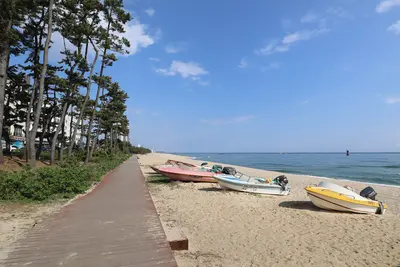
    Gangneung, located on Gangwon Province's coast, is just two hours from Seoul by KTX-Eum. Its historical estates include Ojukheon, scholar Yulgok's birthplace, and Seongyojang, the residence of Lee Nae-beon's family. Coastal attractions include Gyeongpo Beach with Gyeongpoho Lagoon and the Anmok Beach cafe street. Gangneung is renowned for Chodang-Sundubu, a soft tofu curdled with seawater, and for the UNESCO-listed Danoje Festival.

    Mobius6·CC BY-SA 4.0

    Gangnam and Jamsil

    Gangnam and Jamsil

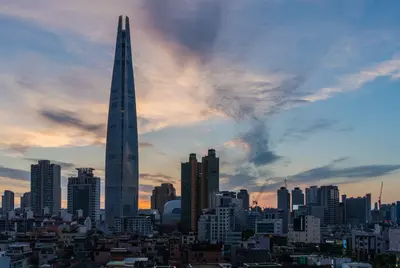
    South of the Han River lie Seoul's affluent business and shopping districts. In Gangnam, amidst office towers, you'll find the Buddhist temple Bongeunsa, the COEX Convention & Shopping Center with the Starfield Library, and the Royal Tombs of Seonjeongneung, a UNESCO World Heritage site. Further east in Jamsil stand the Lotte World Tower and the Lotte World amusement park.

    Ethan Brooke·Pexels

    Dongdaemun

    Dongdaemun

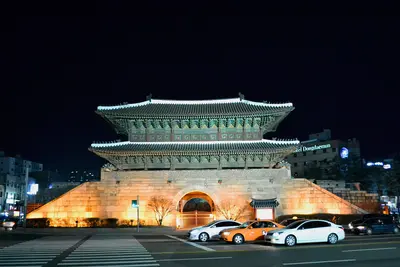
    Dongdaemun is named after Heunginjimun, the Great East Gate of the old city wall, its current structure dating to 1869. Around the gate, history and fashion converge: Zaha Hadid's Dongdaemun Design Plaza opened in 2014, and next door, the Dongdaemun History & Culture Park reveals excavated city wall remains. From the gate, a section of the city wall leads to Naksan, and in market alleys, restaurants have for decades cooked Dakhanmari, a whole chicken in a pot.

    TealAlligator·CC BY-SA 4.0

    Insadong and Ikseon-dong

    Insadong and Ikseon-dong

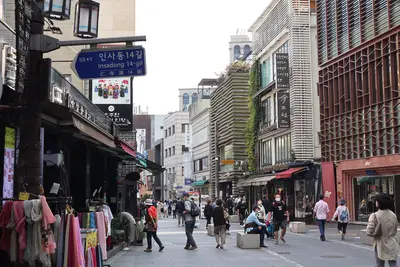
    The approximately 700-meter-long Insadong-gil is Seoul's street for handicrafts, antiques, galleries, and teahouses; on weekends, it belongs to pedestrians and street musicians. Just a few minutes' walk east lies Ikseon-dong, a labyrinth of small Hanok houses from the 1920s and 1930s, now home to cafés and shops. Further east, the Naksan section of the old city wall leads up a hill with a view over the city.

    S h y numis·CC BY-SA 4.0

    Jongno and Palace Quarter

    Jongno and Palace Quarter

    Seoul's historic heart stretches from Gwanghwamun Square, featuring statues of King Sejong and Admiral Yi Sun-sin, to the Joseon Dynasty palaces. Gyeongbokgung, Changdeokgung, Changgyeonggung, and the Jongmyo Shrine are tightly grouped here, with Bukchon Hanok Village and Samcheong-dong's galleries in between. West of Gyeongbokgung, Seochon, one of the city's oldest residential areas, is worth exploring, with the Tongin Market.

    Daniel Bernard·Unsplash

    Your next steps

    Seoraksan National Park and Sokcho is in South Korea. Ways to carry on from here.

    • More in South Korea

      Highlights, areas, routes and the best time to travel for all of South Korea.

      South Korea travel guide
    • Round trips in South Korea

      Ready-made routes through South Korea, with stops, nights and a map.

      See the routes

    Sources & method

    • Photos: Wikimedia Commons, Unsplash, Pexels. Each photo carries its credit.
    • Place data such as addresses and ratings comes from Google Maps.
    • The content is based on web research from public, traceable sources. How the content is made · The role of AI