Fernweh: Home
ExploreGuideDestinationsMy tripsMy trip
de|en
All Places & RegionsRound tripsNight trains in EuropeAll highlightsAbout FernwehFAQPrivacy PolicyImprint
Download on the App StoreGet it on Google Play
ExploreGuideDestinationsMy tripsMy trip
    • Places & highlights
    • Recommendations
    • Walking tours
    • Eat & drink
    • Culture
    • Getting around
    • Accommodation
    • Nearby
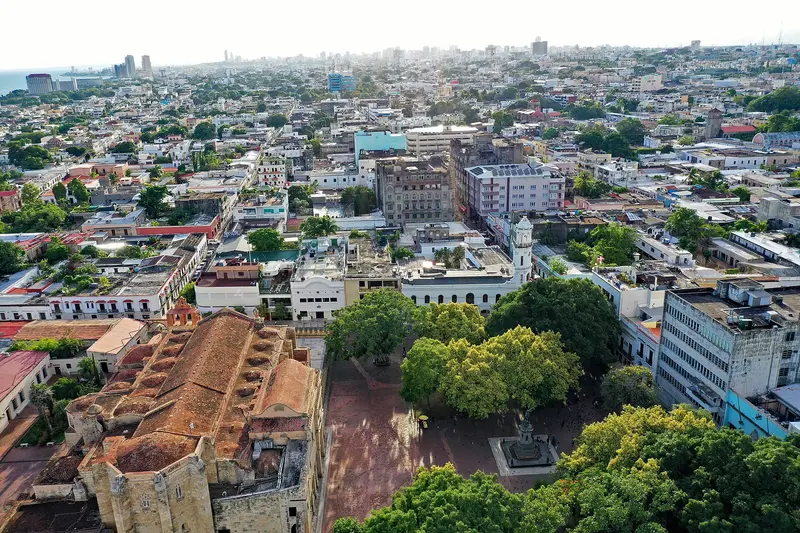
    Zona Colonial

    Mariordo (Mario Durán & German Valverde) / Wikimedia Commons / CC BY-SA 4.0, mod.

    The Dominican Republic

    Zona Colonial

    Point of Interest

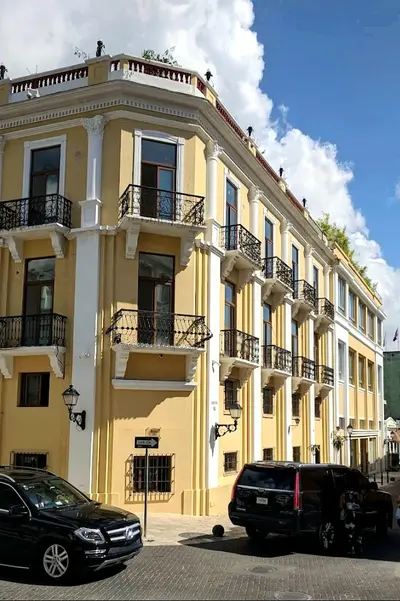
    The Zona Colonial, officially Ciudad Colonial, is Santo Domingo's Old Town on the west bank of the Río Ozama and a UNESCO World Heritage site since 1990.

    by Felix Gillen

    1. Home
    2. Destinations
    3. The Dominican Republic
    4. Santo Domingo
    5. Zona Colonial
    The Zona Colonial, officially Ciudad Colonial, is Santo Domingo's Old Town on the west bank of the Río Ozama and a UNESCO World Heritage site since 1990. Governor Nicolás de Ovando had it laid out in a grid pattern starting in 1502; Calle Las Damas is considered the New World's first street. Within a few square kilometers stand the Catedral Primada, the Viceroy's Palace Alcázar de Colón, the Fortaleza Ozama, and the ruins of the first Franciscan monastery.The government has been renovating the district for several years with a major program: streets and facades were renewed, over 2,000 colonial-style lanterns installed, and museums modernized. In September 2026, the Alcázar reopened as the Museo Diego Colón Palacio Virreinal; construction is still ongoing on individual houses.
    The Dominican Republic travel guideRound trips in The Dominican RepublicPlan a trip with Zona Colonial

    Contents

    • Places & highlights
    • Recommendations
    • Walking tours
    • Eat & drink
    • Culture
    • Getting around
    • Accommodation
    • Nearby

    Sights in Zona Colonial

    Discover the most important sights and attractions

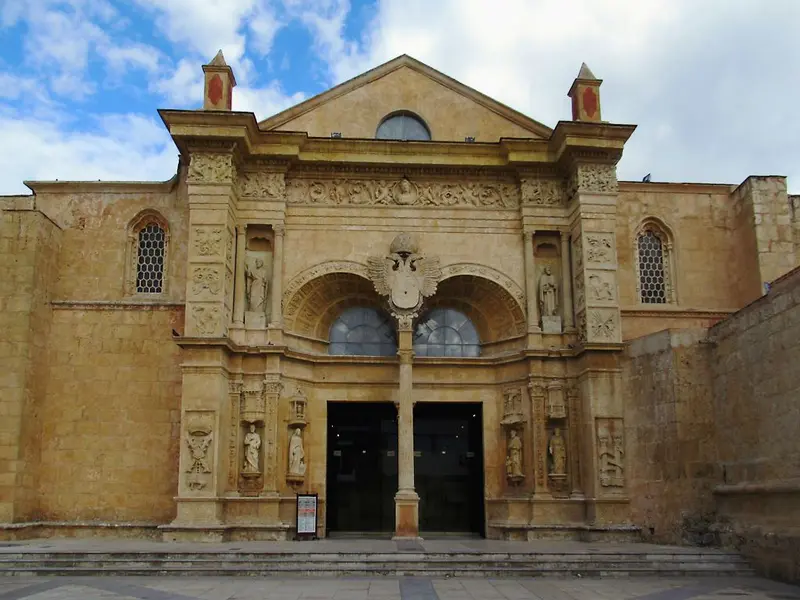
    First Cathedral of America

    “Catedral Primada de América (32984578730)” by David Stanley / Wikimedia Commons / CC BY 2.0, mod.

    Church

    1First Cathedral of America

    The Basílica Catedral Santa María de la Encarnación at Parque Colón is considered the first cathedral in the Americas. Diego Colón laid the foundation stone in 1514, with construction primarily taking place from 1521 to 1540; the façade of golden coral limestone combines Late Gothic and Plateresque styles, while inside stands a high altar of chased silver. The cathedral treasury is displayed at the Museo de la Catedral opposite, which since June 2024 features twelve newly designed halls. Mass times vary, so check them before your visit.
    Open in Google Maps
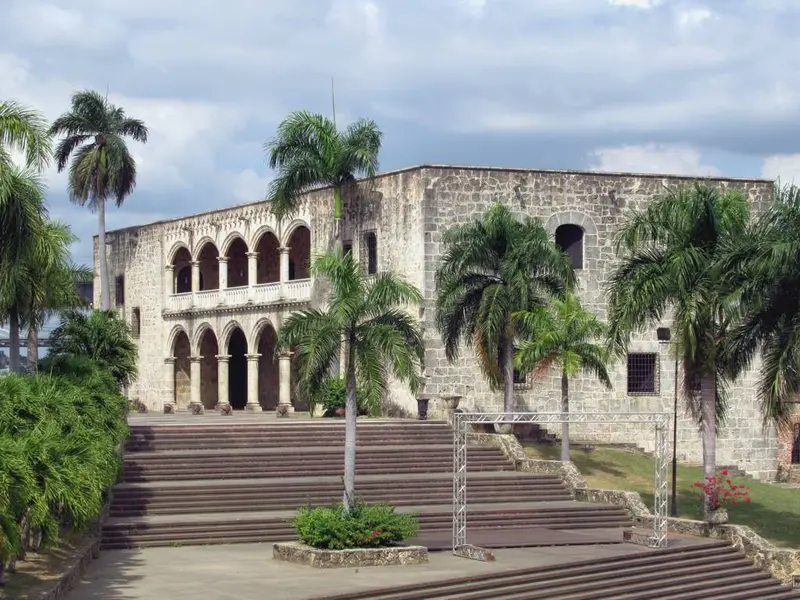
    Alcázar de Colón (Diego Colón Viceroyal Palace Museum)

    “Alcázar de Colón (33195170432)” by David Stanley / Wikimedia Commons / CC BY 2.0, mod.

    Museum

    2Alcázar de Colón (Diego Colón Viceroyal Palace Museum)

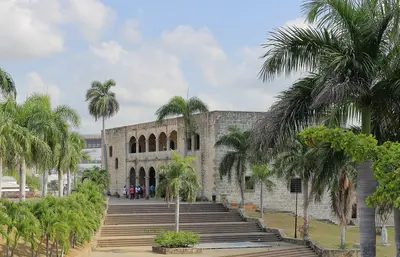
    The palace of Diego Colón, son of Columbus, and his wife María de Toledo, located on Plaza de España, was the seat of the Viceroy. Following a renovation, it reopened at the end of September 2026 as the Museo Diego Colón Palacio Virreinal: 17 rooms, a patio with views of the Río Ozama, restored 16th-century tapestries, and an exhibition on daily life in the colonial era, covering Indigenous peoples and the enslaved. Previously open Tuesday to Sunday, closed Mondays; new admission prices can be found on-site.
    Open in Google Maps
    Historic Landmark

    3Fortaleza Ozama

    The fortress on the Río Ozama was built from 1502 to 1508 under Governor Nicolás de Ovando and is considered the oldest European military installation in the Americas. From the roof of the Torre del Homenaje, you look out over the river and the old town; on the esplanade stands a statue of the chronicler Gonzalo Fernández de Oviedo. Until the 1960s, the complex served as a prison; since March 2024, the museum has been modernized. The entrance is at the end of Calle Las Damas.
    Open in Google Maps

    4Calle Las Damas

    The street was laid out in 1502 under Governor Nicolás de Ovando and is considered by the Dominican government to be the first street in the New World; it was formerly called Calle de La Fortaleza. Along it are the Fortaleza Ozama, the Panteón de la Patria, and the Museo de las Casas Reales, all reachable within a few minutes' walk.
    Open in Google Maps
    Museum

    5Museum of the Royal Houses

    The Casas Reales were built in 1511 by order of King Ferdinand and served as the seat of the Real Audiencia, the first court with jurisdiction over the New World, later of the Capitanía General. Today, the museum showcases the island's colonial history. It's best to check current opening hours and admission fees; it was last open Tuesday to Sunday.
    Open in Google Maps
    Attraction

    6Panteón de la Patria

    The National Pantheon on Calle Las Damas was originally a Jesuit church, built from 1714 to 1746. A 1956 law designated it the burial site of important national figures; it was inaugurated as the Panteón in 1974.
    Open in Google Maps

    City walks in Zona Colonial

    Curated walking tours through the city's highlights, handpicked by experienced travel journalists.

    Walking Tour of the Colonial Zone
    A circuit through Santo Domingo's Old Town, a UNESCO World Heritage site since 1990, covers the Viceregal Palace, the New World's first street, the Ozama Fortress, America's first cathedral, and 16th-century ruins. This sequence follows the Dominican government's Old Town guide. Allow half a day with museum visits; most museums are closed on Mondays.
    Open in Google Maps
    Stops (9)

    Restaurants in Zona Colonial

    1

    Book Perico

    Contemporary Dominican cuisine on Calle El Conde; the dining room under a greenhouse roof with blooming climbing plants. Recommended by Lonely Planet and Revista Mercado (2026).
    Show on Google Maps
    2

    Pat'e Palo European Brasserie

    Brasserie with European cuisine in the restaurant row on Plaza de España, opposite Alcázar de Colón; recommended by Lonely Planet.
    Show on Google Maps
    3

    Maraca

    Upscale restaurant with contemporary Latin American cuisine and cocktails in the Zona Colonial, listed by Revista Mercado among the city's best restaurants in May 2026.
    Show on Google Maps

    History and Life in the Old Town

    A 16th-Century CityAfter its relocation to the west bank in 1502, it became the administrative center of the Spanish colonial empire in the Caribbean. According to UNESCO, Santo Domingo was home to the first cathedral, the first hospital, the first customs house, and the first university in the Americas. Sir Francis Drake plundered the city in 1586; traces of this can be seen in the ruins of the Franciscan Monastery and the Hospital San Nicolás de Bari.Squares and StreetsMeeting points include Parque Colón in front of the cathedral, a square since 1506, and Plaza de España in front of the Alcázar with its row of restaurants. The pedestrian street Calle El Conde connects the old town with Parque Independencia and Puerta del Conde.Renovation until End of 2026A program funded by the Inter-American Development Bank is renovating streets, facades, churches, and museums; according to the Minister of Tourism, it is expected to be completed by December 2026. Expect construction sites, for example at Casa Aybar.

    Arrival and on the way

    Getting ThereLas Américas Airport (SDQ) is located east of the city; by taxi, you'll need at least 45 to 60 minutes to the Old Town, agree on the price beforehand. From Punta Cana, Expreso Bávaro runs several times daily to Santo Domingo.On FootThe Zona Colonial is small and flat; all main sights are just a few minutes' walk apart. Plan half to a full day for a tour including the Cathedral, Alcázar, and Fortress; during hot weather, go early mornings or late afternoons.MuseumsMost museums are closed on Mondays. Admission prices and times have partly changed after renovation; check them on-site.

    Accommodations in Zona Colonial

    Find perfect stay in Zona Colonial

    Booking.com* (Affiliate link)
    Search Hotels
    Agoda* (Affiliate link)
    Search Hotels
    Airbnb
    Vacation Rentals

    * Affiliate link: if you book through it, we earn a small commission. The price stays the same for you.

    Nearby

    Santo Domingo

    Santo Domingo

    Santo Domingo, founded in 1496 and relocated to the west bank of the Río Ozama in 1502, is the oldest continuously inhabited European city in the Americas. Its heart is the Zona Colonial, a UNESCO World Heritage site since 1990: here you'll find America's first cathedral, the Viceregal Palace of the Columbus family, and the Fortaleza Ozama. The Old Town is undergoing extensive renovation until the end of 2026, with streets, facades, and museums already renewed.Outside the Old Town, highlights include the seaside Malecón, the Los Tres Ojos cave park, and the monumental Faro a Colón in the east of the city.

    Martin Falbisoner·CC BY-SA 4.0

    Santo Domingo and South Coast

    Santo Domingo and South Coast

    The capital region on the south coast is the cultural highlight for most travelers. At its heart lies Santo Domingo with the Zona Colonial, a UNESCO World Heritage site since 1990, boasting its Cathedral, Viceroy's Palace, and the oldest European fortress in the Americas. East of the city lie Las Américas Airport and the Los Tres Ojos Cave Park.

    ElRicoBlanco·CC0

    Los Haitises National Park

    Parque Nacional Los Haitises, on Samaná Bay's south side, is a karst landscape of forested limestone cones, mangrove estuaries, and caves. Cueva de la Línea and Cueva de San Gabriel preserve Taíno rock paintings: birds, dolphins, human figures, and masks. Park access is by boat and licensed guide only. Tours depart from Samaná, Sánchez, and Sabana de la Mar; the peninsula crossing takes about 30 minutes.
    Las Terrenas

    Las Terrenas

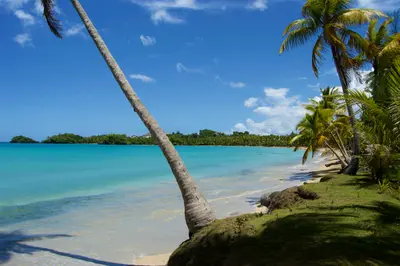
    Las Terrenas, on Samaná Peninsula's north coast, is the region's liveliest beach resort, featuring small hotels, beachfront restaurants, and long palm-lined beaches. West of town lie Playa Bonita, with an offshore reef for snorkeling, and the long, nearly white Playa Cosón. From here, access El Limón waterfall in the hills and, in season, whale watching tours in Samaná. From Santo Domingo, it's a good two hours via the Autopista del Nordeste.

    Daniel Bernal·Unsplash

    Samaná

    Samaná

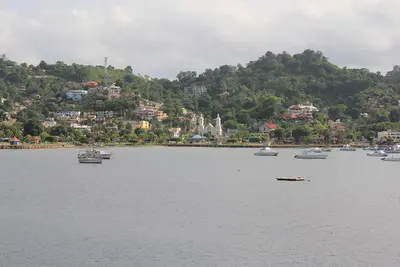
    Santa Bárbara de Samaná, usually just called Samaná, is the peninsula's main town and the hub for whale watching: From mid-January to late March, boats depart from the Malecón to see the humpback whales that give birth to their calves in the Bay of Samaná and the marine mammal sanctuary of Banco de la Plata y Navidad. The town itself has no public swimming beaches; for swimming, take a boat to Cayo Levantado or further to Las Galeras.

    Laslovarga·CC BY-SA 4.0

    Your next steps

    Zona Colonial is in The Dominican Republic. Ways to carry on from here.

    • More in The Dominican Republic

      Highlights, areas, routes and the best time to travel for all of The Dominican Republic.

      The Dominican Republic travel guide
    • Round trips in The Dominican Republic

      Ready-made routes through The Dominican Republic, with stops, nights and a map.

      See the routes
    • Plan a trip with Zona Colonial

      The Guide asks about season, length and who is coming, and suggests a trip with Zona Colonial.

      Plan the trip

    Sources & method

    • Photos: Wikimedia Commons. Each photo carries its credit.
    • Place data such as addresses and ratings comes from Google Maps.
    • The content is based on web research from public, traceable sources. How the content is made · The role of AI