Fernweh: Home
ExploreGuideDestinationsMy tripsMy trip
de|en
All Places & RegionsRound tripsNight trains in EuropeAll highlightsAbout FernwehFAQPrivacy PolicyImprint
Download on the App StoreGet it on Google Play
ExploreGuideDestinationsMy tripsMy trip
    • Overview
    • Places in the region
    • Culture
    • Getting around
    • Round trips
    • Nearby
    Chaco and Mennonite Colonies

    Josep M. Gracia / Wikimedia Commons / CC BY-SA 4.0, mod.

    Paraguay

    Chaco and Mennonite Colonies

    RegionNatureCulture

    The Chaco covers about 60 percent of Paraguay's area but is only sparsely populated.

    by Felix Gillen

    1. Home
    2. Destinations
    3. Paraguay
    4. Chaco and Mennonite Colonies
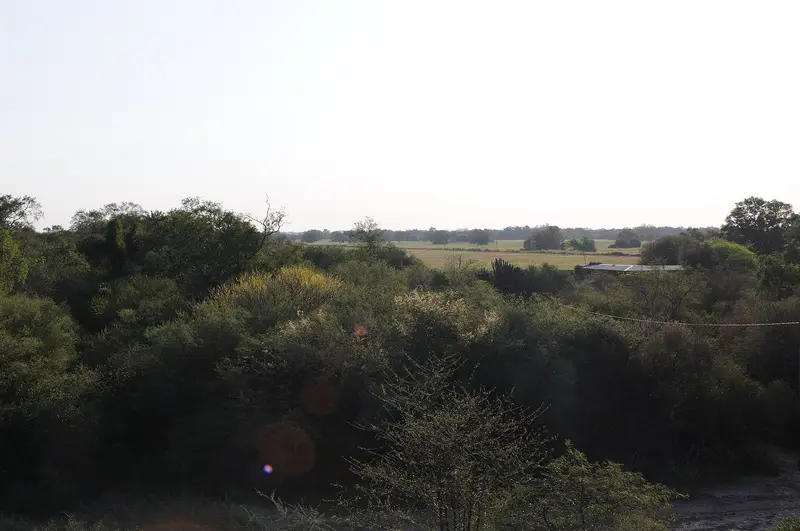
    The Chaco covers about 60 percent of Paraguay's area but is only sparsely populated. In the Central Chaco, about 450 km northwest of Asunción along the Transchaco highway, Mennonites founded the colonies Menno, Fernheim, and Neuland, with the towns Loma Plata, Filadelfia, and Neu-Halbstadt, starting in 1927; Plautdietsch and High German are still spoken there today. Museums recount the settlement, Fortín Boquerón commemorates the Chaco War, and waterfowl inhabit salt lagoons like Laguna Capitán.
    Paraguay travel guideSee the round tripPlan a trip with Chaco and Mennonite Colonies

    Contents

    • Overview
    • Places in the region
    • Culture
    • Getting around
    • Round trips
    • Nearby
    The starting point for the Central Chaco is Filadelfia (Kolonie Fernheim). Loma Plata (Kolonie Menno) is about 20 to 24 km away, Neu-Halbstadt (Kolonie Neuland) approximately 40 km away. You can reach Fortín Boquerón in about 50 to 60 km, and Laguna Capitán is part of Kolonie Menno's ecotourism offering.

    More places in Chaco and Mennonite Colonies

    Philadelphia

    Josep M. Gracia·CC BY-SA 4.0

    Philadelphia

    Filadelfia, about 470 km from Asunción, is the center of the Fernheim Mennonite colony in the Central Chaco. Founded in 1930 by Soviet Union refugees, the colony designated Filadelfia its administrative seat in 1931. Several museums, including Museo Jakob Unger (displaying Chaco animals, fossils, and pre-Columbian artifacts), make Filadelfia a good base for the Central Chaco.

    Sights in Chaco and Mennonite Colonies

    Discover the most important sights and attractions

    Loma Plata and Museum of the Menno Colony

    Loma Plata is the center of Kolonie Menno, founded in 1927 by Canadian Mennonites, about 20 to 24 km from Filadelfia. The Kolonie Museum, opened in 1977 on Avenida Central, tells the story of the settlement; according to Wikivoyage, admission is free.
    Open in Google Maps

    Fortín Boquerón

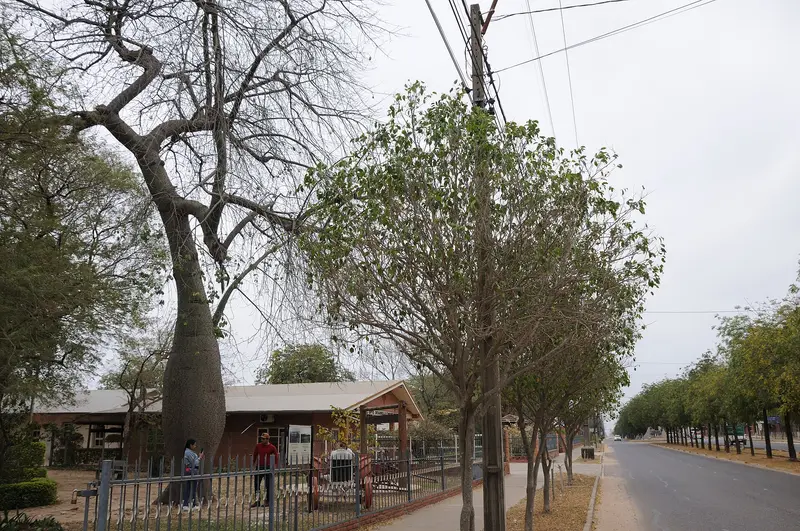
    The fort, founded in 1928, was the scene of one of the decisive battles of the Chaco War. Visitors can see a museum, a military cemetery, a monument made from original trenches, and a hollowed-out bottle tree that served as a sniper's nest. According to Agencia IP, the memorial is open daily.
    Open in Google Maps

    Captain's Lagoon

    The Salt Lagoon in the ecotourism area of Menno Colony attracts waterfowl; flamingos are usually seen from July to September. Entry is by prior arrangement only, and spaces are limited.
    Open in Google Maps

    History and Nature

    Chaco WarIn the Chaco War against Bolivia (1932 to 1935), Paraguay gained most of the Chaco Boreal. Fortín Boquerón was the site of one of the decisive battles.Salt LagoonsWaterfowl gather at Laguna Capitán; you usually see flamingos from July to September.

    Arrival

    TranschacoFrom Asunción, the paved Transchaco (Ruta 9) leads into the Central Chaco; buses take about 7 to 8 hours to Filadelfia. From November to April, roads may be flooded according to the Foreign Office.Getting AroundFor Boquerón, Loma Plata and the lagoons, you'll need a car; Laguna Capitán can only be visited by prior arrangement.

    Round trips through this region

    Discover Paraguay: Asunción, Jesuit Ruins and Chaco

    Discover Paraguay: Asunción, Jesuit Ruins and Chaco

    The tour starts in the capital, takes you by bus south to the Jesuit Reductions of Trinidad and Jesús near Encarnación, and then into the Chaco to the Mennonite colonies around Filadelfia. All stages can be done by long-distance bus; on-site, especially in the Chaco, a car is helpful.

    11 Days
    4 stops

    Tobias Meza·Unsplash

    Nearby

    Asunción

    Asunción

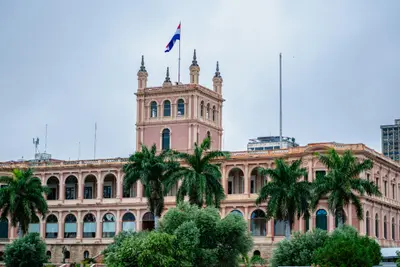
    Asunción is the capital of Paraguay and lies on a bay of the Río Paraguay; according to the 2022 census, the city itself has around 462,000 inhabitants. The historic center with Government Palace Palacio de López, Panteón Nacional de los Héroes, Cathedral and Casa de la Independencia is easily explored on foot; many museums are free. Along the river runs the Costanera, a promenade with bike and walking path.

    Tobias Meza·Unsplash

    San Bernardino and Lago Ypacaraí

    San Bernardino and Lago Ypacaraí

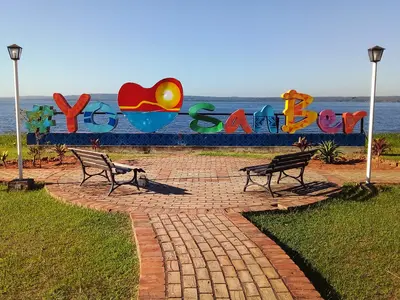
    San Bernardino, on Lago Ypacaraí, founded in 1881 by German and Swiss settlers, is now a summer resort for capital residents; its main season runs December to mid-February. Around the lake lie the towns of the Circuito de Oro: Areguá, with ceramics and handicrafts; Itauguá, city of Ñandutí lace; and the pilgrimage town of Caacupé.

    Ulises Icardi·CC BY-SA 4.0

    Parque Nacional Ybycuí

    Parque Nacional Ybycuí

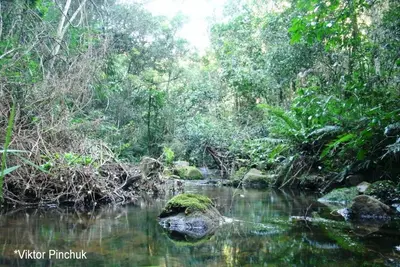
    Ybycuí National Park, located southeast of Asunción, was founded in 1973 and protects approximately 5,000 ha of forest with streams and waterfalls. The waterfalls Salto Guaraní, Salto Mina, and Salto Mbocaruzú are publicly accessible. The park also features the reconstructed La Rosada ironworks from the mid-19th century, which was destroyed in the war in 1869 and is now a museum.

    Виктор Пинчук·CC BY-SA 4.0

    Quebrada de Humahuaca

    Quebrada de Humahuaca

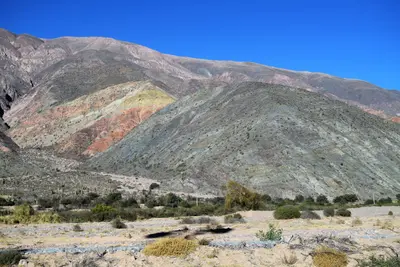
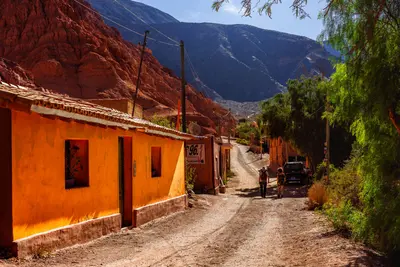
    The Quebrada de Humahuaca is a roughly 155 km high valley in Jujuy Province, traversed by the Río Grande flowing north to south. Its rock walls glow red, ochre, yellow, and violet, due to exposed strata from many geological eras. For approx. 10,000 years, humans used the valley as a trade route, later also the Incas; in 2003, UNESCO declared the Quebrada a World Heritage cultural landscape.Along the road are strung small towns: Purmamarca with the Cerro de los Siete Colores, Maimará with the "Paleta del Pintor", Tilcara with the reconstructed pre-Hispanic mountain fortress Pucará, and Humahuaca at the northern end, from where you drive to the Serranía de Hornocal with its "14 Colors". The climate is dry and windy. The valley is high; allow time for acclimatization.
    Magali Guimarães·Pexels

    Purmamarca

    Purmamarca

    This small village at the entrance to the Quebrada de Humahuaca is situated directly at the foot of the Cerro de los Siete Colores, the "Mountain of Seven Colors," one of Argentina's most famous photo opportunities. In the village square, vendors sell local handicrafts.The approximately three-kilometer-long Paseo de los Colorados leads around the colorful rocks; in the morning light, the colors appear particularly vibrant. Purmamarca is also a starting point for the drive over the Cuesta de Lipán to the Salinas Grandes and a popular place to experience the Carnival of the North.

    Agustin Devani·Pexels

    Your next steps

    Chaco and Mennonite Colonies is in Paraguay. Ways to carry on from here.

    • More in Paraguay

      Highlights, areas, routes and the best time to travel for all of Paraguay.

      Paraguay travel guide
    • Round trips with Chaco and Mennonite Colonies

      One route passes through Chaco and Mennonite Colonies, with stops, nights and a map.

      See the round trip
    • Plan a trip with Chaco and Mennonite Colonies

      The Guide asks about season, length and who is coming, and suggests a trip with Chaco and Mennonite Colonies.

      Plan the trip

    Sources & method

    • Photos: Wikimedia Commons. Each photo carries its credit.
    • The content is based on web research from public, traceable sources. How the content is made · The role of AI