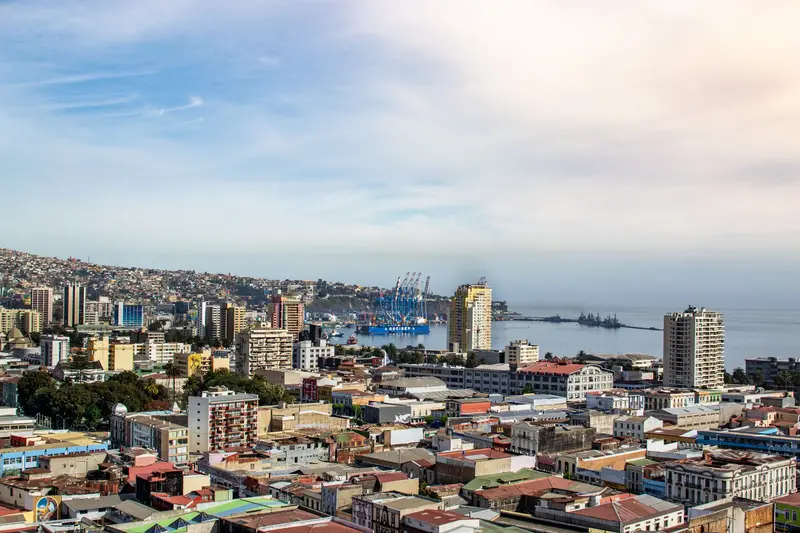
After two nights in Valparaíso with its hills and historic lifts, you fly from Santiago to Puerto Montt and drive the short distance to Puerto Varas. There you spend four nights on Lago Llanquihue amidst volcanoes and national parks.
7 Days / 6 Nights
October–April
2 stops
Why This Route?
For first-time visitors looking to experience coastal culture and southern landscapes in one week.
Hidden Gems
Paseo Dimalow on Cerro Alegre in Valparaíso
Museo a Cielo Abierto with murals on Cerro Bellavista in Valparaíso
Lago Todos los Santos near Petrohué, about 60 kilometers from Puerto Varas
Itinerary
Stop 1 • 2 Nights
Valparaíso
City
Route highlight
Valparaíso is Chile's historic port city on the Pacific coast west of Santiago, stretching steeply up the hills from a narrow strip along the harbor. Colorfully painted houses, stair-filled alleys, murals, and historic funiculars characterize the city, whose historic port quarter has been a UNESCO World Heritage site since 2003.
4 Sights
4 Restaurants
Culture & History
Port of Early GlobalizationIn the 19th century, Valparaíso became the most important trading port on the South American Pacific coast. Merchants and immigrants from Europe built banks, warehouses, churches, and residential buildings. With the opening of the Panama Canal, the port lost significance, but the buildings from that era remained. In 2003, UNESCO inscribed the Historic Quarter of the Port City of Valparaíso on its World Heritage List as a testament to early globalization in the late 19th century. It encompasses five interlocking quarters by the port and on the adjacent hills, along with Muelle Prat, customs and naval buildings, and its Ascensores and trolleybuses.Cerros and AscensoresThe city consists of the flat 'plan' area by the water and the steep Cerros, where most people live. To connect both levels, over 30 funicular railways, the Ascensores, were built starting in 1883. The oldest is the Ascensor Concepción from 1883. Today, only a small number of them are still operating; many have been closed for years or are being renovated, and even the functioning lifts are frequently out of service for maintenance. Recently, El Peral, Reina Victoria, Barón, and San Agustín were among those in operation; the Ascensor Artillería has been out of service since 2021. Check the current status locally.Art and Pablo NerudaValparaíso has always attracted artists and writers. Pablo Neruda's house, La Sebastiana, on Cerro Bellavista, is now a museum. Nearby is the Museo a Cielo Abierto (Open-Air Museum), opened in 1992, featuring around 20 murals by Chilean artists, including Roberto Matta. Additionally, countless murals and graffiti adorn Cerros Alegre and Concepción, which are also home to many galleries and artisan shops.
Perfect for an exciting city trip. Perfect for unwinding and relaxation and Culinary highlights.
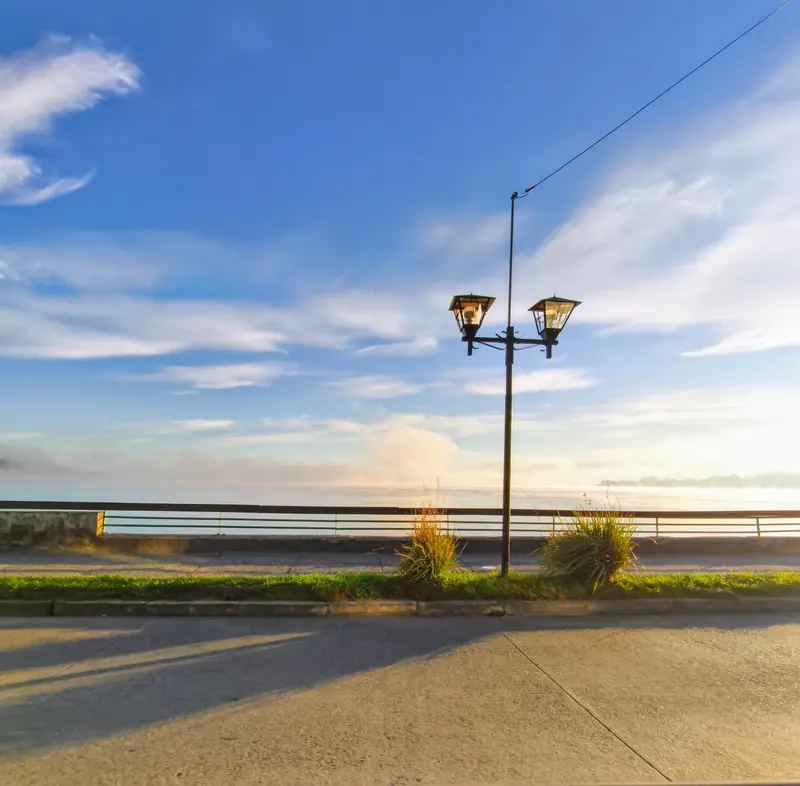
Puerto Varas is a small town on Lago Llanquihue in the south of the Chilean Lake District, characterized by wooden houses from the period of German immigration. On clear days, the Osorno and Calbuco volcanoes rise above the lake, and most of the region's attractions can be reached from here as a day trip.
9 Sights
13 Restaurants
Culture in Puerto Varas
The Church on the HillThe Church of Sagrado Corazón de Jesús on the hill above the town is its landmark: a wooden structure built between 1915 and 1918, designed after churches in Baden-Württemberg and a National Monument since 1992. From up there, you also get a good view of the lake and volcanoes.Homes of Immigrant FamiliesAround the center stand several heritage-listed residential buildings of the immigrant families from the late 19th and early 20th centuries, recognizable by their shingle facades, bay windows, and steep roofs. Some today house hotels or restaurants, while others can only be viewed from the outside.In everyday life, the German heritage is more a backdrop than a living tradition: Spanish is spoken, Chilean customs are celebrated. It remains visible in breweries, bakeries, and club names.