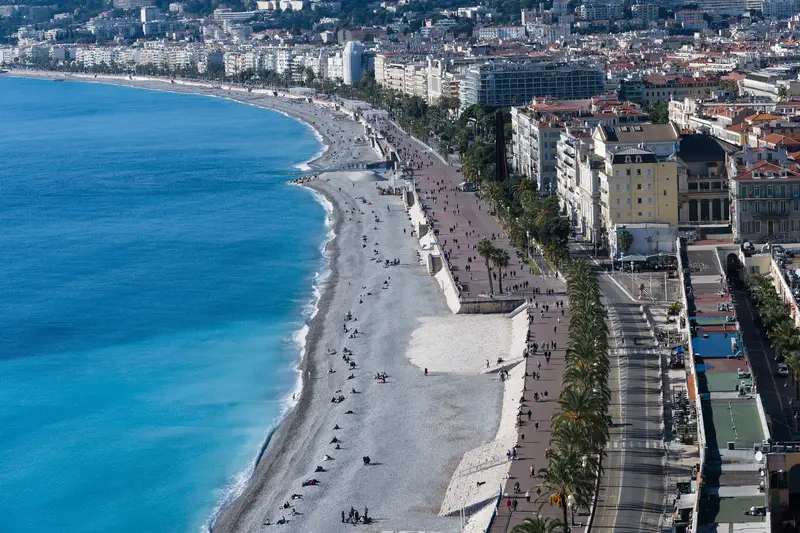
Photo by Jean-Paul Wettstein on Pexels
Night train trip
Two night trains: from Berlin to Paris and to the Côte d'Azur
by Felix Gillen
- 7 Days / 6 Nights
- Berlin → Nice
The European Sleeper takes you overnight from Berlin via Brussels to Paris. After three nights in Paris, you board the Intercités de Nuit, the French night train, at Austerlitz station and wake up on the coast: Beyond Marseille, it travels along the sea via Cannes and Antibes to Nice. There you stay three nights, with excursions into the mountain villages of the hinterland. The return journey is again with two night trains via Paris or during the day via Italy and Switzerland.
At a glance
- Duration
- 7 Days / 6 Nights
- Stops
- 3 · Berlin → Nice
- Countries on the route
- France, Germany, Belgium
- Arrival
- Train · Berlin
- Departure
- Train · Nice Ville
- Nights on a night train or ferry
- 2
- Best Time to Go
- April to June and September to October
More on when to go
July and August are crowded and expensive. Winter is mild and calm, but the sea is cool.
3 stops
Why This Route?
Following the discontinuation of the Nightjet from Berlin and Vienna to Paris in December 2025, the European Sleeper is the direct overnight connection from Germany to Paris. Paired with the night train to the Riviera, this offers a flight-free journey south. Beyond the promenade, Nice offers its own distinct Nissart cuisine and a hinterland rarely explored by train.
Hidden Gems
- The Marché d'Aligre in Paris's 12th arrondissement, Tuesdays to Sundays mornings, with its covered Beauvau Market Hall
- the Train des Pignes of the Chemins de fer de Provence from Gare du Sud station in Nice to the Var Valley and Entrevaux
- Socca at Chez Pipo in the port district, where Nice locals themselves queue up
Getting there and back
Open jaw: start and end are in different places
- Arrival
- Train · BerlinThe European Sleeper departs from Berlin on Mondays, Wednesdays, and Fridays in the late afternoon, from different stations depending on construction work (early December 2026: Berlin-Spandau from 17:52). Check the departure station on europeansleeper.eu, where you can also book couchettes and sleeping cars.
- Departure
- Train · Nice VilleFor your return, take the Intercités de Nuit Nice departing 18:57, arriving Paris Austerlitz 6:55, and the same evening, the European Sleeper ES 475 from Paris Nord departing 18:03 for Berlin (arriving 10:01, Tuesdays, Thursdays, and Sundays). During the day, you can also travel via Ventimiglia, Genoa, and Milan to Switzerland. Book seats on the French night train with SNCF Connect.
Itinerary
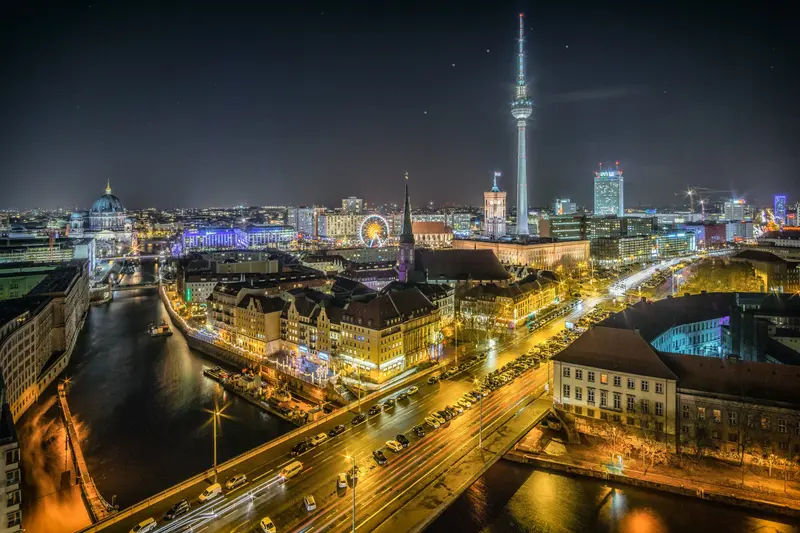
Night train
European Sleeper ES 474 Berlin → Brussels → Paris Nord, arriving in the morning. Mon, Wed, Fri; early December 2026 from Berlin-Spandau 17:52.
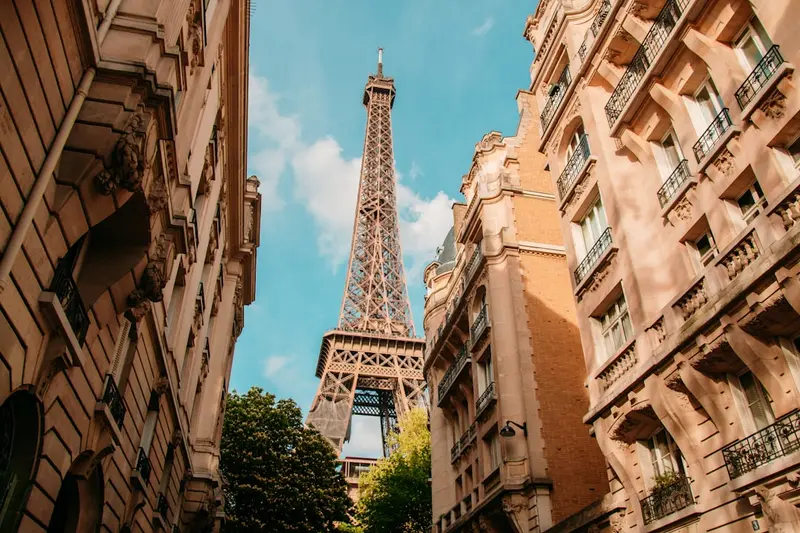
Paris
Paris is the capital of France, situated on both banks of the Seine. You come for its museums like the Louvre and Musée d'Orsay, for the Eiffel Tower, Notre-Dame, and Sacré-Cœur, for the cafés, bistros, and markets, and for the neighborhoods best explored on foot. The banks of the Seine between Pont de Sully and Pont d'Iéna are a UNESCO World Heritage site.Notre-Dame Cathedral on Île de la Cité reopened in December 2024, following the 2019 fire. In Le Marais, you'll find 17th-century noble mansions and small galleries; in the Latin Quarter, the Sorbonne and the Panthéon; and on Montmartre, the winding staircases around Sacré-Cœur.Good to knowPlanning: For a first visit, four to five days are sufficient. Book the Louvre, Eiffel Tower, and Orsay online with a time slot, often days in advance during peak season.Louvre: From January 2026, visitors from outside the European Economic Area pay 32 Euros; the museum is closed on Tuesdays.Best time to visit: Spring and autumn are pleasant and less crowded than July and August; many small restaurants close for their annual holidays in August.
Live in the east of the city, by Canal Saint-Martin or in Belleville, where Parisians sit by the water in the evenings. Shop at Marché d'Aligre and have lunch at Bouillon Chartier from 1896, where French classics are served at low prices. For Southwestern French cuisine with Cassoulet and Foie gras, head to Comptoir de la Gastronomie near Les Halles.
16 Sights
11 Restaurants
History, Art and Daily Life
From Lutetia to Capital CityThe Romans called the Parisii settlement on the Île de la Cité Lutetia. In the Middle Ages, Notre-Dame (construction began in 1163) and the Sainte-Chapelle were built. The Louvre grew from a fortress into a royal palace and has been a museum since 1793. Under Napoleon III, Baron Haussmann had wide boulevards cut through the medieval city starting in the 1850s; the uniform apartment buildings from this era still define the cityscape today. For the 1889 World’s Fair, the Eiffel Tower was built, and for the 1900 fair, the Gare d'Orsay, Grand Palais, and Petit Palais.MuseumsBesides the Louvre and Orsay, the Centre Pompidou for modern art, the Orangerie with Monet's Water Lilies, and the Musée Rodin are worth a visit. Municipal museums like the Petit Palais and Carnavalet offer free permanent exhibitions.Cafés and MarketsThe corner café, the boulangerie, and weekly markets in almost every arrondissement are part of Parisian daily life. The Marché des Enfants Rouges in the Marais is considered the city's oldest covered market.
Night train
Intercités de Nuit 5781 Paris Austerlitz 20:57 → Nice Ville 9:09, daily. Due to engineering works, departures may temporarily be from Paris-Bercy.
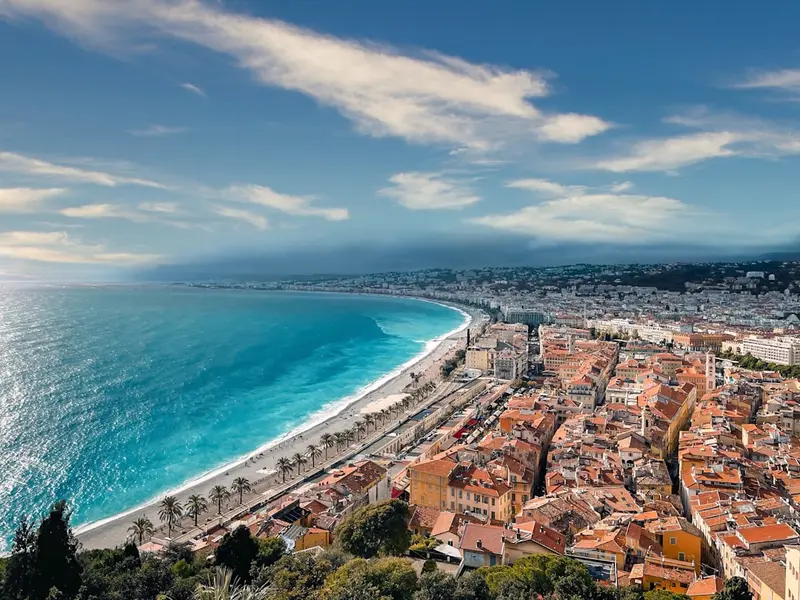
Nice
Nice is the largest city on the Côte d'Azur, situated on the Baie des Anges, about 30 kilometers from the Italian border. Stroll along the Promenade des Anglais by the sea; in the Old Town, Vieux Nice, you'll find baroque alleys and the flower market at Cours Saleya. From Colline du Château, you overlook the Old Town, port, and bay. The city has only been French since 1860 and has retained an Italian influence in its cuisine and culture; try Socca and visit the Musée Matisse or the Musée Marc Chagall. For mild weather and fewer crowds, April to June, as well as September and October, are ideal.
Head to the Cours Saleya market in the morning, try Socca at Chez Pipo by the port and Petits farcis at Chez Acchiardo in the Old Town, both local favorites for decades. Take the Train des Pignes into the hinterland, or reach Villefranche-sur-Mer in minutes by regional train. In the evening, the city congregates on Place Garibaldi.
10 Sights
5 Restaurants
Culture, Art, and History
Nice was founded as the Greek settlement Nikaia; the Roman city Cemenelum was located on the Cimiez hill. From 1388, Nice belonged to the House of Savoy, later to the Kingdom of Sardinia-Piedmont, before it was annexed to France in 1860.This history continues to shape the city's character and traditions today. The Old Town, Vieux Nice, with its baroque churches and narrow streets, clearly shows Italian influences. The Belle Époque left behind grand hotels and villas along the Promenade des Anglais and in Cimiez, reflecting the boom in tourism in the late 19th and early 20th centuries. Nice has preserved its own identity, audible in Niçois (Nissart) and visible in festivals like the February Carnival. For a long time, the city has attracted artists, and museums commemorate Henri Matisse and Marc Chagall, who lived and worked here.
Plan this route as your trip
All stops, trains and nights go into your trip planner. You adjust dates and places to stay afterwards.
This route is a suggestion from our research. Please check timetables, times in port, opening hours and prices before you book – what your tour operator or carrier says is what counts.
Fernweh is a free travel guide and trip planner: routes researched by people, taken over in one click, used day by day on the road. More about Fernweh
3 stops
Route Summary
Duration7 Days
Stops3 Places
TypeCulture