After three nights in Athens, the ferry from Piraeus takes you to Paros in three to four hours. From there, it's just about 45 minutes by ferry to Naxos, where you spend your last five nights.
13 Days / 12 Nights
May–June & September
3 stops
Why This Route?
For those seeking to combine culture and island time with minimal travel.
Hidden Gems
Kolymbithres with smooth granite rocks in Naoussa Bay on Paros
Lefkes mountain village, inland Paros
Alyko Beach, southwest Naxos
Itinerary
Stop 1 • 3 Nights
Athen
City
Rich in culture and history. Perfect for an exciting city trip and Culinary highlights.
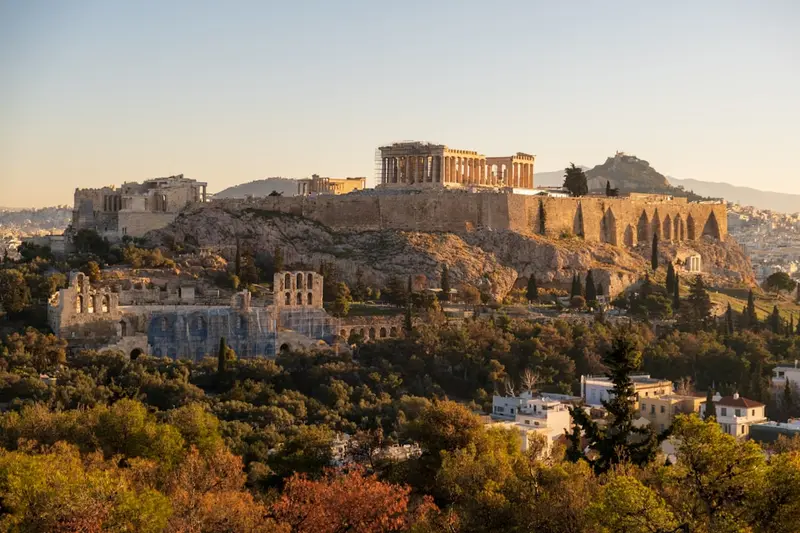
Athens is a city that doesn't keep its 3,400 years in a museum, but lives them daily: Beneath the Acropolis lie districts full of tavernas, record shops, and rooftop bars. If you only seek antiquity, stay two days. If you want to get to know the city, you need four.
12 Sights
6 Restaurants
Culture and History
Athens has been inhabited for over 3,000 years. In the 5th century BC, under Pericles, it gave rise to Attic democracy, tragedy as a theatrical form, and the buildings of the Acropolis. Philosophers like Socrates, Plato, and Aristotle taught in the city.Antiquity and ByzantiumThe Acropolis, with the Parthenon, Propylaea, and Erechtheion, combines Doric and Ionic architectural styles. From the Byzantine era come small domed cruciform churches like Kapnikarea and Panagia Gorgoepikoos, which today stand amidst commercial buildings.Capital since 1834When Athens became the capital of the new state in 1834, it was a small town. Under King Otto, Neoclassical buildings such as the University, Academy, and National Library emerged, designed among others by the Hansen brothers. Today, the Acropolis Museum and the National Archaeological Museum display the ancient finds.
Perfect for unwinding and relaxation. Rich in culture and history.
Paros is located in the center of the Cyclades and is an important hub in the ferry network, bringing the island significant transit traffic and excellent connectivity. From its quarries came Parian marble, which ancient sculptors like Praxiteles used.Those who stay will find two very different port towns, a quiet mountainous interior with old paved paths in between, and on the east coast, windy bays popular with wind- and kitesurfers.
6 Sights
3 Restaurants
The Culture, Art, and History on Paros
Marble as an Export GoodIn archaic times, Paros was a prosperous maritime power, its prosperity stemming from what lay beneath its surface. From the 7th century BC onwards, the fine-grained, translucent Lychnites marble was quarried in the tunnels near Marathi, by the light of oil lamps. Works such as Praxiteles' Hermes and the Aphrodite of Milos were created from Parian marble. The poet Archilochos, also from the 7th century BC, hailed from Paros. The Archaeological Museum in Parikia displays a fragment of the Parian Chronicle, a timeline of Greek history carved in marble.Byzantium and VeniceTradition holds that the Panagia Ekatontapyliani in Parikia was founded by Saint Helena in the 4th century; it was rebuilt in the 6th century under Emperor Justinian and received its dome. Around 1260, the Venetians built the Kastro in Parikia using components from ancient temples, followed in the 15th century by the harbour fortification of Naoussa, whose remnants stand half-submerged.FestivalsEven today, the year's rhythm is dictated by festivals honouring the respective local patron saints. The largest is the Dormition of the Theotokos on August 15th in Parikia, featuring a procession of the icon of Panagia Ekatontapyliani through the alleys. In Naoussa, on August 23rd, a re-enacted pirate raid with fireworks commemorates the raids of earlier centuries.
Rich in culture and history. Perfect for unwinding and relaxation and Route highlight.
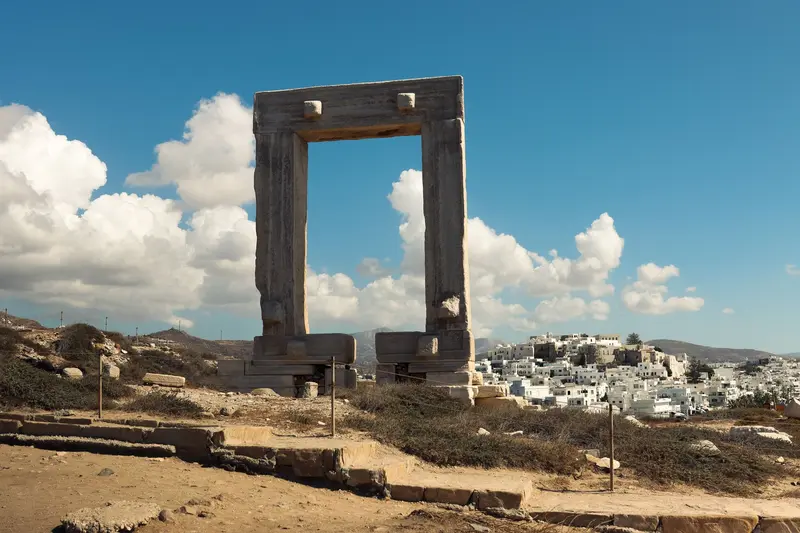
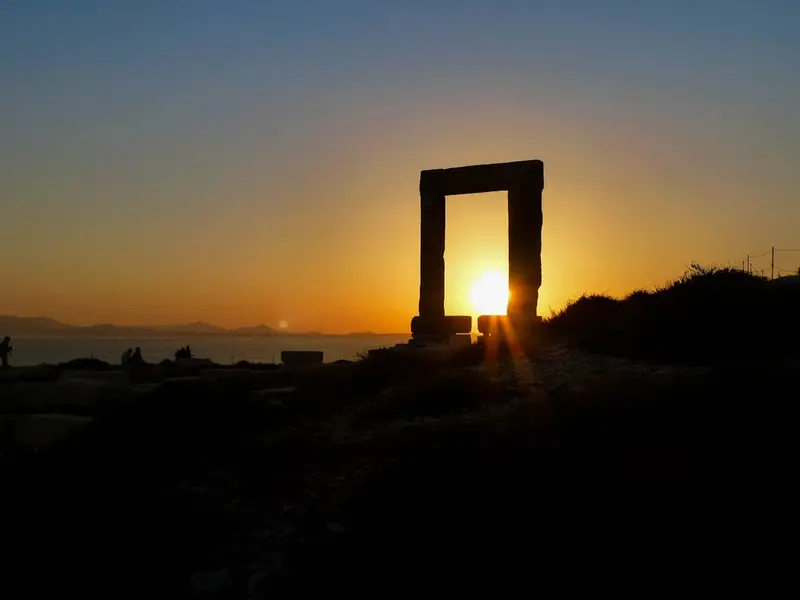
At around 430 square kilometres, Naxos is the largest island in the Cyclades and one of the most fertile. Long sandy beaches such as Agios Prokopios and Plaka line the west coast, while the interior has mountains, olive groves and villages of marble and stone. Above the harbour of Chora stands the Portara, the marble gateway of an unfinished temple of Apollo, with the Venetian Kastro above the town. Visit in May, June or September if you can, and plan on a rental car for the mountain villages.
5 Sights
4 Restaurants
History and culture
Naxos was a centre of island culture as early as the Early Cycladic period in the 3rd millennium BC. In the Archaic period the island exported its marble and sculpture; among other things, the Naxians dedicated the Terrace of the Lions on Delos. Myth links Naxos with Dionysus and Ariadne, whom Theseus left behind here.Duchy of NaxosAfter the Fourth Crusade, the Venetian Marco Sanudo founded the Duchy of the Archipelago in 1207, with its seat on Naxos. The Kastro of Chora, with its Catholic cathedral and noble houses, and the tower houses of the interior date from this period. In 1566 the island came under Ottoman control; the Catholic families have remained to this day.Churches and villagesThe Tragea valley and the area around Chalki hold many small Byzantine churches, some with very early frescoes; those of Panagia Drosiani date back to the 7th century. In Apiranthos, older residents speak their own dialect, traced back to settlers from Crete.