Fernweh: Home
    ExploreTravel GuidesPlan a tripMy tripLast visited
    de|en
    All Places & RegionsAll highlightsAbout FernwehFAQPrivacy PolicyImprint
    ExploreTravel GuidesPlan a tripMy tripLast visited
    • Neighborhoods & highlights
    • Recommendations
    • Walking tours
    • Eat & drink
    • Food culture
    • Culture
    • Nightlife
    • Getting around
    • Accommodation
    • Plan trip
    • Nearby
    Paros

    Greece

    Paros

    CityCulture

    Paros is located in the center of the Cyclades and is an important hub in the ferry network, bringing the island significant transit traffic and excellent connectivity.

    by Felix Gillen

    1. Home
    2. Destinations
    3. Greece
    4. Cyclades
    5. Paros
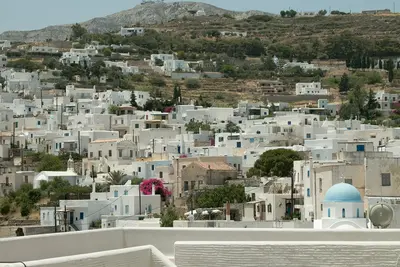
    Paros is located in the center of the Cyclades and is an important hub in the ferry network, bringing the island significant transit traffic and excellent connectivity. From its quarries came Parian marble, which ancient sculptors like Praxiteles used.Those who stay will find two very different port towns, a quiet mountainous interior with old paved paths in between, and on the east coast, windy bays popular with wind- and kitesurfers.
    Lefkes
    Zde / Wikimedia Commons / CC BY-SA 4.0

    District 1 of 2

    Lefkes

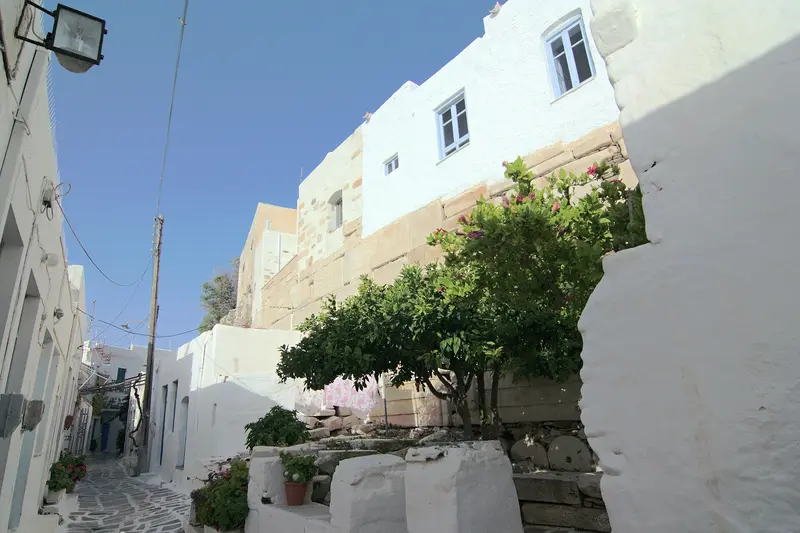
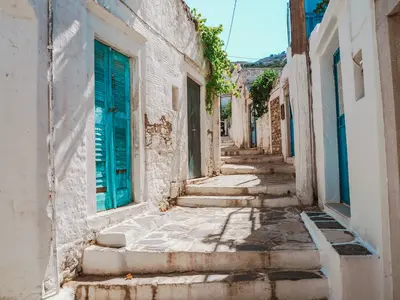
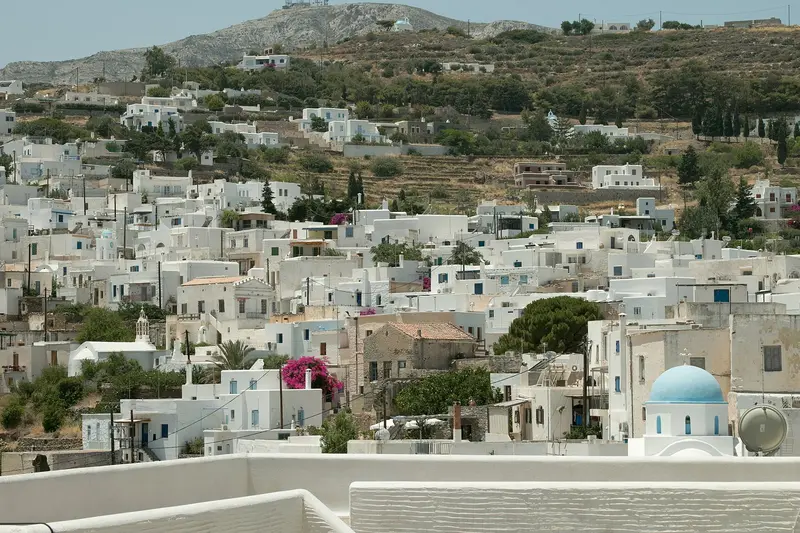
    Lefkes is located at about 250 meters, almost in the center of Paros, eleven kilometers from Parikia, and was once the island's main village.

    Discover
    Naoussa

    District 2 of 2

    Naoussa

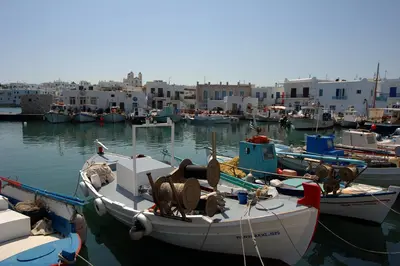
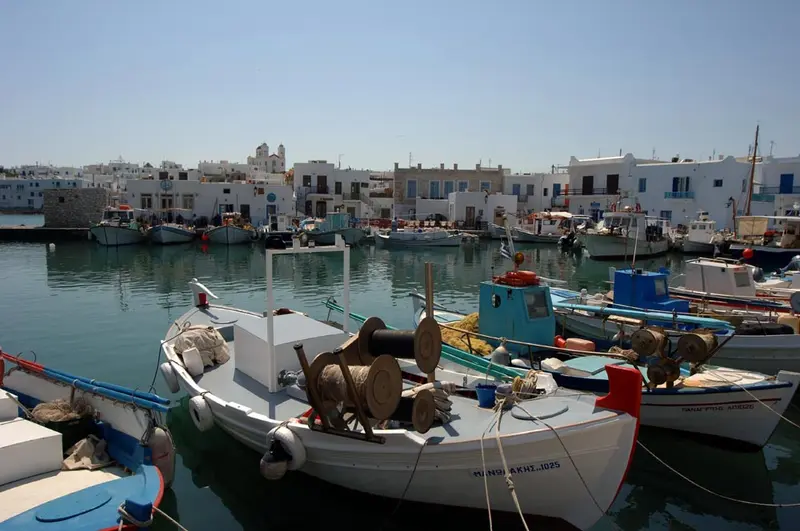
    Naoussa, located on the large northern bay, is Paros' second-largest town and boasts one of the biggest fishing fleets in the Cyclades. Around its small old harbour, fishing boats, tavernas, and bars cluster, some housed in former boathouses.

    Discover

    Sights in Paros

    Discover the most important sights and attractions

    White Cross over Parikia

    1White Cross over Parikia

    On a hill on the eastern edge of Parikia stands a large white cross, visible from the town and port. From there, you overlook the rooftops of the Old Town, Parikia Bay, and the ferry port. You can reach it on foot or by car via a paved road. In the evening, the sun sets over the bay to the west.
    Open in Google Maps
    Panagia Ekatontapyliani

    2Panagia Ekatontapyliani

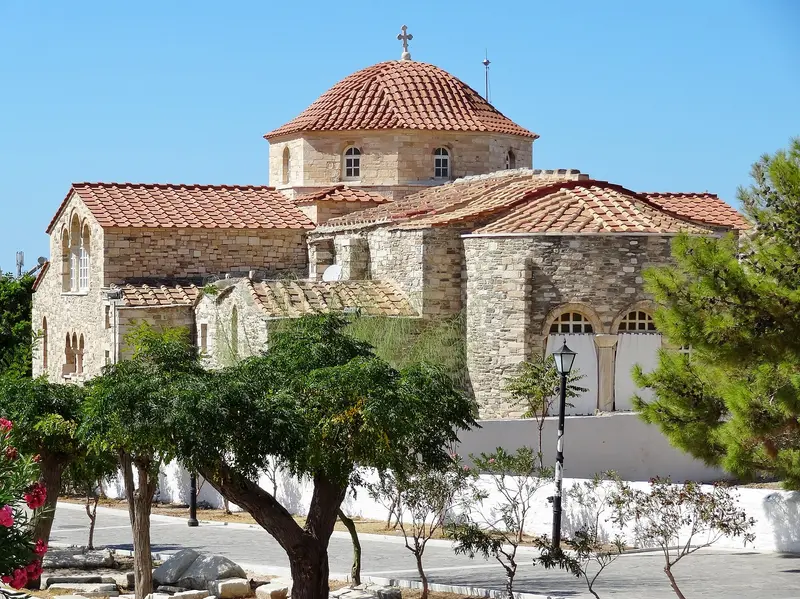
    The Panagia Ekatontapyliani in the centre of Parikia is one of Greece's most important early Christian churches. Its founding is traditionally attributed to Saint Helena in the 4th century, and in the 6th century, it was rebuilt under Emperor Justinian as a cross-in-square church. The name is usually interpreted as the Church of 100 Gates; according to a legend, only 99 of them are visible. The complex includes several chapels and an early Christian baptistery with a cruciform baptismal font. A small Byzantine museum displays icons; for the church interior, shoulders and knees should be covered.
    Open in Google Maps
    Chapel Agios Fokas

    3Chapel Agios Fokas

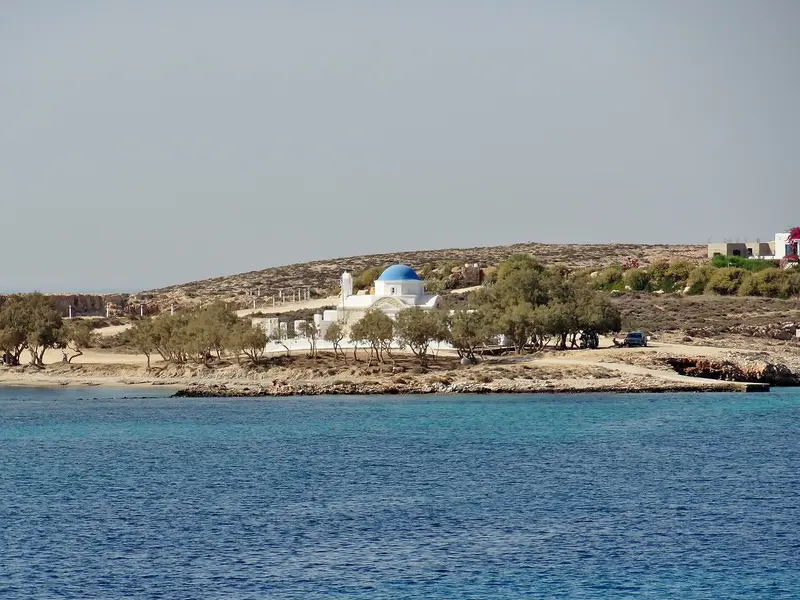
    The Agios Fokas Chapel is located at the northern entrance of Parikia Bay in the Krios area, directly on the water. The small, whitewashed building with its blue dome can be seen from the ferries entering the port of Parikia. In Orthodox tradition, Saint Phokas is regarded as the patron saint of seafarers. From the chapel, you can gaze across the bay towards Parikia.
    Open in Google Maps
    Kastro of Parikia

    4Kastro of Parikia

    The castle on the low hill above the harbor was erected by the Venetians around 1260, using columns and marble blocks from ancient temples that once stood there as building material. Archaeologists found building parts from three archaic and two classical temples within its walls; a small remnant of the archaic Temple of Athena remains on the peak. Today, primarily a wall section and a round tower remain of the castle. At the very top lies the church of Agios Konstantinos, featuring a covered courtyard and bay views, making it one of the most beautiful spots for sunset.
    Open in Google Maps
    Marble Tunnels of Marathi
    Attraction

    5Marble Tunnels of Marathi

    Near Marathi, about five kilometers from Parikia on the road to Lefkes, lie the ancient marble quarries of Paros. From the 7th century BC, the fine-grained, translucent Lychnites was quarried here underground, in the light of oil lamps, hence its name. From Parian marble, works such as the Hermes of Praxiteles and the Aphrodite of Milos were created. At the entrance to the Nymphs' Grotto, a votive relief from the 4th century BC is carved into the rock, along with remnants of the facilities with which a company resumed quarrying in the 19th century. The tunnels themselves are unsecured, and a descent is not advisable.
    Open in Google Maps
    Archaeological Museum of Paros
    Museum

    6Archaeological Museum of Paros

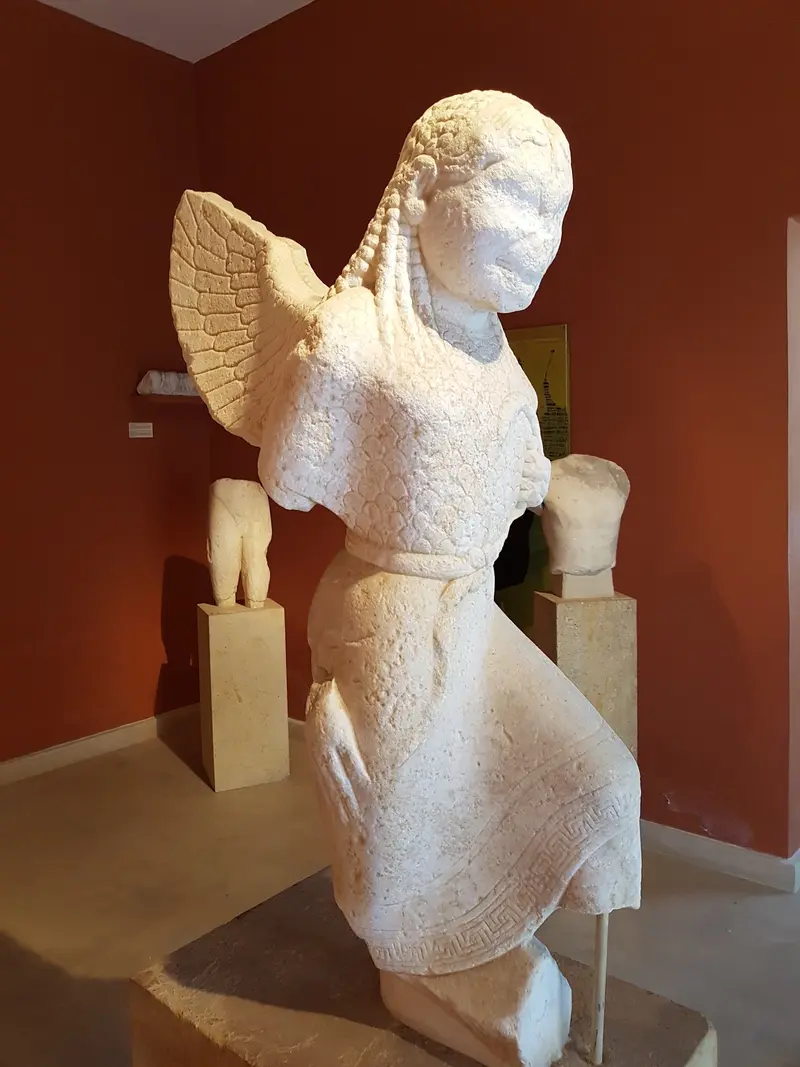
    The museum behind Panagia Ekatontapyliani in Parikia displays finds from Paros, Antiparos, and Despotiko. Its most important piece is a fragment of the Parian Chronicle, a marble slab from the 3rd century BC, which lists events of Greek history from 1582 to 264/263 BC; the other two parts are located in the Ashmolean Museum in Oxford. Also on display are the running Gorgon from the mid-6th century BC, the Nike of Paros from around 470 BC, and relief slabs from the monument of the poet Archilochos.
    Open in Google Maps

    City walks in Paros

    Curated walking tours through the city's highlights, handpicked by experienced travel journalists.

    Naoussa: Charming Fishing Village & Venetian Heritage

    Explore picturesque Naoussa, known for its idyllic fishing harbor, the Venetian fortress and winding lanes. Immerse yourself in the relaxed atmosphere of this lively village and discover its unique maritime history.

    ~2 Std.
    Open in Google Maps
    Stops (6)

    Dining & Drinks

    1

    Chaniotis Restaurant

    The Mageirio on Manto Mavrogenous Square in the center of Parikia prepares a selection of slow-cooked dishes in the morning, which are served from the pots throughout the day. Typical dishes include bean and lentil soup, Stifado, Kokkinisto, Briam, and stuffed vegetables. Vegetables, cheese, and sausage are largely sourced from the island.
    Show on Google Maps
    2

    Kafepotopoleio Pinoklis

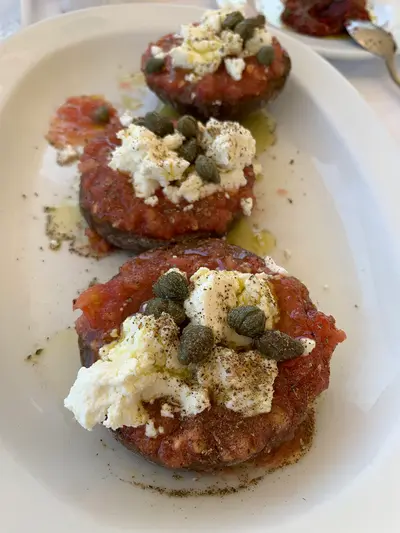
    The traditional Kafeneio and taverna is located on the waterfront road of Parikia, a few steps from the port, with sea views. Mezedes such as Dolmades, stuffed mushrooms, and Dakos salad are served, along with homemade Greek dishes, including many vegetarian options. Live music is offered on select evenings.
    Show on Google Maps
    3

    Restaurant AROMAS

    Located in Parikia near the yacht harbor, the restaurant offers outdoor tables under a leafy canopy. The cuisine is Greek, featuring daily changing specials, fresh fish, Moussaka, and Saganaki. From the garden, you can watch the sunset over the bay.
    Show on Google Maps

    Eating and Drinking on Paros

    Paros lives on fish, goat cheese, and its own viticulture, documented since antiquity. Mountain tavernas cook differently than coastal ones.
    Gouna

    Gouna

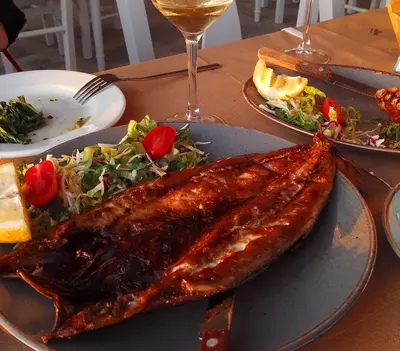
    Mackerel, butterflied, pre-dried in the sun, and then grilled over charcoal. This method dates back to before refrigeration and makes the fish firm and salty. In Naoussa and Aliki, it's on almost every tavern menu in summer.

    Revithokeftedes

    Fried chickpea balls with onion, mint, and oregano, a Lenten dish now an everyday meze. Served with lemon and a yogurt dip. Almost every taverna has its own version, ranging from herbal to spicy.
    Xinomizithra and Touloumotyri

    Xinomizithra and Touloumotyri

    The soft, sour fresh cheese Xinomizithra is made on Paros from goat's and sheep's milk and served as a spread. Touloumotyri, on the other hand, ripens in a goatskin pouch and tastes much sharper. You can get both in the cheese shops of Parikia and at the market in Marpissa.

    Wine from Paros

    The island primarily cultivates white Monemvasia and red Mandilaria, from which an unusual blend is made. The cooperative near Parikia and some small estates offer tastings. Open house wine is served in carafes on tables in the village taverns.

    Sweets from Naoussa

    In Naoussa and Lefkes, almond pastries and Loukoumia are made in small bakeries, often only in the mornings. This is accompanied by Souma, a clear pomace brandy distilled after the grape harvest. It is served in small glasses after meals.

    The Culture, Art, and History on Paros

    Marble as an Export GoodIn archaic times, Paros was a prosperous maritime power, its prosperity stemming from what lay beneath its surface. From the 7th century BC onwards, the fine-grained, translucent Lychnites marble was quarried in the tunnels near Marathi, by the light of oil lamps. Works such as Praxiteles' Hermes and the Aphrodite of Milos were created from Parian marble. The poet Archilochos, also from the 7th century BC, hailed from Paros. The Archaeological Museum in Parikia displays a fragment of the Parian Chronicle, a timeline of Greek history carved in marble.Byzantium and VeniceTradition holds that the Panagia Ekatontapyliani in Parikia was founded by Saint Helena in the 4th century; it was rebuilt in the 6th century under Emperor Justinian and received its dome. Around 1260, the Venetians built the Kastro in Parikia using components from ancient temples, followed in the 15th century by the harbour fortification of Naoussa, whose remnants stand half-submerged.FestivalsEven today, the year's rhythm is dictated by festivals honouring the respective local patron saints. The largest is the Dormition of the Theotokos on August 15th in Parikia, featuring a procession of the icon of Panagia Ekatontapyliani through the alleys. In Naoussa, on August 23rd, a re-enacted pirate raid with fireworks commemorates the raids of earlier centuries.

    Nightlife

    1

    Big Noses

    The café-bar is on Parikia's waterfront road near the port. Order at the counter: daytime, breakfast, salads, sandwiches, and bowls; evenings, wine and cocktails. Seating is available indoors and on several outdoor spaces.
    Show on Google Maps
    2

    Pirate Bar

    This small bar in the old town of Parikia has existed since 1983, making it one of the island's oldest. Inside, whitewashed walls meet stone and wood in dim light; outside, a few tables are set on the alley's cobblestones. The cocktails are mixed with local ingredients.
    Show on Google Maps

    Exploring Locally

    Bus and Rental VehiclesParos, with KTEL Paros, boasts a dense bus network for a Cycladic island. Routes fan out from Parikia to Naoussa, Pounta, Alyki, Drios, and across the island via Lefkes, with very frequent services on the main axis in summer. For those wanting to reach the southern bays or mountain villages, a rental car or scooter is recommended. Book early in August.On Foot and TaxisThe old town centers of Parikia, Naoussa, and Lefkes are car-free and best explored on foot; the marble paving can be slippery and is partly steep. Taxis are available at Parikia harbor and in front of the airport.Ferries and AirportTo Antiparos, a car ferry departs from Pounta, crossing in just a few minutes; in summer, there's also a passenger ferry directly from Parikia. From Parikia, ferries sail to Piraeus, Rafina, and most Cycladic islands. The airport is located in the southwest near Alyki, about ten kilometers from Parikia, with flights from Athens. A KTEL bus connects it with Parikia.

    Accommodations in Paros

    Find perfect stay in Paros

    Booking.com* (Affiliate link)
    Search Hotels
    Agoda* (Affiliate link)
    Search Hotels
    Airbnb
    Vacation Rentals

    * Affiliate link: if you book through it, we earn a small commission. The price stays the same for you.

    Campgrounds in Paros

    Find perfect campground in Paros

    Search via Google Maps
    Campgrounds nearby (15km)
    Camping.info
    Find Campgrounds
    Park4Night
    RV Parks & Camping

    Plan your trip to Paros

    Save places, build a route and plan your city trip, all in one place.

    1. 1
      Sunrise over alpine peaks and a sea of clouds
      1234

      Round trip

      12 days · 4 stops

      Saved

      Pick a route

      Pick a ready-made one or save places and plan your own.

      Open bookmarks
    2. 2

      Trip to Paros

      Live
      • 1White Cross over Parikia3 days
      • 2Panagia Ekatontapyliani4 days
      • 3Chapel Agios Fokas5 days
      Budget

      Plan your trip

      The planner sorts stops, days and budget. Plan together in real time.

      Start trip planning
    3. 3
      9:41 No signal
      Paros
      Available offline

      Use it on the road

      Download the guide to your phone and use it on site, even offline.

    Nearby

    Lefkes

    Lefkes

    Lefkes is located at about 250 meters, almost in the center of Paros, eleven kilometers from Parikia, and was once the island's main village. The village sprawls amphitheatrically up the slope beneath a pine-covered hill, with Cycladic houses standing alongside neoclassical buildings. Cars are left at the car park on the outskirts; the labyrinth of alleys is only accessible on foot.The main street, Ramnos, leads past the House of Literature, a residence for writers and translators since 2004, up to the Agia Triada church of Parian marble. On the village's edge begins the Byzantine path to Prodromos. A small folklore museum exhibits tools, embroideries, and household items from past village life, and after August 15, Lefkes celebrates its major village festival.
    Naoussa

    Naoussa

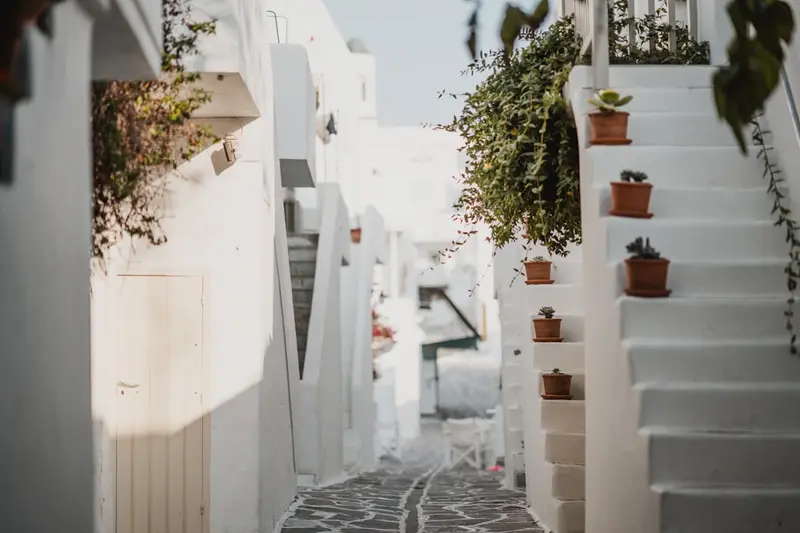
    Naoussa, located on the large northern bay, is Paros' second-largest town and boasts one of the biggest fishing fleets in the Cyclades. Around its small old harbour, fishing boats, tavernas, and bars cluster, some housed in former boathouses. Behind this begins a car-free labyrinth of whitewashed alleyways, small churches, and courtyards brimming with bougainvillea, originally designed to protect against pirates.At the harbour entrance stand the partially submerged remains of Kastelli, a 15th-century Venetian fortification, next to the Chapel of Agios Nikolaos, patron saint of fishermen. Around the bay lie beaches like Kolymbithres, Agios Ioannis, and Monastiri; many can be reached by small boats from the harbour in summer. On August 23rd, the town re-enacts a pirate raid with fireworks and dancing.
    Cyclades

    Cyclades

    The Cyclades are a group of around 220 islands and islets in the central Aegean Sea; only a fraction are inhabited. White-washed villages, barren hills, and a dense ferry network define the region, uniting very diverse islands, from Mykonos' nightlife to Amorgos' quiet mountain villages.If you want to see more than one island, plan your route along the ferry lines, not the map. Two or three islands on a single route are easily manageable in a week.
    Naxos

    Naxos

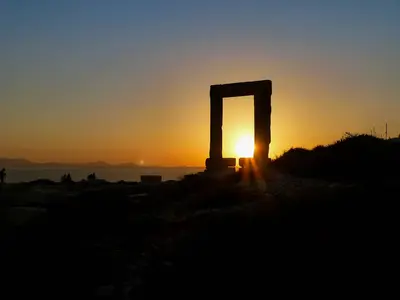
    At around 430 square kilometres, Naxos is the largest island in the Cyclades and one of the most fertile. Long sandy beaches such as Agios Prokopios and Plaka line the west coast, while the interior has mountains, olive groves and villages of marble and stone. Above the harbour of Chora stands the Portara, the marble gateway of an unfinished temple of Apollo, with the Venetian Kastro above the town. Visit in May, June or September if you can, and plan on a rental car for the mountain villages.
    Poseidonia and Agathopes

    Poseidonia and Agathopes

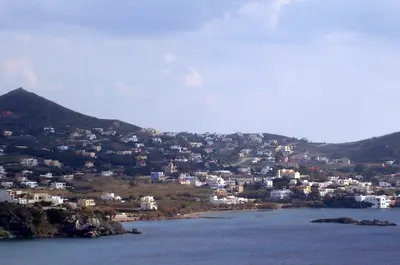
    Poseidonia, in the southwest of Syros, is named after the sea god Poseidon, but is often still called Della Grazia, after the Catholic Church Madonna della Grazia. In the 19th century, the place was the summer retreat for wealthy families from Ermoupoli. From this period, neoclassical villas stand here in large gardens with pine trees, along with the light blue painted church of Agios Ioannis Prodromos from 1876 with a freestanding bell tower.A few minutes' walk away lies Agathopes, one of the island's most popular beaches, with fine sand and shallow, clear water. Further south follows the small, wilder bay of Komito, north, the village of Finikas with a beach and marina.

    Sources & method

    • Photos: Wikimedia Commons, Unsplash, Google Maps. Each photo carries its credit.
    • Place data such as addresses and ratings comes from Google Maps.
    • The content is based on web research from public, traceable sources. How the content is made · The role of AI