Photo by Mario Spencer on Pexels
Round trip · Guatemala
Guatemala in 16 Days: Highlands, Petén and Caribbean
by Felix Gillen
- 16 Days / 15 Nights
- Antigua Guatemala → Lívingston
This tour combines colonial Antigua with Lake Atitlán and Chichicastenango market, leads through Semuc Champey pools into the Petén to Tikal and Yaxhá, concluding at Río Dulce and in Lívingston on the Caribbean. The longest stages are shuttle rides to Lanquín and on to Flores. Avoid night drives outside cities, as per the Foreign Office; check current travel/safety advisories before your trip.
At a glance
- Duration
- 16 Days / 15 Nights
- Stops
- 7 · Antigua Guatemala → Lívingston
- Arrival
- Flight · Guatemala-Stadt (GUA)
- Best Time to Go
- November to April
7 stops
Why This Route?
This route covers Guatemala's three major landscapes: the volcanic highlands with Maya markets, the Petén rainforest with its ancient cities, and the Caribbean coast with Garífuna culture.
Hidden Gems
- Cerro de la Cruz in Antigua in the morning
- Side entrance of Santo Tomás in Chichicastenango
- first cave tour in the K'anba Caves near Semuc Champey
- sunrise at Temple IV in Tikal
- Structure 216 in Yaxhá at sunset
- hot waterfall of Finca El Paraíso on Río Dulce
Getting there and back
Round trip, returning to where you started
- Arrival
- Flight · Guatemala-Stadt (GUA)From La Aurora Airport to Antigua it's about 40 kilometers, shuttles take about one and a half hours.
- Departure
- Flight · Guatemala-Stadt (GUA)From Lívingston, a 30-minute lancha ride goes to Puerto Barrios, followed by a full-day bus journey back to Guatemala City. Alternatively, fly from Flores, a one-hour return flight, skipping the Caribbean.
Itinerary
Antigua Guatemala
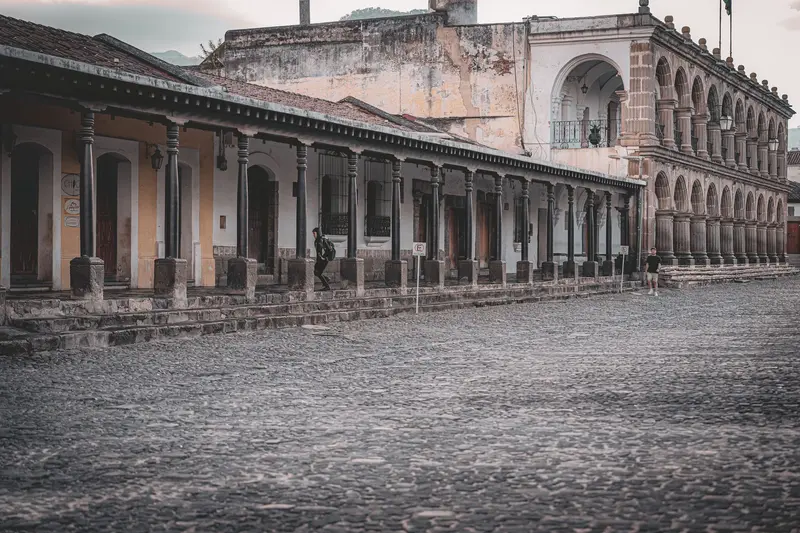
Antigua Guatemala is the former capital of the Spanish Captaincy General and has been a UNESCO World Heritage site since 1979. The city is situated at an altitude of approximately 1500 meters in the Panchoy Valley, about 40 kilometers from Guatemala City airport and surrounded by volcanoes.It was founded in 1543 at its third location. The Santa Marta earthquakes of 1773 destroyed large parts, after which the capital was relocated. What remains is a grid of cobblestone streets with churches, convents, and ruins, some of which are restored and some accessible as ruins.Among the most famous buildings are the Palacio de los Capitanes Generales, the Cathedral, La Merced, and Las Capuchinas. During Holy Week, processions move across carpets made of flowers and colored sawdust. The German Foreign Office also warns of a risk of robberies in Antigua.
Day 1 Arrival, shuttle from GUA approx. 1.5h. Optional half-day tour to Pacaya, check volcano status and Foreign Office advisories beforehand.
10 Sights
3 Restaurants
Baroque, Earthquake & Holy Week
A City After the EarthquakeThe Santa Marta earthquakes of 1773 ended Antigua's time as capital. Many monasteries were subsequently abandoned, including Las Capuchinas. The preservation of the monuments is now managed by the Consejo Nacional para la Protección de La Antigua Guatemala (CNPAG).Semana SantaGuatemala's Holy Week has been on UNESCO's Representative List of the Intangible Cultural Heritage since 2022. Processions carry figures on their shoulders through streets that are first decorated with colorful Alfombras.Hermano PedroThe tomb of Pedro de San José Betancur lies in San Francisco Church. The missionary from the Canary Islands collected alms for the poor and was canonized by Pope John Paul II.
Panajachel (Lake Atitlán)
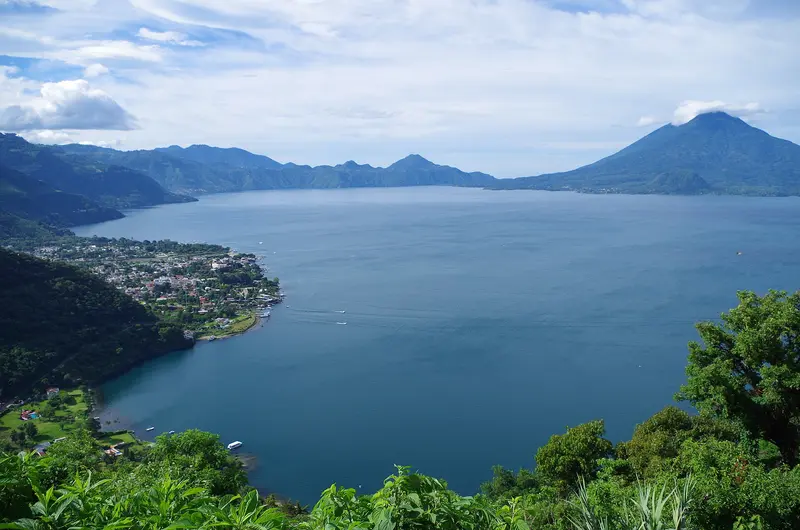
Panajachel is the main town on the northern shore of Lake Atitlán and the departure point for boats to the lake villages. Its main street, Calle Santander, leads from the shore to the edge of the old town center.On Thursday, market day, Panajachel reveals itself as a typical highland village. Tourist shuttles from Antigua take approximately three hours.
Shuttle from Antigua approx. 3 hrs. Lancha to San Pedro 45-60 min. Thursday or Sunday day trip to Chichicastenango market, approx. 1.5 hrs each way.
3 Sights
Antigua Guatemala
Antigua Guatemala is the former capital of the Spanish Captaincy General and has been a UNESCO World Heritage site since 1979. The city is situated at an altitude of approximately 1500 meters in the Panchoy Valley, about 40 kilometers from Guatemala City airport and surrounded by volcanoes.It was founded in 1543 at its third location. The Santa Marta earthquakes of 1773 destroyed large parts, after which the capital was relocated. What remains is a grid of cobblestone streets with churches, convents, and ruins, some of which are restored and some accessible as ruins.Among the most famous buildings are the Palacio de los Capitanes Generales, the Cathedral, La Merced, and Las Capuchinas. During Holy Week, processions move across carpets made of flowers and colored sawdust. The German Foreign Office also warns of a risk of robberies in Antigua.
Return from Panajachel, approx. 3h.
10 Sights
3 Restaurants
Baroque, Earthquake & Holy Week
A City After the EarthquakeThe Santa Marta earthquakes of 1773 ended Antigua's time as capital. Many monasteries were subsequently abandoned, including Las Capuchinas. The preservation of the monuments is now managed by the Consejo Nacional para la Protección de La Antigua Guatemala (CNPAG).Semana SantaGuatemala's Holy Week has been on UNESCO's Representative List of the Intangible Cultural Heritage since 2022. Processions carry figures on their shoulders through streets that are first decorated with colorful Alfombras.Hermano PedroThe tomb of Pedro de San José Betancur lies in San Francisco Church. The missionary from the Canary Islands collected alms for the poor and was canonized by Pope John Paul II.
Lanquín
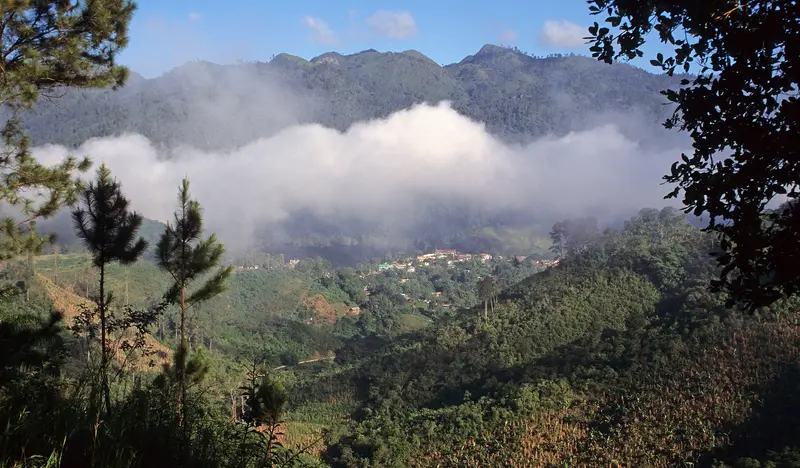
Lanquín is a small Q'eqchi' village in the Río Cahabón valley in Alta Verapaz and the gateway to Semuc Champey, located about 10 kilometers south. In the evening, a visit to the Grutas de Lanquín on the edge of town is worthwhile, when large numbers of bats fly out of the cave.Approximately 95 percent of the population are Q'eqchi' Maya. Pick-ups will take you to Semuc Champey in about 30 to 45 minutes.
Shuttle from Antigua 8 to 8.5 hrs. One day for Semuc Champey, pick-ups from Lanquín 30 to 45 min.
1 Sight
Q'eqchi' town on the Cahabón
PopulationThe population of Lanquín is approximately 95 percent Q'eqchi'-Maya.The GrutasThe cave system on the edge of town is managed by the community and protected by a presidential decree from 1955.
Flores
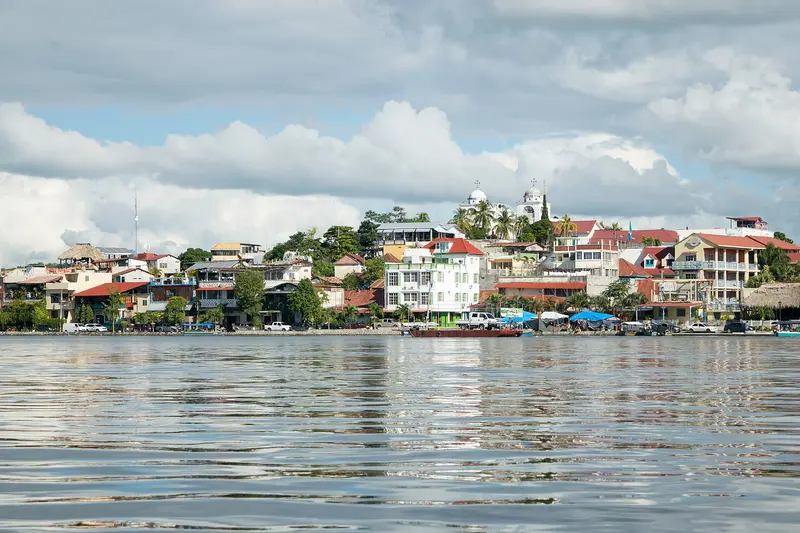
Flores is the small island town in Lago Petén Itzá and the capital of the Petén Department, connected by a causeway to Santa Elena on the mainland. Colourful houses, cobblestone streets, and lakeside paths make it a popular base for Tikal, which is about an hour away.The island is only a few blocks wide, and in its centre stands the Cathedral Nuestra Señora de los Remedios y San Pablo Itzá. Santa Elena on the mainland is more utilitarian; it's home to the airport, bus station, and many accommodations. You can cross to San Miguel on the opposite peninsula by small boats.
Shuttle from Lanquín 6 to 8 hrs. Excursions to Tikal approx. 1 hr. and to Yaxhá approx. 1 hr. 15 min.
3 Sights
2 Restaurants
Nojpetén to Flores
Capital of the ItzáThe Itzá had their capital, Nojpetén, by the lake. The Spanish conquered it in 1697; it was the last independent Maya city.The Current NameIn 1831, the island was named Flores, honoring a Guatemalan patriot. Today, the cathedral serves as the seat of the Apostolic Vicariate of El Petén.
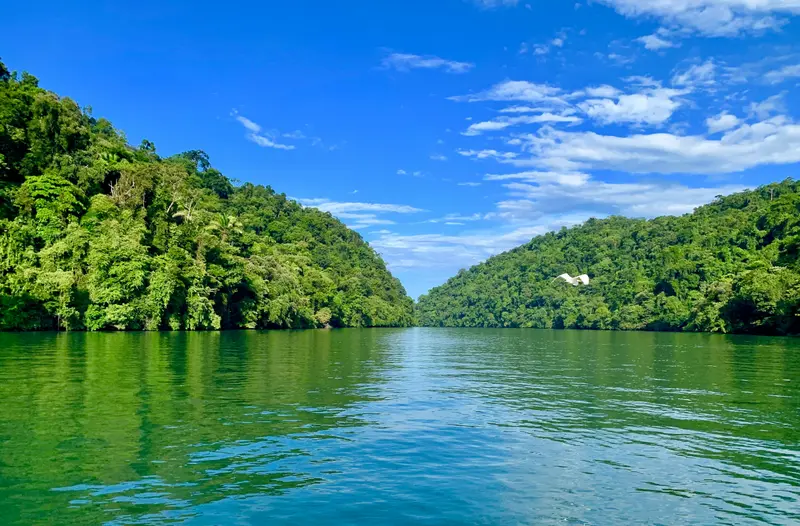
Río Dulce
The Río Dulce connects Lago de Izabal with the Caribbean near Lívingston and flows through a jungle-clad limestone gorge. Many come for the boat trip to Lívingston, the Castillo de San Felipe, and the hot springs of Finca El Paraíso.The town of Río Dulce, also known as Fronteras, is located at the large road bridge where the river leaves the lake. Slightly west, the Castillo de San Felipe de Lara guards the narrowest point at the lake's exit. Downstream, the Río Dulce widens into El Golfete, home to the Biotopo Chocón Machacas protected area.
Shuttle from Flores, ~4 hrs.
3 Sights
Fortress & River
Protection from PiratesThe Castillo de San Felipe was built in the 17th century to protect the villages and trade caravans on Lake Izabal from pirates. In 1686, pirates conquered and burned down the fortress; today, a reconstruction from the 1950s stands.World Heritage CandidateSince 2002, the Castillo has been on Guatemala's tentative UNESCO World Heritage List.
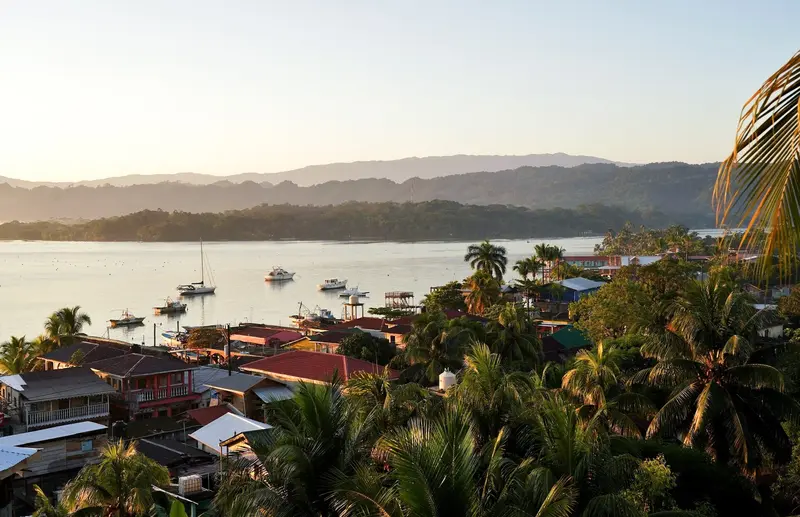
Lívingston
Lívingston is a Caribbean town at the mouth of the Río Dulce and the center of Garífuna culture in Guatemala. There's no road; you can only reach the town by boat from Río Dulce or Puerto Barrios, and the journey through the river gorge alone is worth it.In the town, Garífuna, Afro-Caribbean influences, Maya, and Ladinos mix. Typical is Tapado, a seafood stew in coconut milk. From the town, a path leads to the cascades of Los Siete Altares; you reach Playa Blanca by boat.Around November 26th, Lívingston celebrates National Garífuna Day for several days.
Boat from Río Dulce through the gorge, 1.5-2 hrs. Last day, motorboat to Puerto Barrios (30 min.), then a full-day bus to Guatemala City.
2 Sights
Garifuna Culture
OriginThe Garifuna descend from escaped and shipwrecked West Africans who intermingled with indigenous peoples of the Caribbean. They have their own language, traditions, and rituals.Intangible Cultural HeritageThe language, dance, and music of the Garifuna were proclaimed a Masterpiece by UNESCO in 2001 and inscribed on the Representative List of the Intangible Cultural Heritage in 2008, jointly for Belize, Guatemala, Honduras, and Nicaragua.Garifuna DayNovember 26 is Garifuna National Day. In Livingston, celebrations take place for several days around this date.
Plan this route as your trip
All stops, trains and nights go into your trip planner. You adjust dates and places to stay afterwards.
This route is a suggestion from our research. Please check timetables, times in port, opening hours and prices before you book – what your tour operator or carrier says is what counts.
Fernweh is a free travel guide and trip planner: routes researched by people, taken over in one click, used day by day on the road. More about Fernweh
7 stops
Route Summary
Duration16 Days
Stops7 Places
TypeMixed