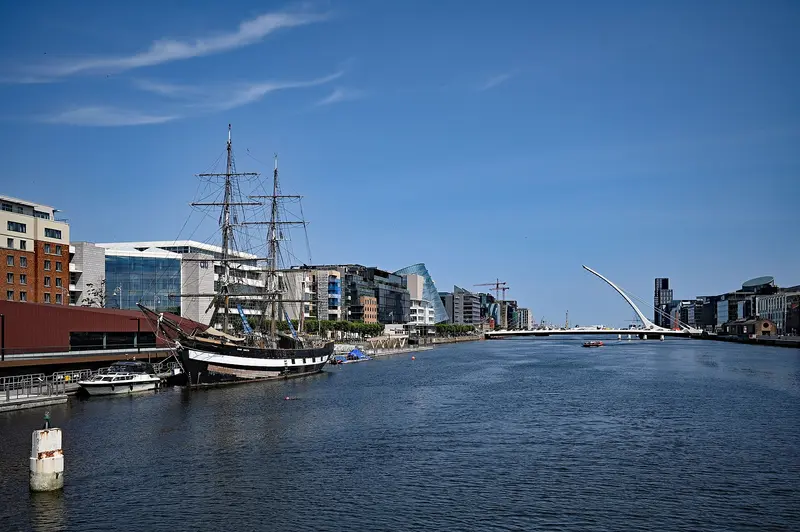
City trip · Ireland
Dublin in Four Days
by Felix Gillen
- 5 Days / 4 Nights
Four days: Georgian Dublin around Trinity College and the squares, the medieval city with the Liberties and Kilmainham, the Northside across the Liffey with Henrietta Street and Glasnevin, and finally the Howth peninsula by suburban train. The river divides the city into the wealthier Southside and the older, poorer Northside, which many visitors only cross for O'Connell Street. You walk the centre; for Kilmainham, Glasnevin and Howth you take the bus, Luas or DART. Several of the big museums are free, while the Book of Kells, Kilmainham Gaol and Henrietta Street need booking ahead.
At a glance
- Duration
- 5 Days / 4 Nights
- Stops
- 1
- Arrival
- Flight · Dublin (DUB)
- Best Time to Go
- May to September: long evenings, mild weather and a dry cliff path at Howth
More on when to go
Around St Patrick's Day on 17 March the city is packed and expensive. In winter it rains often and gets dark early, but the pubs are full of locals and rooms are cheaper.
1 stop
Why This Route?
The route steers clear of Temple Bar at night, which belongs mostly to stag parties, and takes you to the pubs where Dubliners play music and talk instead. It tells Ireland's history where it happened, from Viking Dublin through the tenements to the Easter Rising, and ends by the sea, where the city itself goes walking at the weekend.
Hidden Gems
- Marsh's Library next to St Patrick's Cathedral, Ireland's oldest public library, with wire cages in which readers were once locked
- the tenement tour at 14 Henrietta Street, which tells the story of the Dubliners who lived dozens to a house
- John Kavanagh, The Gravediggers, the pub by the wall of Glasnevin Cemetery, run by the same family since 1833
Getting there and back
Round trip, returning to where you started
- Arrival
- Flight · Dublin (DUB)Dublin has nonstop flights from many cities in Germany, Austria and Switzerland, about two hours in the air. There is no rail link to the airport: the Dublin Express and Aircoach express coaches take 30 to 40 minutes to O'Connell Street and on into the city centre. Without flying, you can travel by train via London to Holyhead and take the ferry to Dublin Port, a long but doable day.
- Departure
- Flight · Dublin (DUB)From Howth the DART takes about 30 minutes back to Connolly; from there and from O'Connell Street the express coaches reach the airport in 30 to 40 minutes. If you fly to the USA, allow extra time for US border preclearance in Terminal 2.
Day by day
Day 1: Georgian Dublin: Trinity, museums and squares
- Trinity College & Book of KellsTen minutes from the airport coach stop on O'Connell Street across O'Connell Bridge. Book your slot for the Book of Kells and the Long Room online at visittrinity.ie; the Old Library remains open until the end of 2027 and will then be renovated.
- National Museum of Ireland – ArchaeologyFive minutes on in Kildare Street, free; Tuesday to Saturday 10 am–5 pm, Sunday and Monday 1–5 pm. The Iron Age bog bodies, the Ardagh Chalice and the Tara Brooch are the reason to come.
- St Stephen's GreenRound the corner. Rebels occupied the park during the Easter Rising of 1916; bullet marks can still be seen on the Fusiliers' Arch at the north-west corner.
- Merrion SquareTen minutes via Merrion Row. Oscar Wilde lived at number 1 and W. B. Yeats at number 82; a statue of Wilde stands in the park.
- TonersFive minutes to Lower Baggot Street. An after-work pint in a pub from 1818 with its Victorian interior.
- The Pig's EarTen minutes back to Nassau Street. Modern Irish dinner overlooking the Trinity College park; book ahead.
Day 2: Medieval Dublin, the Liberties and Kilmainham
- Christ Church CathedralIts 12th-century crypt is the largest cathedral crypt in Ireland and Britain. Dublin Castle and the Chester Beatty next door are closed to visitors until January 2027 because of Ireland's EU Council Presidency.
- St Patrick's CathedralAbout ten minutes south. Jonathan Swift was dean here from 1713 to 1745 and is buried in the nave.
- Marsh's LibraryRight beside the cathedral; Tuesday to Friday 9:30 am–5 pm, Saturday 10 am–5 pm, admission charged. Readers were locked into its wire cages from the 1770s so that no book would go missing.
- The FumballyFive minutes to Fumbally Lane, open Tuesday to Sunday. Lunch in a café with its own bakery; on weekdays the kitchen closes at 3 pm.
- Teeling Whiskey DistilleryA few minutes on at Newmarket Square; book the tour ahead. Opened in 2015, it was the first new distillery in Dublin in more than 125 years.
- Kilmainham GaolAbout 25 minutes west on foot. Guided tours only, with a ticket booked in advance; tickets are released 28 days ahead.
- The CobblestoneLuas from Heuston two stops to Smithfield. Musicians play traditional Irish music here seven nights a week; the musicians' corner is reserved for those playing.
Day 3: Northside: 1916, tenements and Glasnevin
- General Post Office (GPO)On O'Connell Street, headquarters of the Easter Rising in 1916. Afterwards walk through Moore Street with its fruit and flower stalls.
- 14 Henrietta StreetTen minutes on foot. Visits are by guided tour of about 75 minutes only, and places are limited; book ahead.
- Brother Hubbard NorthFive minutes to car-free Capel Street. Lunch with Middle Eastern-influenced, largely vegetarian cooking.
- Glasnevin CemeteryBus 40 from Parnell Street or 140 from O'Connell Street to the Finglas Road, or about half an hour on foot. Michael Collins and Daniel O'Connell are buried here, and a museum explains the cemetery's history.
- John Kavanagh The GravediggersOn Prospect Square right beside the cemetery. A pint in a pub run by the same family since 1833.
- The CeltBus back to O'Connell Street and ten minutes to Talbot Street. Pub food and traditional Irish music every night.
Day 4: Howth by DART
- HowthThe DART takes about 30 minutes from Tara Street or Connolly along the bay to Howth, and the Leap Visitor Card is valid. From the harbour follow the cliff path towards the Baily lighthouse, then eat fish by the harbour before heading via Connolly to the airport.
Itinerary
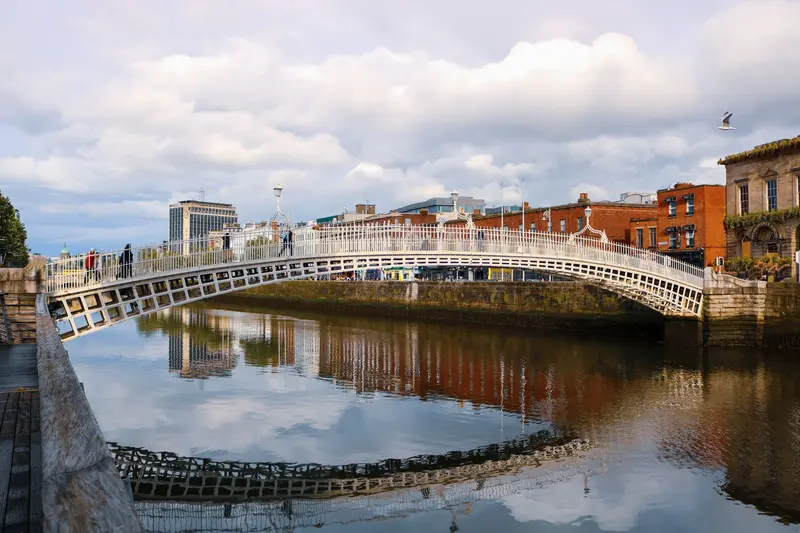
Dublin
Dublin is the capital of Ireland and, with around 1.26 million inhabitants in the urban area including suburbs, is by far the country's largest city. The Liffey divides it into Northside and Southside; on its banks, Vikings established a fortified base in 841.You can easily reach the Book of Kells at Trinity College, the medieval cathedrals Christ Church and St Patrick's, Dublin Castle and Kilmainham Gaol prison, where 14 leaders of the 1916 Easter Rising were executed. You'll also find Georgian squares like Merrion Square, the brewery district The Liberties with the Guinness Storehouse, the modern Docklands and the fishing village of Howth at the end of the DART coastal line.
Stay south of the Liffey around St Stephen's Green and Camden Street, and you can walk everywhere in the centre. North of the river, Stoneybatter near Smithfield is a residential neighbourhood with its own cafés and pubs, linked to the centre by the Luas. The Leap Visitor Card for 1, 3 or 7 days is valid on buses, the Luas and the DART to Howth and is sold at the airport; if you pay cash on the bus you need exact coins, as drivers take no notes and give no change. In the pub you order at the bar, and if you join a group you take your turn buying the round.
6 Sights
6 Restaurants
History and Culture
From Viking Settlement to Capital CityIn 841, Vikings established a fortified stronghold on the Liffey; the city officially dates its founding to 988. From 1204, under the Normans, Dublin, with Dublin Castle, became the seat of English, later British, rule, which remained here until 1922. Christ Church Cathedral dates back to a foundation around 1030, St Patrick's Cathedral was consecrated in 1191 and is Ireland's largest church; Jonathan Swift served as dean here and is buried here.Georgian Dublin and 1916The 18th century saw the development of Georgian squares in the city's southeast, such as Merrion Square, laid out from 1762, where Oscar Wilde spent his childhood. In the 20th century, Dublin became the scene of the Easter Rising; 14 of its leaders were executed at Kilmainham Gaol.Museums and LiteratureTrinity College hosts an exhibition featuring the Book of Kells, an illuminated Gospel manuscript, and the Long Room of the Old Library.The National Museum of Ireland on Kildare Street displays archaeological treasures such as the Tara Brooch and bog bodies.EPIC in the Docklands tells the story of Irish emigration.
Plan this route as your trip
All stops, trains and nights go into your trip planner. You adjust dates and places to stay afterwards.
This route is a suggestion from our research. Please check timetables, times in port, opening hours and prices before you book – what your tour operator or carrier says is what counts.
Fernweh is a free travel guide and trip planner: routes researched by people, taken over in one click, used day by day on the road. More about Fernweh
1 stop
Route Summary
Duration5 Days
Stops1 Places
TypeCulture