The route follows the northern part of the west coast from Galway through Connemara and Mayo to Donegal, ending at the Causeway Coast and in Belfast. Along the way are Kylemore Abbey, pilgrim mountain Croagh Patrick, Achill Island, table mountain Benbulben, cliffs of Sliabh Liag and the Giant's Causeway.
12 Days / 11 Nights
May through September
RV Friendly
8 stops
Why This Route?
The northern West Coast is much calmer than Kerry and Clare, yet scenically just as striking. For those familiar with Ireland, or seeking nature, hiking, and empty beaches, this reveals the island's more varied face.
Hidden Gems
See the abandoned village at the foot of Slievemore on Achill
Cycle sections of the Great Western Greenway from Westport to Achill
Hike to the large cairn on Knocknarea near Strandhill
Book a time slot for the Carrick-a-Rede Rope Bridge in advance
Getting there and back
Open jaw: start and end are in different places
Arrival
Flight · Shannon (SNN)At Shannon Airport you pick up the rental car; it's a good 90 kilometers to Galway.
Departure
Flight · Dublin (DUB)From Belfast, travel to Dublin by rental car or the Enterprise train; confirm with the rental company if you can drive the car in Northern Ireland and return it in Dublin.
Itinerary
Stop 1 • 2 Nights
Galway
City
Route highlight
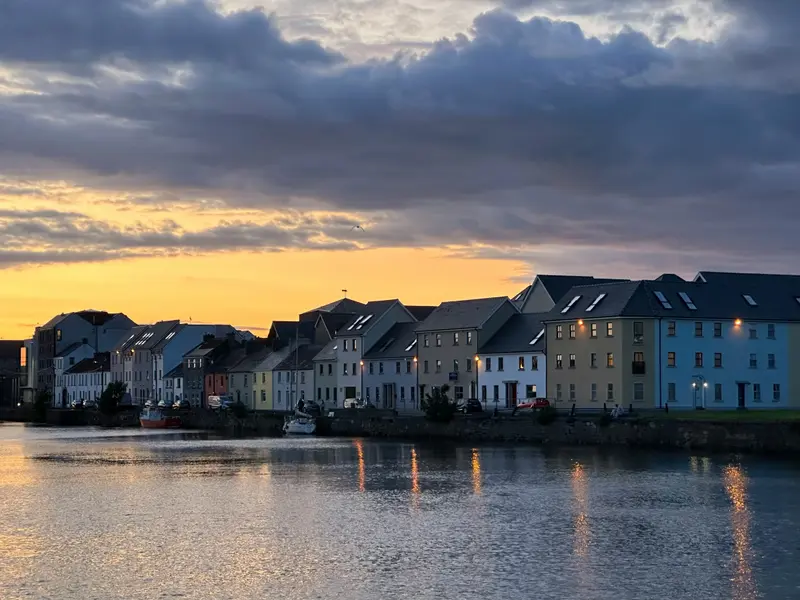
With around 86,000 inhabitants, Galway is the largest city on the west coast and was European Capital of Culture in 2020. Life revolves around the Latin Quarter near Quay Street, with pubs, street music, and small shops; on the riverbank stands the Spanish Arch, a remnant of the medieval city wall, right next to it the Galway City Museum.Eyre Square marks the center of the new town, and to the west, the Salthill promenade stretches about two kilometers along Galway Bay. The city is a starting point for Connemara and the Aran Islands, with year-round ferries departing from Rossaveal, located about 37 kilometers away.
City and side trip to the Cliffs of Moher or to the Aran Islands
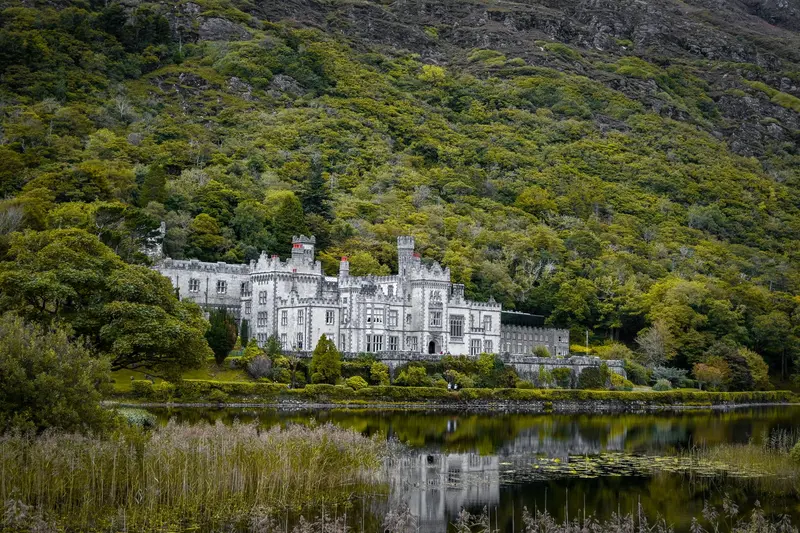
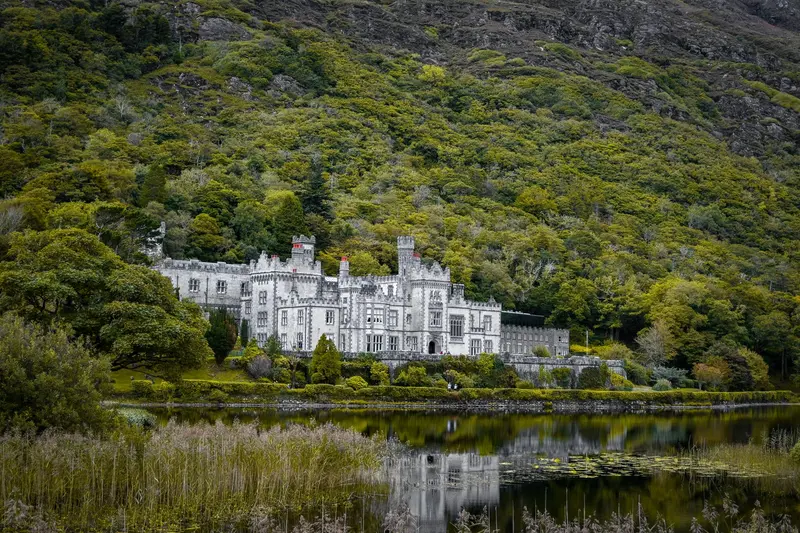
Connemara in the west of County Galway is a landscape of moors, lakes, and the Twelve Bens mountain ranges. Founded in 1980 near Letterfrack, Connemara National Park spans approximately 2,000 hectares; from the visitor centre, an approximately seven-kilometre circular trail leads up the 442-meter-high Diamond Hill with views of the coast and islands.On a lake shore stands Kylemore Abbey, a castle built from 1867, where Benedictine nuns have resided since 1920, complete with a neo-Gothic chapel and Victorian garden. Clifden is the main town, offering the roughly eleven-kilometre Sky Road along the coast.
Overnight in Clifden; Sky Road, National Park, Kylemore Abbey
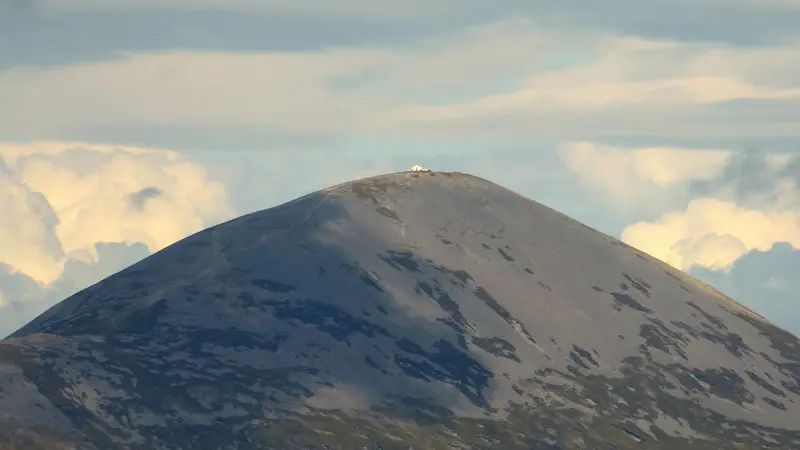
Westport is a planned Georgian town on Clew Bay in County Mayo, with a tree-lined Mall along the Carrow Beg River, the Octagon, and lively pubs. On the outskirts lies the 18th-century Westport House mansion.West of the town rises the 764-meter-high Croagh Patrick, Ireland's most famous pilgrimage mountain; the ascent begins in Murrisk. On the last Sunday in July, Reek Sunday, thousands of pilgrims climb to the summit. From Westport, the 42-kilometer-long Great Western Greenway follows an old railway line via Newport and Mulranny to Achill.
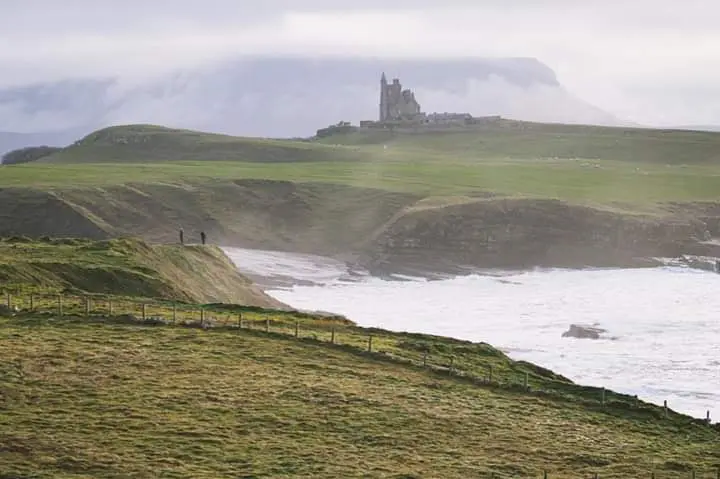
Benbulben is a distinctive, 526-meter-high limestone table mountain north of Sligo town, its steep flanks visible from afar. At its foot, in Drumcliffe cemetery, lies the poet W. B. Yeats buried; his tombstone bears the lines “Cast a cold eye / On life, on death. / Horseman, pass by!”West of Sligo lies the surf spot Strandhill at the foot of Knocknarea, whose summit is crowned by a large cairn. The beach is popular with surfers, but not suitable for swimming due to dangerous currents.
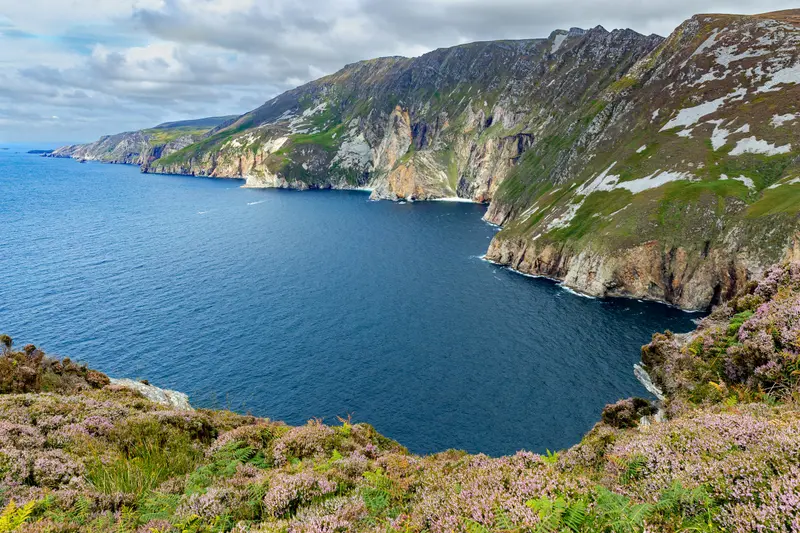
The Cliffs of Slieve League (Sliabh Liag) on the southwest coast of County Donegal rise to 601 metres, making them among Europe's highest sea cliffs. From the Bunglass viewpoint, which you reach via a narrow road from Teelin, you overlook the entire cliff face extending to the Atlantic.Experienced hikers can continue along the narrow ridge of One Man's Path, which is dangerous in bad weather and temporarily closed. The visitor centre is located several kilometres from the cliffs; a shuttle bus operates in summer.
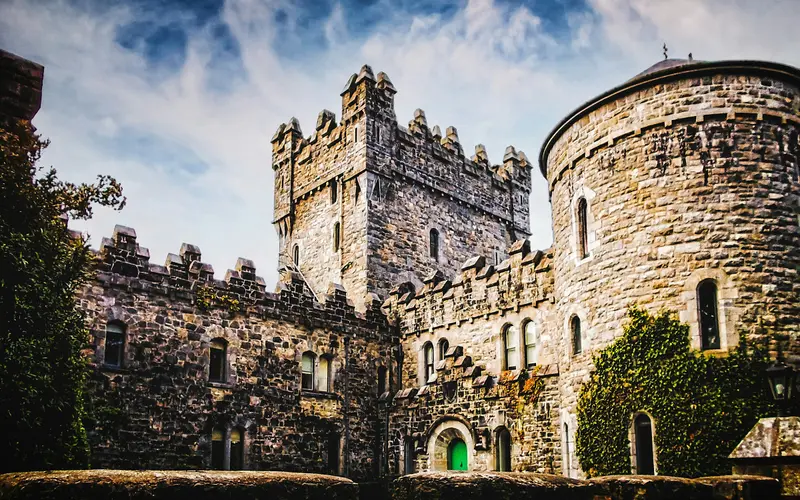
Glenveagh National Park in northwest County Donegal spans approximately 16,000 hectares of mountains, moors, and lakes; golden eagles have been reintroduced here since 2000. At its heart lies Glenveagh Castle on the shore of Lough Veagh, a castle built between 1867 and 1873 with extensive gardens, which was later handed over to the state.Access to the park is free; a shuttle bus runs from the visitor centre to the castle, which you can visit with a guided tour. The castle is closed on some weekdays, so check opening hours in advance.
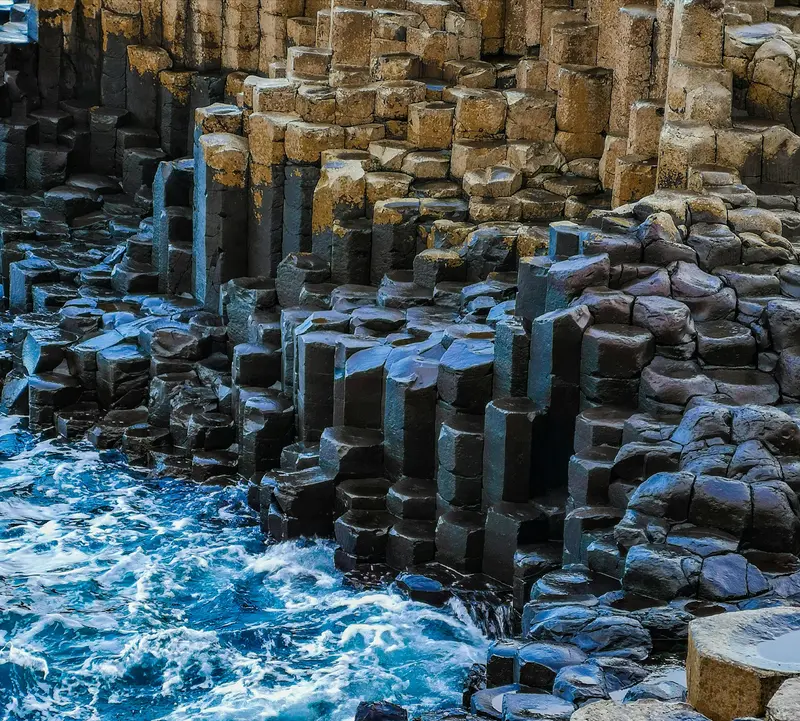
The Giant's Causeway on Northern Ireland's north coast consists of around 40,000 regularly shaped basalt columns, formed 50 to 60 million years ago by volcanic activity. Together with the adjacent Causeway Coast, it has been a UNESCO World Heritage site since 1986; much of the area belongs to the National Trust, which operates a visitor centre with an exhibition.Along the coast are other well-known destinations: the Carrick-a-Rede rope bridge over a 20-meter-deep chasm, for which you must book a time slot in advance, and the ruins of Dunluce Castle on the cliffs between Portballintrae and Portrush. Inland stands the Dark Hedges beech avenue, which has been closed to vehicle traffic since 2017.
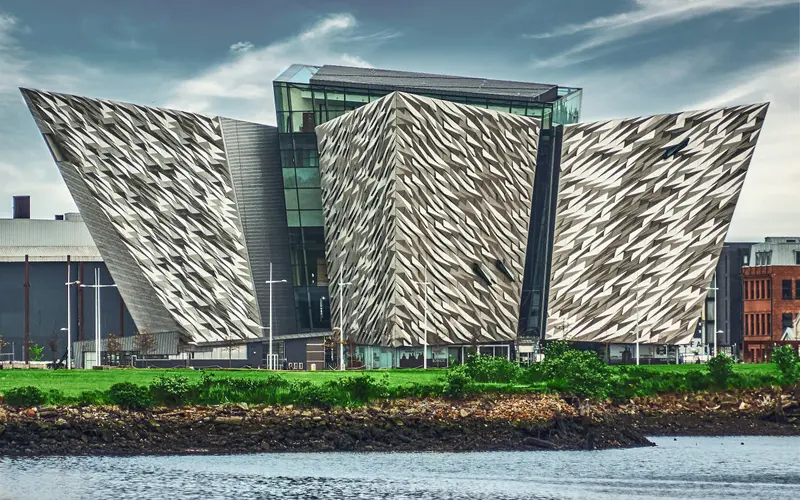
Belfast is the capital of Northern Ireland and was once a shipbuilding hub: The Titanic was built at the Harland & Wolff shipyard. In the Titanic Quarter, the Titanic Belfast museum, opened in 2012, tells the story of the shipyard and the ship in nine galleries; nearby are the SS Nomadic, the last remaining White Star Line vessel, and the historic slipways.In the city center, Donegall Square is home to the City Hall, opened in 1906, with the lively Cathedral Quarter surrounding St Anne's Cathedral to its north. The Ulster Museum in the Botanic Gardens is free. The Peace Walls between Falls Road and Shankill and their murals recall the time of the Troubles; many visitors explore them on a Black Taxi Tour.