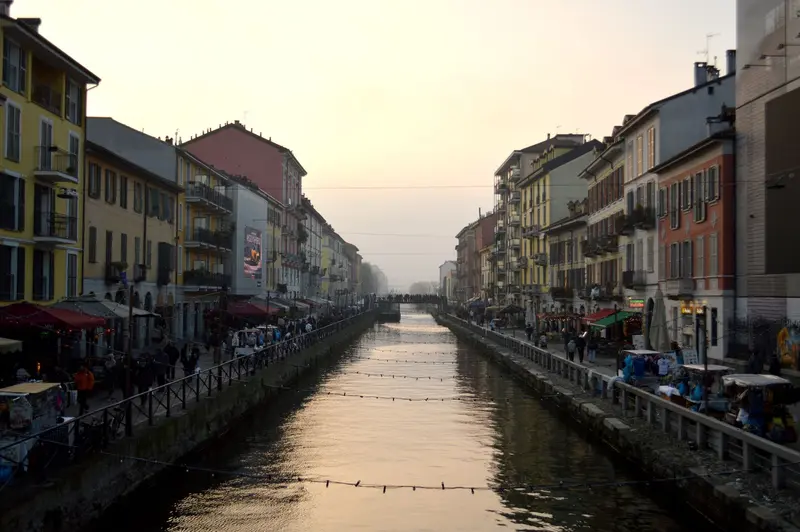
Photo by Valeria Drozdova on Pexels
City trip · Italy
Milan in three days
by Felix Gillen
- 4 Days / 3 Nights
Three days in Milan by train through the Gotthard: on the first afternoon the Duomo, the Galleria and Brera, then Leonardo's Last Supper, the Romanesque basilica of Sant'Ambrogio and an evening on the Navigli canals, and finally the Castello, the Monumentale cemetery and the Isola district. The old town inside the canal ring is easy on foot; for Isola and the Navigli you take the metro or tram. You eat in trattorias and osterias serving Milanese food, from risotto alla milanese to cotoletta.
At a glance
- Duration
- 4 Days / 3 Nights
- Stops
- 1
- Arrival
- Train · Milano Centrale
- Best Time to Go
- April–June and September–October: pleasantly warm, with long evenings by the canals. July and August are humid and many places close for the holidays
More on when to go
November is often foggy. During the furniture fair in April and the fashion weeks in February and September, hotels are expensive and booked out.
1 stop
Why This Route?
Milan is often seen only as a transfer station or a fashion city. From Zurich, you're in the city center in just over three hours, no airport needed. Three days are enough for the major works, for districts like Navigli and Isola, where Milanese spend their evenings, and for a cuisine that, with butter, rice, and saffron, is quite different from that of the South.
Hidden Gems
- In the Orto Botanico behind the Pinacoteca di Brera stands one of the oldest ginkgo trees in Europe, and entry is free
- The Vicolo dei Lavandai on the Naviglio Grande, with its old washing troughs, is almost empty in the morning and full in the evening
- At the Cimitero Monumentale, tombs by sculptors such as Medardo Rosso show more Milanese art than many a museum, and entry is free
Getting there and back
Round trip, returning to where you started
- Arrival
- Train · Milano CentraleFrom Zurich HB, about a dozen EuroCity trains run daily through the Gotthard Base Tunnel in just over three hours to Milano Centrale. From Germany, change trains in Zurich or Basel. During construction work in Ticino, the journey takes longer; check the SBB timetable. From the station, Metro M3 (yellow line) takes you to the Duomo in five minutes.
- Departure
- Train · Milano CentraleBack from Milano Centrale on the EuroCity to Zurich; from Isola the station is about 20 minutes on foot or one stop on the M2 from Garibaldi. EuroCity seats must be reserved, so book them early.
Day by day
Day 1: Duomo, Galleria and Brera
- Milan DuomoAfter arriving, take the M3 to Piazza del Duomo. Book the rooftop terraces online; the light on the marble is best in the late afternoon. Shoulders and knees covered.
- Galleria Vittorio Emanuele IIThrough the arcade to Piazza della Scala; a coffee at the counter costs several times more here, so have it later in Brera.
- Teatro alla ScalaWhen there is no rehearsal, the small museum lets you look into the auditorium from a box.
- Pinacoteca di BreraTen minutes on foot; Mantegna's Dead Christ and Hayez's Kiss. Closed on Mondays, allow two hours.
- Orto Botanico di BreraRight behind the Pinacoteca, free entry; open Monday to Saturday, until 4:30 pm in winter.
- Ancient Trattoria della PesaTwenty minutes on foot along Corso Garibaldi: risotto alla milanese and bone-in cotoletta in wood-panelled rooms from 1880. Closed on Sundays, book ahead.
Day 2: Last Supper, Sant'Ambrogio and the Navigli
- The Last Supper (Santa Maria delle Grazie)Book the named ticket on cenacolovinciano.org as soon as the months are released; 15 minutes in the room, closed on Mondays. M1 to Cadorna or Conciliazione.
- Sant'AmbrogioTen minutes on foot through residential streets; in the atrium and under the golden altar you see the Milan that came before the Duomo.
- Trattoria MilaneseLunch of saffron risotto and ossobuco under wooden beams, here since 1933; book ahead.
- Colonne di San Lorenzo and San Lorenzo MaggioreThe Roman columns on Corso di Porta Ticinese, and behind them the 4th-century mosaics of the Cappella di Sant'Aquilino.
- Sant'Eustorgio and Cappella PortinariThrough the Parco delle Basiliche; the Renaissance chapel has its own ticket together with the Diocesan Museum.
- Darsena and Naviglio GrandeStart at the old harbour basin and walk along the canal to the Vicolo dei Lavandai; on the last Sunday of the month there is an antiques market here.
- Rita & Cocktails (Navigli)Aperitivo in a side street off the canal rather than at the buffet places on the bank.
- El BrellinOsteria in an old laundry on the Vicolo dei Lavandai; in winter cassoeula with savoy cabbage and pork. Book for the evening.
Day 3: Castello, Monumentale and Isola
- Castello SforzescoIn the morning into the courtyard, free to enter; in the museum the Pietà Rondanini, Michelangelo's last sculpture. Museums closed on Mondays.
- Cimitero MonumentaleTwenty minutes on foot through Chinatown on Via Paolo Sarpi; free entry, closed on Mondays. Keep your voice down, Milanese come here to visit their relatives.
- Bosco VerticaleOver the bridge into Isola, the old working-class district behind the tracks; you see the wooded towers from the Biblioteca degli Alberi park.
- RatanàA farewell lunch in Isola: Milanese classics with seasonal ingredients, in the garden when the weather is good. Then one stop on the M2 from Garibaldi to Centrale.
Itinerary
Milan
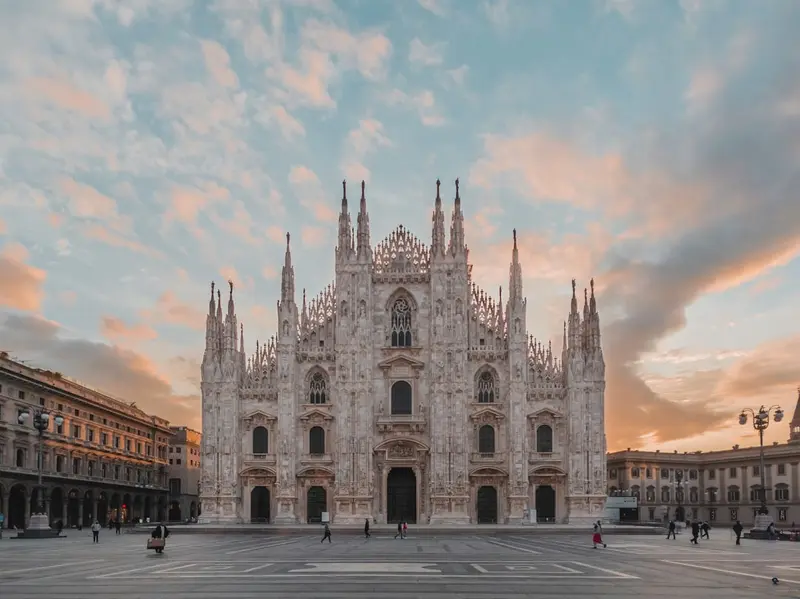
Milan is Italy's economic, fashion, and design capital, and also an art city boasting a Gothic Duomo, Leonardo's Last Supper, and La Scala. Most major attractions are located close to each other between Duomo Square, Galleria Vittorio Emanuele II, La Scala, and Castello Sforzesco, and are within walking distance. Beyond that, districts like Brera with its Pinacoteca and galleries, the Navigli with its canals and aperitivo bars, and the modern Porta Nuova with the Bosco Verticale, shape the city's life.Good to knowThe Last Supper: Tickets are the biggest bottleneck for any trip to Milan. Book them as soon as your travel date is confirmed.Duomo: Book terraces and cathedral online via the Duomo Pass; for the interior, cover shoulders and legs.Time Required: Two full days are enough for the Duomo, Galleria, La Scala, Castello, and The Last Supper; a third day allows time for Brera, the Navigli, or a trip to Lake Como.
Stay in Brera or around Porta Venezia: quiet residential streets, neighbourhood bars and quick access to the station on the M1 and M3; the Navigli are lovely but loud at night. You pay for metro, tram and bus contactless at the gate, and the system caps the fare at the day price. At aperitivo time from 6 pm you pay for a drink and small bites come with it; at a coffee bar you pay at the till first, then order at the counter with your receipt.
11 Sights
4 Restaurants
History and Culture
MediolanumMilan originated as a Celtic settlement and, under the Romans, became Mediolanum, one of the Empire's most important cities: From 286, it was an imperial residence until the court moved to Ravenna in 402. In 313, Constantine and Licinius agreed upon the Edict of Tolerance for Christians in Milan. In 569, the Lombards conquered the city.Visconti and SforzaUnder the Visconti and from 1450 under the Sforza, Milan became one of Italy's wealthiest states. Construction of the Duomo began in 1386, and the Castello Sforzesco was expanded from 1450. Leonardo da Vinci lived in Milan from 1482 to 1499, working for Ludovico Sforza and painting The Last Supper during this period.Opera, Fashion and DesignLa Scala opened in 1778; Verdi and Puccini premiered operas here. In the 20th century, Milan became the center of Italian fashion and design. Every April, the Salone del Mobile furniture fair attracts visitors from all over the world, while Fashion Weeks take place in late February and September.
Plan this route as your trip
All stops, trains and nights go into your trip planner. You adjust dates and places to stay afterwards.
This route is a suggestion from our research. Please check timetables, times in port, opening hours and prices before you book – what your tour operator or carrier says is what counts.
Fernweh is a free travel guide and trip planner: routes researched by people, taken over in one click, used day by day on the road. More about Fernweh
1 stop
Route Summary
Duration4 Days
Stops1 Places
TypeCulture