Fernweh: Home
    ExploreTravel GuidesPlan a tripMy tripLast visited
    de|en
    All Places & RegionsAll highlightsAbout FernwehFAQPrivacy PolicyImprint
    ExploreTravel GuidesPlan a tripMy tripLast visited
    • Neighborhoods & highlights
    • Recommendations
    • Walking tours
    • Eat & drink
    • Food culture
    • Culture
    • Nightlife
    • Getting around
    • Accommodation
    • Plan trip
    • Nearby
    Milan

    Italy

    Milan

    CityCulture

    Milan is Italy's economic, fashion, and design metropolis and also a city of art with its Gothic Cathedral, Leonardo's Last Supper, and the Scala.

    by Felix Gillen

    1. Home
    2. Destinations
    3. Italy
    4. Lombardy
    5. Milan
    Milan is Italy's economic, fashion, and design metropolis and also a city of art with its Gothic Cathedral, Leonardo's Last Supper, and the Scala. Beyond the major sights, districts like Brera, Isola, and the Navigli with their canals shape city life.

    Sights in Milan

    Discover the most important sights and attractions

    Milan Duomo
    Church

    1Milan Duomo

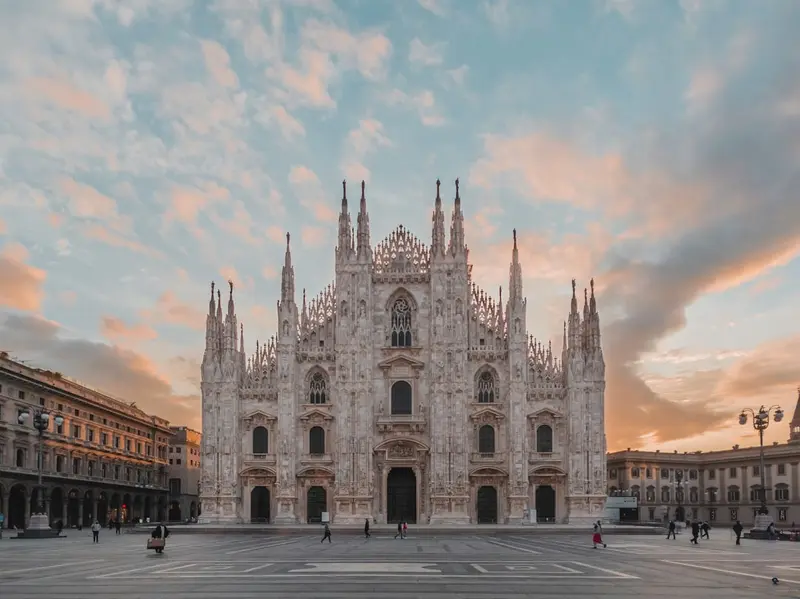
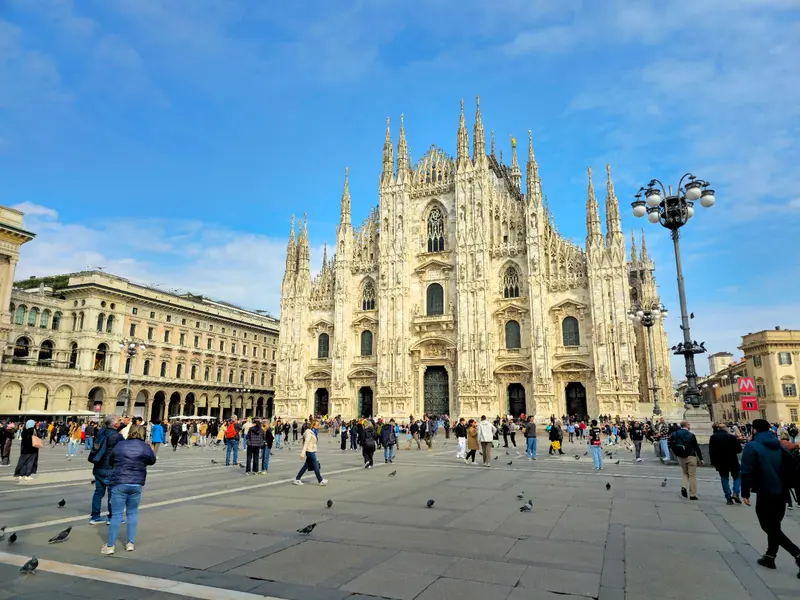
    Construction of the Gothic cathedral began in 1386. The facade was completed in the early 19th century by Napoleon's order, with some works continuing into the 20th century. Over 3,000 statues and a forest of pinnacles adorn the exterior of pink-white Candoglia marble. On the roof terraces, reached by stairs or elevator, you walk among the turrets up to the gilded Madonnina.
    Open in Google Maps
    The Last Supper (Santa Maria delle Grazie)
    Museum

    2The Last Supper (Santa Maria delle Grazie)

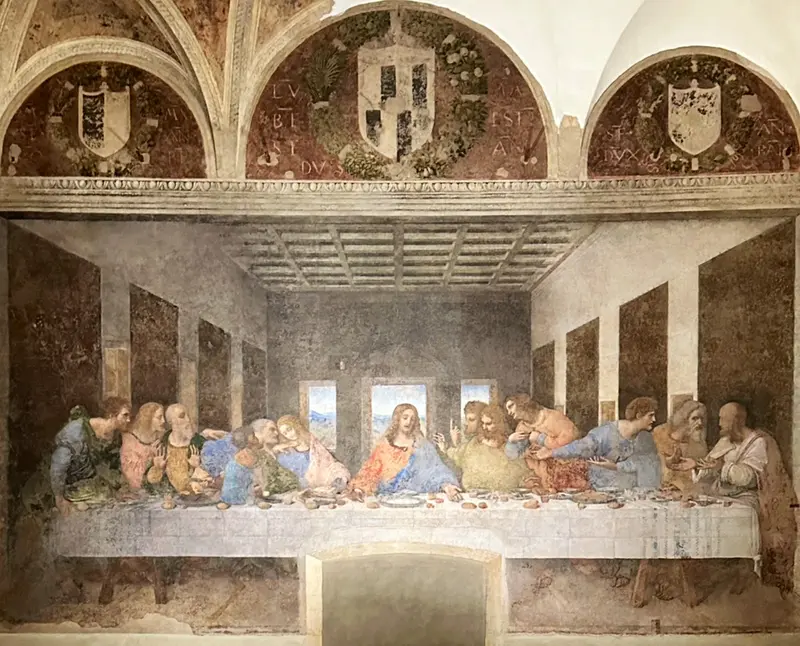
    Leonardo da Vinci painted the fresco for Ludovico Sforza approximately between 1495 and 1498 in the refectory of the monastery next to the Church of Santa Maria delle Grazie. Visitors are admitted in groups of up to 40 people for 15 minutes each. A reservation is mandatory for all tickets; sales open for three months in advance, so plan your booking well ahead.
    Open in Google Maps
    Galleria Vittorio Emanuele II
    Shopping Mall

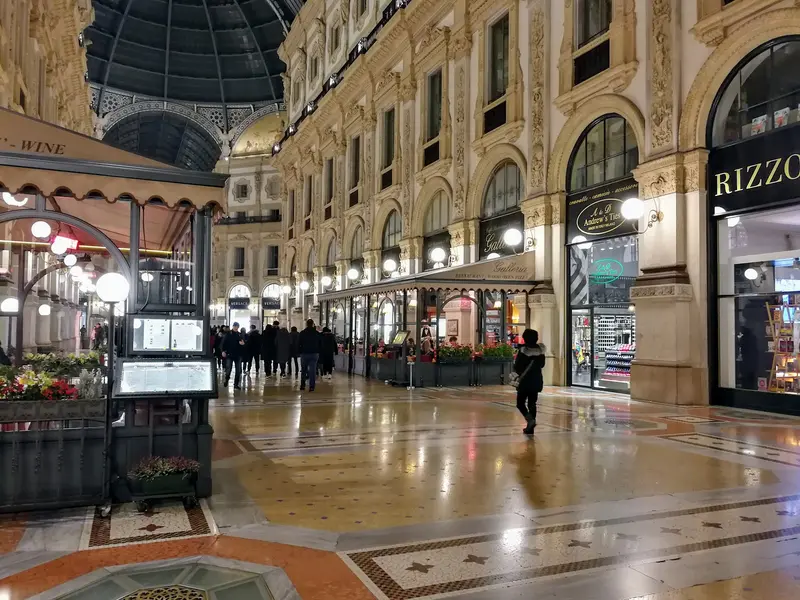
    3Galleria Vittorio Emanuele II

    The glass-covered shopping arcade connects Cathedral Square and Scala Square. The foundation stone was laid in 1865, built to plans by Giuseppe Mengoni; the arcade itself was finished in under three years, the triumphal arch to Cathedral Square not until 1878. Under the large dome, mosaics are embedded in the floor; according to a tradition, one turns on their heel on the bull from the Turin coat of arms, which is said to bring good luck. In the arcades are luxury shops and historic cafés.
    Open in Google Maps
    Castello Sforzesco
    Castle

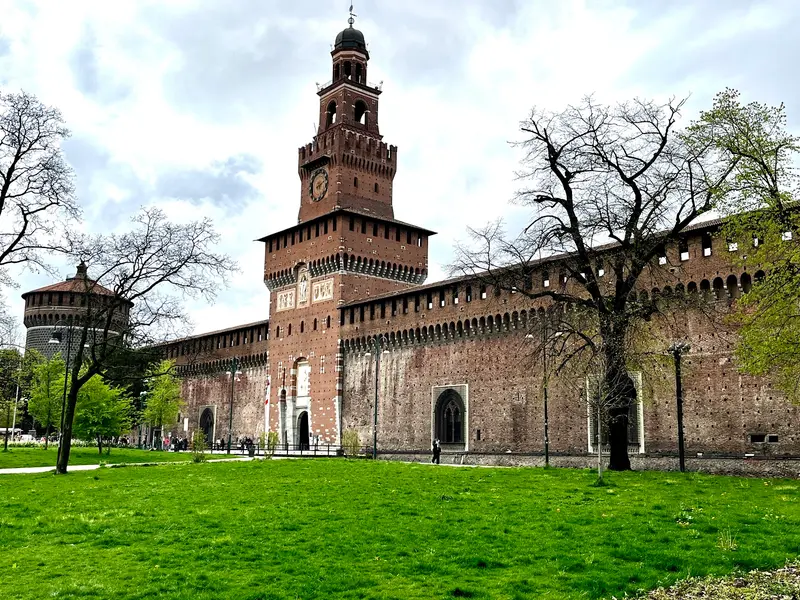
    4Castello Sforzesco

    Francesco Sforza rebuilt the brick fortress as a residence from 1450, on the remains of a Visconti castle destroyed in 1447. Currently, the castle houses several civic museums, including the Pietà Rondanini Museum, Michelangelo's final sculpture. In the Sala delle Asse, Leonardo painted a plant-motif ceiling around 1498. The Parco Sempione borders the castle.
    Open in Google Maps
    Pinacoteca di Brera
    Museum

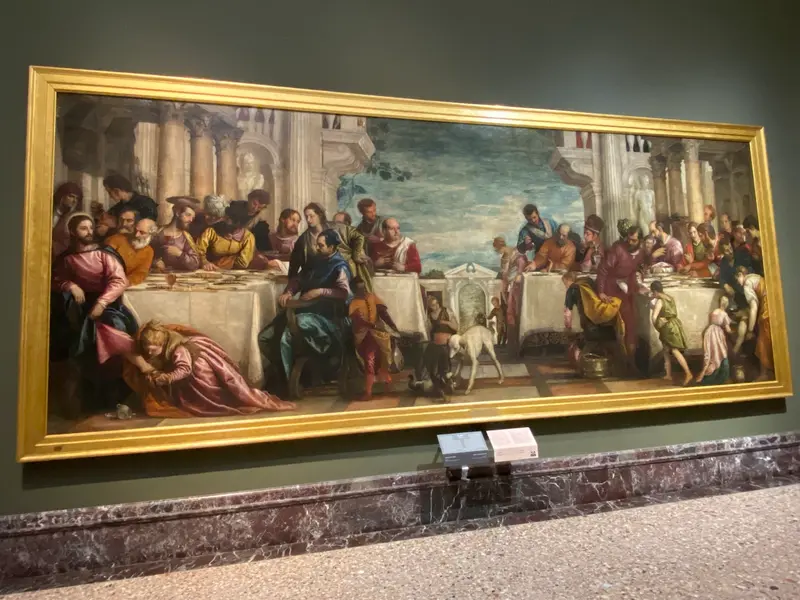
    5Pinacoteca di Brera

    The Pinacoteca in the Palazzo di Brera primarily features Italian painting from the 13th to the 20th century, including Mantegna's Lamentation of Christ, Raphael's The Marriage of the Virgin, and Hayez's The Kiss. Surrounding it is the Brera district, with galleries, cafés, and narrow alleyways.
    Open in Google Maps
    Teatro alla Scala
    Attraction

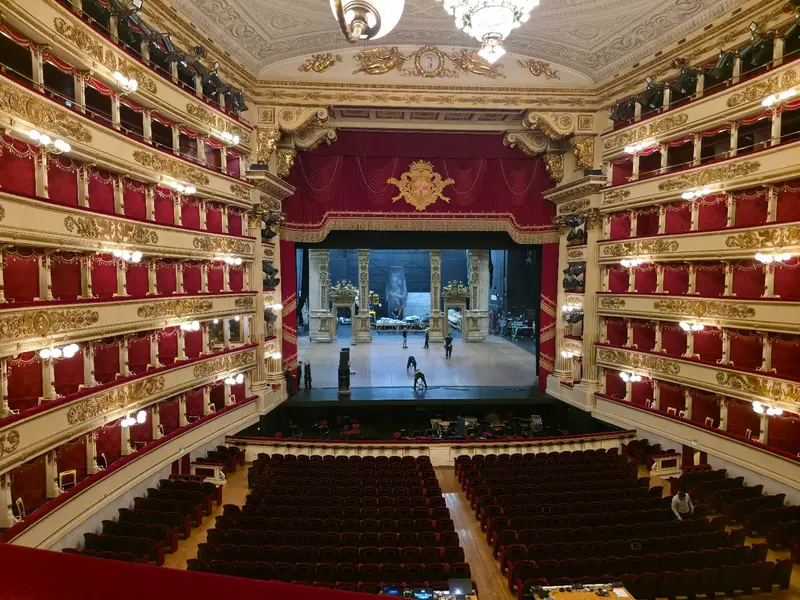
    6Teatro alla Scala

    Opened in 1778, the Opera House is one of the world's most important; here, operas by Verdi, Puccini, and Rossini premiered, including Nabucco, Otello, Madama Butterfly, and Turandot. The season traditionally begins on December 7, the day of the city patron, Ambrosius. If neither rehearsing nor performing, a museum visit can offer a view into the auditorium from the boxes.
    Open in Google Maps

    City walks in Milan

    Curated walking tours through the city's highlights, handpicked by experienced travel journalists.

    Milan's Heartbeat: A Walk Through the Classics

    On this two-hour walk, discover the pulsating soul of Milan. From the majestic cathedral and elegant shopping arcades to historic castles and artistic districts, experience the highlights of the city. Perfect for a first overview of the fashion and design metropolis.

    ~2 Std.
    Open in Google Maps
    Stops (5)

    Food & Drink

    Château Monfort

    Von künstlerischen Themen inspirierte Zimmer in einem Jugendstilhotel mit elegantem Restaurant, Bar und Spa.
    Show on Google Maps
    1

    Trattoria Milanese

    Traditional eatery on a side street between the Duomo and Sant'Ambrogio, with exposed wooden beams and a classic Milanese menu: Risotto alla Milanese, Ossobuco and Cotoletta.
    Show on Google Maps
    2

    Ratanà

    Restaurant in the Isola district near Porta Nuova, reinterpreting Milanese classics with seasonal ingredients. An extensive wine list is available; in good weather, you can sit in the garden.
    Show on Google Maps
    3

    Piz

    Small pizzeria southwest of the Cathedral with a very short menu – essentially Neapolitan classics like Margherita and Marinara. Simple and central for a quick meal.
    Show on Google Maps
    4

    Joia

    Pietro Leemann's restaurant near Porta Venezia is a pioneer of vegetarian fine dining in Italy. Creative tasting menus are served, also purely vegan.
    Show on Google Maps

    Eating & Drinking in Milan

    Milan's cuisine is hearty and buttery – and the city has made the aperitivo a ritual.

    Risotto alla Milanese

    Saffron risotto, classically finished with bone marrow and often served with Ossobuco.

    Ossobuco

    Braised veal shank slices with marrowbone, in Milan usually served with saffron risotto.

    Cotoletta alla Milanese

    Breaded bone-in veal cutlet, pan-fried in butter.

    Panettone

    The tall yeast cake with raisins and candied fruits is Milan's traditional Christmas specialty.

    Aperitivo

    Early in the evening, you meet in bars for a drink, with small dishes like Mondeghili, fried meatballs.

    History and Culture

    MediolanumMilan originated as a Celtic settlement and, under the Romans, became Mediolanum, one of the Empire's most important cities: From 286, it was an imperial residence until the court moved to Ravenna in 402. In 313, Constantine and Licinius agreed upon the Edict of Tolerance for Christians in Milan. In 569, the Lombards conquered the city.Visconti and SforzaUnder the Visconti and from 1450 under the Sforza, Milan became one of Italy's wealthiest states. Construction of the Duomo began in 1386, and the Castello Sforzesco was expanded from 1450. Leonardo da Vinci lived in Milan from 1482 to 1499, working for Ludovico Sforza and painting The Last Supper during this period.Opera, Fashion and DesignLa Scala opened in 1778; Verdi and Puccini premiered operas here. In the 20th century, Milan became the center of Italian fashion and design. Every April, the Salone del Mobile furniture fair attracts visitors from all over the world, while Fashion Weeks take place in late February and September.

    Nightlife

    1

    Blue Note

    Italienischer Ableger des berühmten Nachtclubs aus New York mit regelmäßigen Jazz- und Blueskonzerten.
    Show on Google Maps
    2

    Lacerba

    Bar in Via Orti.
    Show on Google Maps
    3

    Bar Cuore Milano

    Bar in Via Gian Giacomo Mora.
    Show on Google Maps
    4

    Mandarin Garden

    Bar in Via Andegari.
    Show on Google Maps
    5

    VETRA - Cocktails, Beer & Wine bar

    Bar in Piazza Vetra.
    Show on Google Maps
    6

    A'Riccione Terrazza12

    Bar in Via Durini.
    Show on Google Maps

    Out and about in Milan

    Metro, Tram and BusThe transport company ATM operates five metro lines (M1 to M5) as well as a dense tram and bus network; historic trams from the 1920s still run on routes like Line 1 as part of the regular service. A single ticket is valid for 90 minutes on metro, tram, and bus. You can pay directly with a contactless debit or credit card at metro turnstiles and on readers in trams and buses.From the AirportFrom Malpensa Airport, the Malpensa Express runs approximately every 30 minutes, reaching Cadorna in about 37 minutes or the Central Station in about 50 minutes. Linate is connected to San Babila in the city centre via metro line M4 in about twelve minutes.On Foot and By BikeThe city centre between the Duomo, Brera, and Castello is best explored on foot. The BikeMi bike rental system has stations throughout the city centre. Drivers pay a fee to enter the Area C zone in the city centre.

    Accommodations in Milan

    Find perfect stay in Milan

    Booking.com* (Affiliate link)
    Search Hotels
    Agoda* (Affiliate link)
    Search Hotels
    Airbnb
    Vacation Rentals

    * Affiliate link: if you book through it, we earn a small commission. The price stays the same for you.

    Campgrounds in Milan

    Find perfect campground in Milan

    Search via Google Maps
    Campgrounds nearby (15km)
    Camping.info
    Find Campgrounds
    Park4Night
    RV Parks & Camping

    Plan your trip to Milan

    Save places, build a route and plan your city trip, all in one place.

    1. 1
      Sunrise over alpine peaks and a sea of clouds
      1234

      Round trip

      12 days · 4 stops

      Saved

      Pick a route

      Pick a ready-made one or save places and plan your own.

      Open bookmarks
    2. 2

      Trip to Milan

      Live
      • 1Milan Duomo3 days
      • 2The Last Supper (Santa Maria delle Grazie)4 days
      • 3Galleria Vittorio Emanuele II5 days
      Budget

      Plan your trip

      The planner sorts stops, days and budget. Plan together in real time.

      Start trip planning
    3. 3
      9:41 No signal
      Milan
      Available offline

      Use it on the road

      Download the guide to your phone and use it on site, even offline.

    Nearby

    Pavia

    Pavia

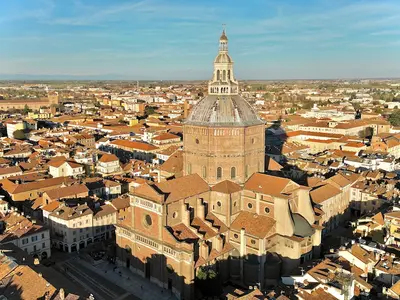
    Pavia was the capital of the Lombard Kingdom from 572 to 774 and is home to one of Europe's oldest universities. Romanesque churches, the Visconti Castle, and the covered Ticino Bridge shape the student city; eight kilometers north lies the Certosa.
    Bergamo

    Bergamo

    Bergamo consists of two cities: the medieval Upper Town, Città Alta, on a hill, encircled by Venetian walls, and the larger Lower Town, Città Bassa. The two are connected by a funicular.
    Lake Como

    Lake Como

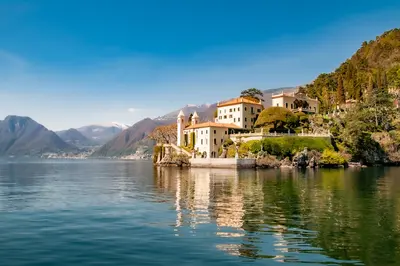
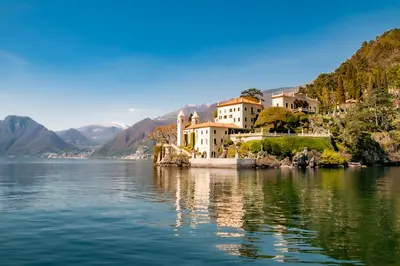
    Lake Como, shaped like an inverted Y, is one of the most striking pre-Alpine lakes and, at over 400 metres, one of Europe's deepest. Steep, wooded shores, terraced-garden villas and villages like Bellagio, Varenna, Tremezzo set the scene.
    Bellagio

    Bellagio

    Bellagio is located at the tip of the peninsula, where Lake Como divides into the arms of Como and Lecco. Staircase alleys lead from the shore up to the small old town; south and above the village lie the parks of Villas Melzi and Serbelloni.
    Lombardy

    Lombardy

    Lombardy stretches from the Alps, across the great pre-Alpine lakes, into the Po Valley. Besides Milan, art cities like Bergamo, Brescia, Mantua, and Pavia, as well as Lake Como, Lake Iseo, and Lake Garda, define the region.

    Sources & method

    • Photos: Unsplash, Google Maps. Each photo carries its credit.
    • Place data such as addresses and ratings comes from Google Maps.
    • The content is based on web research from public, traceable sources. How the content is made · The role of AI