Fernweh: Home
    ExploreTravel GuidesPlan a tripMy tripLast visited
    de|en
    All Places & RegionsAll highlightsAbout FernwehFAQPrivacy PolicyImprint
    ExploreTravel GuidesPlan a tripMy tripLast visited
    • Overview
    • Places in the region
    • Eat & drink
    • Food culture
    • Culture
    • Getting around
    • Round trips
    • Nearby
    Lombardy

    Italy

    Lombardy

    Region

    Lombardy stretches from the Alps, across the great pre-Alpine lakes, into the Po Valley. Besides Milan, art cities like Bergamo, Brescia, Mantua, and Pavia, as well as Lake Como, Lake Iseo, and Lake Garda, define the region.

    by Felix Gillen

    1. Home
    2. Destinations
    3. Italy
    4. Lombardy
    Lombardy stretches from the Alps, across the great pre-Alpine lakes, into the Po Valley. Besides Milan, art cities like Bergamo, Brescia, Mantua, and Pavia, as well as Lake Como, Lake Iseo, and Lake Garda, define the region.
    Lombardy is Italy's most populous region; roughly a sixth of all inhabitants live here. At its heart is Milan with its Cathedral, Leonardo's Last Supper, and a rich cultural offering. To its north lie the lakes: Lake Como with villas and lakeside towns like Bellagio, Lake Iseo with Monte Isola island, and on the eastern edge, Lake Garda with Sirmione. In the plain are art cities like Bergamo with its walled Upper Town, Mantua with the Gonzaga palaces, and Pavia with the Certosa. To the north, valleys like Veltlin and Val Camonica lead into the Alps.
    Bellagio

    Place 1 of 4

    Bellagio

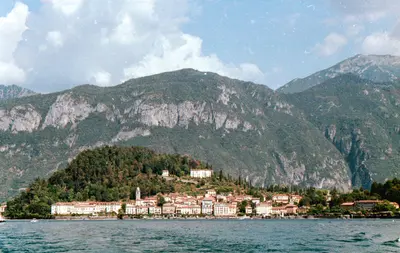
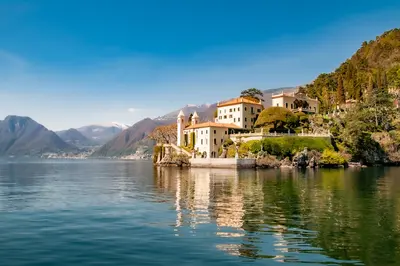
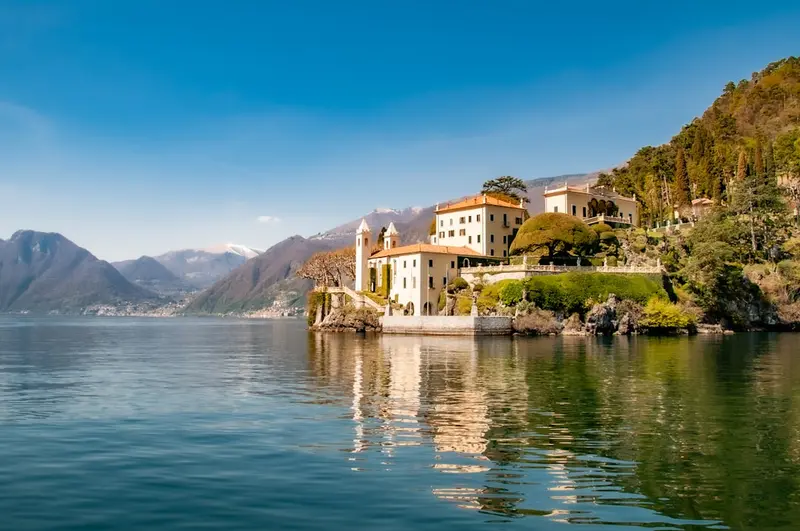
    Bellagio is located at the tip of the peninsula, where Lake Como divides into the arms of Como and Lecco. Staircase alleys lead from the shore up to the small old town; south and above the village lie the parks of Villas Melzi and Serbelloni.

    Discover
    Bergamo

    Place 2 of 4

    Bergamo

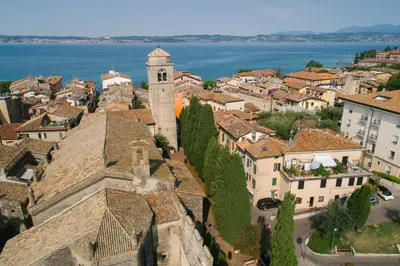
    Bergamo consists of two cities: the medieval Upper Town, Città Alta, on a hill, encircled by Venetian walls, and the larger Lower Town, Città Bassa. The two are connected by a funicular.

    Discover
    Brescia

    Place 3 of 4

    Brescia

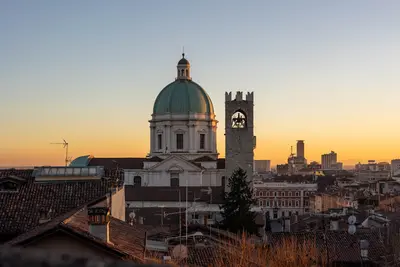
    Brescia, Lombardy's second-largest city, is often overlooked despite possessing significant Roman structures.

    Discover
    Lake Como

    Place 4 of 4

    Lake Como

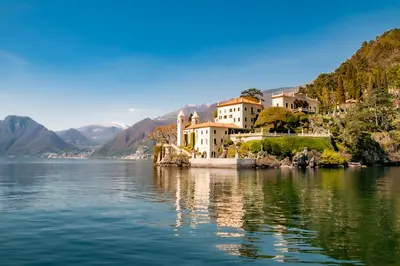
    Lake Como, shaped like an inverted Y, is one of the most striking pre-Alpine lakes and, at over 400 metres, one of Europe's deepest. Steep, wooded shores, terraced-garden villas and villages like Bellagio, Varenna, Tremezzo set the scene.

    Discover

    More places in Lombardy

    Milan

    Milan

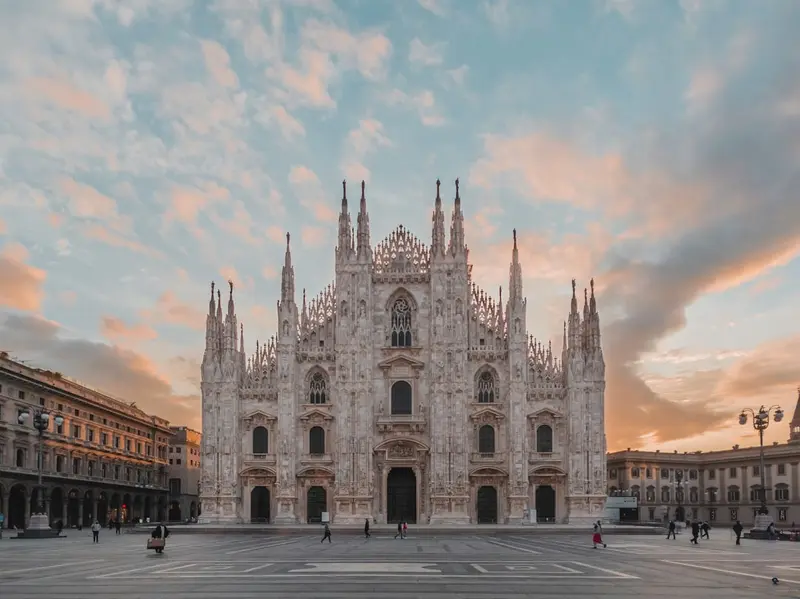
    Milan is Italy's economic, fashion, and design metropolis and also a city of art with its Gothic Cathedral, Leonardo's Last Supper, and the Scala. Beyond the major sights, districts like Brera, Isola, and the Navigli with their canals shape city life.
    Mantua (Mantova)

    Mantua (Mantova)

    Mantua, set on three lakes formed by the Mincio, was the seat of the Gonzaga for almost four centuries. Their palaces, with frescoes by Mantegna and Giulio Romano, make the small city a Renaissance hub; since 2008, it has been a UNESCO World Heritage site along with Sabbioneta.
    Pavia

    Pavia

    Pavia was the capital of the Lombard Kingdom from 572 to 774 and is home to one of Europe's oldest universities. Romanesque churches, the Visconti Castle, and the covered Ticino Bridge shape the student city; eight kilometers north lies the Certosa.
    Sirmione

    Sirmione

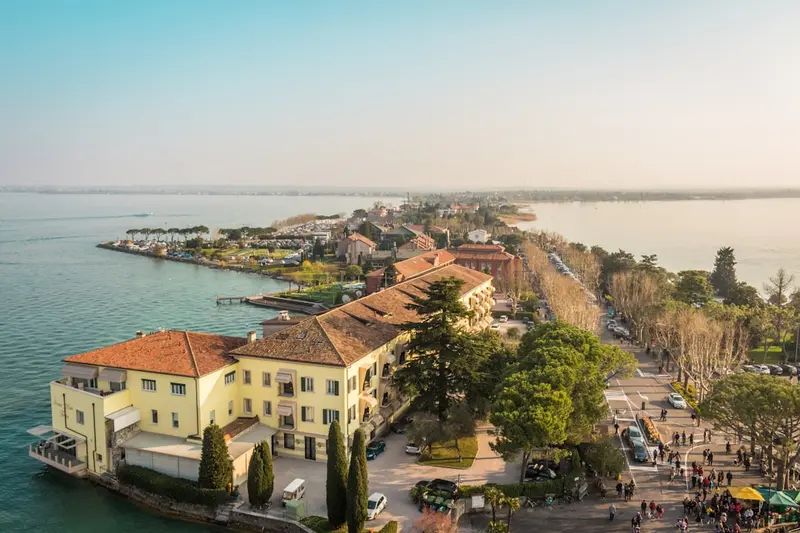
    Sirmione sits on a narrow, four-kilometer peninsula on Lake Garda's southern shore. Enter the traffic-calmed old town through Scaliger Castle's gate; its northern tip holds the ruins of a Roman villa, and a hot thermal spring in the lake makes it a spa resort.

    Sights in Lombardy

    Discover the most important sights and attractions

    Rock art in Val Camonica
    National Park

    Rock art in Val Camonica

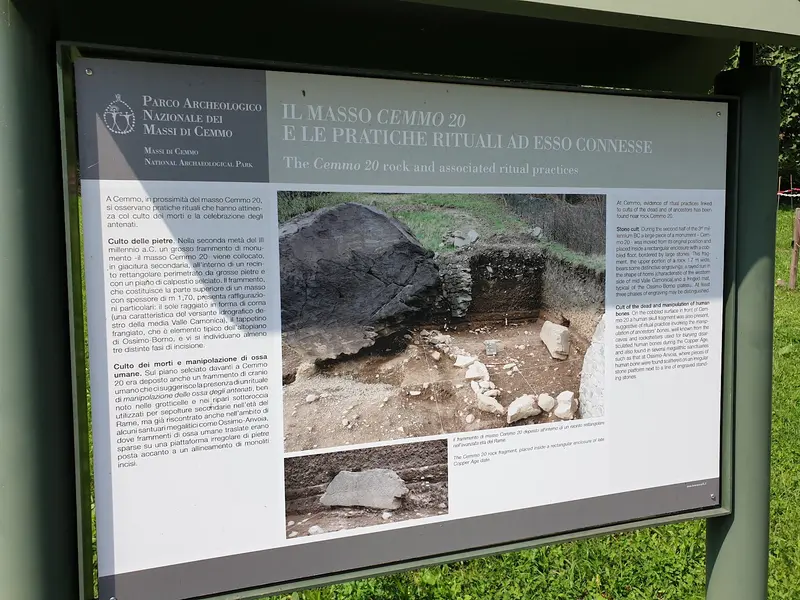
    In Val Camonica, north of Lake Iseo, people have, over millennia, carved more than 140,000 figures and symbols into the glacier-smoothed rocks, the oldest dating from the 8th to 6th millennium BC. The rock engravings were Italy's first UNESCO World Heritage site in 1979. Near Capo di Ponte are the decorated rock blocks of Cemmo and the Naquane National Park of Rock Engravings.
    Open in Google Maps

    Monte Isola

    The wooded island in Lake Iseo is considered the largest inland island in Southern and Central Europe. On the island, only mopeds and bicycles are used; ferries connect the ports of Carzano and Peschiera Maraglio with the mainland. A footpath leads from Cure up to the pilgrimage church Madonna della Ceriola at around 600 meters, the highest point of the island.
    Open in Google Maps
    Sacro Monte di Varese
    Museum

    Sacro Monte di Varese

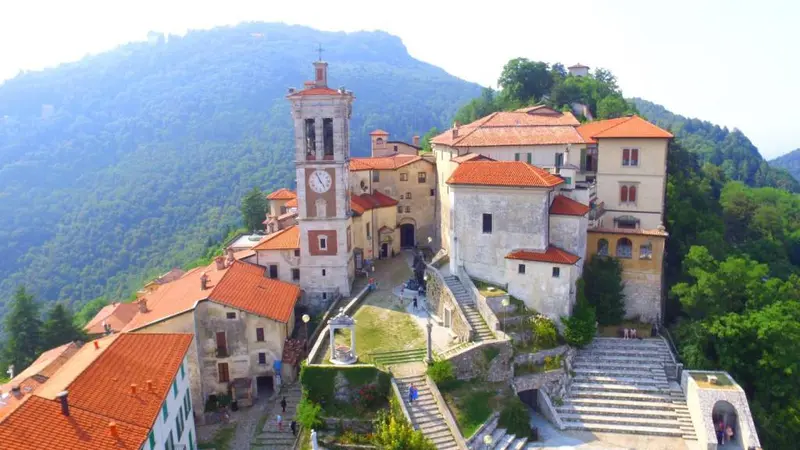
    A paved pilgrim path leads for about two kilometers past 14 chapels from the 17th century (1604 to 1698) up to the mountain village of Santa Maria del Monte. The chapels depict the Mysteries of the Rosary with painted terracotta figures and frescoes. The Sacred Mountain has been a UNESCO World Heritage site since 2003, along with eight other Sacri Monti in Piedmont and Lombardy; along the way, you gaze out over the plain and Lake Varese.
    Open in Google Maps

    Restaurants & Cafes

    Château Monfort

    Von künstlerischen Themen inspirierte Zimmer in einem Jugendstilhotel mit elegantem Restaurant, Bar und Spa.
    Show on Google Maps

    Eating & Drinking in Lombardy

    The Lombard cuisine relies on butter, rice, polenta, and cheese instead of olive oil and tomatoes.

    Risotto alla Milanese

    Risotto, dyed golden yellow with saffron, a classic of Milanese cuisine.

    Cotoletta alla Milanese

    The breaded Milanese veal cutlet, a classic of Lombard cuisine.

    Pizzoccheri

    Buckwheat noodles, the specialty of Valtellina.

    Käse

    From Lombardy come Gorgonzola, Taleggio, Grana Padano and the mountain cheese Bitto.

    Franciacorta

    Sparkling wine from the hilly landscape between Brescia and Lake Iseo.

    Historical and Cultural

    Romans and LombardsEven in antiquity, Mediolanum, today's Milan, was the region's centre, serving as the capital of the Western Roman Empire in late antiquity. Lombardy owes its name to the Lombards, who arrived in Italy in 568 and made Pavia their capital. In the Middle Ages, the Lombard cities, led by Milan, formed the Lombard League and defeated Emperor Frederick Barbarossa at Legnano in 1176.Visconti, Sforza, and Foreign RulersIn Milan, the Visconti and then the Sforza ruled; Leonardo da Vinci, among others, came to their court. After the Battle of Pavia, Milan fell to the Spanish Habsburgs, and from 1706, the Austrians ruled. In 1859, the greater part of the region joined the Kingdom of Sardinia and thus the emerging Italy, with Mantua following only in 1866.World HeritageLombardy boasts eleven UNESCO World Heritage Sites. These include the Rock Drawings in Val Camonica, Italy's first World Heritage Site in 1979, Mantua and Sabbioneta, the Sacro Monte di Varese, the Longobard sites in Brescia, and the Venetian Walls of Bergamo.

    On the road in Lombardy

    By TrainRegional trains connect Milan with Bergamo, Brescia, Pavia, Como, Lecco, and Varese. High-speed trains travel from Milan to Brescia in about 35 minutes, continuing towards Verona and Venice.On the LakesRegular ferries and boats operate on Lake Como, Lake Iseo, Lake Maggiore, and Lake Garda. On Lake Como, they are the most convenient mode of transport between Bellagio, Varenna, and Menaggio.By CarFor valleys like Valtellina or Val Camonica, a car is practical. In Milan, the paid congestion zone Area C applies in the city center.

    Round trips through this region

    Northern Italian Lakes

    Northern Italian Lakes

    From Milan, head to Lake Maggiore to Stresa, then on to Lake Como to Bellagio and Lake Garda to Sirmione, concluding in Verona. Between the lakes, each trip takes just under two to a little over two hours. Locally, ferries replace the car.

    13 Days
    5 stops
    Italy Complete Motorhome (2–3 Weeks)

    Italy Complete Motorhome (2–3 Weeks)

    The motorhome route leads from Lake Garda via Verona, Florence and Siena to Rome, to the Lazio coast to Sperlonga, and continues via Naples to the Amalfi Coast. In the historic city centers and on the Amalfi Coast, motorhome access is limited. You park at designated pitches on the outskirts and travel onward by bus, train, or ferry.

    19 Days
    8 stops

    Nearby

    Bergamo

    Bergamo

    Bergamo consists of two cities: the medieval Upper Town, Città Alta, on a hill, encircled by Venetian walls, and the larger Lower Town, Città Bassa. The two are connected by a funicular.
    Brescia

    Brescia

    Brescia, Lombardy's second-largest city, is often overlooked despite possessing significant Roman structures. The Capitolium (with its Roman Theatre) and the Longobard Monastery of Santa Giulia are UNESCO World Heritage sites; it also boasts Renaissance squares, two cathedrals, and a castle above the old town.
    Bellagio

    Bellagio

    Bellagio is located at the tip of the peninsula, where Lake Como divides into the arms of Como and Lecco. Staircase alleys lead from the shore up to the small old town; south and above the village lie the parks of Villas Melzi and Serbelloni.
    Milan

    Milan

    Milan is Italy's economic, fashion, and design metropolis and also a city of art with its Gothic Cathedral, Leonardo's Last Supper, and the Scala. Beyond the major sights, districts like Brera, Isola, and the Navigli with their canals shape city life.
    Lake Como

    Lake Como

    Lake Como, shaped like an inverted Y, is one of the most striking pre-Alpine lakes and, at over 400 metres, one of Europe's deepest. Steep, wooded shores, terraced-garden villas and villages like Bellagio, Varenna, Tremezzo set the scene.

    Sources & method

    • Photos: Unsplash, Google Maps. Each photo carries its credit.
    • Place data such as addresses and ratings comes from Google Maps.
    • The content is based on web research from public, traceable sources. How the content is made · The role of AI