Fernweh: Home
    ExploreTravel GuidesPlan a tripMy tripLast visited
    de|en
    All Places & RegionsAll highlightsAbout FernwehFAQPrivacy PolicyImprint
    ExploreTravel GuidesPlan a tripMy tripLast visited
    • Neighborhoods & highlights
    • Walking tours
    • Eat & drink
    • Food culture
    • Culture
    • Getting around
    • Accommodation
    • Plan trip
    • Nearby
    Mantua (Mantova)

    Italy

    Mantua (Mantova)

    CityCulture

    Mantua, set on three lakes formed by the Mincio, was the seat of the Gonzaga for almost four centuries.

    by Felix Gillen

    1. Home
    2. Destinations
    3. Italy
    4. Lombardy
    5. Mantua (Mantova)
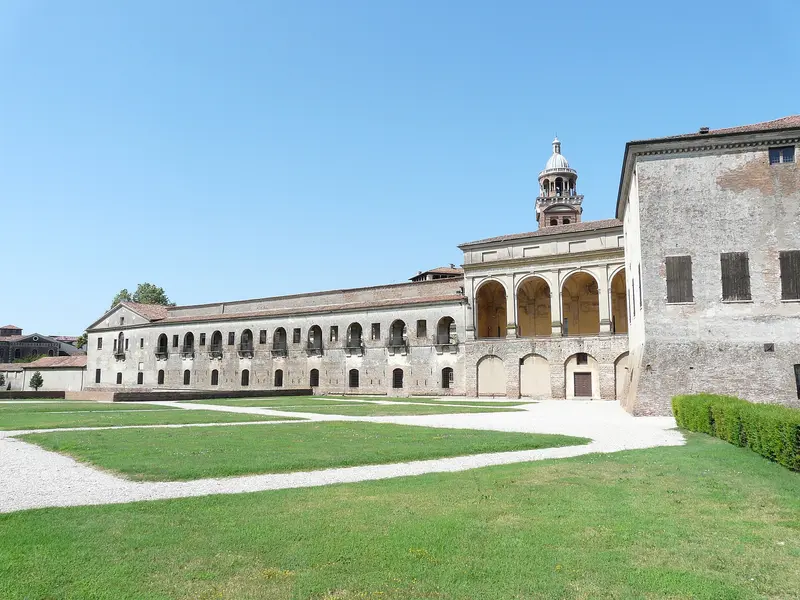
    Mantua, set on three lakes formed by the Mincio, was the seat of the Gonzaga for almost four centuries. Their palaces, with frescoes by Mantegna and Giulio Romano, make the small city a Renaissance hub; since 2008, it has been a UNESCO World Heritage site along with Sabbioneta.

    Sights in Mantua (Mantova)

    Discover the most important sights and attractions

    Palazzo Ducale

    1Palazzo Ducale

    The Gonzaga residence between Piazza Sordello and Piazza Castello grew over centuries into a complex of Castello di San Giorgio, Corte Vecchia, and Corte Nuova. The highlight is the Camera degli Sposi, which Andrea Mantegna painted between 1465 and 1474, with its painted ceiling opening to the sky. For the Camera degli Sposi, you book a fixed time slot with the full ticket; access to the Castello is via Piazza Castello.
    Open in Google Maps
    Basilica Sant'Andrea
    Church

    2Basilica Sant'Andrea

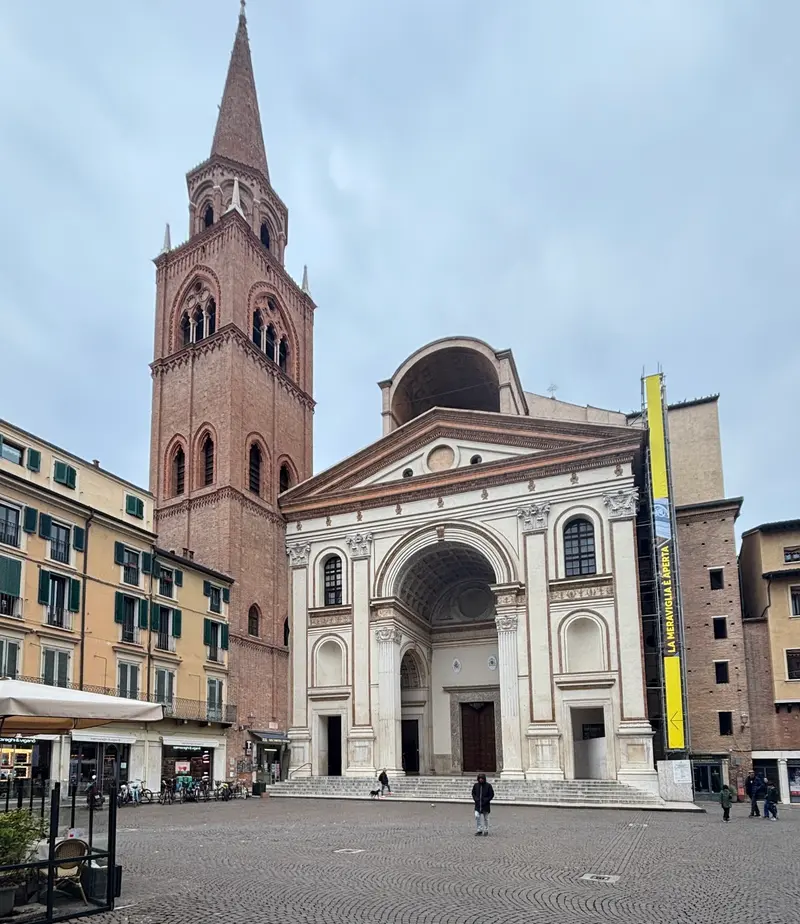
    Leon Battista Alberti designed the new church in 1472 for Ludovico II. Gonzaga; its single-nave nave boasts a coffered barrel vault. The crypt houses reliquaries said to contain earth soaked with Christ's Blood, while Andrea Mantegna is buried in the San Giovanni Battista Chapel.
    Open in Google Maps
    Palazzo Te
    Museum

    3Palazzo Te

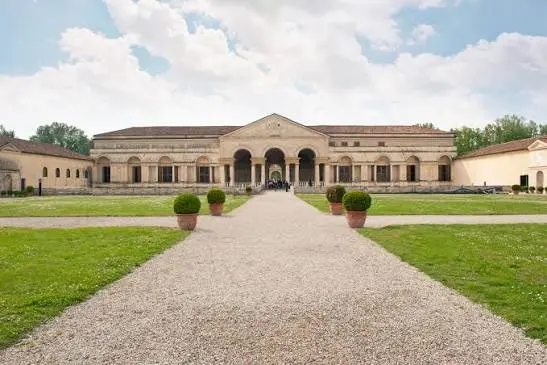
    Giulio Romano built the pleasure palace 1524-1534 for Federico II. Gonzaga by the swamps outside the city walls. A key Mannerist work, the Sala dei Giganti shows painted giants wreaking chaos and destruction; the Sala di Psiche features frescoes of Olympian feasts.
    Open in Google Maps
    Teatro Bibiena
    Attraction

    4Teatro Bibiena

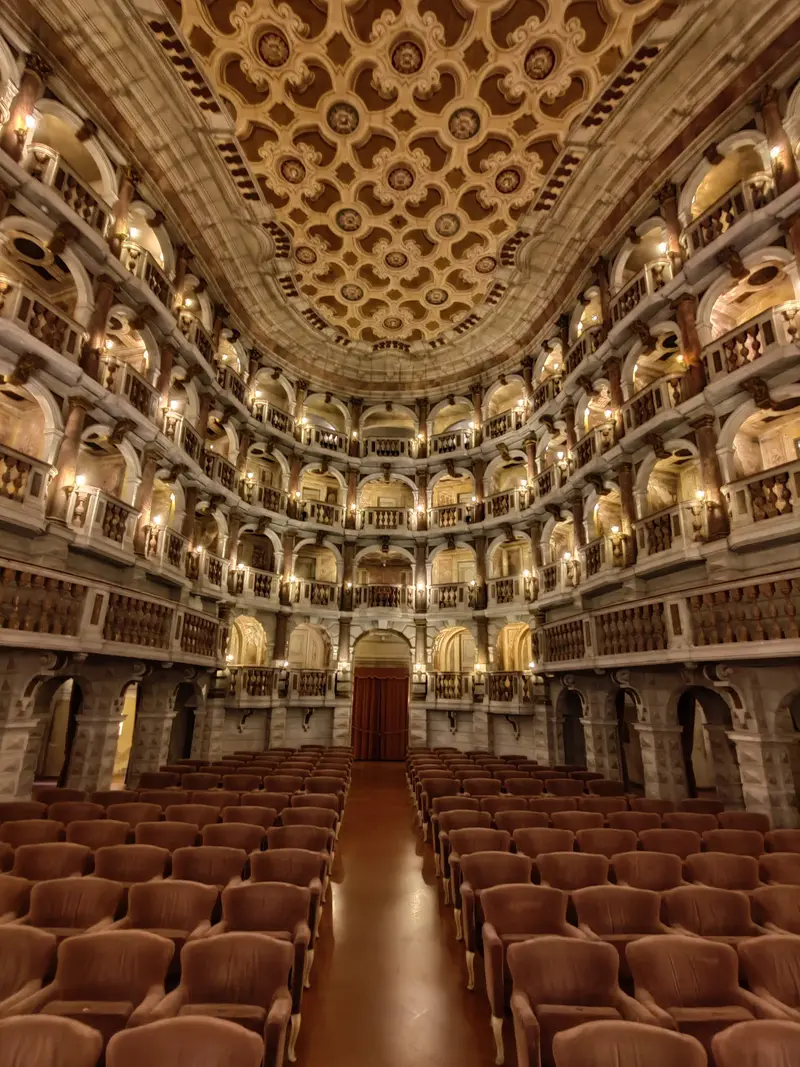
    The Academy's small theater was opened on December 3, 1769, designed by Antonio Galli Bibiena. Its bell-shaped hall has four wooden tiers of boxes. On January 16, 1770, about six weeks after the opening, the 13-year-old Mozart gave a concert here.
    Open in Google Maps
    Piazza delle Erbe
    Attraction

    5Piazza delle Erbe

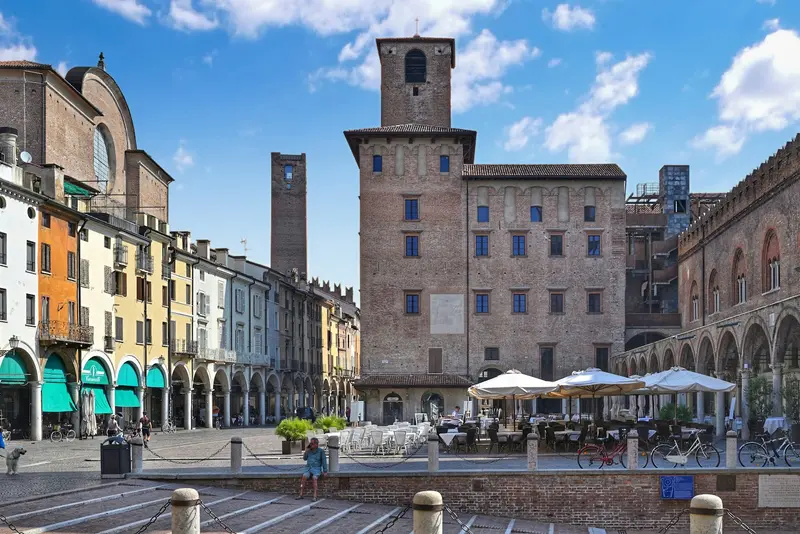
    The central square is flanked by late Gothic and Renaissance arcades, the Palazzo della Ragione, the clock tower with an astronomical clock by Bartolomeo Manfredi, and the Romanesque round church Rotonda di San Lorenzo, which dates back to Mathilde of Canossa.
    Open in Google Maps

    City walks in Mantua (Mantova)

    Curated walking tours through the city's highlights, handpicked by experienced travel journalists.

    Mantua: Renaissance Splendor & Historic Lanes

    Discover Mantua, a UNESCO World Heritage city, on a picturesque walk through its magnificent squares and charming lanes. Immerse yourself in the history of the Gonzaga family and admire architectural masterpieces of the Renaissance.

    ~2 Std.
    Open in Google Maps
    Stops (6)

    Food and Drink

    1

    Osteria dell'Oca

    Osteria on Via Trieste southeast of Piazza delle Erbe with traditional regional dishes and homemade pasta.
    Show on Google Maps
    2

    Antica Osteria Ai Ranari

    Traditional osteria on Via Trieste, whose name recalls the frog catchers who used to work on the lakes around Mantua. The cuisine focuses on Mantuan home cooking.
    Show on Google Maps
    3

    Il Salumaio – Gastronomia e Trattoria

    Delicatessen shop with an attached trattoria in Via Verdi, near Sant'Andrea. Besides local cured meats and cheeses, simple dishes are served for lunch.
    Show on Google Maps

    Eating & Drinking in Mantua

    Mantua's gastronomy is deeply rooted in Lombardian tradition, with pumpkin and rice as central ingredients. Here you'll discover hearty specialties like Tortelli di Zucca or Risotto alla Mantovana, authentically served in eateries like the Osteria dell'Oca.

    Tortelli di zucca

    Pasta parcels filled with pumpkin, Amaretti, Mostarda mantovana, Grana and nutmeg, served with melted butter and Grana.

    Risotto alla pilota

    Risotto with seasoned pork brät (pistume), finished with Grana.

    Sbrisolona

    A coarse, crumbly cake made from cornmeal, butter, and almonds; its name comes from brisà, 'crumbs'.

    History and Culture

    The GonzagaFrom 1328 to 1708, the Gonzaga ruled Mantua. They brought artists like Andrea Mantegna, Leon Battista Alberti, and Giulio Romano to their court, turning the city into a center of the Renaissance. Mantegna painted the Camera degli Sposi in the Palazzo Ducale from 1465 to 1474, Alberti designed the Basilica Sant'Andrea, and Giulio Romano built and frescoed the Palazzo Te.World HeritageSince 2008, Mantua, along with the Gonzaga city of Sabbioneta, has been a UNESCO World Heritage site. The three lakes were created in the 12th century when the Mincio was dammed for defense.Virgil and LiteratureThe Roman poet Virgil was born in 70 BC in a village near Mantua. Verdi set his opera Rigoletto at the Mantua court. Every year, in early September since 1997, the Festivaletteratura literary festival has been held.

    Out and about in Mantua

    On Foot and By BikeThe old town is flat and compact; the paths between Palazzo Ducale, Piazza delle Erbe, and Palazzo Te are easily covered on foot or by bike.Bus and TrainCity buses complement the network. From the station, trains run directly to Verona, Milan, and Modena, plus a daily high-speed connection to Rome.

    Accommodations in Mantua (Mantova)

    Find perfect stay in Mantua (Mantova)

    Booking.com* (Affiliate link)
    Search Hotels
    Agoda* (Affiliate link)
    Search Hotels
    Airbnb
    Vacation Rentals

    * Affiliate link: if you book through it, we earn a small commission. The price stays the same for you.

    Campgrounds in Mantua (Mantova)

    Find perfect campground in Mantua (Mantova)

    Search via Google Maps
    Campgrounds nearby (15km)
    Camping.info
    Find Campgrounds
    Park4Night
    RV Parks & Camping

    Plan your trip to Mantua (Mantova)

    Save places, build a route and plan your city trip, all in one place.

    1. 1
      Sunrise over alpine peaks and a sea of clouds
      1234

      Round trip

      12 days · 4 stops

      Saved

      Pick a route

      Pick a ready-made one or save places and plan your own.

      Open bookmarks
    2. 2

      Trip to Mantua (Mantova)

      Live
      • 1Palazzo Ducale3 days
      • 2Basilica Sant'Andrea4 days
      • 3Palazzo Te5 days
      Budget

      Plan your trip

      The planner sorts stops, days and budget. Plan together in real time.

      Start trip planning
    3. 3
      9:41 No signal
      Mantua (Mantova)
      Available offline

      Use it on the road

      Download the guide to your phone and use it on site, even offline.

    Nearby

    Verona

    Verona

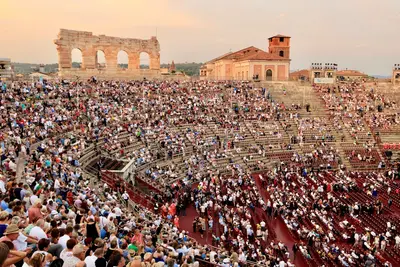
    Verona is situated on the Adige River and, with approximately 255,000 inhabitants, is the largest city in Veneto. Its Old Town, featuring Roman and medieval buildings, has been a UNESCO World Heritage site since 2000.Romans and ScaligersFrom Roman times date the Arena and Ponte Pietra, while Piazza delle Erbe lies above the former forum. In the 13th and 14th centuries, the Della Scala family ruled; Castelvecchio, Ponte Scaligero, and the Scaliger Tombs bear witness to their reign. From 1405, Verona belonged to Venice, predominantly to Austria in the 19th century, and joined Italy in 1866.Opera and LiteratureIn summer, the Opera Festival transforms the Arena into an open-air stage. Three of Shakespeare's plays are set in Verona, including “Romeo and Juliet”. The Casa di Giulietta is a popular destination; however, its historical connection is a later attribution, and the balcony was only added in the 1930s.SurroundingsIn the hills north of the city lies the Valpolicella wine region, home to Amarone.
    Sirmione

    Sirmione

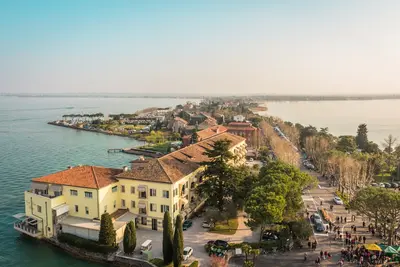
    Sirmione sits on a narrow, four-kilometer peninsula on Lake Garda's southern shore. Enter the traffic-calmed old town through Scaliger Castle's gate; its northern tip holds the ruins of a Roman villa, and a hot thermal spring in the lake makes it a spa resort.
    Parma

    Parma

    Parma is located in Emilia-Romagna on the Via Emilia and, with around 200,000 inhabitants, is the region's second-largest city after Bologna. From the 16th century, it was the capital of a Duchy under the Farnese, and later the Bourbons; palaces, churches, and the opera house date from this period.Parma is especially known for Prosciutto di Parma and Parmigiano Reggiano. UNESCO has designated Parma as a City of Gastronomy. In the Duomo and San Giovanni Evangelista, dome frescoes by Correggio can be seen.
    Modena

    Modena

    Modena lies on the southern edge of the Po Valley between Bologna and Parma and has around 184,000 inhabitants. The historic center clusters around Piazza Grande, home to the Romanesque Cathedral and Ghirlandina bell tower, a joint UNESCO World Heritage site since 1997.The city is known for its traditional balsamic vinegar and its automotive connection: Enzo Ferrari was born in Modena, and Maranello, with the Ferrari factory, lies south of the city.
    Brescia

    Brescia

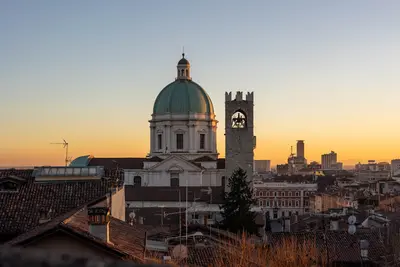
    Brescia, Lombardy's second-largest city, is often overlooked despite possessing significant Roman structures. The Capitolium (with its Roman Theatre) and the Longobard Monastery of Santa Giulia are UNESCO World Heritage sites; it also boasts Renaissance squares, two cathedrals, and a castle above the old town.

    Sources & method

    • Photos: Wikimedia Commons, Unsplash, Google Maps. Each photo carries its credit.
    • Place data such as addresses and ratings comes from Google Maps.
    • The content is based on web research from public, traceable sources. How the content is made · The role of AI