Back to Colombia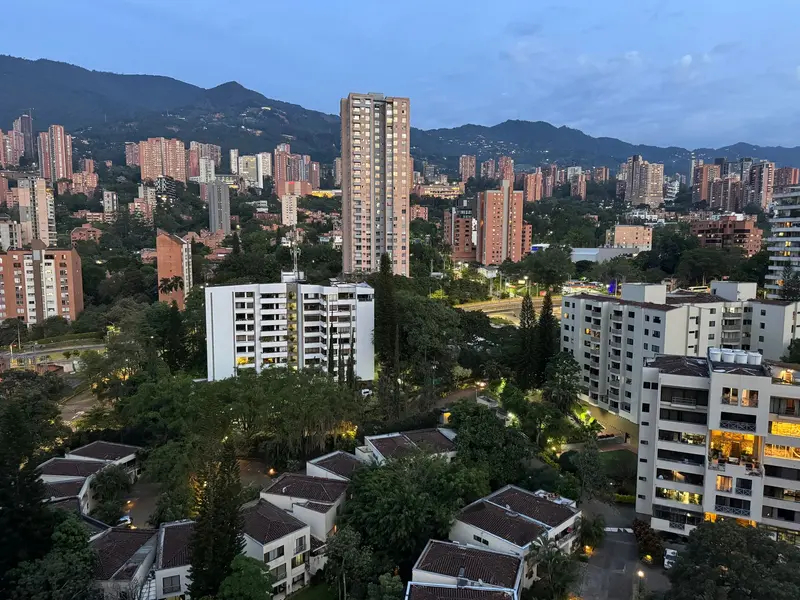
Antioquia und Kaffeezone
by Felix Gillen
From Medellín to the Guatapé reservoir, the coffee village Jardín and further into the coffee region with Salento, the Valle de Cocora, Filandia and Manizales. The route leads through green Andean valleys and colorful villages of the coffee cultural landscape.
7 stops
Why This Route?
This route connects the two best-known regions in the western Andes without a domestic flight. You'll experience Medellín, villages with colorful facades, and the coffee culture landscape with fincas and wax palms.
Hidden Gems
- Barbas Bremen Reserve near Filandia
- La Garrucha in Jardín
- Acaime Reserve in the Cocora Valley
- Calle del Recuerdo in Guatapé
Getting there and back
Open jaw: start and end are in different places
- Arrival
- Flight · MedellínInternationale Flüge landen in Medellín am Flughafen José María Córdova in Rionegro, Inlandsflüge teils am Stadtflughafen Olaya Herrera.
- Departure
- Flight · PereiraFrom Manizales Bus Terminal, it's about 1h 15m to 1.5h to Pereira, where you fly from Matecaña Airport. La Nubia Airport Manizales resumed scheduled flights to Bogotá & Medellín in Sept 2026, but often closes due to fog.
Itinerary
Stop 1 • 2 Nights
Medellín
Route highlight
With around 2.5 million inhabitants, Medellín is Colombia's second-largest city, located at almost 1,500 m in the Valle de Aburrá. You visit for its cable cars connecting hillside neighborhoods to the Metro, the Botero sculptures in the center, and the street art in Comuna 13. Popular nightlife districts are El Poblado with Provenza, and Laureles.
Metrocable, Plaza Botero, and Comuna 13. Buses to Guatapé depart from the North Terminal.
5 Sights
4 Restaurants
City in Transition
Medellín bears the nickname City of Eternal Spring. In August, it celebrates the Feria de las Flores.In 2002, Comuna 13 (San Javier) was the scene of military Operation Orión, with numerous dead and disappeared. Today, graffiti and guided tours tell the neighborhood's story there.Salsa: In Laureles, around Carrera 70, there are several salsa venues.
Stop 2 • 1 Night
Guatapé
Route highlight
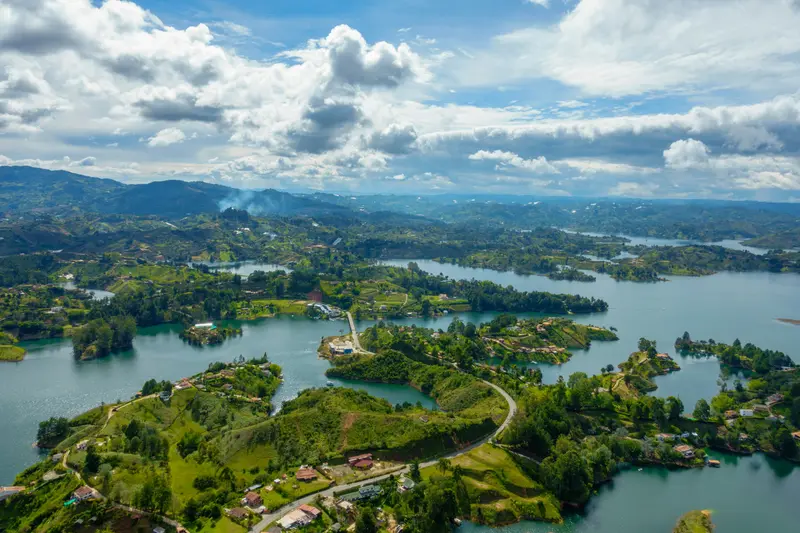
Guatapé is a village with around 10,000 inhabitants on the Peñol-Guatapé reservoir, about two hours east of Medellín. People visit for its colorful Zócalos on the house facades and the Piedra del Peñol, a 220 m high granite rock with stairs to its summit. It's a popular day trip; it gets crowded on weekends.
Around 81 km from Medellín, about 2 hours. Climb the Piedra del Peñol, Zócalos in the village. Then back to Medellín; buses to Jardín depart from Terminal del Sur.
5 Sights
4 Restaurants
Village of Squares
Zócalos are painted cement reliefs on the base of house facades. The first date from around 1919; newer motifs recount the history of the indigenous people and settlement by Antioqueños.In the 1970s, EPM built the reservoir, displacing the old town of El Peñol.
Stop 3 • 2 Nights
Jardín
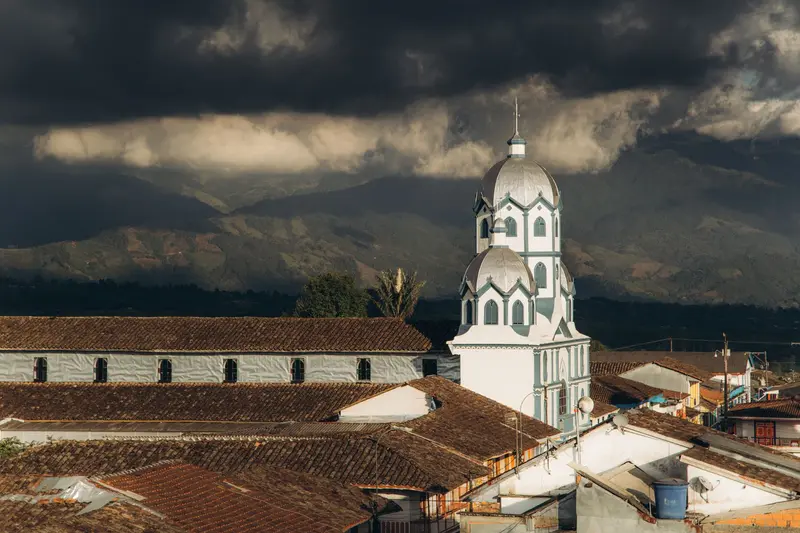
Jardín is a coffee village with around 15,000 inhabitants in southwestern Antioquia, a good three hours south of Medellín. You go there for the main square with the Neo-Gothic basilica and for the mountain landscape with waterfalls, cable cars, and birdwatching. The village is located at 1,750 m and was founded in 1863.
Ab Medellín rund 3 bis 3,5 Stunden. Basilika am Hauptplatz, Cerro Cristo Rey, Cueva del Esplendor.
2 Sights
2 Restaurants
Coffee and Colonial Architecture
Jardín belongs to the Network of Colombian Heritage Villages (Red de Pueblos Patrimonio). The Basilica has been a National Monument since 1980, and the main square since 1985.Economically, residents live from coffee, plantains, cocoa, and trout farming, with tourism increasingly contributing as well.
Stop 4 • 3 Nights
Salento
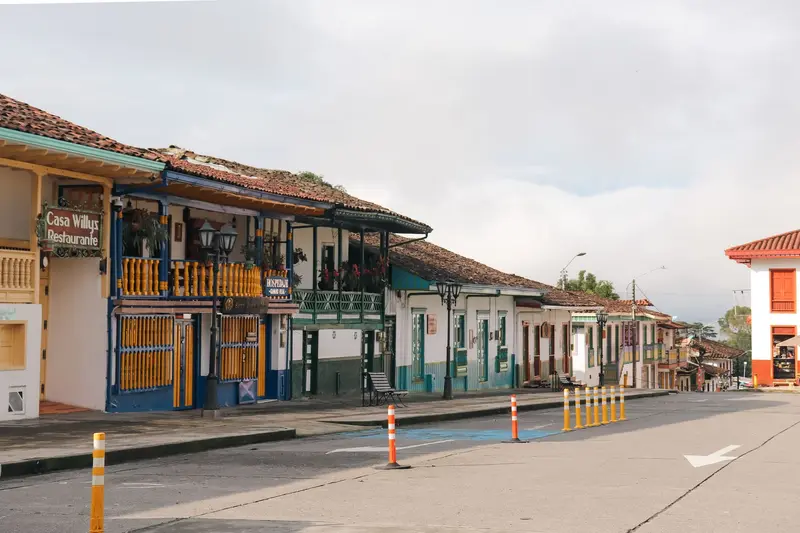
Salento is a village of 10,000 residents in Quindío Department, 45 minutes from Armenia. Visit for its colourful colonial houses on Calle Real, the coffee fincas, and as the hub for Jeeps to Valle de Cocora. Its historic centre is UNESCO World Heritage, the Coffee Cultural Landscape.
Ab Jardín mit zwei Bussen über Riosucio, Abfahrt laut einem Bericht von 2024 gegen 8 Uhr, Ankunft am späten Nachmittag. Tickets vorab vor Ort kaufen. Kaffeefincas in der Vereda Palestina.
2 Sights
2 Restaurants
Oldest place in Quindío
Salento was founded in 1842 as a penal colony and is considered the oldest town in the Department, hence its nickname Municipio Padre del Quindío. Since 2011, its center has been part of the World Heritage site Paisaje Cultural Cafetero.The earthquake of August 10, 2026, damaged 166 houses, with no fatalities. According to the municipality, tourism continues without general restrictions.
Stop 5 • 0 Nights
Valle de Cocora
Route highlight
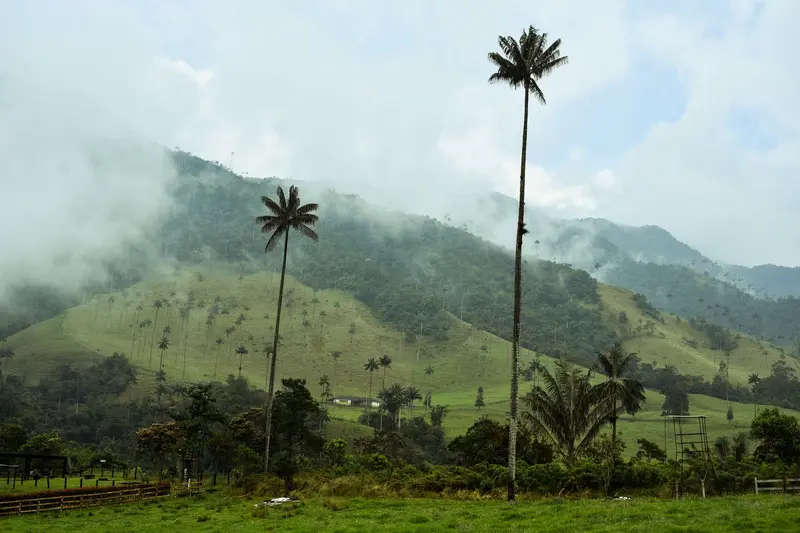
The Valle de Cocora is a high valley (1,800-2,400 m) in Departamento Quindío's coffee region, north of Salento, roughly 20-30 minutes by jeep from the village. You go for the Quindío wax palms, which stand in great numbers on the pastures here. The valley lies within the influence area of Los Nevados National Park, at the headwaters of the Río Quindío.
Day trip from Salento with Willys-Jeeps from the Plaza. The loop hike is about 12 km long and takes 4 to 6 hours. Start early.
1 Sight
National Tree Wax Palm
The Quindío wax palm (Ceroxylon quindiuense) has been the national tree of Colombia since Law 61 of 1985. The name Cocora originates from a Quimbaya princess, daughter of Cacique Acaime.The August 2026 earthquake did not disrupt visits: The valley remained open, the Willys Jeeps run normally.
Stop 6 • 1 Night
Filandia
Filandia is a village with around 13,000 inhabitants in northern Quindío, about an hour from Armenia and Pereira. You go for its colorful houses around the main square, the wooden observation tower overlooking the coffee slopes (which has been closed since the August 2026 earthquake), and its basket weaving tradition. It is quieter than nearby Salento.
From Salento by jeep, approx. 40 mins. Buy return beforehand. Mirador Colina Iluminada and Calle del Tiempo Detenido.
4 Sights
3 Restaurants
Basket Weavers and Colonists
Filandia was founded in 1878 by settlers from Antioquia and is located at a good 1,900 m. Basketry traditionally produced the baskets for the coffee harvest.
Stop 7 • 2 Nights
Manizales
Manizales is the capital of the Caldas Department, with around 475,000 inhabitants, and is located over 2,100 m on steep Andean slopes. You go there as a base for coffee fincas and Los Nevados National Park, featuring the Nevado del Ruiz volcano. Founded in 1849, the city is shaped by several universities.
From Filandia by bus to Pereira (approx. 1 hour) and then on to Manizales (approx. 1 hour 15 minutes to 1.5 hours). Coffee farm Hacienda Venecia, Recinto del Pensamiento. Check the condition of Cable Aéreo and Cathedral on site after the August 2026 earthquake.
4 Sights
2 Restaurants
Coffee, Universities and Earthquakes
In January, Manizales celebrates the Feria de Manizales. The city has 15 universities, including the Universidad de Caldas and a campus of the Universidad Nacional.The earthquake on August 10, 2026, severely damaged the Cathedral; a tower partially collapsed onto the nave. The Cathedral is closed, and the tower is being shored up. According to the city, studies and planning for reconstruction will take about eight months; a date for reopening is not known. The Monumento a los Colonizadores in Chipre was also damaged and temporarily closed.
7 stops
Route Summary
Duration12 Days
Stops7 Places
TypeMixed
Best Time to GoDecember to February, as well as July and August, the drier months in Antioquia and the Coffee Zone.