Back to Croatia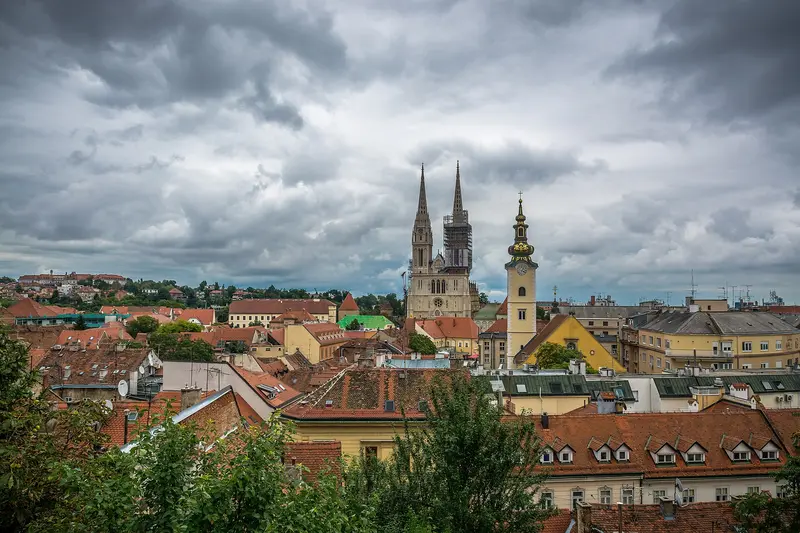
From Zagreb via Plitvice to the Adriatic
by Felix Gillen
The route connects the capital with the country's most famous National Park and then leads to the Dalmatian Coast to Zadar and Split.
5 stops
Why This Route?
In just over a week, you'll see Croatia's capital, two national parks, and two of the coast's most important cities. From Zagreb, you'll travel via highway and country road to the Plitvice Lakes, then continue to the coast.
Hidden Gems
- The Grič Cannon at Lotrščak Tower at 12 PM
- the Greeting to the Sun in Zadar after sunset
- the Barone Fortress in Šibenik
Getting there and back
Open jaw: start and end are in different places
- Arrival
- Flight · Zagreb (ZAG)
- Departure
- Flight · Split (SPU)
Itinerary
Stop 1 • 2 Nights
Zagreb
Route highlight
Zagreb is the capital of Croatia and, with around 767,000 inhabitants, by far the largest city in the country. The historic Upper Town with its Cathedral, St. Mark's Church, and Lotrščak Tower, the squares and parks of the Lower Town, and numerous museums make it a unique destination away from the coast.The Upper Town originated from the settlements of Gradec and Kaptol, which were only unified in 1850. A short funicular connects it to the Lower Town.
Upper Town, Dolac Market and museums.
6 Sights
3 Restaurants
History and City Living
Zagreb became an episcopal see in 1094, and Gradec received city rights with the Golden Bull in 1242. An earthquake in March 2020 damaged many buildings, including the Cathedral, where masses have resumed since Christmas 2025, with restoration ongoing. A cannon has fired daily at noon from the Lotrščak Tower since 1877. During the Advent season, the city center becomes a meeting point with markets spread across several squares.
Stop 2 • 1 Night
Plitvice Lakes National Park
Route highlight
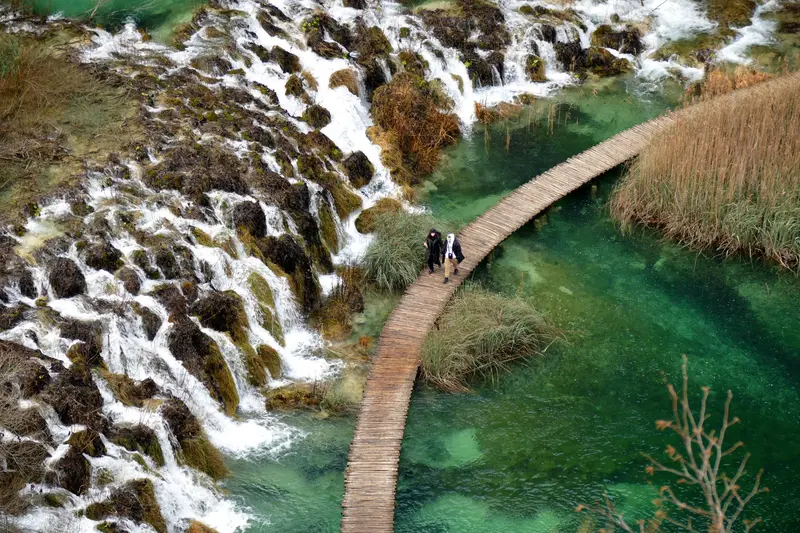
Plitvice Lakes National Park in Lika is Croatia's most famous national park, located about two hours south of Zagreb. Sixteen lakes are connected by travertine barriers and waterfalls, with wooden walkways leading directly over the water.The park has been protected since 1949, was added to the UNESCO World Heritage list in 1979, and welcomed nearly 1.5 million visitors in 2024.
Early morning to the paths around the lakes.
1 Sight
Nature and Care
The lakes are created by tufa depositing on mosses and algae, forming natural dams. The Great Waterfall, Veliki slap, plunges 78 meters. Swimming is forbidden park-wide. The park spans nearly 297 km², but most visitors stick to the paths around the lower and upper lakes.
Stop 3 • 2 Nights
Zadar
Route highlight
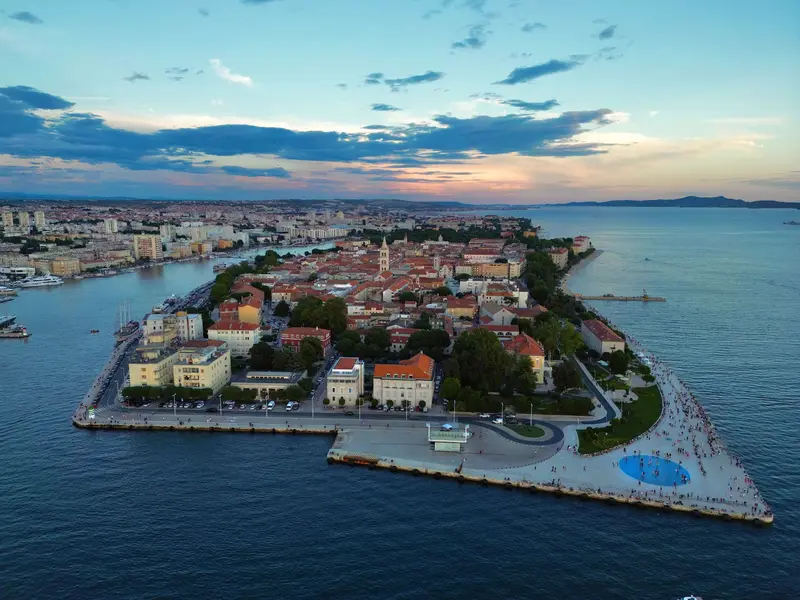
Zadar is the largest city in North Dalmatia, its Old Town situated on a peninsula on the Adriatic Sea. Roman Forum, Romanesque churches, and the Venetian fortifications—a UNESCO World Heritage site—meet modern installations like the Sea Organ here.The city is a good starting point for the National Parks Krka, Kornati and Plitvice Lakes.
Meeresorgel und Altstadt, Abstecher nach Nin.
4 Sights
3 Restaurants
History and the Present
Zadar dates back to the Liburnian settlement Iader and became a Roman colony in 48 BC. The Church of Saint Donatus dates from the 9th century, and the Cathedral of Saint Anastasia is the largest church in Dalmatia. Since 2017, the city's Venetian defensive fortifications have been a World Heritage site. Architect Nikola Bašić created the Sea Organ (2005) and the Greeting to the Sun on the waterfront promenade.
Stop 4 • 1 Night
Krka National Park
Route highlight
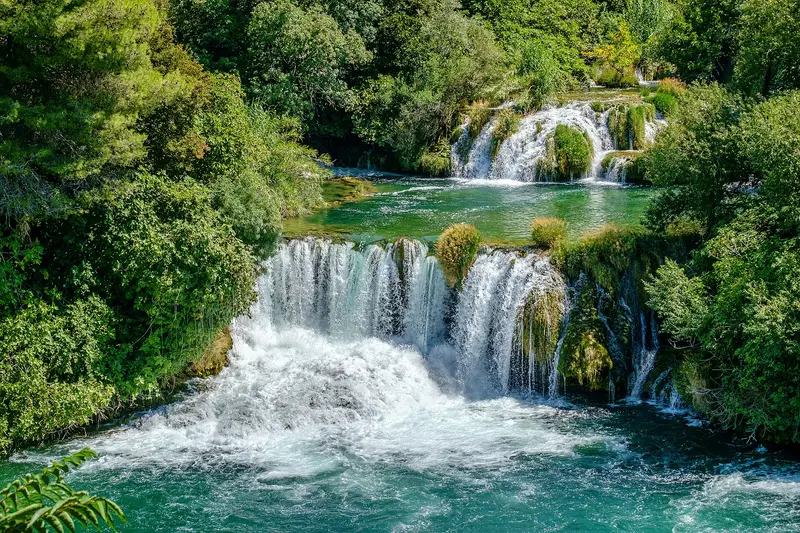
Krka National Park protects the lower course of the Krka River in the Šibenik hinterland, featuring a chain of travertine waterfalls. The most famous is Skradinski buk, with 17 cascades, over which a wooden walkway leads.The park has been a national park since 1985; in 2025, approximately one million visitors arrived.
Waterfalls at Skradinski buk, overnight stay in Šibenik.
2 Sights
Nature & Monastery
Skradinski buk falls over 17 steps a total of nearly 48 meters. On the island of Visovac in the river stands a Franciscan monastery, founded in 1445. Further upstream lies the Roški slap waterfall. Swimming has been forbidden at Skradinski buk since 2021 to protect the tufa barriers.
Stop 5 • 2 Nights
Split
Route highlight
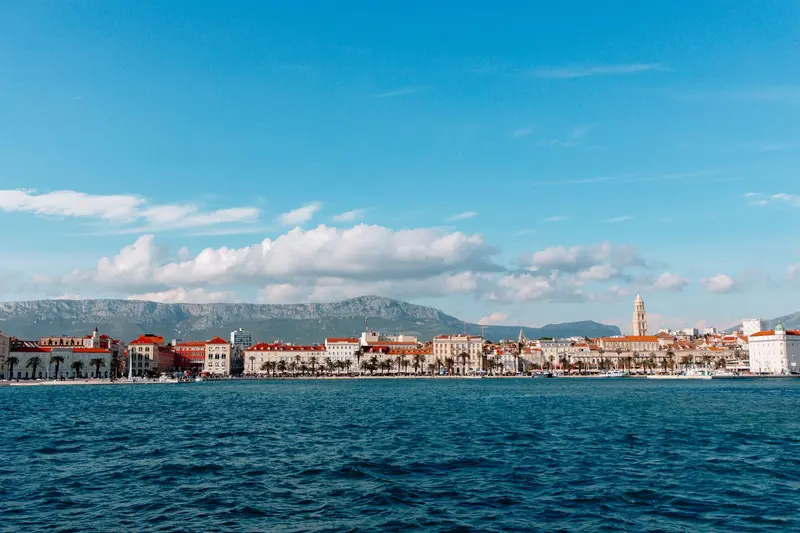
Split is Croatia's second-largest city and the center of Dalmatia. Its heart is the palace, which the Roman Emperor Diocletian had built around 300 AD, and where people still live, run cafés, and shop today.From the port, ferries and catamarans depart for the islands of Brač, Hvar, and Vis. West of the old town lies the forested city hill Marjan.
Diokletianspalast, Marjan und Ausgangspunkt für die Inseln.
5 Sights
2 Restaurants
Palace, Klapa and Alka
Diocletian's Palace, built around 295–305, has been a UNESCO World Heritage site since 1979 as the historical core of Split. The emperor's mausoleum was transformed into the Cathedral of Saint Domnius. Dalmatia's multi-part Klapa singing has been on UNESCO's Intangible Cultural Heritage List since 2012. In the hinterland, during the Sinjska alka knightly tournament in Sinj each August, riders charge towards a ring; this tradition is also UNESCO cultural heritage.
5 stops
Route Summary
Duration9 Days
Stops5 Places
TypeMixed
Best Time to GoMay to June, September to October