Back to Croatia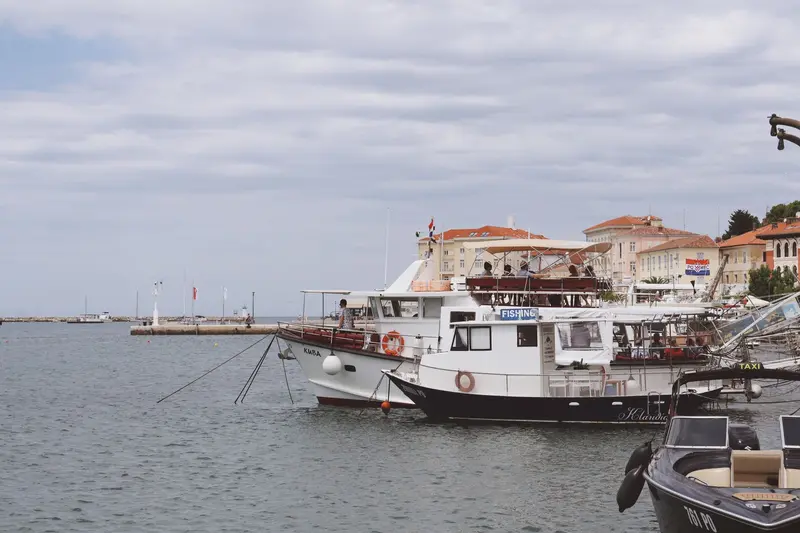
Istria and Kvarner
by Felix Gillen
A round trip through the northwest of Croatia: Venetian coastal towns, hill villages with truffle cuisine, the Arena of Pula, and the seaside resorts and islands of Kvarner.
6 stops
Why This Route?
Short distances, good food, and a mix of culture, hills, and sea: Istria and Kvarner are ideal for a relaxing week by car.
Hidden Gems
- The Grisia Alley in Rovinj
- the artist town Grožnjan
- the fishing village Volosko on the Lungomare
Getting there and back
Round trip, returning to where you started
- Arrival
- Car · Grenzübergang Slowenien–Kroatien in Istrien
- Departure
- Car · Grenzübergang Slowenien–Kroatien in Istrien
Itinerary
Stop 1 • 1 Night
Poreč
Poreč is a coastal town in West Istria with an old town on a narrow peninsula and the Euphrasian Basilica, an early Christian episcopal complex on the UNESCO World Heritage List. Besides the old town, long hotel and bathing bays to the north and south attract many beach holidaymakers.The old town's street network still follows the Roman camp, with its main axes Decumanus and Cardo.
Euphrasius-Basilika und Altstadt.
2 Sights
3 Restaurants
Culture and History
Poreč originated as a Roman castrum and became Colonia Iulia Parentium under Augustus. The Euphrasian Basilica was rebuilt by Bishop Euphrasius in the 6th century. The basilica, atrium, baptistery, and bishop's palace are considered the most complete preserved complex of its kind and have been on the World Heritage List since 1997. In summer, there are concerts and festivals in the old town squares.
Stop 2 • 2 Nights
Rovinj
Route highlight
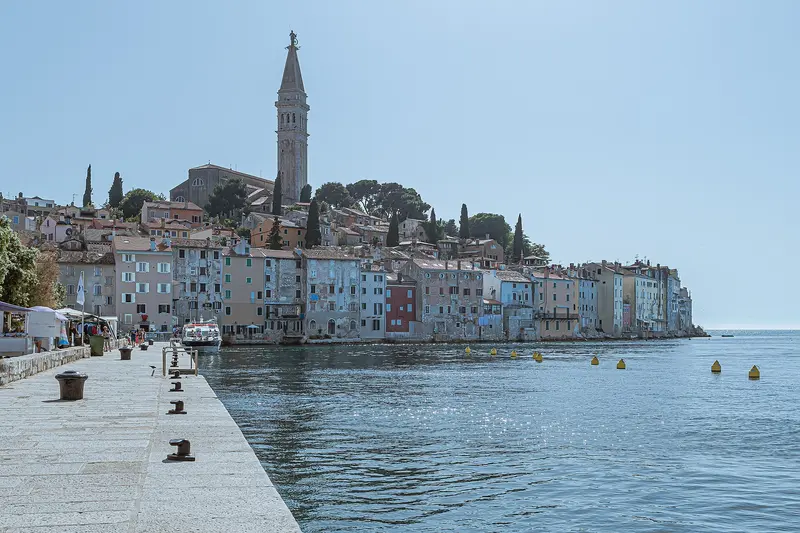
Rovinj is a port city on the west coast of Istria, whose old town is situated on a former island around the Church of St. Euphemia. Narrow streets, colorful waterfront houses, and a number of excellent restaurants make the city one of Croatia's most visited places.Until 1763, the old town was separated from the mainland by a canal; today it is a pedestrian zone. To the south lies the Zlatni rt Forest Park with its bathing coves.
Old Town, Batana Museum and bathing coves at Zlatni rt.
5 Sights
2 Restaurants
Culture and Tradition
Rovinj belonged to Venice from 1283 to 1797, a legacy seen in its bell tower, city gates, and houses. The Batana, a flat wooden fishing boat, has its own Ecomuseum. The project has been listed in UNESCO's Register of Good Safeguarding Practices for Intangible Cultural Heritage since 2016. Since 1967, the steep alley Grisia turns into an open-air gallery every year on the second Sunday in August.
Stop 3 • 1 Night
Pula
Route highlight
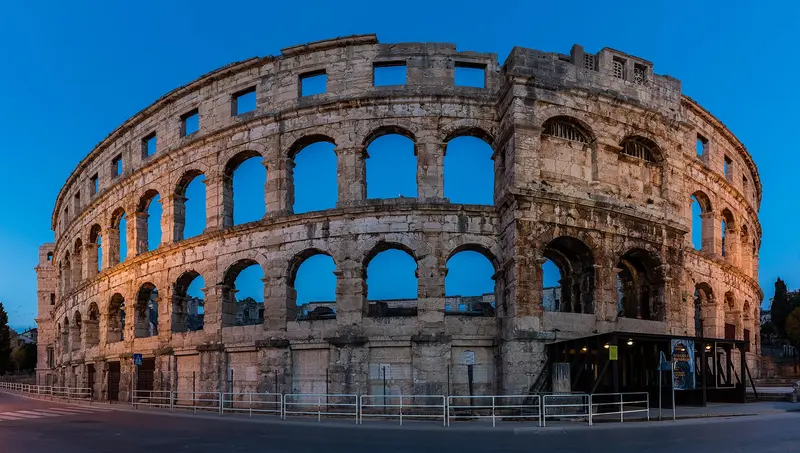
Pula is the largest city in Istria and is located at the southern tip of the peninsula. Its landmark is one of the six largest preserved Roman arenas, complemented by a triumphal arch, a temple at the Forum, and a Venetian fortress above the city.Pula is a working and port city with a shipyard, not a holiday backdrop. From here, boats depart for Brijuni National Park.
Arena, Forum und Boot nach Brijuni.
5 Sights
3 Restaurants
Culture and History
Pula became Roman in 177 BC and a colony around 46/45 BC; from 1331 to 1797, it belonged to Venice. The Arena was built between 27 BC and 68 AD and today serves as a stage: For decades, the Pula Film Festival in July has shown films outdoors, in 2026 the 73rd edition took place. The Historical Museum of Istria is housed in Kaštel, the Venetian fortress.
Stop 4 • 1 Night
Motovun
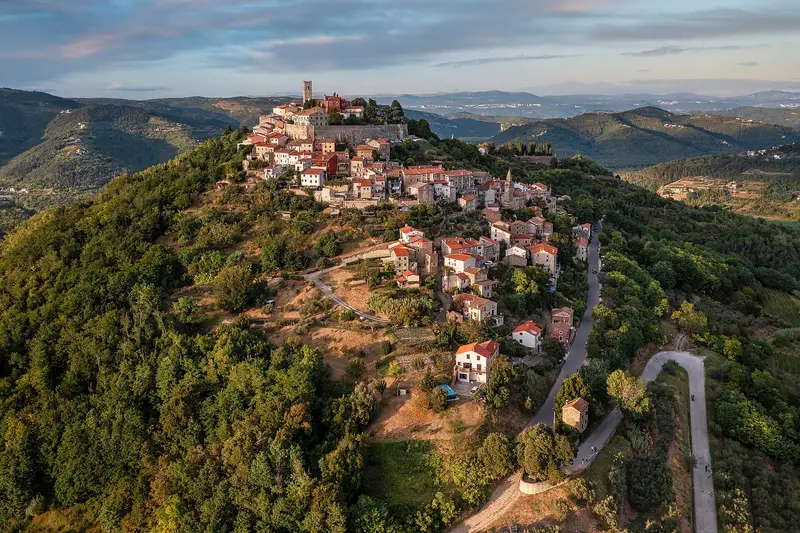
Motovun is a walled hilltop town in inland Istria, high above the Mirna Valley. Via the preserved town walls, you can walk around the town and look out far over vineyards and the truffle forest in the valley.A few kilometers northwest lies Grožnjan, known since the 1960s as a city of artists with galleries and summer music events.
Stadtmauer, Trüffel und Grožnjan.
2 Sights
2 Restaurants
Truffle, Film, Music
White truffles grow in the Mirna Valley forest. In 1999, Giancarlo Zigante found a record truffle of 1.31 kilograms near Buje. In October, nearby Livade celebrates the truffle season over several weekends. Since 1999, the Motovun Film Festival has taken place in July. In Grožnjan, artists have settled since 1965; it boasts numerous galleries and studios, and since 1969, the Jeunesses Musicales organization has been training young musicians there.
Stop 5 • 1 Night
Opatija
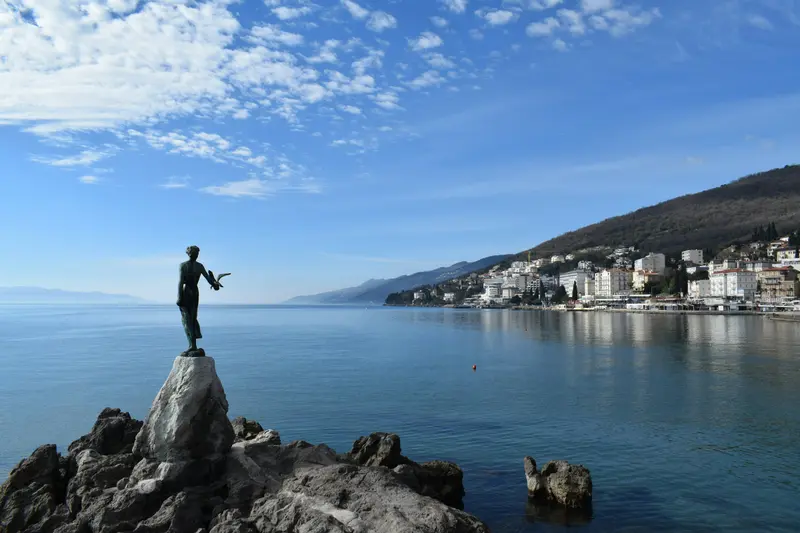
Opatija is a seaside resort on the Kvarner Bay west of Rijeka, which became a spa town for the Habsburg society in the 19th century. Villas, grand hotels, and parks still define the waterfront today.The Lungomare coastal path stretches twelve kilometers along the water, from Volosko to Lovran.
The Lungomare to Volosko.
4 Sights
2 Restaurants
Habsburg-era spa resort
Its seaside resort history began in 1844 with the construction of Villa Angiolina. Hotels such as the Kvarner appeared from the 1880s. The Girl with the Seagull statue by Zvonko Car (1956) is the city's landmark. In October, neighboring Lovran celebrates the chestnut harvest with the Marunada.
Stop 6 • 2 Nights
Krk
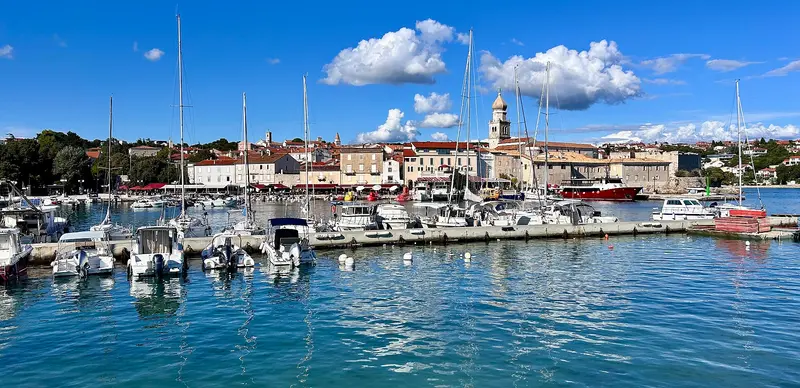
Krk is the largest island in the Kvarner Bay and is connected to the mainland by a bridge. The main town of the same name on the southwest coast has a walled old town with a Romanesque cathedral and a Frankopan castle.Rijeka Airport is also located on the island; from Valbiska, ferries depart for Cres and Rab.
Altstadt Krk und Fähre nach Rab oder Cres.
3 Sights
2 Restaurants
Culture
The city of Krk dates back to a Roman settlement. The Cathedral of the Assumption of Mary dates from the 11th and 12th centuries, and the castle on Kamplin Square commemorates the Frankopan counts who ruled the island in the Middle Ages. The raw ham from the island was, in 2015, the first Croatian product with an EU protected geographical indication.
6 stops
Route Summary
Duration9 Days
Stops6 Places
TypeBeach & Relaxation
Best Time to GoMay to June, September to October