Clémenceau Lauret / Wikimedia Commons / CC BY-SA 4.0, mod.
Round trip · La Réunion
La Réunion in 12 Days: Lagoon, Cirques and Volcano
by Felix Gillen
- 12 Days / 11 Nights
- Saint-Gilles-les-Bains and L'Hermitage → Cirque de Salazie and Hell-Bourg
This clockwise tour takes you around the island and into two of its three cirques. It begins with beach days on the west coast and the view from Maïdo to Mafate, ascends via the RN5 to Cilaos, connects Saint-Pierre with Piton de la Fournaise and the wild south, and ends after the east coast in Hell-Bourg in the Cirque de Salazie.
At a glance
- Duration
- 12 Days / 11 Nights
- Stops
- 5 · Saint-Gilles-les-Bains and L'Hermitage → Cirque de Salazie and Hell-Bourg
- Arrival
- Flight · Saint-Denis Roland Garros (RUN)
- Best Time to Go
- May to November
5 stops
Why This Route?
This route combines the three main reasons most visit La Réunion: lagoons on the west coast, hiking in the Cirques, and the active volcano. The stages are short enough for early starts, as the volcano, Maïdo, and Cirques generally appear cloudless in the morning.
Hidden Gems
- Rock pools of Grande Anse at the south end of the beach
- Saint-Paul's open-air market on Friday
- Maison de la Broderie in Cilaos
- Forêt de Mare Longue with its botanical trail
Getting there and back
Round trip, returning to where you started
- Arrival
- Flight · Saint-Denis Roland Garros (RUN)From Roland Garros Airport, you drive by rental car via Saint-Denis and the Route des Tamarins to the west coast, approx. 40 km to Boucan Canot.
- Departure
- Flight · Saint-Denis Roland Garros (RUN)From Hell-Bourg, drive via Salazie and Saint-André back to the North Coast; allow ample time for airport rental car drop-off.
Itinerary
Saint-Gilles-les-Bains and L'Hermitage
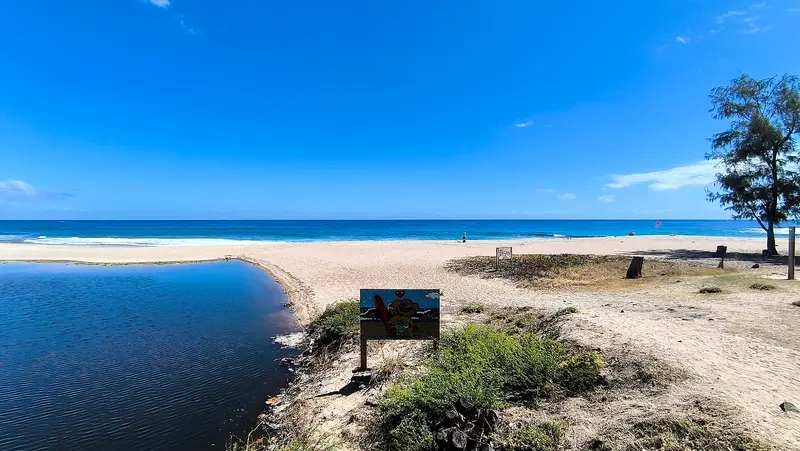
Saint-Gilles-les-Bains is the best-known seaside resort on the west coast, approximately 40 kilometres south of Saint-Denis, situated between Boucan Canot beach and L'Hermitage lagoon. This former fishing village belongs to the municipality of Saint-Paul.Around the marina, dive schools have been established, and the Aquarium de La Réunion showcases fish from the Mascarene Islands. You can walk to L'Hermitage lagoon, and along the sand, you reach La Saline. Above the village, in Saint-Gilles-les-Hauts, lies the Musée de Villèle.
L'Hermitage Lagoon, Boucan Canot, Saint-Paul Market; morning at Maïdo for Mafate views
3 Sights
A historic spa town
From Fishing Village to Seaside ResortSaint-Gilles-les-Bains belongs to the municipality of Saint-Paul, in whose bay the first French settlers landed. The former fishing village became the island's most important seaside resort.Plantation HistoryUp in Saint-Gilles-les-Hauts, the Musée de Villèle is located in the 1788 family home of Panon-Desbassayns. It covers the colonial history and slavery on La Réunion.
Cirque de Cilaos
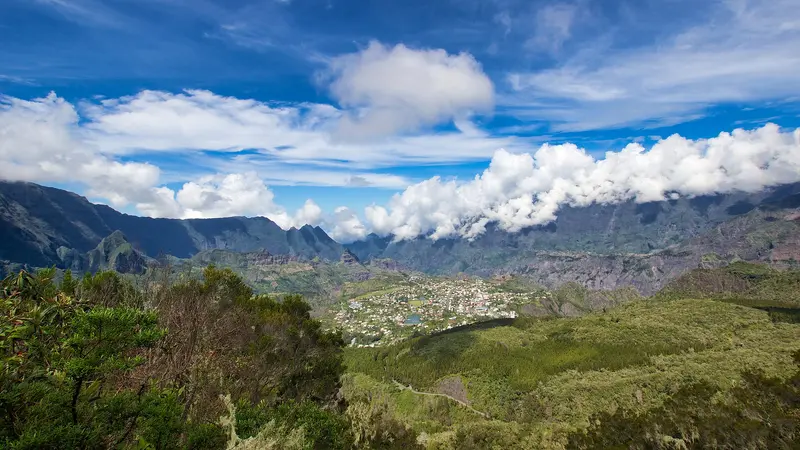
The Cirque de Cilaos is the southernmost of the three cirques in the island's interior, enclosed by the steep walls of the Piton des Neiges. You go there for the mountain road with over 400 bends, for the ascent to Piton des Neiges, the island's highest point, and for a mountain village with thermal springs, lentil fields, and its own embroidery tradition.The village of Cilaos lies at around 1,200 m altitude. From here, you can reach the hamlets of Bras-Sec and Îlet à Cordes, the small lake Mare à Joncs, and hiking trails leading into the neighboring cirque of Mafate. Wine is grown on the steep slopes. The cirque is part of the UNESCO World Heritage site „Pitons, cirques et remparts“.
Getting there via RN5 from Saint-Louis, about 1.5 hrs from Saint-Gilles; Roche Merveilleuse, hot springs, or ascent to Piton des Neiges
3 Sights
History, Thermal Baths & Crafts
Refuge and SettlementFirst, in the 18th century, escaped slaves (Marrons) settled in the cirque. Starting in 1835, poor white settlers, the "Petits Blancs", arrived; Cilaos was officially settled from 1850. The name possibly derives from the Malagasy "Tsy ilaozana", a place one does not leave.Thermal ResortBy the late 19th century, the town grew around a thermal spa. The current thermal spa dates from 1987; the springs used are 30 to 37 °C.Lentils, Wine and EmbroideryLentils are primarily grown on Îlet à Cordes; the commune celebrates them every October with a festival. On the steep slopes, around 20 hectares are planted with vines such as Malbec, Chenin, and Pinot noir. The openwork embroidery "jours de Cilaos" was developed by Angèle Mac-Auliffe; the Maison de la Broderie shows works.
Saint-Pierre
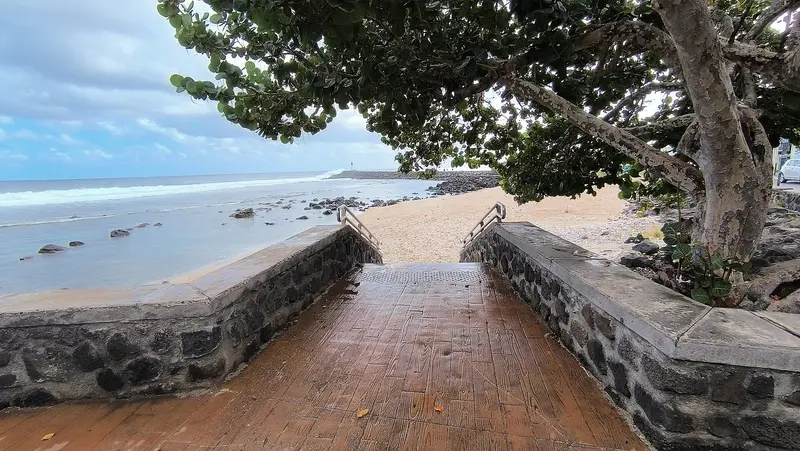
Saint-Pierre is the largest city in the south of La Réunion and is considered the capital of the south; in 2022, it had 85,254 inhabitants. It was founded in 1735, and the small Pierrefonds airport is located near the city.Along the waterfront are the harbor, restaurants, bars, and a lagoon with a white sandy beach protected by a coral reef. Every Saturday morning, a market is held here, and every year in June, the Sakifo music festival. In the Terre Sainte quarter are narrow streets and Creole houses.
Saturday market and lagoon; Day trip to Pas de Bellecombe (from St-Pierre, approx. 1h 25m, early start); Grande Anse, Rivière Langevin and Mare Longue
2 Sights
3 Restaurants
Capital of the South
Port and TradeFounded in 1735, Saint-Pierre grew around its port, completed in 1883, thriving first on coffee, then on sugarcane. The town hall is housed in the former building of the Compagnie des Indes.Market, Rum and MusicOn Saturday mornings, the market takes place on the waterfront. At the Isautier distillery, the Saga du Rhum tells the story of rum on the island. Every June, the Sakifo Festival hosts a series of concerts.
East
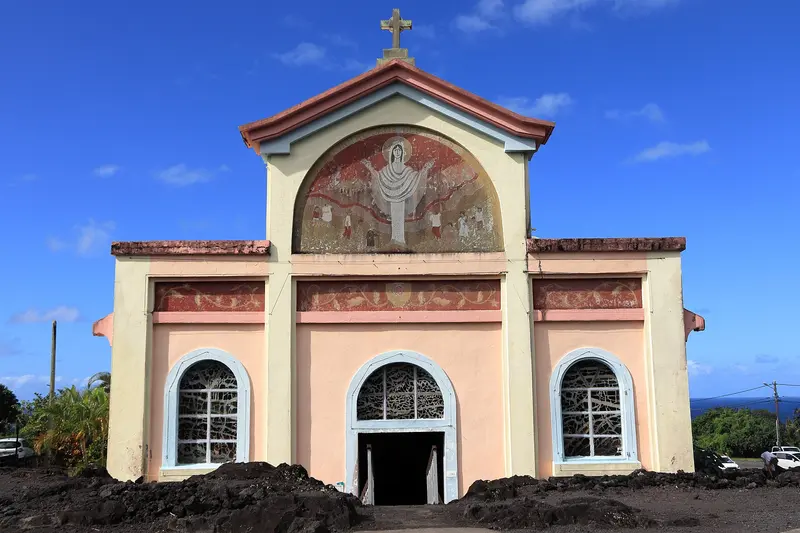
The East is the rainier side of the island between Saint-Denis and the lava fields of Grand Brûlé. You visit for the coastal traces of Piton de la Fournaise, the vanilla growing regions, the waterfalls and bathing pools inland, and the Tamil temples.At Sainte-Rose, the Route des Laves follows cooled lava flows; the church of Notre-Dame-des-Laves was narrowly spared during the 1977 eruption. Further north, near Bras-Panon, are the pools of the Rivière des Roches, and in Saint-André, the Temple du Colosse. Inland, you reach the Bélouve cloud forest via the Plaine-des-Palmistes.
Lava Route, Notre-Dame-des-Laves, Anse des Cascades, Vanilla in Bras-Panon
1 Sight
Faith, Vanilla and Volcano
Tamil TemplesIn 1848, Indian indentured laborers built a first chapel by the sea near the sugarcane plantations of Saint-André. The current Temple du Colosse was built on this site in 1991. It is dedicated to the goddess Pandialé. Visitors remove their shoes at the entrance and do not wear leather accessories.VanillaThe hand-pollination of the vanilla flower dates back to Edmond Albius. The Provanille cooperative in Bras-Panon has been operating since 1968 and unites nearly 140 growers. Vanilla plants are found on cultivated land and must not be picked.Living with the VolcanoThe Grand Brûlé, between Sainte-Rose and Saint-Philippe, is uninhabited. Here, lava flows often reach the sea and have repeatedly altered the course of the Route des Laves. In 2007, a lava flow buried the road under approximately 60 m of rock.
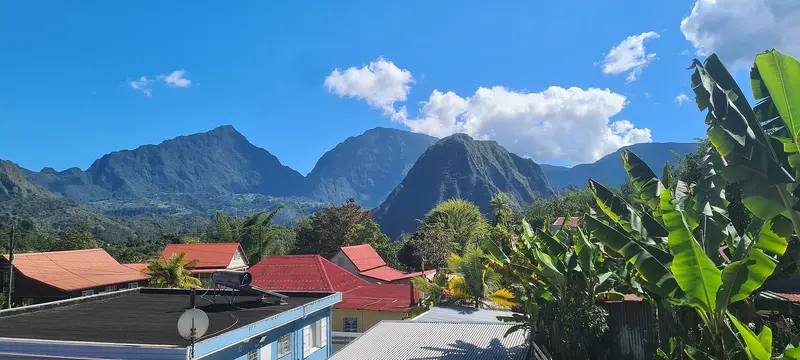
Cirque de Salazie and Hell-Bourg
The Cirque de Salazie is the easternmost of the island's three central calderas and the most easily accessible. You go there for the waterfalls on the green cliffs and for Hell-Bourg, the only village outside mainland France to bear the "Plus beaux villages de France" label.Salazie is the rainiest of the three calderas. The water feeds dense vegetation, Chouchou fields, and numerous cascades such as the Voile de la Mariée. Besides Hell-Bourg, the municipality includes the localities of Grand Îlet and Mare à Vieille Place. Hiking paths go to Piton d'Anchaing, Bélouve Forest, and via Col des Bœufs to Mafate.
From Saint-André to the cirque in under 30 minutes; Voile de la Mariée, Maison Folio, Bélouve, and Trou de Fer
1 Sight
History and Daily Life in Salazie
Maroons and SettlersFrom the 17th century, escaped slaves sought refuge in the valley basin. Following land grants in the 1830s, the population rose from 36 people (1834) to 2,500 (1848). Piton d'Anchaing commemorates the legendary Maroon Anchaing and his companion Héva.Hell-Bourg Spa TownThermal springs were discovered here in 1831, and in 1841 the place received its name from Governor Anne Chrétien Louis de Hell. A thermal bath opened in 1852, its heyday was around 1875; a cyclone in 1948 caused the springs to dry up. From this era date the Creole villas and the Guétalis, small wooden pavilions from which one could discreetly observe the street.ChouchouThe Chouchou (Chayote) was introduced from Mexico in 1840. It grows on trellises and shapes the landscape and cuisine; hats are also woven from its straw.
Plan this route as your trip
All stops, trains and nights go into your trip planner. You adjust dates and places to stay afterwards.
This route is a suggestion from our research. Please check timetables, times in port, opening hours and prices before you book – what your tour operator or carrier says is what counts.
Fernweh is a free travel guide and trip planner: routes researched by people, taken over in one click, used day by day on the road. More about Fernweh
5 stops
Route Summary
Duration12 Days
Stops5 Places
TypeAdventure