Steven Lek / Wikimedia Commons / CC BY-SA 4.0, mod.
City trip · Morocco
The North by Train and Bus: Rabat to Tangier
by Felix Gillen
- 13 Days / 12 Nights
- Rabat → Tangier
This route links the imperial cities and the Rif Mountains of northern Morocco without a rental car. From the capital Rabat, the train takes just over two hours to Meknes and then about 35 minutes to Fez. From Fez, long-distance buses take over: four and a half to five hours through the Rif to Chefchaouen, then about an hour and a half to Tetouan and an hour to Tangier. Along the way are the Roman city of Volubilis, the Fès el-Bali medina and Tetouan's Andalusian-influenced old town, ending at the Strait of Gibraltar.
At a glance
- Duration
- 13 Days / 12 Nights
- Stops
- 6 · Rabat → Tangier
- Arrival
- Flight · Rabat (RBA)
- Departure
- Flight · Tanger (TNG)
- Best Time to Go
- March to May, September to November. In high summer Fez and Meknes get very hot
More on when to go
From November to March rain is more frequent and nights in Chefchaouen are cold. Check whether your dates fall during Ramadan.
6 stops
Why This Route?
The route adds the places the big Sahara loop leaves out: the capital Rabat, Moulay Ismail's residence in Meknes, the Roman city of Volubilis and the Tetouan medina. Trains and buses connect every stop, the journeys stay short, and you get to know Morocco without your own car or long desert drives.
Hidden Gems
- The Chellah in Rabat, with Roman remains, a Marinid necropolis and stork nests
- Moulay Idriss Zerhoun above Volubilis, where non-Muslims have only been allowed to stay overnight since 2005
- Cape Spartel, about 14 kilometers west of Tangier, with the Caves of Hercules close by
Getting there and back
Open jaw: start and end are in different places
- Arrival
- Flight · Rabat (RBA)Rabat-Salé Airport is about 9 kilometers from the center; a taxi is the easiest option. Alternatively, fly into Casablanca; the train from Casablanca to Rabat takes about an hour. For current travel and safety advice, see the UK FCDO travel advice for Morocco (gov.uk/foreign-travel-advice/morocco).
- Departure
- Flight · Tanger (TNG)Fast ferries from Tangier reach Tarifa in Spain in about an hour. To fly home from Rabat instead, the Al Boraq high-speed train gets you back there in about 1 hour 20 minutes.
Itinerary
Rabat
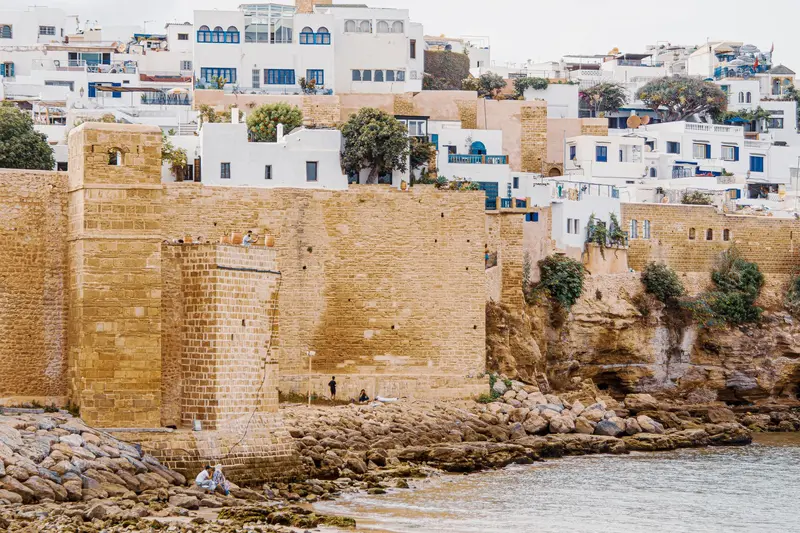
Rabat is the capital of Morocco, home to the King and government. The city lies at the mouth of the Bouregreg into the Atlantic and has been part of the UNESCO World Heritage since 2012 as an ensemble of a modern capital and historic city. Hassan Tower, Chellah, and the Kasbah of the Oudayas are close by.
Rabat-Salé Airport is about 9 kilometers from the center. The Kasbah of the Udayas, Hassan Tower and the Chellah are part of the city's UNESCO World Heritage listing from 2012.
6 Sights
5 Restaurants
Culture and History
From Sala to the AlmohadsThe Romans founded the city of Sala Colonia here; its remains are visible in Chellah. Almohad Sultan Yaqub al-Mansur began building a magnificent mosque in 1191; it remained unfinished after his death in 1199. All that remains is the 44-meter-tall Hassan Tower.Marinids and Modern TimesFrom the late 13th century, the Marinids used Chellah as a necropolis. Next to the Hassan Tower, the Mausoleum of Mohammed V, the King of Independence, was completed in 1971. In the Kasbah of the Oudayas, the Musée National de la Parure has been showcasing historical jewelry since 2023.
Meknes
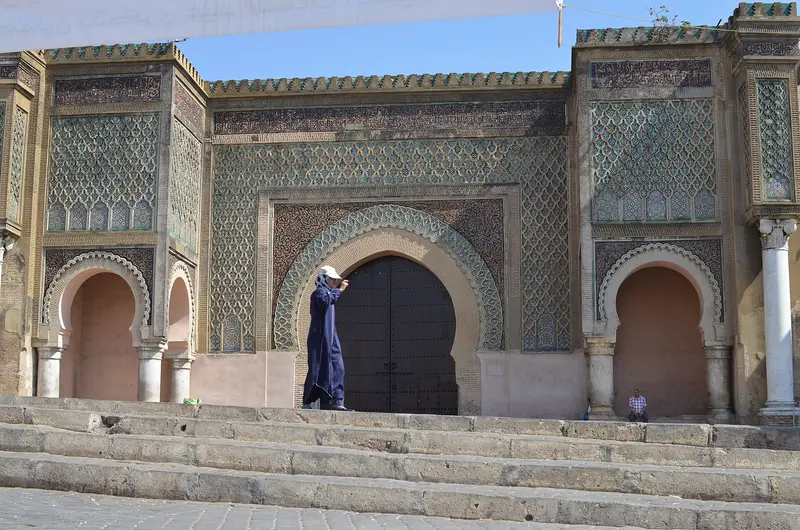
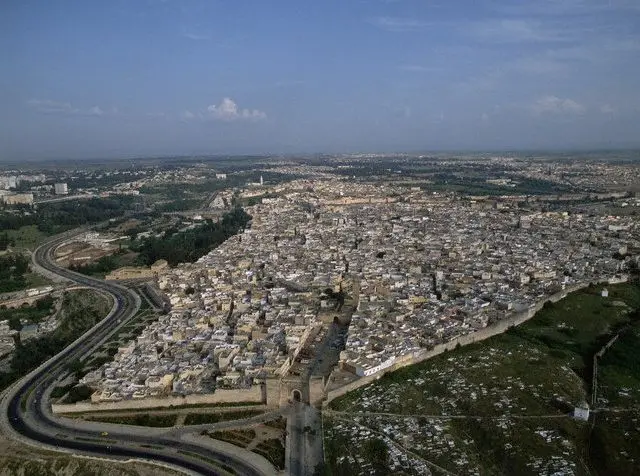
Meknès, 60 kilometres west of Fès, is one of the country's four Imperial Cities. Sultan Moulay Ismail made it his capital from 1672, having colossal gates, palaces, and granaries built. Its Old Town is a UNESCO World Heritage site since 1996; Volubilis and Moulay Idriss are within excursion distance.
Just over two hours from Rabat by train. Besides Bab Mansour and the Heri es-Souani storehouses, set aside a day for Volubilis and Moulay Idriss, both about half an hour north and reachable by grand taxi.
3 Sights
3 Restaurants
Culture and History
The City of Moulay IsmailMoulay Ismail reigned for 55 years and made Meknès the center of his empire. Dating from his time are the city gate Bab Mansour, which his son Moulay Abdallah completed in 1732, the vast granaries Heri es-Souani, and his mausoleum, also open to non-Muslims.World HeritageUNESCO inscribed the historic city of Meknès on the World Heritage List in 1996. A few kilometers north, Volubilis and Moulay Idriss Zerhoun are two other sites you can easily combine as a day trip.
Fez
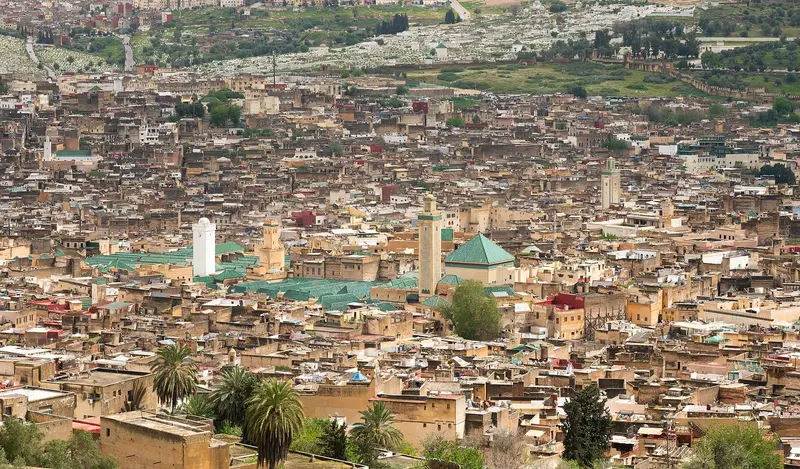
Fès is the oldest of Morocco's imperial cities and is considered the spiritual heart of the country. The Medina Fès el-Bali, founded by the Idrisids at the end of the 8th century, is one of the largest car-free urban areas in the world and has been a UNESCO World Heritage site since 1981. Beyond the Bab Boujloud gate, a labyrinth of alleys begins, featuring Quranic schools, tanneries, and artisan quarters.
About 35 minutes from Meknes by train, with hourly departures. For the maze-like Fès el-Bali medina, a guide on the first day is the best way in.
6 Sights
4 Restaurants
Culture and History
Two FoundationsIdris I founded a first settlement on the Fès River in 789; his son Idris II founded a second on the opposite bank in 809. From these grew Fès el-Bali, the Old City. Tradition holds that Fatima al-Fihri founded the al-Qarawiyyin Mosque in 859, which developed into a center of Islamic scholarship. Non-Muslims are not permitted to enter.The MarinidsFès experienced its golden age under the Marinids. In 1276, west of the Old City, they founded Fès el-Jdid as a fortified royal city, which includes the Dar al-Makhzen Royal Palace and the former Jewish Quarter, Mellah. The Quranic schools Bou Inania and al-Attarine, with their wood carvings and tile mosaics, also date from this period.CraftsTo this day, tanners, dyers, carpet weavers, and coppersmiths work in the Medina; their workshops have been located for centuries at Place Seffarine. The largest tannery is Chouara. You can view its dyeing vats from the terraces of the surrounding leather shops; entry is free, but vendors hope for a purchase.
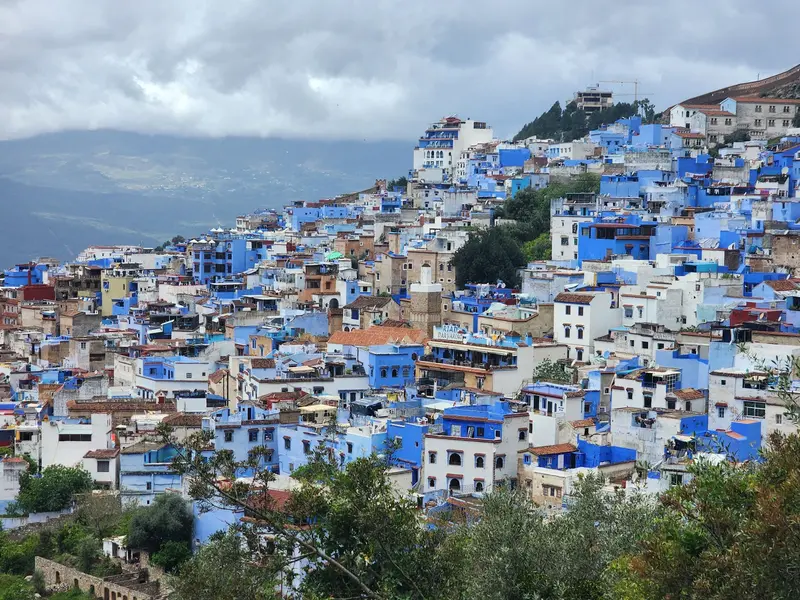
Chefchaouen
Chefchaouen, located in the Rif Mountains, is known for its blue-washed houses and medina alleys. Founded in 1471 as a fortress, the city today has about 46,000 residents. The Kasbah, Ras el-Maa Spring, and the Spanish Mosque viewpoint are key attractions.
Four and a half to five hours from Fez with CTM or Supratours; buses often sell out in spring and fall, so book early. The Akchour waterfalls in Talassemtane National Park make a good day trip.
4 Sights
3 Restaurants
Culture & History
Fortress in the RifAli ibn Rashid al-Alami founded Chefchaouen in 1471 as a fortress. The Kasbah, with its ten towers, dates from this period and today houses a small ethnographic museum.Why Blue?There are several explanations for the blue colour of the houses. A local version suggests that the paint was introduced in the 1970s for tourism. Above the town stands the Spanish Mosque, built in the 1920s, a popular sunset viewpoint.
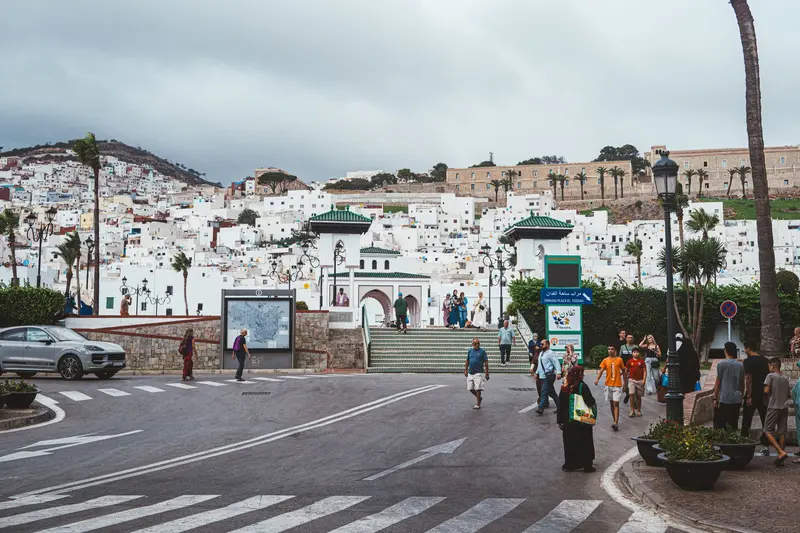
Tetouan
Tétouan is located at the foot of the Rif Mountains, approximately 60 kilometres southeast of Tangier. Andalusian refugees rebuilt the city at the end of the 15th century; its whitewashed medina, which earned the city the nickname "White Dove," has been a UNESCO World Heritage site since 1997. From 1913 to 1956, Tétouan was the capital of the Spanish Protectorate.
About an hour and a half from Chefchaouen by bus. The medina, a UNESCO World Heritage Site since 1997, was rebuilt by refugees expelled from Andalusia and is considered one of the most complete in the country.
3 Sights
2 Restaurants
Culture & History
Andalusian HeritageThe Merinids built a kasbah in the late 13th century; in 1399, the Castilians destroyed the place. In the late 15th century, refugees from Andalusia, under Ali al-Mandri, rebuilt the city. Their influence still shapes the architecture and crafts today.Spanish EraFrom 1913 to 1956, Tétouan was the capital of the Spanish Protectorate. The Medina includes seven main gates, the Dar Dbagh tanneries, the Rabbi Isaac Bengualid Synagogue (now a museum), and the Royal Palace at Mechouar.
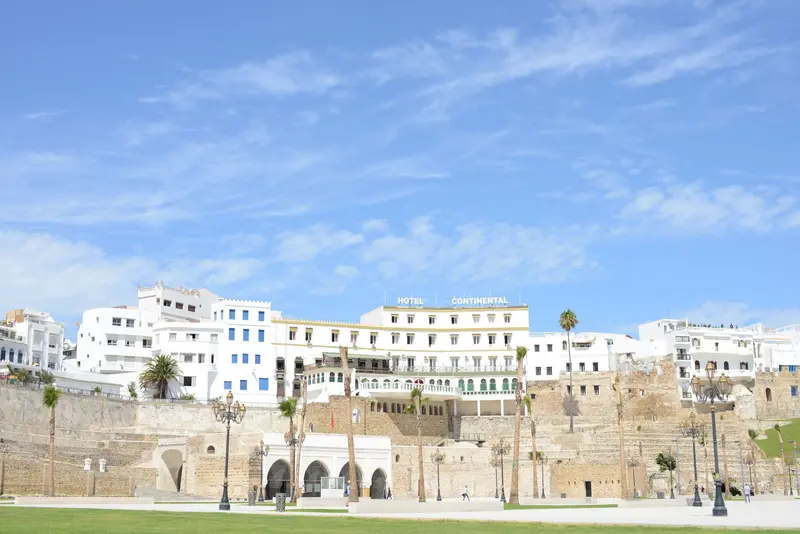
Tangier
Tangier is situated on the Strait of Gibraltar, where the Mediterranean and Atlantic converge, and for many travelers from Spain, it is the gateway to Morocco. From 1923 to 1956, the city was an international zone, attracting writers and artists. Today, the Al Boraq connects Tangier with Casablanca in just over two hours.
About an hour from Tetouan by bus. The kasbah and medina overlook the strait, and Cape Spartel is just under half an hour away.
5 Sights
3 Restaurants
Culture & History
International ZoneTangier's origins date back to a Phoenician settlement. In the 20th century, several powers administered the city as an international zone. During this period, writers like William S. Burroughs lived here, writing Naked Lunch at the Tangerinn bar in the Hotel El Muniria.The KasbahPerched on the hill above the medina is the Kasbah, home to the Dar el-Makhzen palace, built by Sultan Moulay Ismail. Today, it houses the Kasbah Museum, featuring collections of Moroccan art and regional archaeology. The Hafa Cliff Café, dating back to 1921, is a traditional spot for mint tea with views of the strait.
Plan this route as your trip
All stops, trains and nights go into your trip planner. You adjust dates and places to stay afterwards.
This route is a suggestion from our research. Please check timetables, times in port, opening hours and prices before you book – what your tour operator or carrier says is what counts.
Fernweh is a free travel guide and trip planner: routes researched by people, taken over in one click, used day by day on the road. More about Fernweh
6 stops
Route Summary
Duration13 Days
Stops6 Places
TypeCulture