Ten days from Marrakech into the High Atlas Mountains and to the Atlantic coast to Essaouira and Taghazout.
11 Days / 10 Nights
April to June, September to October
5 stops
Why This Route?
The route combines mountain air in the High Atlas with the windy Atlantic and avoids long desert drives. It is suitable for a first trip to Morocco with hiking and beach days.
Hidden Gems
Natural pools in Paradise Valley
BBQ stalls at Essaouira's fishing port
Weekly market in the Ourika Valley on Monday
Getting there and back
Round trip, returning to where you started
Arrival
Flight · Marrakesch (RAK)From the airport, Bus 19 goes to the Medina; to Imlil, travel by transfer or shared taxi via Asni.
Departure
Flight · Marrakesch (RAK)
Itinerary
Stop 1 • 2 Nights
Marrakech
City
Route highlight
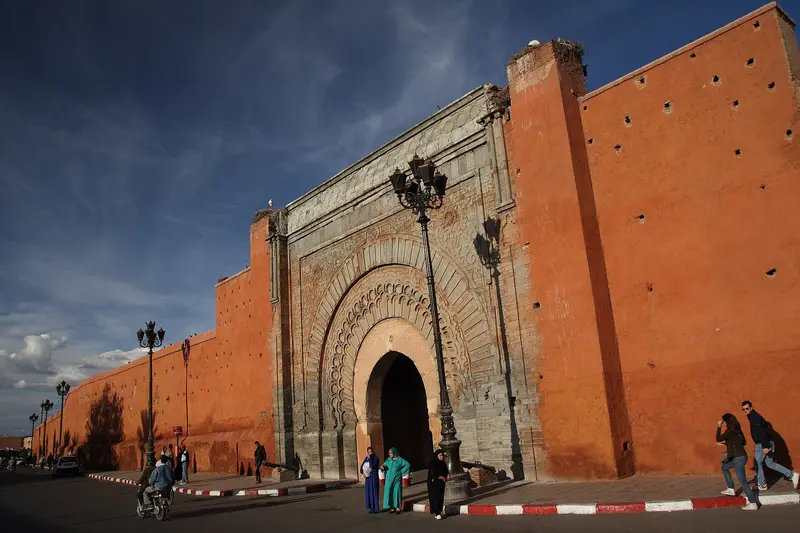
Marrakech, nestled at the foot of the High Atlas, will be Morocco’s top destination in 2025, expecting over ten million passengers. Founded by the Almoravids around 1070, its approximately nine-kilometre-long red clay walls still enclose the Medina, a UNESCO World Heritage site since 1985. Its heart is Jemaa el-Fna Square, surrounded by souks, palaces, and gardens.
Souks and Palaces
9 Sights
3 Restaurants
Culture & History
Capital of Two DynastiesMarrakech was the capital of the Almoravids, who here in the 11th century ruled an empire reaching as far as Andalusia. In the 12th century, the Almohads built the Koutoubia Mosque, whose minaret still defines the city's skyline. In the 16th century, the Saadians once again made the city their residence; the Medersa Ben Youssef dates from this time.Jemaa el-FnaSince the 14th century, the square has been considered a symbol of the city. Storytellers, healers, musicians, and food stalls made it so unique that UNESCO recognized it in 2001 as one of the first Masterpieces of the Oral and Intangible Heritage of Humanity. This initiative was sparked by the Spanish writer Juan Goytisolo, who lived in Marrakech.After the EarthquakeThe earthquake of September 8, 2023, damaged parts of the city wall, several mosques, and historic buildings. The Koutoubia has been open again since March 2024, while restoration work is still ongoing at other monuments like the Bahia and Badi Palaces.
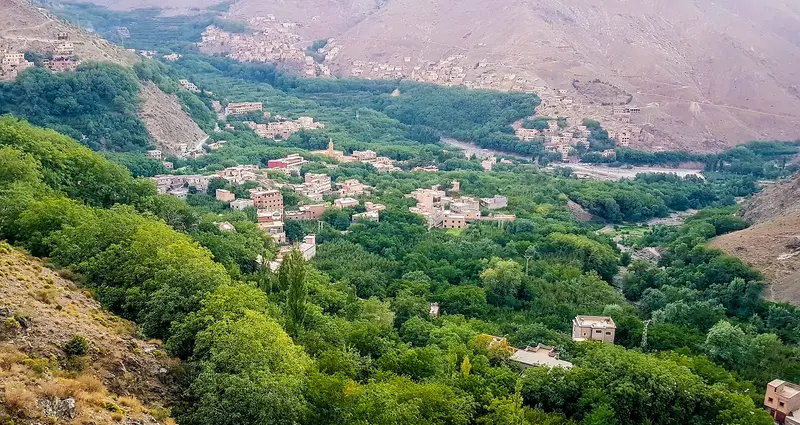
Imlil is located at around 1,800 metres in the High Atlas, approximately 65 kilometres south of Marrakech, and serves as the starting point for climbing Toubkal. At 4,167 metres, it is the highest mountain in North Africa and the centrepiece of the Toubkal National Park, founded in 1942. Around the village, hiking trails lead to Berber villages and to the Sidi Chamharouch shrine, which non-Muslims are not permitted to enter.
Hiking in Toubkal National Park, summits only with a mountain guide.
4 Sights
Culture & History
Atlas Mountain VillageImlil grew primarily with mountain tourism around Toubkal. The Kasbah du Toubkal above the village, once the summer residence of a local feudal lord, has been a hotel since 1995. Martin Scorsese filmed scenes for Kundun here. The 2023 earthquake caused relatively little damage to Imlil, and mountain operations quickly resumed.ToubkalThe summit was first climbed in 1923. A two-day tour with an overnight stay in a hut at approx. 3,200m is common. A licensed mountain guide is mandatory for the ascent.
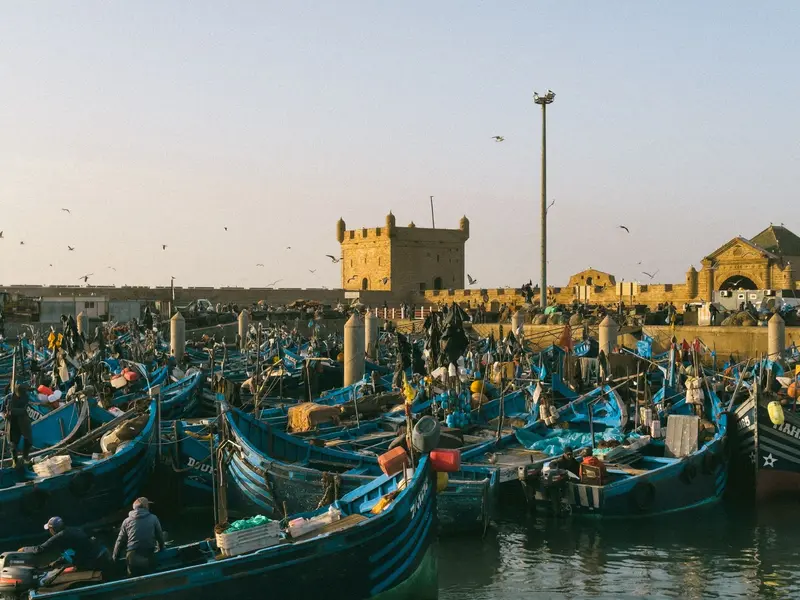
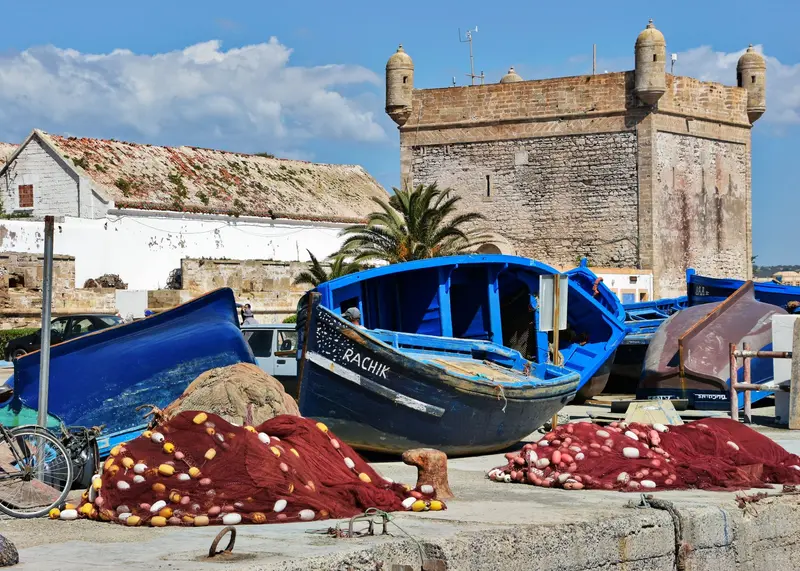
Essaouira is a fortified port city on the Atlantic coast west of Marrakesh. Sultan Mohammed III. had it built in the 1760s according to the plans of French engineer Théodore Cornut; its Medina has been a UNESCO World Heritage site since 2001. Wind, the fishing port, and the Gnaoua Festival define the town.
Medina, Port and Skala de la Ville
4 Sights
4 Restaurants
Culture & History
Planned City by the SeaThe Skala de la Ville bastion, with its bronze cannons, served as the backdrop for the city of Astapor in Game of Thrones.Gnaoua FestivalHeld since 1998, usually in late June, the Gnaoua Festival attracts hundreds of thousands of visitors annually. The region is also a center for argan oil production.
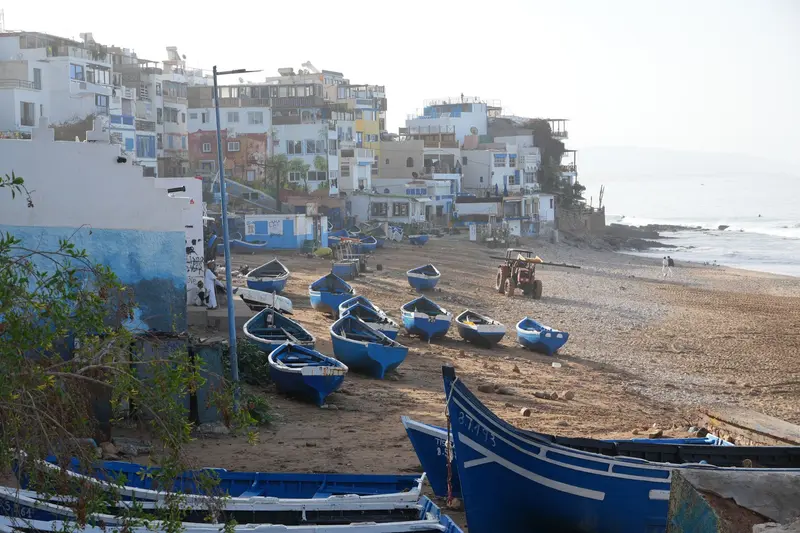
Taghazout is a former fishing village approximately 20 kilometers north of Agadir and one of Morocco's best-known surf spots. The right-hand wave at Anchor Point breaks three kilometers north of the village, with beginner spots directly at the village. In the hinterland lies the Paradise Valley with natural rock pools.
Surf course and trip to Paradise Valley
2 Sights
1 Restaurant
Culture & History
SurfingThe best time for waves is from September to April. Hash Point, right by the village, is suitable for beginners, while Killer Point, Panoramas, and Boilers are reef and point breaks for advanced surfers.Fishermen and ArganBesides tourism and surfing, residents earn their living from fishing and argan oil. South of the village, the Taghazout Bay resort area, with its hotels and golf course, has been developing for several years.
Marrakech, nestled at the foot of the High Atlas, will be Morocco’s top destination in 2025, expecting over ten million passengers. Founded by the Almoravids around 1070, its approximately nine-kilometre-long red clay walls still enclose the Medina, a UNESCO World Heritage site since 1985. Its heart is Jemaa el-Fna Square, surrounded by souks, palaces, and gardens.
Return via Agadir
9 Sights
3 Restaurants
Culture & History
Capital of Two DynastiesMarrakech was the capital of the Almoravids, who here in the 11th century ruled an empire reaching as far as Andalusia. In the 12th century, the Almohads built the Koutoubia Mosque, whose minaret still defines the city's skyline. In the 16th century, the Saadians once again made the city their residence; the Medersa Ben Youssef dates from this time.Jemaa el-FnaSince the 14th century, the square has been considered a symbol of the city. Storytellers, healers, musicians, and food stalls made it so unique that UNESCO recognized it in 2001 as one of the first Masterpieces of the Oral and Intangible Heritage of Humanity. This initiative was sparked by the Spanish writer Juan Goytisolo, who lived in Marrakech.After the EarthquakeThe earthquake of September 8, 2023, damaged parts of the city wall, several mosques, and historic buildings. The Koutoubia has been open again since March 2024, while restoration work is still ongoing at other monuments like the Bahia and Badi Palaces.