From Playa del Carmen, the ferry crosses to Cozumel in 35 to 45 minutes, where you dive or snorkel at the Reef National Park. Back on the mainland, it's about 65 kilometers south to the Mayan ruins and cenotes of Tulum, and finally another 170 kilometers to the Bacalar Lagoon. For the Tulum–Bacalar route, you'll need just under three hours by bus; Tulum and Bacalar also have Tren Maya stations.
14 Days / 13 Nights
November–April
4 stops
Why This Route?
For travelers wanting to experience the Caribbean Coast without the rush: reef, seaside ruins, and a tranquil lagoon with short stages.
Hidden Gems
San Gervasio in Cozumel's interior, a former Ixchel pilgrimage site
Parque Punta Sur with Celaráin Lighthouse at Cozumel's southern tip
Los Rápidos at the southern end of Bacalar Lagoon
Cenote Azul on the edge of Bacalar
Getting there and back
Open jaw: start and end are in different places
Arrival
Flight · Cancún (CUN)Playa del Carmen is about 68 km south of Cancún; buses go directly from the airport.
Departure
Flight · Chetumal (CTM)Chetumal Airport is about 45 minutes by taxi from Bacalar. Alternatively, the Tren Maya runs from Bacalar back to Cancún Airport.
Itinerary
Stop 1 • 3 Nights
Playa del Carmen
City
Perfect for unwinding and relaxation. Culinary highlights and For adventure seekers.
Playa del Carmen, located about 70 kilometers south of Cancún, is the largest city on the Riviera Maya. In just a few decades, this fishing village grew into a city of over 300,000 residents. Life unfolds along Quinta Avenida, a pedestrian street parallel to the beach. From here, ferries depart for Cozumel.
6 Sights
5 Restaurants
History and City Life
From Fishing Village to CityThe Maya called the place Xaman-Ha, and from this coast, pilgrims crossed to the sanctuary of Ixchel on Cozumel. After the conquest, it remained a small fishing village for a long time. Tourism began with the passenger ferry to Cozumel: in 1995, the city had just under 18,000 inhabitants; by the 2020 census, it had around 305,000.TodayMany residents come from other parts of Mexico and from abroad, including numerous digital nomads. The Riviera Maya Jazz Festival took place for years in November at Playa Mamitas. The Playa del Carmen Jazz Fest is considered a type of successor, which celebrated its third edition in October 2026.
routes.tagDescriptions.tauchen. Dreamy beaches and Stunning nature and outdoors.
Cozumel is an approximately 48-kilometer-long Caribbean island off the Riviera Maya, a good half-hour by ferry from Playa del Carmen. You primarily come for diving and snorkeling in the reefs of the Arrecifes de Cozumel National Park, which belong to the Mesoamerican Reef System. The main town is San Miguel de Cozumel on the west coast, where the ferries dock; Cozumel is also Mexico's most important cruise port. Beyond that, you'll find the Mayan site San Gervasio and, at the southern tip, the Punta Sur Natural Park.
4 Sights
5 Restaurants
History and Nature
Island of IxchelIn pre-Hispanic times, Cozumel was a pilgrimage site: merchants and pilgrims worshipped the moon goddess Ixchel, patron of birth, fertility, and weaving. From approximately 1250, it became a major pilgrimage center. The most important city was San Gervasio in the island's interior, linked to the peninsula's trade network by raised pathways (Sacbés). After the Spanish arrived in the early 16th century, it was abandoned by around 1600.Protected AreasThe Arrecifes de Cozumel National Park was established in 1996, covering approximately 120 square kilometers. Since 2005, it has been protected as a Ramsar wetland and is part of the UNESCO Isla Cozumel Biosphere Reserve. At the southern tip, Punta Sur Natural Park encompasses lagoons with crocodiles and waterfowl, along with pristine beaches where sea turtles nest in summer.Cruise IslandCozumel is Mexico's leading cruise port: in 2025, approximately 4.7 million passengers arrived on over 1,300 ship calls. For 2026, authorities expect more than five million.
Rich in culture and history. Perfect for unwinding and relaxation and For adventure seekers.
Tulum is located on the Caribbean coast of the Yucatán Peninsula, south of Cancún on the Riviera Maya. It is known for its Maya ruins on a cliff directly above the sea, for cenotes in the hinterland, and a long beach lined with boutique hotels and beach clubs. Tulum has grown significantly in recent years, with prices increasing accordingly.
5 Sights
7 Restaurants
Chronicle
The Maya Port CityTulum was formerly called Zamá, "Dawn." The city was a trading port in the Late Maya period, protected by a wall on three sides and the cliff to the sea. It was still inhabited when the Spanish reached the coast in the early 16th century.From Village to ResortTulum was long a small village with a few simple cabañas on the beach. Beginning in the 1990s, tourism grew, followed by boutique hotels. This rapid expansion strains groundwater and mangroves; electricity and wastewater are issues in many places.
Stunning nature and outdoors. Perfect for unwinding and relaxation and Route highlight.
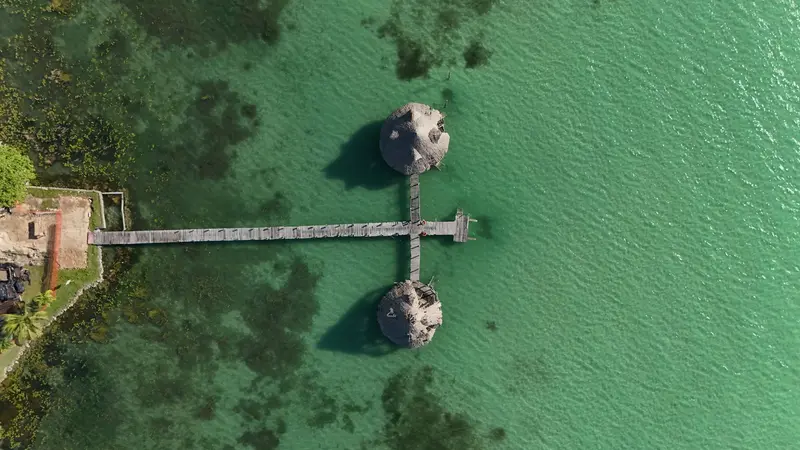
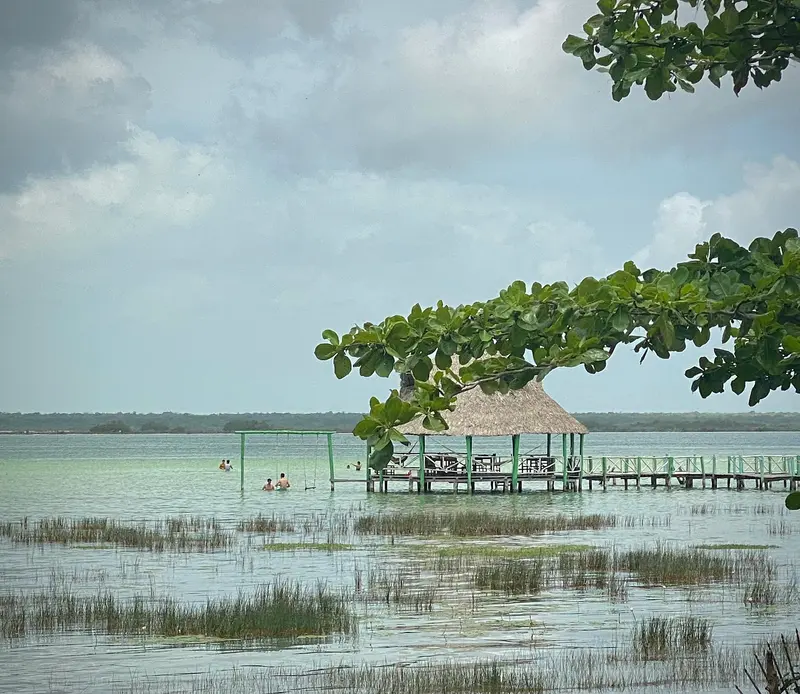
Bacalar is a small town in southern Quintana Roo, about 40 kilometers north of Chetumal, on the shore of the lagoon of the same name. You come for the Lagoon of Seven Colors, whose water changes from turquoise to deep blue depending on the depth, and for the living stromatolites in its canals. Overlooking the shore is the 18th-century Spanish Fort San Felipe. Since 2006, the town bears the title Pueblo Mágico.
4 Sights
4 Restaurants
History and Lagoon
Mayans and SpaniardsBacalar originated as a Mayan settlement. The Spanish conquered it in 1543 and founded the town of Salamanca de Bacalar in 1545. After repeated pirate attacks in the 17th century, Fort San Felipe was built in the 1720s and early 1730s, which today houses a museum of regional history and piracy.The Caste WarIn the Caste War, Mayan troops from Chan Santa Cruz captured the town in 1848; it only returned to Mexican control in 1902. Since 2011, Bacalar has been its own municipality, having previously belonged to Othón P. Blanco. In 2006, it was named a Pueblo Mágico.Stromatolites & Conservation RulesIn the lagoon, stromatolites grow – calcareous structures formed by microorganisms; the lagoon is home to one of the largest freshwater occurrences of these structures. They are sensitive: do not step on or touch them. In the water, avoid sunscreen; a UV shirt and hat protect without chemicals. From September 2025, the port authority will divide the lagoon into five navigation zones with speed limits. Los Rápidos and the Canal de los Piratas are restricted or limited access zones. Buoy-marked sensitive areas are completely off-limits to boats and swimmers.