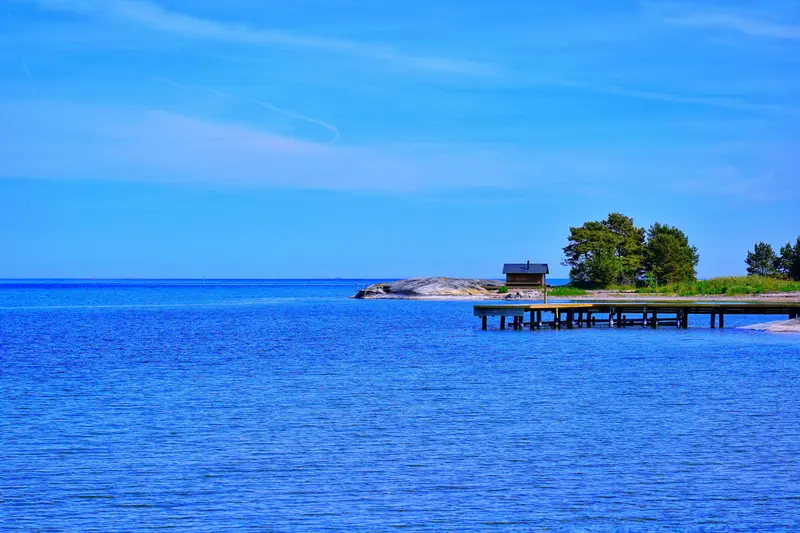
From Stockholm, take a ferry to Vaxholm and Sandhamn in the central archipelago, then south to Utö and Nåttarö, before the route ends in Nynäshamn. The islands are largely car-free; Waxholmsbolaget ferries run most frequently in summer. Check the timetables in advance, as not all islands are directly connected.
17 Days / 16 Nights
June to August
6 stops
Why This Route?
For travelers without a car who want to discover different islands by ferry and do easy hikes.
Hidden Gems
Vaxholm Fortress on a small island off Vaxholm, reachable by shuttle ferry from the harbor
Trouville Beach on Sandön near Sandhamn, a sandy cove away from the harbor
the disused iron ore mines of Utö with their water-filled shafts
Itinerary
Stop 1 • 3 Nights
Stockholm
Region
Route highlight
Stockholm, the capital of Sweden, stretches across 14 islands where Lake Mälaren flows into the Baltic Sea, and is often called the "Venice of the North". The city combines the medieval alleyways of Gamla Stan with modern architecture, a rich museum landscape on Djurgården, and plenty of greenery by the water. Directly in front of the city, the archipelago begins, which can be easily explored by ferry as a day trip.
Rich in culture and history. Perfect for unwinding and relaxation and Perfect for an exciting city trip.
Known as the "Capital of the Archipelago," Vaxholm is a small island town with city rights since 1652. Since steamboat services began in 1849, it developed into a seaside resort, and many Stockholmers built wooden summer houses here, which still shape the townscape today. In front of the harbour lies Vaxholm Fortress. With boats from Strömkajen and Strandvägen or bus 670 from KTH, Vaxholm is an easy day trip and a starting point for further islands.
1 Sight
3 Restaurants
History and Culture
Fortress in KodjupetVaxholm Fortress was built in the mid-16th century under Gustav Vasa to protect Stockholm from sea attacks. Under Johan III, a stone tower replaced the original wooden blockhouse; most of the current complex dates from 1833 to 1863. Attacks by the Danes in 1612 and the Russian fleet in 1719 were repelled. Since 1964, it has housed the Fortress Museum.Steamers and Summer RetreatsIn 1849, a steamboat company began operating between Stockholm and Vaxholm, eventually forming today's Waxholmsbolaget through later mergers. From the 1860s, Vaxholm became a popular seaside resort, and many Stockholmers built wooden summer houses here.Wooden TownOnly from 1912 onwards was it permitted to build with materials other than wood in Vaxholm. This explains the uniform appearance of wooden houses that still characterizes the town today.
For adventure seekers. Perfect for unwinding and relaxation and Culinary highlights.
Sandhamn is located on the island of Sandön in the central archipelago, about 50 kilometers east of Stockholm, and has been one of Sweden's most important sailing centers since the late 19th century. The Royal Swedish Yacht Club KSSS has hosted regattas here since the 1890s, including the Gotland Runt Regatta. In summer, the number of residents increases from around one hundred to several thousand. Boats from Waxholmsbolaget and Cinderellabåtarna connect Sandhamn with Stockholm and Stavsnäs.
3 Sights
4 Restaurants
History and Culture
Port, Customs, and InnSandhamns Värdshus has been part of island life since the 17th century. Next to the historic customs house, the Sandhamn Archipelago Museum tells the story of the place, open daily in summer.Sailing CultureSailing tradition still defines the island today. In summer, many regattas are held at the harbour, and sailors from all over the archipelago dock here.Sandhamn in LiteratureThe island became famous far beyond Sweden through Viveca Sten's crime novels, set on Sandhamn. Local baking traditions include Sandhamnslimpa bread and the island bakery's Seglarbullen buns.
For adventure seekers. Rich in culture and history and Perfect for unwinding and relaxation.
Utö is a larger island in the southern archipelago in the municipality of Haninge. It combines archipelago nature with industrial history: traces of several centuries of mining are still visible today. The calcareous subsoil ensures a rich flora with many orchid species in the nature reserve in the north. In summer, you'll find numerous swimming spots; the best way to explore the island is by rental bike. You can reach Årsta brygga by bus 846 from Västerhaninge commuter train station; from there, the Waxholmsboat sails year-round to Gruvbryggan, and in summer, also directly from Strömkajen in Stockholm in about three hours.
1 Sight
4 Restaurants
History and Culture
Sweden's Oldest Iron MinesIron ore mining began on Utö around 1150, making these mines the oldest in Sweden. By 1624, nine mines were operational, but in 1719, Russian troops destroyed the mines, houses, and livestock. Mining ceased in 1879. Today, the former shafts are filled with groundwater and appear as elongated ponds in the landscape; there are no underground tours.Mining Museum and LithiumHoused in the old fire station next to Utö Värdshus, the Gruvmuseet showcases the history of mining, open daily in summer. The element Lithium was first detected in a rock sample from Utö in 1817.Sport and Summer RetreatNew summer houses were built in the 19th and 20th centuries, including for artists and writers. More recently, Utö gained renown as the birthplace of Swimrun, an event where running and swimming alternate through the archipelago.
Nåttarö, located in the southern Stockholm archipelago, is about 30 boat minutes from Nynäshamn and is protected as a nature reserve. The island is almost entirely covered by pine forest, and on the east side, Stora Sand offers one of the archipelago's longest sandy beaches with large dunes. Additionally, there are bathing rocks, car-free gravel paths, and trails for walks.
1 Sight
3 Restaurants
Culture and History of Nåttarö
The Legend of DrottninggrottanThe most famous place in the island's history is the cave Drottninggrottan. According to tradition, it served as a hiding place for Queen Maria Eleonora in the early 17th century when she fled from court and government after the death of her husband, King Gustav II Adolf.Protection of Nature and the SeaToday, Nåttarö is protected as a nature reserve and is one of the first marine nature reserves in the region. The many small skerries in Nåttaröfladen are an important breeding ground for seabirds, which is why a ban on entering several islands applies there between February 1 and August 15.Life in SummerIn summer, the holiday village, restaurant, and guest harbour shape island life. Boaters use the protected natural harbours, such as the popular Östermarsfladen in the north.
Stunning nature and outdoors. Dreamy beaches and Perfect for relaxed travel without rush.
Nynäshamn lies about 60 kilometres south of Stockholm and is one of the mainland ports for ferries to Gotland. Additionally, ships sail from here to Gdańsk in Poland. It also serves as a starting point for the southern archipelago. In summer, the harbour is full of boats, with restaurants and small shops lining the promenade. The surrounding area offers coastal paths and nature reserves inviting visitors for walks. Nynäshamn is an easy day trip from Stockholm by commuter train.
5 Sights
4 Restaurants
Nynäshamn: Culture and History
Rail, Port and Seaside ResortAlthough interest in a port here grew as early as the mid-19th century, Nynäshamn's development only began in 1901 with the opening of the railway line to Stockholm. In the early 20th century, the town became known as a seaside resort: in 1906, the spa hotel of Nynäs Havsbad opened, its buildings combining Art Nouveau with elements of National Romanticism. In 1912, Nynäshamn hosted the Olympic sailing competitions.Industry and Ferry ServicesIn 1916, the state Telegraph Administration's workshops established industry here, followed by the oil refinery, still operating today, in 1928 and 1929. In summer, ferries to Gotland—a popular destination for Swedes of all ages—shape the port's activity.Maritime FestivalsEvery summer, a port festival takes place, complemented by craft markets. On these occasions, a steam train often runs between Stockholm and Nynäshamn.