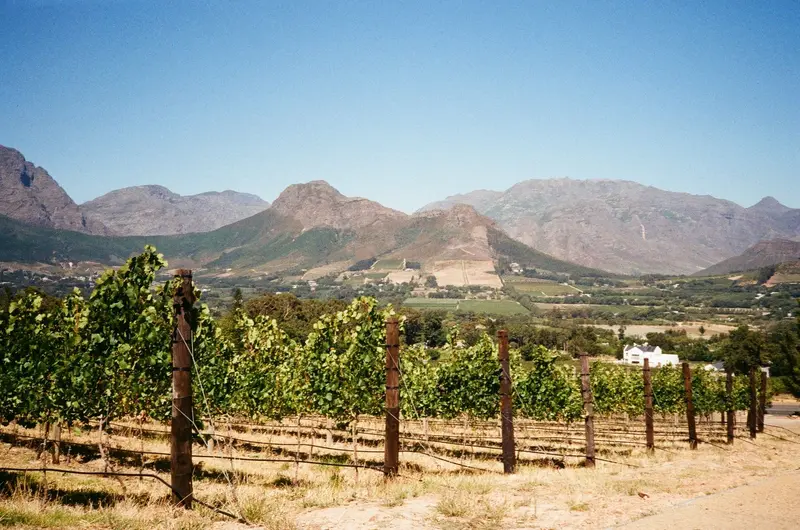
Cape Town, the Cape Peninsula, and the Winelands are in close proximity: Table Mountain, penguins at Boulders Beach, the Cape of Good Hope, and wineries in Stellenbosch and Franschhoek can be combined in eight to ten days without long drives.
9 Days / 8 Nights
September–April
4 stops
Why This Route?
Short drives, good food and wine, plus city, mountains and sea in a good week.
Hidden Gems
Kalk Bay with its fishing harbor and cafés on False Bay
Views from Franschhoek Pass over the valley
Hiking trails in Jonkershoek Nature Reserve near Stellenbosch
Itinerary
Stop 1 • 3 Nights
Kapstadt
City
Route highlight. Perfect for unwinding and relaxation and Culinary highlights.
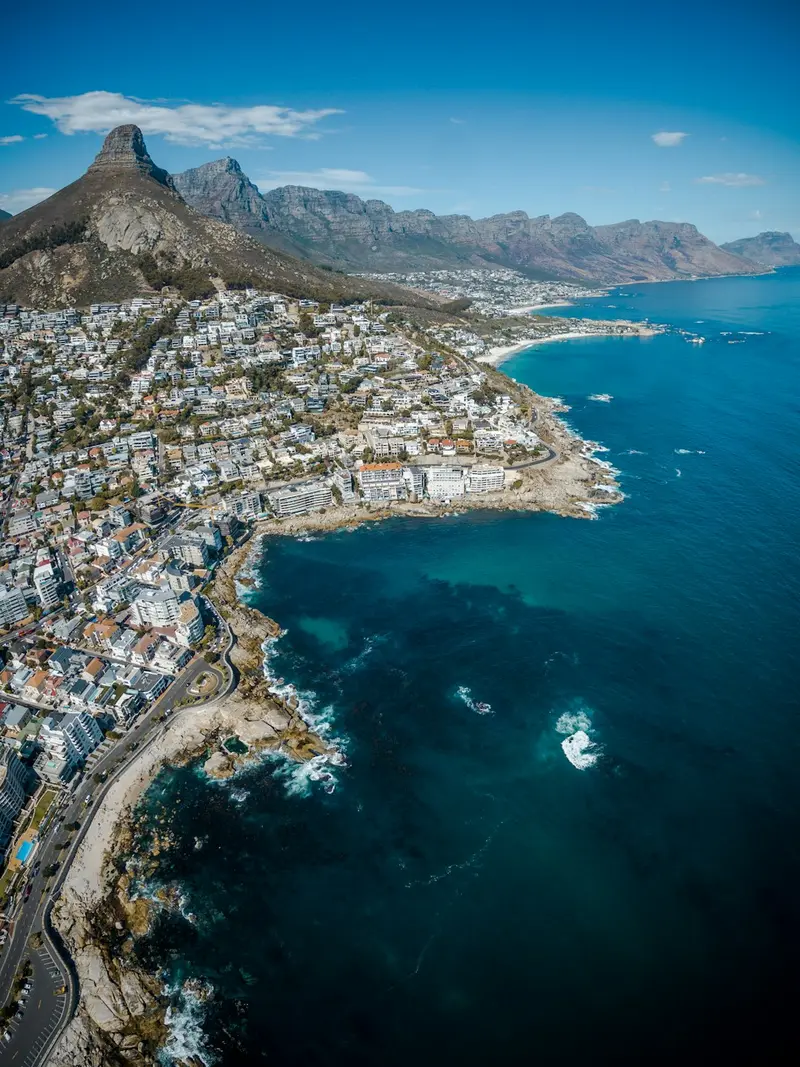
Cape Town is situated between Table Mountain and the Atlantic Ocean and, with approximately 4.8 million inhabitants in its metropolitan area, is South Africa's second-largest city. The city combines colonial history, the memory of Apartheid on Robben Island, and a vibrant restaurant and art scene with beaches, hiking trails, and wine regions right on its doorstep.
7 Sights
12 Restaurants
Cape Town's Culture, Art & History
Kapstadt ist ein Schmelztiegel der Kulturen, dessen Geschichte tief in der Kolonialzeit verwurzelt ist. Im 17. Jahrhundert von der Niederländischen Ostindien-Kompanie gegründet, entwickelte sich die Stadt aus einer Versorgungsstation zu einem bedeutenden Hafen. Diese Epoche prägte die einzigartige Kap-Holländische Architektur, sichtbar in den Giebelhäusern und Weingütern der Region.Die kulturelle Identität Kapstadts ist eng mit der Ankunft von Sklaven aus Asien und Afrika sowie der indigenen Bevölkerung der Khoisan verbunden. Das bunte Bo-Kaap-Viertel mit seinen farbenfrohen Häusern zeugt von der reichen malaiischen Tradition und ist ein lebendiges Zeugnis dieser multikulturellen Vergangenheit. Die Apartheid-Ära hinterließ tiefe Narben, doch die Stadt hat sich zu einem Symbol für Widerstand und Versöhnung entwickelt.Heute spiegelt sich die kulturelle Vielfalt in einer dynamischen Kunstszene wider, von modernen Galerien und Street Art bis hin zu traditionellen Musik- und Tanzformen. Die Küche ist ebenfalls ein Spiegelbild der Geschichte, mit Einflüssen aus der malaiischen, afrikanischen und europäischen Küche, die die lokalen Traditionen prägen.
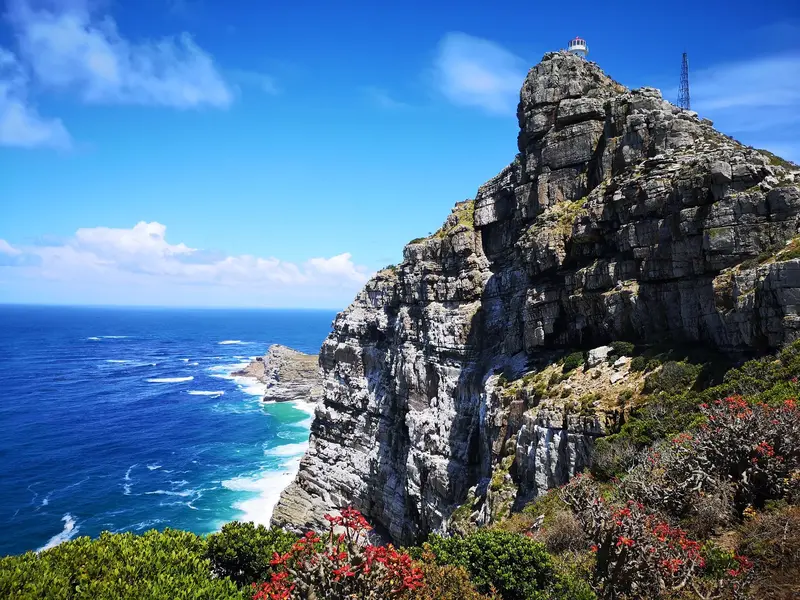
The Cape Peninsula stretches from Cape Town about 50 kilometers south to the Cape of Good Hope and Cape Point. On the Atlantic side, Chapman's Peak Drive leads along steep cliffs; on False Bay lie Muizenberg, Kalk Bay and Simon's Town with the penguin colony at Boulders Beach. The south is part of the Table Mountain National Park.
1 Sight
Two Shores, One Peninsula
Atlantic and False BayThe Cape Peninsula has two very different sides. To the west, the cold Benguela Current meets a steep rocky coast with Hout Bay, Noordhoek, and Chapman's Peak Drive, the water rarely exceeds 15 degrees. False Bay to the east is significantly warmer. Here, Muizenberg with its colourful beach huts and surf schools, the fishing harbour Kalk Bay, Fish Hoek, and the naval base Simon's Town line up.The south of the peninsula belongs to the Table Mountain National Park and is part of the Cape Floral Kingdom, one of the Earth's six floral kingdoms. Chacma baboons, eland, and mountain zebras live in the fynbos vegetation. Never feed the baboons or leave food visible in your car.
Culinary highlights. Perfect for unwinding and relaxation and Rich in culture and history.
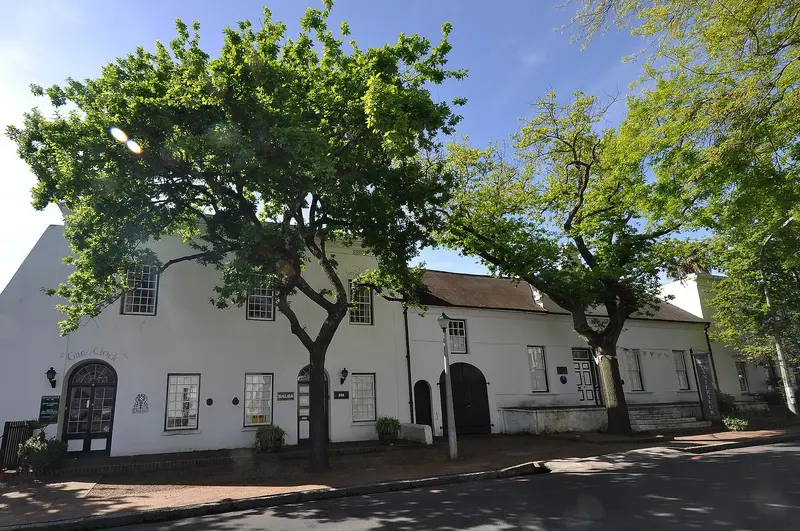
Stellenbosch is the centre of the Cape Winelands, about 50 kilometres east of Cape Town. The university town, founded in 1679, is, after Cape Town, the country's second-oldest European settlement, with Cape Dutch gabled houses under ancient oaks and well over a hundred surrounding wineries.
4 Sights
5 Restaurants
Stellenbosch's rich history and cultural heritage
Stellenbosch, South Africa's second oldest European settlement, was founded in 1679 by Simon van der Stel and has since shaped the region's historical and cultural landscape. The town rapidly developed into an important agricultural centre, particularly for viticulture, significantly influenced by early Dutch settlers and later by the expertise of French Huguenots.Stellenbosch's architecture is a testament to this rich past. The Cape Dutch style is particularly distinctive, with its characteristic gabled houses and whitewashed facades that can still be admired along the historic Dorp Street today. Additionally, influences of Victorian and Georgian architecture complement the townscape.Culturally, Stellenbosch is inextricably linked to its centuries-old winemaking tradition and Stellenbosch University, which plays a significant role in South Africa's intellectual life. Numerous art galleries and museums, such as the Rupert Museum and the Dorf-Museum, preserve and present the region's artistic and historical heritage. The town is also a centre for Afrikaans language and culture.
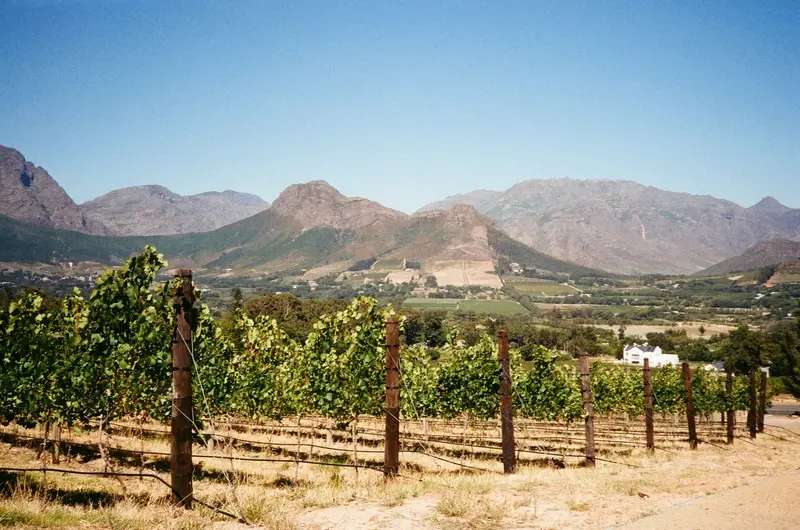
Franschhoek is located in a valley surrounded by mountains, approximately 75 kilometers east of Cape Town. Huguenots settled here at the end of the 17th century, a fact commemorated by the Huguenot Monument and many French winery names. Today, the town is considered a culinary center of the Cape Winelands, accessible notably via the Franschhoek Wine Tram.
1 Sight
2 Restaurants
Huguenots, Wine and Cuisine
From Refugee Valley to Wine TownIn 1688, about 200 French Huguenots settled in Olifantshoek, soon known as "Franschhoek" (French Corner). Their legacy remains in winery names like La Motte, La Provence, or Chamonix. Today, Franschhoek is a top South African wine town, famous for Cap Classique, its traditionally-produced sparkling wine.Along a main street barely two kilometers long are galleries, delis, and several of the country's most renowned restaurants. Weekends see the town accordingly packed; weekdays are quieter.