Island hopping in the Andaman Sea without party islands: the tranquil Koh Yao Noi, Phuket for trips and Old Town, and finally Koh Lanta with long beaches. From Bangkok, you fly to Phuket and take a boat to Koh Yao Noi; ferries and speedboats operate between the islands.
20 Days / 19 Nights
November–April
4 stops
Why This Route?
For beachgoers seeking tranquility: few changes of location and no party towns.
Hidden Gems
Longtail boat from Koh Yao Noi to Phang-Nga Bay
Old Town of Phuket Town with Sino-Portuguese houses
Lighthouse in Mu Ko Lanta National Park at the southern tip of Koh Lanta
Itinerary
Stop 1 • 3 Nights
Bangkok
City
Perfect for an exciting city trip. Rich in culture and history and Culinary highlights.
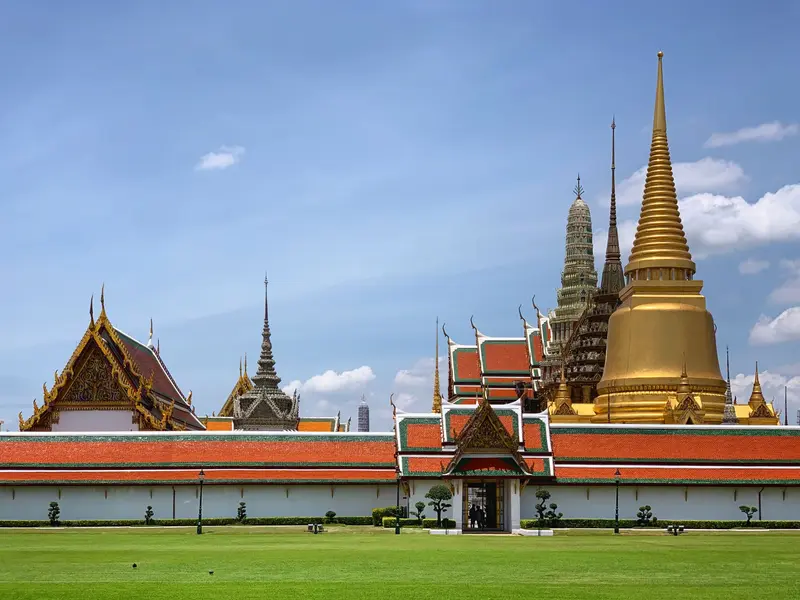
Bangkok is Thailand's capital and by far its largest city, where Buddhist temples, street food, and high-rise districts lie closely side by side. Along the Chao Phraya River stand the Grand Palace with the Emerald Buddha, Wat Pho with its 46-meter-long Reclining Buddha, and opposite, Wat Arun. Markets like the Chatuchak Weekend Market and the street food of Yaowarat showcase daily city life, while Sukhumvit and Siam are known for shopping malls and nightlife. The most pleasant time to visit is from November to February. You can avoid traffic jams with the Skytrain (BTS), Metro (MRT), and river boats.
10 Sights
3 Restaurants
History and Culture
History and CultureAfter the destruction of Ayutthaya in 1767, the capital was initially in Thonburi on the west bank. King Rama I relocated it in 1782 to Rattanakosin Island on the east bank; the erection of the City Pillar on April 21, 1782, is considered the founding date of Bangkok as the capital. From this period date the Grand Palace and Wat Phra Kaeo with the Emerald Buddha. Older are Wat Pho, which Rama I had rebuilt from 1788, and Wat Arun on the west bank, whose grand prang was completed in 1851.Buddhism shapes daily life: In the early morning, monks walk through the neighborhoods on their alms rounds, and many people bring offerings to temples and shrines. The monarchy enjoys high reverence; you'll see images of the royal family everywhere; insults to the royal house are punishable by law. During Songkran in April, entire streets turn into water fights.
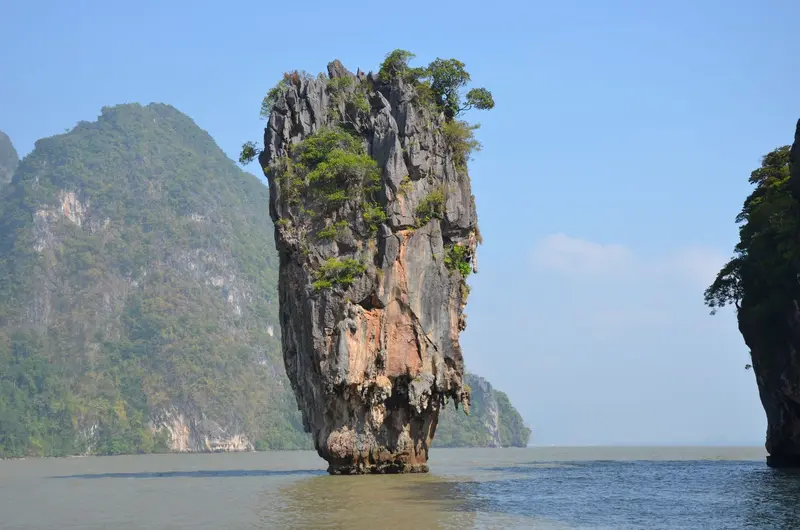
Koh Yao Noi is located in Phang Nga Bay between Phuket and Krabi, offering views of limestone karsts rising from the shallow waters. Its name translates to "small long island." To its south lies the larger sister island, Koh Yao Yai.The island is predominantly Muslim and thrives on fishing, rubber cultivation, and rice farming. It features villages, a ring road, mosques, and a number of resorts and homestays, but no nightlife. You'll mostly get around by scooter.The beaches on the east coast are very shallow, and the tidal range is significant. At low tide, the sea recedes considerably. The beaches are only suitable for swimming around high tide; plan according to the tide calendar.Nonetheless, the island is an excellent base for kayak and boat tours to the bay's rocky islands. As the population lives conservatively, swimwear is inappropriate outside of beach and pool areas.
7 Sights
5 Restaurants
Culture & Everyday
Around 90 percent of the people in Koh Yao district are Muslim, with mosques shaping the villages. Outside the beaches, dress with covered shoulders and knees.The island thrives on fishing, rubber, and agriculture. Residents established their own homestay programs early on to earn from tourism without fundamentally changing the island. For this, Koh Yao Noi received in 2002 the World Legacy Award from Conservation International and National Geographic Traveler. In homestays, you can watch rubber tapping or fishing.
Perfect for an exciting city trip. Perfect for unwinding and relaxation and Culinary highlights.
Phuket, Thailand's largest island, is more than its famed beaches. Phuket Town's Old Town, with Sino-Portuguese shophouses, street art, and old cafes, recounts its tin mining past. In the south stand the Big Buddha on Nakkerd Hill and *Wat Chalong* temple; the west coast has bays from lively Patong to quieter Kata Noi and Nai Harn. Hokkien noodles, Moo Hong, seafood define the island's cuisine. Best travel time: November to February.
8 Sights
5 Restaurants
Phuket's Culture and Its History
Tin and ImmigrationPhuket's present-day character stems from tin mining. In the 19th century, tens of thousands of workers arrived from Southern China, primarily Hokkien speakers from Fujian; those who found success built the shophouses and villas of today's Old Town. The architectural style combines Chinese layouts with colonial elements from Malacca and Penang, hence the term Sino-Portuguese.Vegetarian FestivalThe island's most important festival originated from this immigration: the Vegetarian Festival in the ninth month of the Chinese lunar calendar, usually in October. For nine days, participants eat meat-free, while mediums in a trance pierce their cheeks and arms. It is a religious event, not a show; discretion when photographing is advised.Besides Buddhist temples, Chinese shrines and mosques shape the landscape, as Phuket is home to a large Muslim community. Away from the tourist beaches, modest clothing is appropriate.
Perfect for unwinding and relaxation. Rich in culture and history and Route highlight.
Koh Lanta, part of Krabi Province, is larger and more tranquil than most Andaman Sea islands. Its main island, Lanta Yai, is elongated: beaches line the west coast, forested hills rise inland, and a single main road connects north and south.The beaches vary distinctly. In the north lie Klong Dao and Phra Ae, featuring shallow water and the densest infrastructure. Further south, Klong Khong, Klong Nin, and Kantiang Bay become quieter and rockier. The Mu Ko Lanta National Park, complete with a lighthouse, hiking trail, and macaques, adjoins the southern tip.On the east coast lies Lanta Old Town, a village of stilt houses built over the water, where the island's Chinese-Muslim trading history is evident; nearby live families of the Urak Lawoi, the original sea nomads. The island is reached by ferry from Krabi and Phuket, and via a land connection over Koh Lanta Noi. The season runs from November to April; during the rainy season, many accommodations and restaurants close.
6 Sights
3 Restaurants
Culture and Population
Three Population GroupsKoh Lanta is culturally more diverse than most Andaman Islands. The majority of the rural population is Muslim; in villages, mosques and prayer times set the daily rhythm. During Ramadan, many local kitchens close during the day. Buddhist and Thai-Chinese families are also present, along with the Urak Lawoi, one of the Andaman Sea's sea nomad groups, predominantly living in the southeast.The Old TownChinese traders settled in Ban Si Raya on the east coast; their descendants still shape the area. Its two-story wooden houses on stilts along the shore likely date from the 1960s, alongside a Chinese shrine resembling a pier into the sea, and a temple. Each March, the Old Town celebrates the Laanta-Lanta-Festival with music, dances, and street food.Away from the beaches, the rule is: cover shoulders and knees in villages and mosques; swimwear stays on the beach.