Photo by Mikhail Nilov on Pexels
Round trip · United States
Florida: Miami, Everglades and the Keys
by Felix Gillen
- 12 Days / 11 Nights
- Miami → Orlando
From Miami, head via Homestead to Everglades National Park, then take the Overseas Highway (US 1) across the Keys to Key West. Return via the same road to the mainland and continue on Florida's Turnpike to Orlando; a roundtrip from Miami is only worthwhile if you plan to skip Orlando. The dry season from December to April is peak season in the Everglades, offering the full ranger program. During the rainy season from May to November, it's wet, there are many mosquitoes, and fewer offerings. The Atlantic hurricane season runs from June 1 to November 30. Everglades National Park is among the parks that charge an entry surcharge to non-US resident visitors aged 16 and over; you can find the current rules on nps.gov/ever.
At a glance
- Duration
- 12 Days / 11 Nights
- Stops
- 4 · Miami → Orlando
- Arrival
- Flight · Miami (MIA)
- Departure
- Flight · Orlando (MCO)
- Best Time to Go
- December to April
4 stops
Why This Route?
This route connects three sides of Florida: Art Deco and Cuban coffee in Miami, alligators and sawgrass in the Everglades, and the island chain of the Keys, over which the Overseas Highway leads for 113 miles and 42 bridges to Key West. Finally, Orlando awaits with theme parks and the space center on the coast.
Hidden Gems
- Anhinga Trail at Royal Palm in Everglades National Park, where alligators often lie directly next to the boardwalk
- Bahia Honda State Park with one of the most beautiful beaches in the Keys
- Ferry or seaplane from Key West to Dry Tortugas National Park with Fort Jefferson
- Snorkeling in John Pennekamp Coral Reef State Park near Key Largo
- Wynwood Walls in Miami
Getting there and back
Open jaw: start and end are in different places
- Arrival
- Flight · Miami (MIA)The MIA Mover takes you from the terminal to the Rental Car Center. For your first days in Miami Beach, you can pick up the car later; parking is expensive.
- Departure
- Flight · Orlando (MCO)Return the car at Orlando International Airport; major rental companies have stations there.
Itinerary
Miami
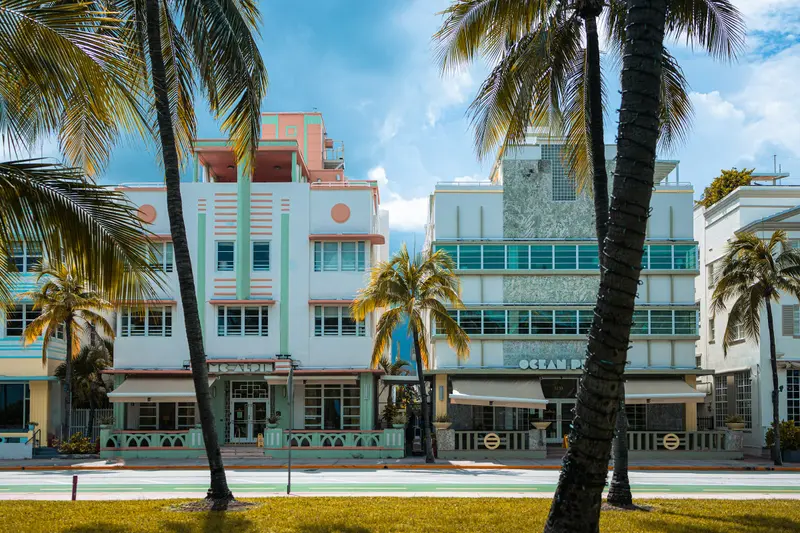
Miami sits on Biscayne Bay in southeast Florida, with the separate city of Miami Beach across the water on a barrier island. Come for the beaches, the Art Deco hotels of South Beach and the Cuban neighborhoods; you can reach much of it without a car using free trains and trolleys.South Beach's Art Deco Historic District has about 800 historic buildings and was listed on the National Register of Historic Places in 1979. In Little Havana, older Cuban exiles play dominoes on Calle Ocho, and in Wynwood nearly every warehouse wall is painted. On the bay you'll find the Pérez Art Museum and, in Coconut Grove, the Vizcaya estate; farther south are the beaches of Key Biscayne.Good to knowWhen to go: The warm dry season runs November through April. Hurricane season is June 1 to November 30, busiest from mid-August to mid-October.Miami Beach rules: Alcohol, glass, smoking, coolers, tents and loud music are banned on city beaches year-round. On spring break weekends in March, expect bag checks and only a handful of open beach entrances on Ocean Drive.Getting around: Metromover in Downtown and Brickell is free, and so are the trolleys in Miami, Miami Beach and Coral Gables. Parking garages in South Beach fill up fast on weekends and during Art Basel.
South Beach and Art Deco Historic District, Little Havana on Calle Ocho, Street Art in Wynwood.
7 Sights
4 Restaurants
Cuban Heritage, Art Fairs and Street Festivals
Miami incorporated on July 28, 1896, after landowner Julia Tuttle persuaded railroad magnate Henry Flagler to extend his line south. After the Cuban Revolution in 1959, tens of thousands of exiles arrived, and in 1985 the city elected its first Cuban-born mayor, Xavier Suárez. You'll hear Spanish almost everywhere, and Caribbean and Central American communities shape neighborhoods like Little Haiti.Calle Ocho Festival: a free street party with live music on stages along SW 8th Street, part of Carnaval Miami.Viernes Culturales: art and music on the last Friday of every month in Little Havana.Art Basel Miami Beach: the international art fair takes over the Miami Beach Convention Center every year in early December. Book hotels early; rates spike that week.Museums: Pérez Art Museum, Frost Museum of Science, Institute of Contemporary Art, Lowe Art Museum and Vizcaya.
Everglades National Park (Homestead)
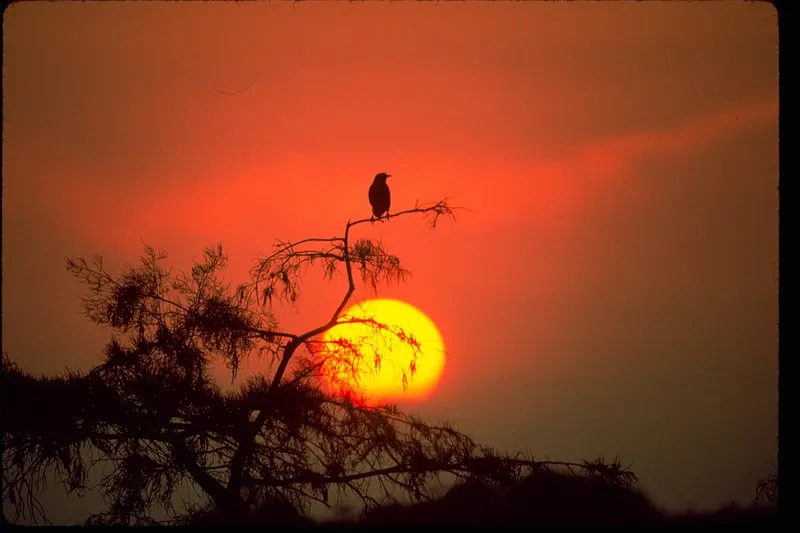
Everglades National Park covers the southern tip of the Florida peninsula between Miami and the Gulf, the largest subtropical wilderness in the country. You come to see alligators, herons, anhingas and turtles from a few feet away on short boardwalks and bike paths, about an hour's drive from Miami.The Everglades aren't a swamp in the usual sense but a shallow, slow-moving sheet of water and sawgrass flowing south, dotted with islands of hardwood hammock, pine and mangrove. The park has three entrances with no road connecting them inside the park: Shark Valley on the Tamiami Trail (US 41) in the north, the main entrance at the Ernest F. Coe Visitor Center near Homestead in the east, where the 38-mile road to Flamingo begins, and the Gulf Coast entrance at Everglades City in the west.Before you goFees: $35 per private vehicle, good for seven days at all entrances. Visitors 16 and older who aren't US residents pay an additional $100 per person; US citizens and residents don't, and neither does anyone entering on an annual pass (the nonresident America the Beautiful pass is $250). The park doesn't take cash, only cards or a digital pass.When to go: the dry season, roughly November through April. Wildlife gathers at the remaining water, it's cooler, and there are the most ranger programs. It's busiest over the winter holidays and spring break.Mosquito season: the wet season, May through October, is hot and humid, and mosquitoes can be brutal, especially at Flamingo and around the mangroves. Bring long sleeves and repellent; even winter isn't completely bug-free. The wet season also overlaps with hurricane season.Supplies: there's no gas in the park. Fill up in Homestead or Florida City. The marina store at Flamingo has snacks and basic groceries.FlamingoAt the end of the 38-mile park road, Flamingo sits on Florida Bay with a visitor center, a marina with boat tours and kayak rentals, a campground and eco-tents. Manatees and American crocodiles often show up in the marina basin; the Everglades are one of the few places where alligators and crocodiles live side by side. With stops along the way, such as Pa-hay-okee Overlook, plan on a full day for the round trip.
Via the main entrance near Homestead to Royal Palm with Anhinga Trail and on to Flamingo. Alternatively, in the park's north, Shark Valley with a tram tour.
3 Sights
2 Restaurants
Nature and history
The Everglades are a shallow river that flows slowly south from Lake Okeechobee to Florida Bay. Writer Marjory Stoneman Douglas called it the "River of Grass" in her 1947 book, the same year President Truman dedicated the national park. It's a UNESCO World Heritage Site, an International Biosphere Reserve and a Wetland of International Importance.Canals, levees and farming south of the lake drastically altered the flow of water over the 20th century; in 2000 Congress approved the Comprehensive Everglades Restoration Plan, one of the largest ecosystem restoration projects in the country. Another threat is invasive Burmese pythons, which have hit small mammal populations hard.The Miccosukee and Seminole people, whose ancestors retreated into the Everglades in the 19th century, still live along the Tamiami Trail. Airboat rides are only available outside the park, for example along the Tamiami Trail; airboats are prohibited inside the national park.
Key West and the Florida Keys
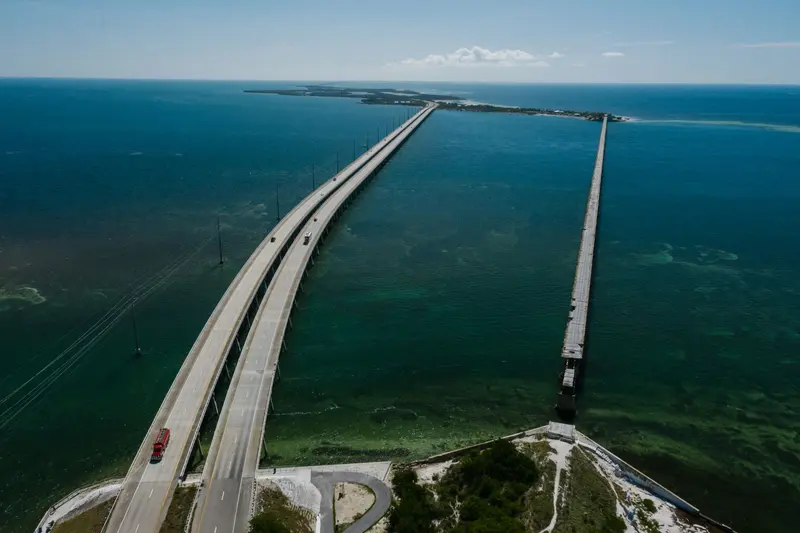
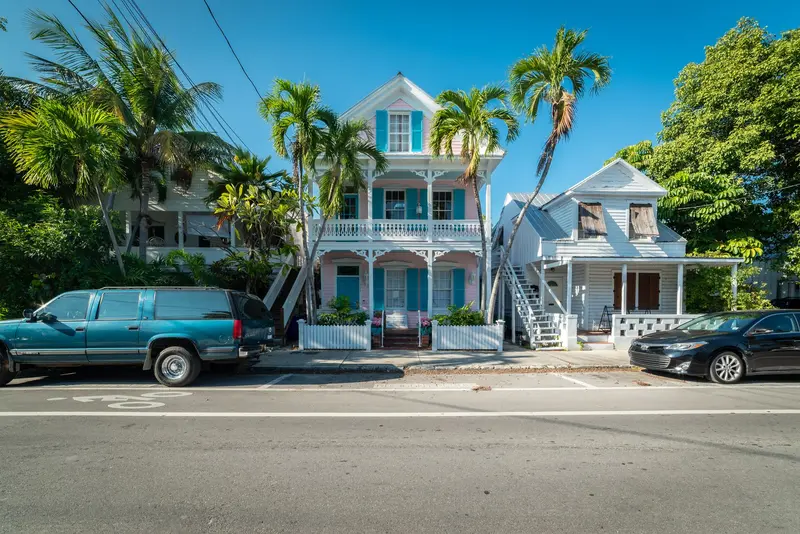
Key West is the last island in the Florida Keys you can drive to: a small town of wooden houses, bars and harbor piers, about 110 miles south of Florida City. You come for the drive across the water, for Hemingway's house and for evenings at Mallory Square, when the crowd applauds the sunset.The drive is half the point. The Overseas Highway (US 1), opened in 1938, hops island to island for about 113 miles. Good stops along the way: John Pennekamp Coral Reef State Park in Key Largo, the beaches at Bahia Honda State Park and the Old Seven Mile Bridge at Marathon, whose restored 2.2-mile span reopened to walkers and cyclists in January 2022 and leads out to Pigeon Key.Old Town Key West is compact enough to cover on foot or by bike: Duval Street from the Gulf to the Atlantic, the Southernmost Point Buoy, Fort Zachary Taylor and its beach, and the bars at night. It's also where you catch the ferry to Dry Tortugas National Park, about 2.5 hours west in the Gulf.
One night in Islamorada or Marathon, then three in Key West: Duval Street, Hemingway Home, Southernmost Point, and sunset at Mallory Square. En route, the Seven Mile Bridge near Marathon.
7 Sights
3 Restaurants
History and Culture
The name Key West is an English corruption of the Spanish Cayo Hueso, Bone Island, because Spanish seafarers found human bones here. In the 19th century, the city thrived on fishing, salvaging shipwrecked vessels on the offshore reef, and cigar production by Cuban immigrants. In 1912, Henry Flagler's Over-Sea Railroad reached the island; a hurricane destroyed the railway in 1935, and in 1938 the Overseas Highway took over its role. In late 1949, fishermen off Key West discovered vast stocks of pink shrimp, and the subsequent boom went down in the city's history as the Pink Gold Rush.Ernest Hemingway lived in Key West from 1931 to 1939 and here, among other works, wrote "To Have and Have Not" and "The Snows of Kilimanjaro." President Harry S. Truman spent a total of 175 days between 1946 and 1952 in his winter retreat, today's Little White House.Key West showed its stubborn side on April 23, 1982: In protest against road blocks by border police on the highway, the city council declared the island the independent Conch Republic, declared war on the USA, immediately capitulated, and requested foreign aid. The action garnered so much attention that the roadblocks soon disappeared. The name Conch, as the locals call themselves, has since stood for the island's unique stubbornness.
Orlando
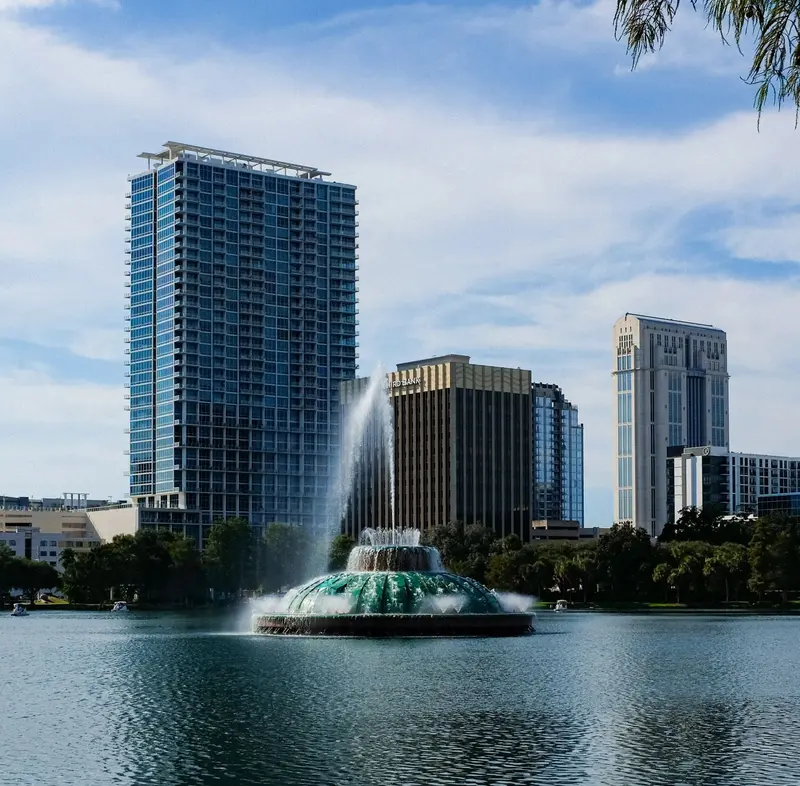
Orlando, in the heart of Florida, just over an hour's drive from the Atlantic coast, is the theme park capital: The Walt Disney World Resort with four theme parks, the Universal Orlando Resort with three parks including Epic Universe, opening in May 2025, and SeaWorld are in the south and southwest of the city. You come for the rollercoasters, themed worlds, and shows, but the city itself offers more than many expect, with lakes, parks, and a vibrant dining scene.Plan a full day for each of the major parks, and in between, take time for the real Orlando: a stroll around Lake Eola in Downtown, dinner at one of the Vietnamese restaurants on Colonial Drive, or an afternoon in Winter Park with a boat tour of the lakes and the Tiffany glass at the Morse Museum.Orlando also serves as an excellent base for excursions: You can reach the Kennedy Space Center at Cape Canaveral in about an hour by car, and with the Brightline train, you'll be in Miami in about three and a half hours. From May to November, it's hurricane season in Florida; current advisories are provided by the Foreign Office, linked on the country page.
Long drive from Key West, past Miami on the Turnpike. Then theme parks or a day at coastal Kennedy Space Center.
4 Sights
4 Restaurants
History and Culture
The Timucua lived here first, and later the Seminole. The settlement near the Fort Gatlin army post was originally called Jernigan, after settlers Isaac and Aaron Jernigan; in 1857 the new post office took the name Orlando. The popular story about a fallen soldier named Orlando Reeves is most likely a legend; historians think the name more probably came from Shakespeare's As You Like It. The town incorporated in 1875 with 85 residents, and after the Civil War citrus became the backbone of the economy.Two things changed everything. Starting in the 1950s, the space program at Cape Canaveral pulled workers and industry into the region. Then on October 1, 1971, Walt Disney World opened with the Magic Kingdom, followed by SeaWorld in 1973, EPCOT in 1982, Universal Studios Florida in 1990 and Epic Universe in 2025. The citrus town became one of the biggest vacation destinations in the country.Away from the parks, Orlando has turned into a serious food city. The Michelin Guide now recognizes a number of restaurants in Orlando and Winter Park, including casual spots for ramen, banh mi and barbecue.
Plan this route as your trip
All stops, trains and nights go into your trip planner. You adjust dates and places to stay afterwards.
This route is a suggestion from our research. Please check timetables, times in port, opening hours and prices before you book – what your tour operator or carrier says is what counts.
Fernweh is a free travel guide and trip planner: routes researched by people, taken over in one click, used day by day on the road. More about Fernweh
4 stops
Route Summary
Duration12 Days
Stops4 Places
TypeMixed