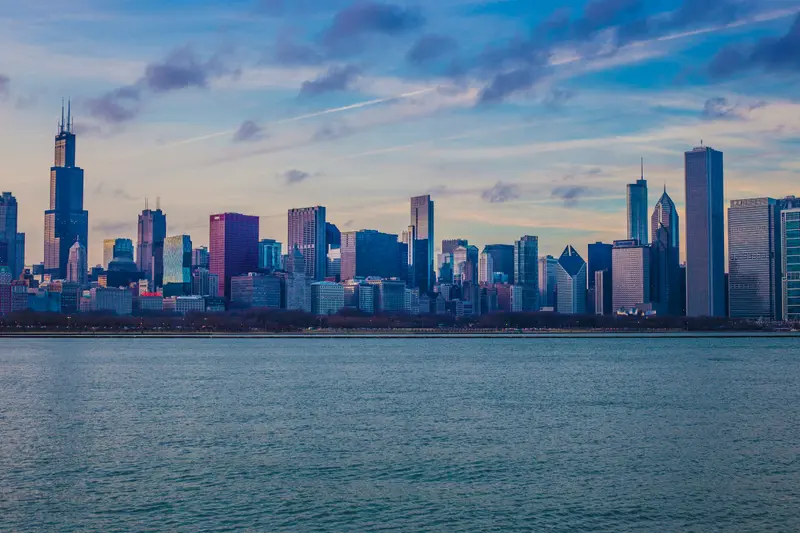
Chicago, located in northeastern Illinois on the southwestern shore of Lake Michigan, is the third-largest city in the USA with around 2.7 million inhabitants.
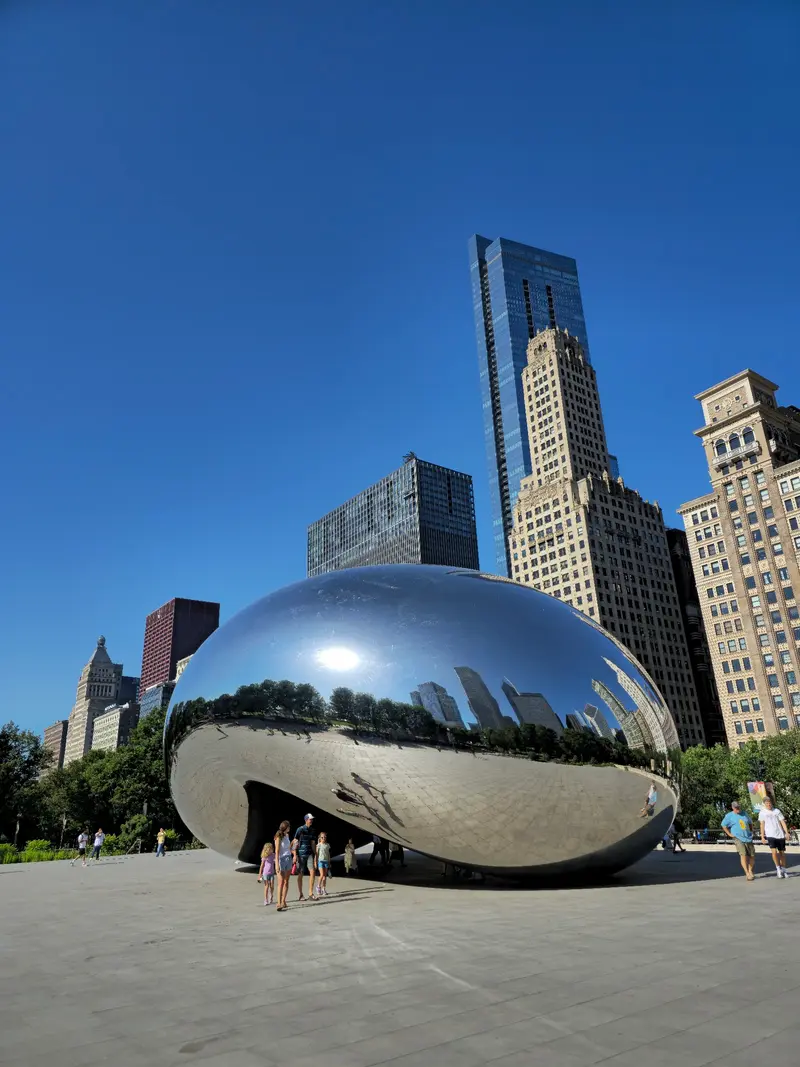
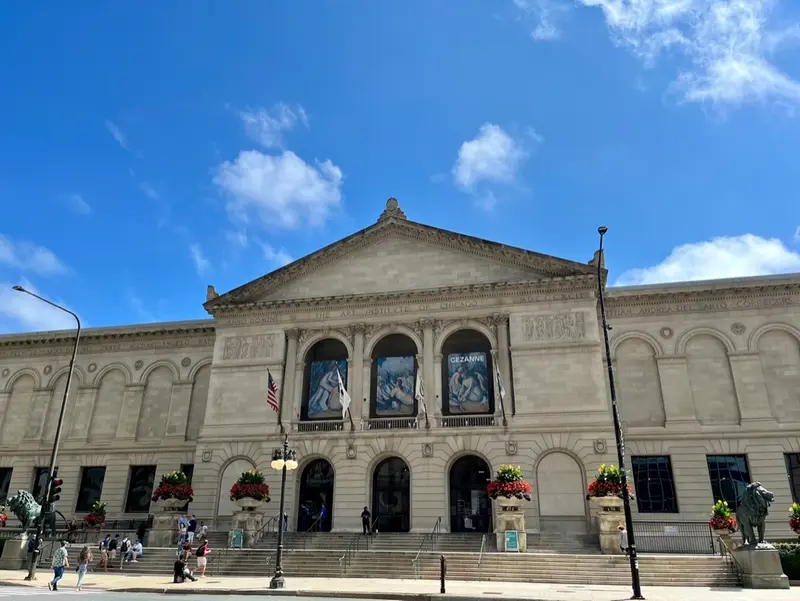
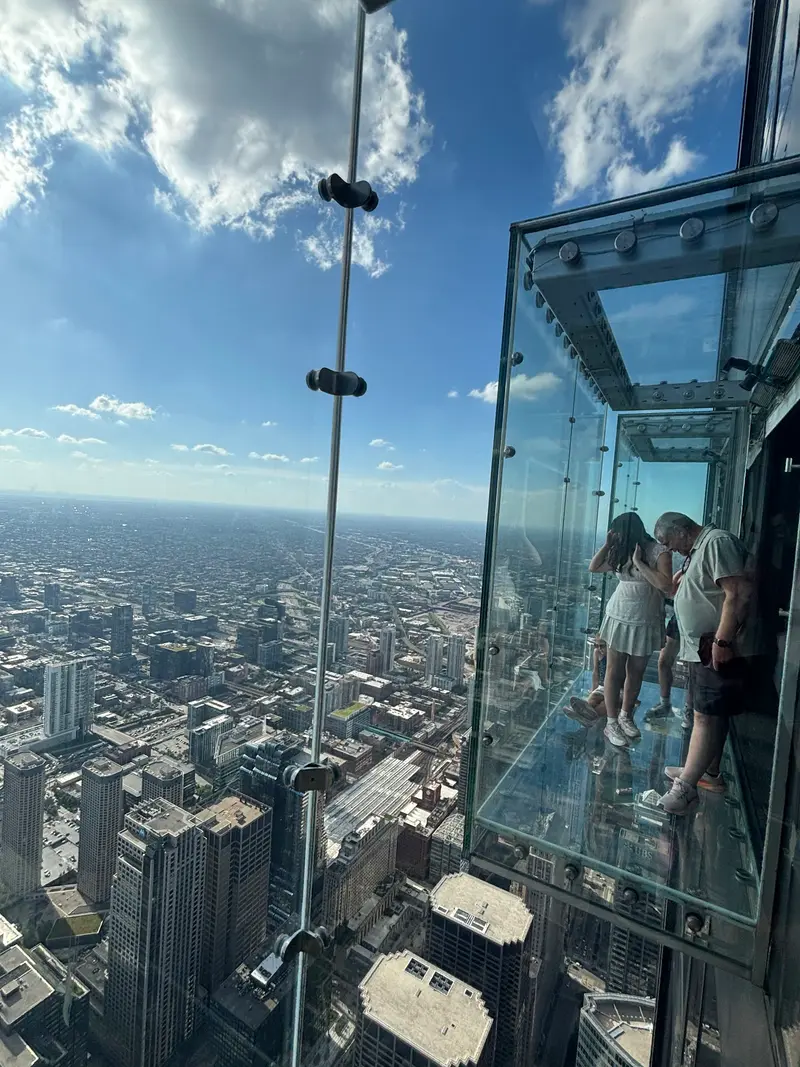
Chicago, located in northeastern Illinois on the southwestern shore of Lake Michigan, is the third-largest city in the USA with around 2.7 million inhabitants. You come primarily for its architecture: After the Great Fire of 1871, the Home Insurance Building, considered the first modern skyscraper, was built here in 1885.The city center is called the Loop, named after the elevated train that circles the business district. In the Willis Tower, you stand on the glass balcony The Ledge on the 103rd floor, about 412 m above the street. The Millennium Park, opened in 2004, features Anish Kapoor's sculpture Cloud Gate, and the Art Institute of Chicago mainly displays Impressionism and American art.The architecture tour by the Chicago Architecture Center on the Chicago River lasts around 90 minutes and passes more than 50 buildings. From O'Hare Airport, the Blue Line runs 24/7, taking 40 to 45 minutes to reach downtown.
Located on the southwestern shore of Lake Michigan, Chicago is the third-largest city in the USA with around 2.7 million inhabitants. The city center is the Loop, encircled by the elevated train, featuring skyscrapers, Millennium Park, and the Art Institute; along the lakefront are the Museum Campus and Navy Pier. You can get around using the CTA's L trains and buses, Divvy rental bikes, or on foot along the Riverwalk. The city is renowned for its architecture, blues music, and unique street food scene. Outside the center, the north around Wrigleyville, home to the Cubs' baseball stadium, is especially worth visiting.
Sights in Chicago
Discover the most important sights and attractions
Attraction
1Millennium Park and Cloud Gate
Anish Kapoor's sculpture of 168 welded stainless steel plates was unveiled in 2006 and is popularly called "The Bean." Its curved surface reflects the skyline and clouds; Frank Gehry's Jay Pritzker Pavilion is also in the park.
Founded in 1879, the museum features Edward Hopper’s 'Nighthawks', Seurat’s 'A Sunday Afternoon on the Island of La Grande Jatte', and Grant Wood’s 'American Gothic'. Two bronze lions guard the Michigan Avenue entrance; Renzo Piano’s Modern Wing opened in 2009.
The Skydeck on the 103rd floor is 412 meters above the street; since 2009, The Ledge's glass boxes protrude about 1.2 meters from the facade. The tower, called Sears Tower until 2009, was completed in 1974.
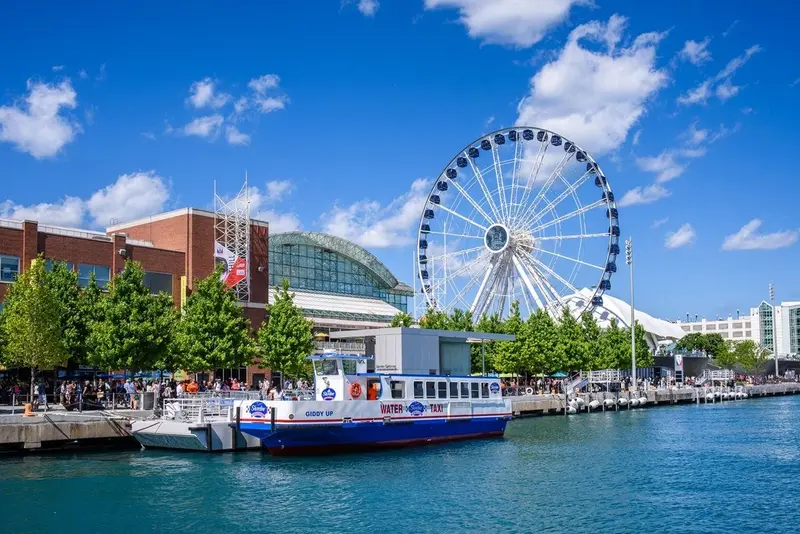
The pier, opened in 1916, extends a kilometer into Lake Michigan. The 60-meter Centennial Wheel was added in 2016. The Chicago Shakespeare Theater plays on the pier, and summer brings Wednesday and Saturday fireworks.
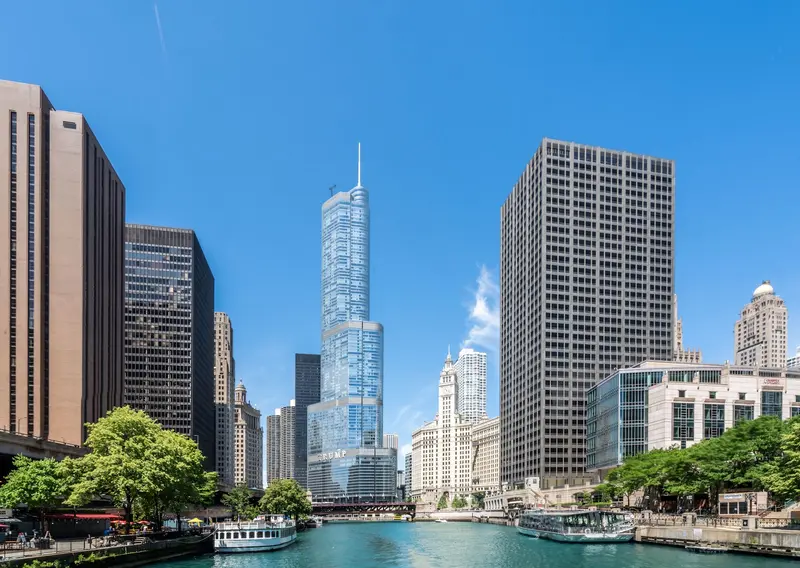
The Riverwalk on the south bank of the Chicago River stretches from Lake Michigan to Lake Street, completed in 2016. Restaurants at Marina Plaza, terraced seating at River Theater, and floating gardens at the Jetty line the way, with excursion boats departing near the lake.
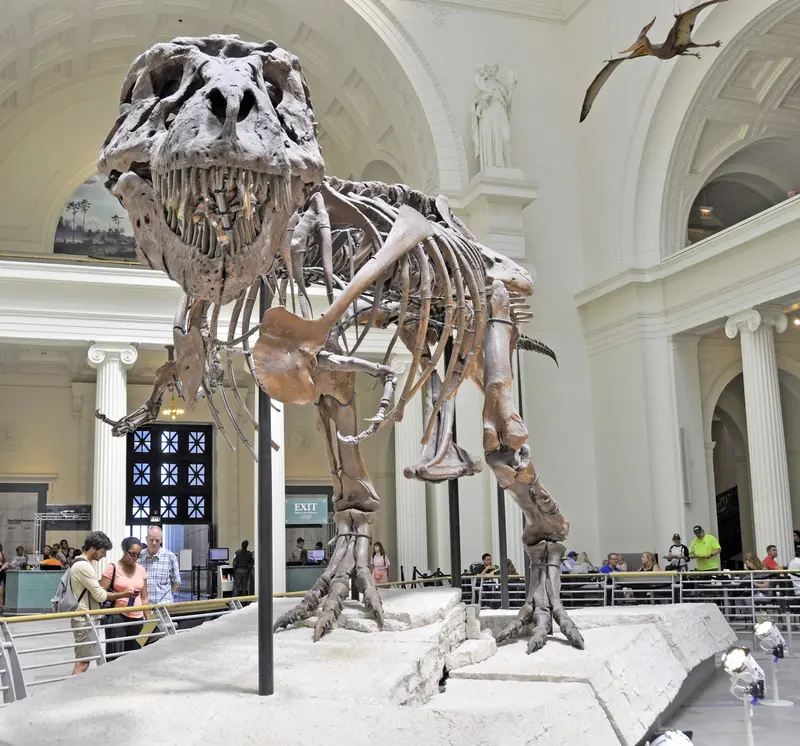
The Field Museum moved in 1921 to the lakefront Museum Campus, home to Shedd Aquarium and Adler Planetarium. Its most famous exhibit is Sue, an approximately 12-meter-long T-rex skeleton.
Chicago's cuisine is down-to-earth and closely connected to the city's immigrant communities.
Deep-Dish Pizza
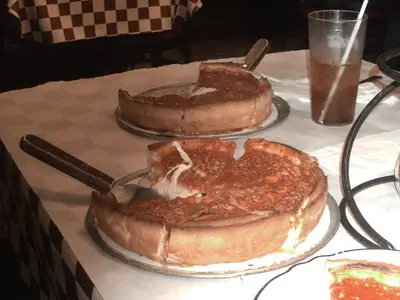
Originated in 1943 at Pizzeria Uno. The pan's high rim holds a lot of cheese, topped with a chunky tomato sauce.
Stuffed Pizza
Nancy's Pizza and Giordano's developed this variant in the mid-1970s with a second dough layer over the filling.
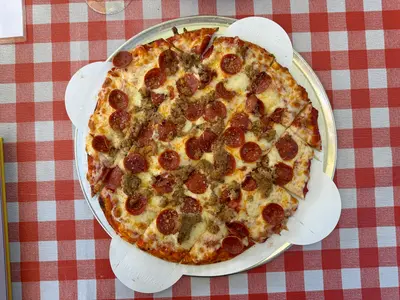
Tavern-style Pizza
Thin, crispy crust, cut into squares, originally served in pubs without plates, on napkins.
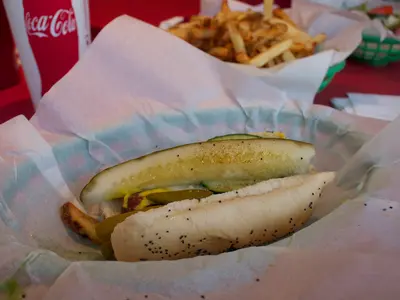
Chicago-style Hot Dog
Beef sausage in a poppy seed bun with mustard, onions, green relish, pickle, tomato, Sport Peppers, and celery salt; ketchup is not included. This combination originated during the economic crisis at the Maxwell Street stands.
Italian Beef
Thinly sliced roast beef in seasoned broth on French bread, "hot" with Giardiniera or "sweet" with peppers. Al's Beef has been selling it since 1938.
Architecture, Blues and Museums
After the Great Fire of 1871, Chicago was rebuilt, becoming a laboratory for skyscraper architecture, with the Home Insurance Building emerging in 1885. The 1893 World's Fair left behind two major museums: The Field Museum originated from its collections, and the Art Institute occupied a building constructed for the exhibition.Chicago Blues: The Great Migration brought African American musicians from the South to the city. Muddy Waters, who moved to Chicago in 1943, shaped the electrically amplified style with guitar and harmonica, and Chess Records spread his sound.Chicago Blues Festival: Since 1984, the annual festival, held around Muddy Waters' death anniversary, commemorates this tradition.Museums: The Art Institute, founded in 1879, holds approximately 300,000 works, while the Field Museum houses over 24 million objects.
The CTA's network of L trains and buses covers the city well. You pay with a Ventra Card, Ventra App, or contactless bank card, and two transfers within two hours are included.O'Hare: The Blue Line goes directly to the Loop. From O'Hare, the fare is $5, but the surcharge is waived with a day pass.Midway: The Orange Line goes to the Loop, at the standard rail fare of $2.50.Fares: Train $2.50, Bus $2.25. Passes: 1-Day $5, 3-Day $15, 7-Day $20. The Ventra Card costs $5, which is credited as transit value upon registration.Divvy: Single ride $1 plus $0.20 per minute (e-bike $0.44), Day Pass $19.90 with three hours per classic ride.