Fernweh: Home
ExploreGuideDestinationsMy tripsMy trip
de|en
All Places & RegionsRound tripsNight trains in EuropeAll highlightsAbout FernwehFAQPrivacy PolicyImprint
Download on the App StoreGet it on Google Play
ExploreGuideDestinationsMy tripsMy trip
    • Places & highlights
    • Tours
    • Eat & drink
    • Culture
    • Getting around
    • Accommodation
    • Nearby
    Kunta Kinteh Island and Juffureh

    Kenneth Aitchison / Wikimedia Commons / CC BY-SA 4.0, mod.

    Gambia

    Kunta Kinteh Island and Juffureh

    Point of Interest

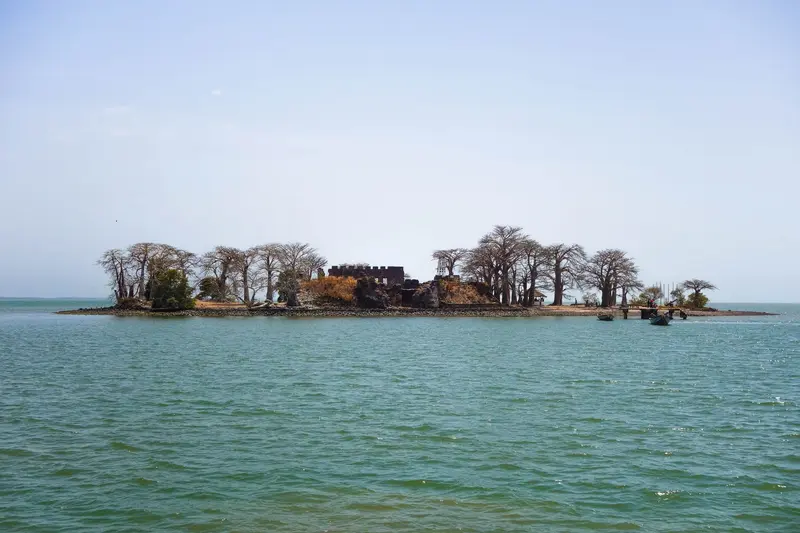
    Kunta Kinteh Island, formerly James Island, is a small island in the Gambia River, around 30 kilometres upstream from its mouth, opposite the villages of Albreda and Juffureh on the north bank.

    by Felix Gillen

    1. Home
    2. Destinations
    3. Gambia
    4. Gambia River
    5. Kunta Kinteh Island and Juffureh
    Kunta Kinteh Island, formerly James Island, is a small island in the Gambia River, around 30 kilometres upstream from its mouth, opposite the villages of Albreda and Juffureh on the north bank. With the ruins of its fort and the trading posts on the bank, it has been a UNESCO World Heritage site since 2003 and is one of the most important memorial sites for the transatlantic slave trade in West Africa.From 1651, Courlanders built a fort here; it was later taken over by the British, and in 1779, it was destroyed by the French. Due to erosion, the island has shrunk to a fraction of its former size. In 2011, it was named after Kunta Kinte, the main character from Alex Haley's novel "Roots," whose family is said to originate from Juffureh.
    Gambia travel guideRound trips in GambiaPlan a trip with Kunta Kinteh Island and Juffureh

    Contents

    • Places & highlights
    • Tours
    • Eat & drink
    • Culture
    • Getting around
    • Accommodation
    • Nearby

    Sights in Kunta Kinteh Island and Juffureh

    Discover the most important sights and attractions

    Kunta Kinteh Island

    Photo by Timon Cornelissen on Pexels

    Natural Feature

    1Kunta Kinteh Island

    The small island with the ruins of the fort, built by Courlanders from 1651, later British and destroyed by the French in 1779. A UNESCO World Heritage site since 2003, shrunk by erosion to a fraction of its former size. Accessible only by boat.
    Open in Google Maps

    2Juffureh

    The village on the north bank gained fame as Kunta Kinte's ancestral home thanks to Alex Haley's novel "Roots". The Maurel-Frères building in the village is a UNESCO World Heritage site, while in nearby Albreda stand the ruins of a Portuguese chapel and the CFAO building.
    Open in Google Maps

    Tours & experiences in Kunta Kinteh Island and Juffureh

    Search tours for Kunta Kinteh Island and Juffureh on GetYourGuide* (Affiliate link)On GetYourGuide, with reviews from other travellers

    * Affiliate link: if you book through it, we earn a small commission. The price stays the same for you.

    Restaurants in Kunta Kinteh Island and Juffureh

    World Heritage and Memory

    What the World Heritage Site IncludesThe UNESCO World Heritage Site Kunta Kinteh Island and Related Sites encompasses Kunta Kinteh Island and its fort, the ruin of a Portuguese chapel and the CFAO Building in Albreda, the Maurel-Frères Building in Juffureh, San Domingo, Fort Bullen, and the Six-Gun Battery at the river mouth. After the British ban on the slave trade in 1807, these two fortifications served to prevent the trade.RootsAlex Haley's 1976 novel "Roots" popularized Juffureh as the ancestral home of Kunta Kinte; his lineage is disputed among historians. The Roots Homecoming Festival, drawing visitors from the African diaspora to Juffureh, was last held in 2016, with a revival announced.

    Arrival

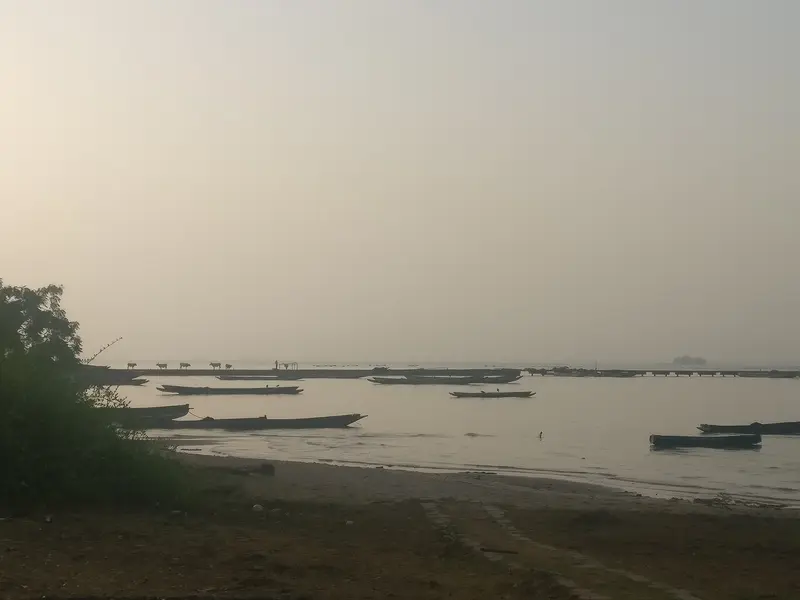
    By Boat or via BarraAccording to Culture Trip, boats depart from Denton Bridge near Banjul directly to the island. Alternatively, take the ferry to Barra, drive to the north bank towards Albreda and Juffureh, and catch one of the boats that cross the few kilometers to the island daily.On SiteThe island is small and heavily threatened by erosion; stick to the designated paths. Albreda hosts a museum dedicated to the slave trade. The National Centre for Arts and Culture sets admission fees; inquire on site.

    Accommodations in Kunta Kinteh Island and Juffureh

    Find perfect stay in Kunta Kinteh Island and Juffureh

    Booking.com* (Affiliate link)
    Search Hotels
    Agoda* (Affiliate link)
    Search Hotels
    Airbnb
    Vacation Rentals

    * Affiliate link: if you book through it, we earn a small commission. The price stays the same for you.

    Nearby

    Banjul

    Banjul

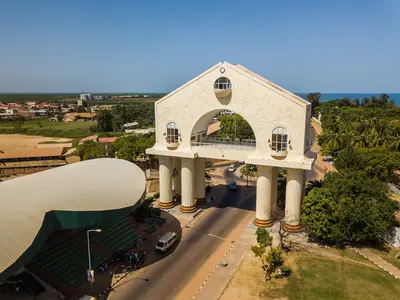
    Banjul is the small capital of Gambia, situated on an island at the mouth of the Gambia River. You come for the Arch 22 gateway, the National Museum, the bustling Albert Market, and the mangroves of the Tanbi Wetlands that separate the city from the mainland.Founded by the British in 1816 as Bathurst, it was renamed Banjul in 1973. The 2024 census revealed the city had only about 26,000 residents, making it the country's sole shrinking municipality: housing and commerce have long since moved to the greater Serrekunda area. Nevertheless, many still commute daily to the ministries, markets, and the Barra ferry port.

    Hannu Sääskilahti·CC BY-SA 4.0

    Abuko Nature Reserve

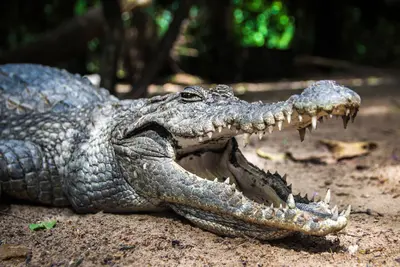
    Abuko is The Gambia's most renowned nature reserve, a gallery forest on Lamin Stream south of Abuko village in the coastal hinterland. Along approximately five kilometres of trails, you'll see vervet monkeys, Western Red Colobus monkeys, and patas monkeys, crocodiles in the pond, and with a bit of luck, some of the over 250 bird species recorded here.The reserve, covering over 100 hectares, was established in 1968, parts of which had been protected since 1916. A wildlife viewing station at a waterhole and a small animal orphanage are part of the loop trail.
    Greater Banjul

    Greater Banjul

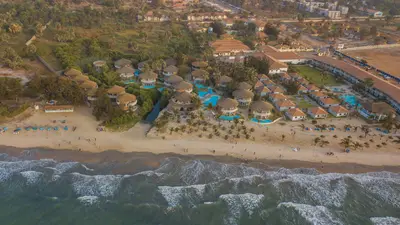
    Greater Banjul is the heart of The Gambia: the island capital Banjul at the mouth of the Gambia River, and just about 18 kilometers away, the urban area around Serrekunda with the coastal towns of Bakau, Fajara, Kotu and Kololi. Here you'll find most of the country's hotels, restaurants, and beaches, plus nature reserves like Bijilo and Abuko, where you can observe monkeys and hundreds of bird species.

    The Gambia·Pexels

    Serrekunda

    Serrekunda ist der größte Ballungsraum Gambias und das wirtschaftliche Herz des Landes, rund 18 Kilometer von Banjul entfernt hinter der Atlantikküste. Du kommst vor allem wegen des Serrekunda Market, des größten Marktes des Landes, und wegen des gambischen Alltags abseits der Hotelzone.Zur Gemeinde Kanifing, zu der Serrekunda gehört, zählten beim Zensus 2024 rund 380.000 Menschen. Zusammen mit Banjul und Brikama bildet die Stadt den Großraum, in dem etwa die Hälfte der Bevölkerung Gambias lebt.
    Bakau

    Bakau

    Bakau is a lively coastal town west of Banjul, known for the sacred Kachikally Crocodile Pool and the colorful fishing beach with painted pirogues. Around Cape Point, you'll find quieter beach sections, a shady botanical garden, and some of the coast's most traditional restaurants.The Bojang family, considered Bakau's founding family, still watches over Kachikally today. At the fishing beach southwest of Cape Point, boats are unloaded and fish is sold in the mornings and afternoons, while on Sundays, Gambian families picnic and play football here.

    Roel van der krabben·CC BY-SA 4.0

    Your next steps

    Kunta Kinteh Island and Juffureh is in Gambia. Ways to carry on from here.

    • More in Gambia

      Highlights, areas, routes and the best time to travel for all of Gambia.

      Gambia travel guide
    • Round trips in Gambia

      Ready-made routes through Gambia, with stops, nights and a map.

      See the routes
    • Plan a trip with Kunta Kinteh Island and Juffureh

      The Guide asks about season, length and who is coming, and suggests a trip with Kunta Kinteh Island and Juffureh.

      Plan the trip

    Sources & method

    • Photos: Wikimedia Commons, Pexels. Each photo carries its credit.
    • Place data such as addresses and ratings comes from Google Maps.
    • The content is based on web research from public, traceable sources. How the content is made · The role of AI