Fernweh: Home
ExploreGuideDestinationsMy tripsMy trip
de|en
All Places & RegionsRound tripsNight trains in EuropeAll highlightsAbout FernwehFAQPrivacy PolicyImprint
Download on the App StoreGet it on Google Play
ExploreGuideDestinationsMy tripsMy trip
    • Places in the region
    • Round trips
    • Nearby
    Bohemia

    Photo by Stepan Vrany on Pexels

    Czech Rep.

    Bohemia

    RegionCultureNature

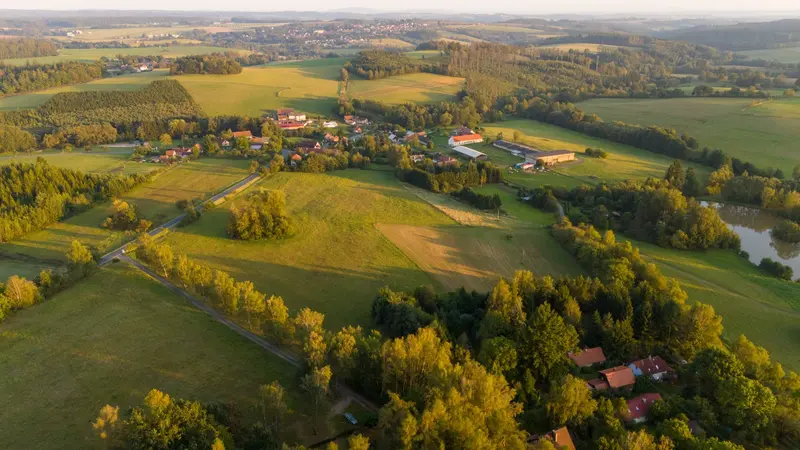
    Bohemia is the western part of Czechia, a basin between the Bohemian Forest, Ore Mountains and Giant Mountains. The Vltava flows from the south through Prague to the Elbe.

    by Felix Gillen

    1. Home
    2. Destinations
    3. Czech Rep.
    4. Bohemia
    Bohemia is the western part of Czechia, a basin between the Bohemian Forest, Ore Mountains and Giant Mountains. The Vltava flows from the south through Prague to the Elbe.To the south are Budweis and Český Krumlov, both reachable by train from Prague in two to three hours.
    Czech Rep. travel guideSee the round tripPlan a trip with Bohemia

    Contents

    • Places in the region
    • Round trips
    • Nearby
    Český Krumlov

    Photo by Mike Swigunski on Unsplash

    Place 1 of 2

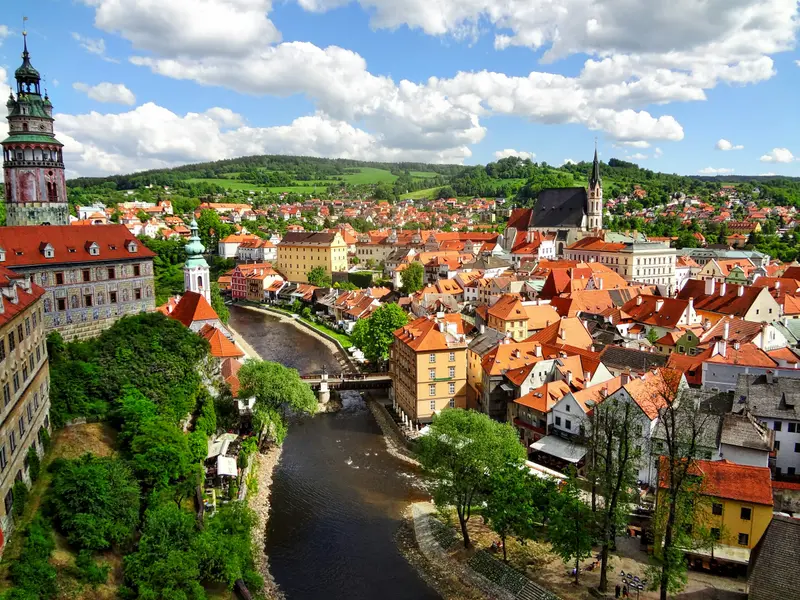
    Český Krumlov

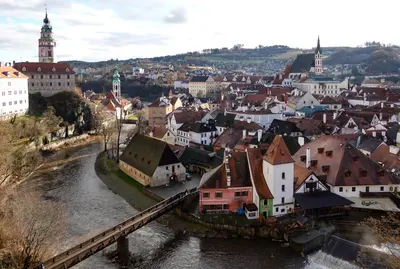
    Český Krumlov (Krumau) is located in South Bohemia in a tight loop of the Vltava River, dominated by the Rosenberg and Schwarzenberg Castle. Its Old Town has been a UNESCO World Heritage site since 1992.

    Discover
    Prague

    Photo by Alex Does Pictures on Pexels

    Place 2 of 2

    Prague

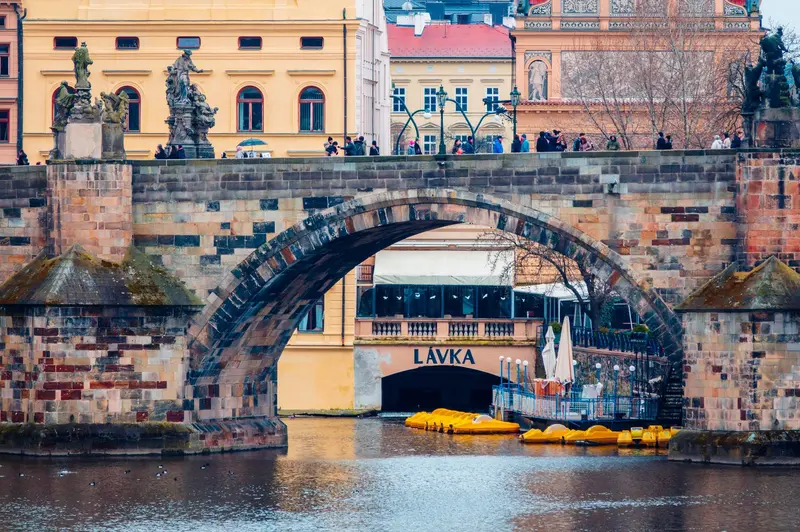
    Prague lies on both sides of the Vltava: on the right bank are the Old Town and New Town, on the left is the Lesser Town below the Castle. The Charles Bridge connects both sides, and the historic centre has been a UNESCO World Heritage site since 1992.

    Discover

    Round trips through this region

    By night train to Prague and Český Krumlov

    By night train to Prague and Český Krumlov

    In the evening, you board the night train in Basel, Freiburg, Karlsruhe or Frankfurt, and by morning, you're in Prague. After three nights, a direct Intercity goes in just over two hours to Český Krumlov in South Bohemia, an old town in a Vltava loop. You return to Prague and on the same evening, take the night train home.

    6 Days
    5 stops

    Magda Ehlers·Pexels

    Nearby

    Saxon Switzerland / Bastei

    Saxon Switzerland / Bastei

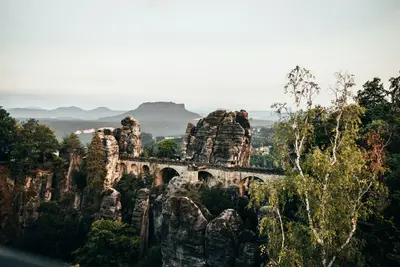
    Saxon Switzerland is the German part of the Elbe Sandstone Mountains and lies about 30 kilometers southeast of Dresden on both sides of the Elbe. Its bizarre rock formations are largely within the Saxon Switzerland National Park, which was created in September 1990, even before German unity. Climbing is done according to the Saxon Rules and only on designated climbing peaks.The most famous viewpoint is the Bastei near Rathen, which rises 194 meters above the Elbe. It is freely accessible year-round and at any time. Upriver, Königstein Fortress perches on its tabletop mountain, one of Europe's largest mountain fortresses; opposite, the Lilienstein rises. Behind the spa town of Bad Schandau, the Kirnitzschtal and the rock regions of the Schrammsteine and Kuhstall open up.If you stay for several days, hike the Malerweg: The official trail leads in eight stages, spanning around 116 kilometers from Pirna-Liebethal across both sides of the Elbe back to Pirna.

    Paul Meckes·Unsplash

    Pillnitz

    Pillnitz

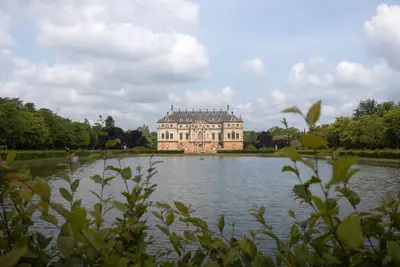
    Pillnitz is located about 15 kilometers upstream from the city center on the right bank and has been part of Dresden since 1950. From 1720, August the Strong commissioned a summer residence here according to plans by Matthäus Daniel Pöppelmann and Zacharias Longuelune: the Water Palace with its grand staircase to the Elbe and the Mountain Palace, both with Chinoiserie-style roofs, with the Baroque pleasure garden in between. The Neoclassical New Palace was built between 1819 and 1826, after the old Renaissance castle had burned down in 1818. Viticulture has been documented in Pillnitz since 1403.In the palace park, you'll find the English and Chinese Pavilions, the year-round open Palm House, and the over 230-year-old Pillnitz Camellia, which blooms from February to April. The Water and Mountain Palaces house the Museum of Decorative Arts, while the Palace Museum in the New Palace is open from late March to early November. You can get there by bus 63, by tram line 2 to the final stop and then by ferry across the Elbe, or by paddle steamer of the Sächsische Dampfschiffahrt, which docks directly at the palace.

    Niklas Jeromin·Pexels

    Loschwitz & Blasewitz

    Loschwitz & Blasewitz

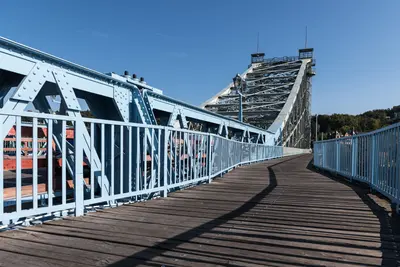
    Loschwitz on the right and Blasewitz on the left Elbe bank have been connected since 1893 by the Loschwitzer Bridge, which everyone simply calls the Blue Wonder. Loschwitz was first mentioned in 1227 and was long a wine-growing village. On former vineyards on the Elbe slope today stand the three Elbe Castles Albrechtsberg, Lingnerschloss, and Schloss Eckberg. Friedrich Schiller lived from 1785 to 1787 in the Schillerhäuschen. Blasewitz developed into a villa suburb during the Gründerzeit. Both places have belonged to Dresden since 1921.From Körnerplatz in Loschwitz, two historic mountain railways ascend to the Elbe heights: the funicular to Weißer Hirsch and the suspension railway to Oberloschwitz, whose top station has a viewing tower. Down by the river, you can stroll across the Elbe meadows. Bus lines 61, 63, and 84 run to Körnerplatz, and tram lines 6 and 12 to Schillerplatz in Blasewitz. From there, you walk across the Blue Wonder.

    Wolfgang Weiser·Pexels

    Dresden

    Dresden

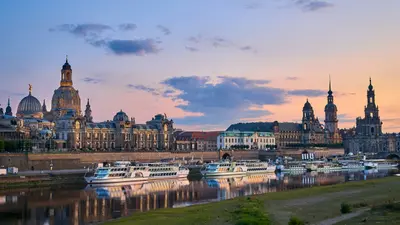
    Dresden lies on both sides of the Elbe in the Elbe Valley Basin and is known as Florence on the Elbe for its art collections. Under Augustus the Strong, the city gained cultural significance through Dresden Baroque. After the air raids of February 13-15, 1945, the historic Old Town south of the Elbe was partially rebuilt; the Frauenkirche, however, only between 1993 and 2005.On the Old Town side, the Zwinger, Semper Opera House, Royal Palace, and Brühl's Terrace line up. Across the river, on the right Elbe bank, is the Neustadt (New Town). The Äußere Neustadt (Outer New Town), largely undamaged during the war, is now Dresdeners' main entertainment district, offering cafés, pubs, bars, and small shops.

    Oliver Guhr·Unsplash

    Inner Old Town

    Inner Old Town

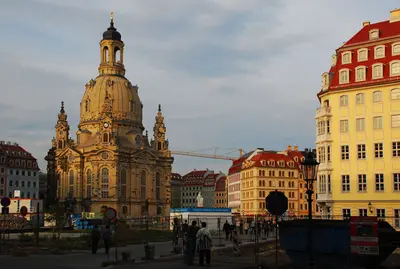
    The Inner Old Town, situated on the left bank of the Elbe, is Dresden's historic core, stretching from the Terrassenufer in the north to the City Hall in the south. Its borders follow the old city fortifications, which were dismantled at the beginning of the 19th century: Postplatz lies on the western edge, Pirnaischer Platz on the eastern. The air raids in February 1945 almost completely destroyed the district. From 1953, buildings in the style of Socialist Classicism arose on Altmarkt; around the Frauenkirche, Neumarkt has been rebuilt quarter by quarter since 2004, with some prominent buildings following historical models.Between Theaterplatz, Schloßplatz, Neumarkt, and Altmarkt, the city's major attractions are so close together that you can reach everything on foot. Along the Elbe riverbank stretches the Brühlsche Terrasse; every December, the Striezelmarkt, held since 1434, takes place on Altmarkt. Wilsdruffer Straße crosses the district; to the south, Prager Straße connects in the Seevorstadt. You can get here quickly by tram: Of the twelve DVB lines, only 10 and 13 do not run through the Inner Old Town, with Postplatz being the most important hub.

    Enrico Hänel·Pexels

    Your next steps

    Bohemia is in Czech Rep.. Ways to carry on from here.

    • More in Czech Rep.

      Highlights, areas, routes and the best time to travel for all of Czech Rep..

      Czech Rep. travel guide
    • Round trips with Bohemia

      One route passes through Bohemia, with stops, nights and a map.

      See the round trip
    • Plan a trip with Bohemia

      The Guide asks about season, length and who is coming, and suggests a trip with Bohemia.

      Plan the trip

    Sources & method

    • Photos: Pexels. Each photo carries its credit.
    • The content is based on web research from public, traceable sources. How the content is made · The role of AI