ExploreTravel GuidesPlan a trip
    de|en
    All Places & RegionsAbout FernwehFAQPrivacy PolicyImprint
    ExploreTravel GuidesPlan a trip
    • Neighborhoods & highlights
    • Eat & drink
    • Culture
    • Nightlife
    • Getting around
    • Accommodation
    • Plan trip
    • Nearby
    Dresden

    Germany

    Dresden

    City

    Dresden lies on both sides of the Elbe in the Elbe Valley Basin and is known as 'Florence on the Elbe' due to its art collections. Under August the Strong, the city gained cultural significance through the Dresden Baroque.

    1. Home
    2. Destinations
    3. Germany
    4. Saxony
    5. Dresden
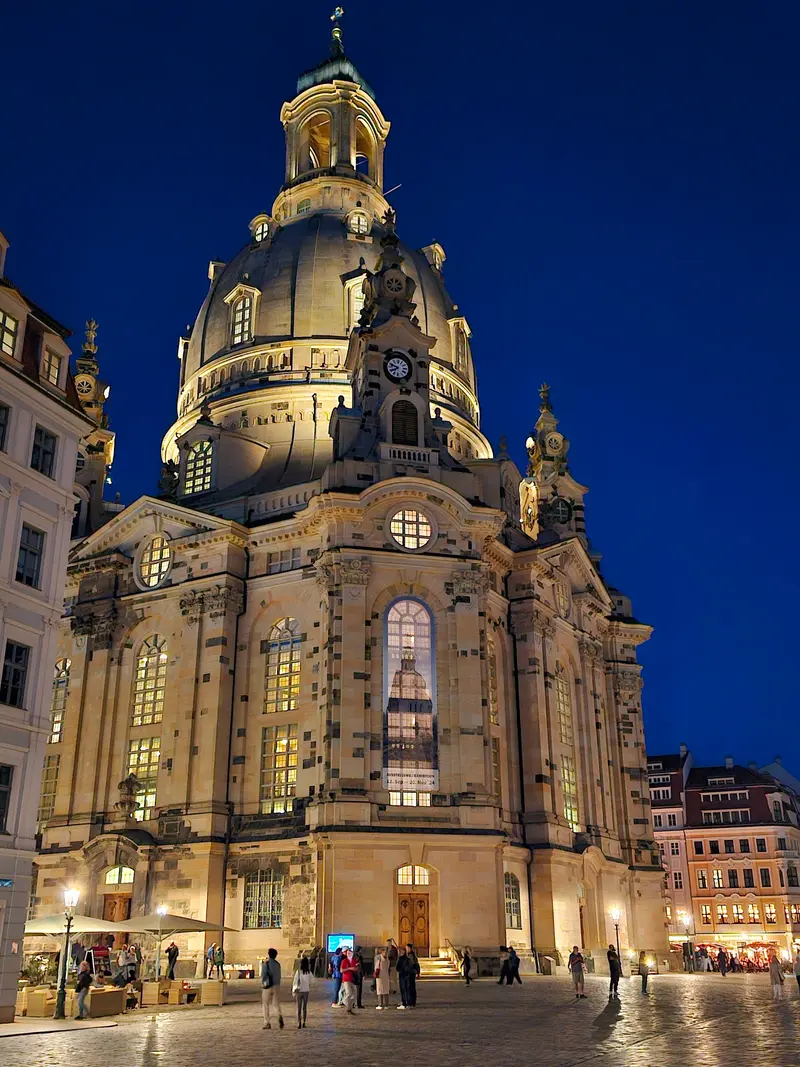
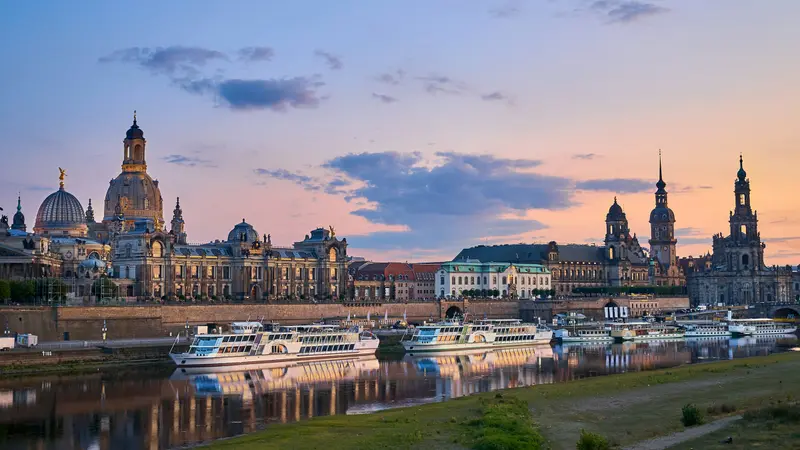
    Dresden lies on both sides of the Elbe in the Elbe Valley Basin and is known as 'Florence on the Elbe' due to its art collections. Under August the Strong, the city gained cultural significance through the Dresden Baroque. Following the air raids from February 13 to 15, 1945, the historic Old Town south of the Elbe was partially rebuilt; the Frauenkirche, however, only between 1993 and 2005.On the Old Town side, the Zwinger, Semperoper, Residenzschloss, and Brühl's Terrace stand together. Opposite, on the right bank of the Elbe, is the Neustadt. The Äußere Neustadt, almost undamaged in the war, is now the main entertainment district for Dresdeners, with cafés, pubs, bars, and small shops.
    Dresden, with around 572,000 inhabitants, is located on both banks of the Elbe, which flows for 30 kilometers through the city. The major attractions of the Old Town are closely grouped together and can be easily explored on foot. DVB trams and buses connect all important points of the city, usually every ten minutes on weekdays. The baroque ensemble along the Elbe is special, having been largely rebuilt after its destruction in 1945. Beyond the Old Town, the Outer New Town is worth exploring with its pubs, cafés, and small shops.

    Sights in Dresden

    Discover the most important sights and attractions

    Frauenkirche
    Church

    1Frauenkirche

    George Bähr built the church from 1726 to 1743; on February 15, 1945, it collapsed, burnt out. After its reconstruction from 1993 to 2005, it was consecrated on October 30, 2005; the visitor platform on the tower lantern is 67 meters high.
    Open in Google Maps
    Zwinger with Old Masters Picture Gallery
    Museum

    2Zwinger with Old Masters Picture Gallery

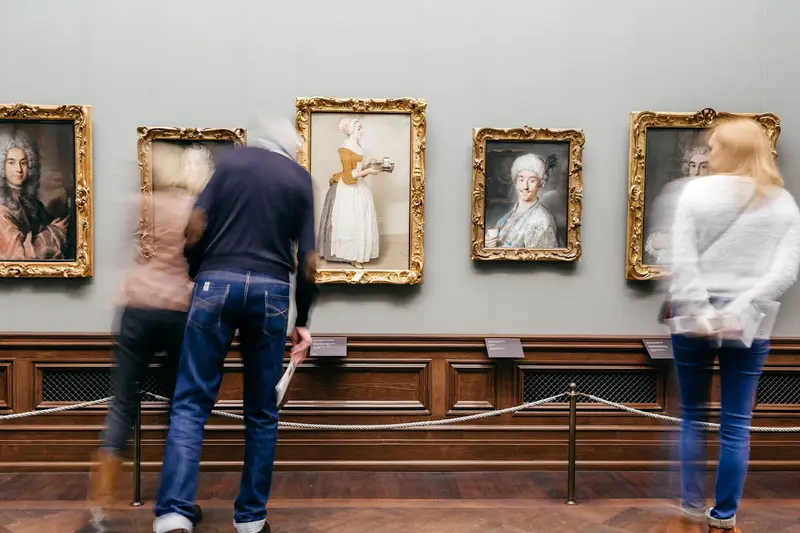
    Matthäus Daniel Pöppelmann and Balthasar Permoser created the Zwinger from 1711 to 1728 for Augustus the Strong; its most famous motif is the Crown Gate. In the Zwinger's Semper Building, the Gemäldegalerie Alte Meister displays works by Raphael, Correggio, and Vermeer, and the Porcelain Pavilion houses the Dresden Porcelain Collection.
    Open in Google Maps
    Semperoper
    Attraction

    3Semperoper

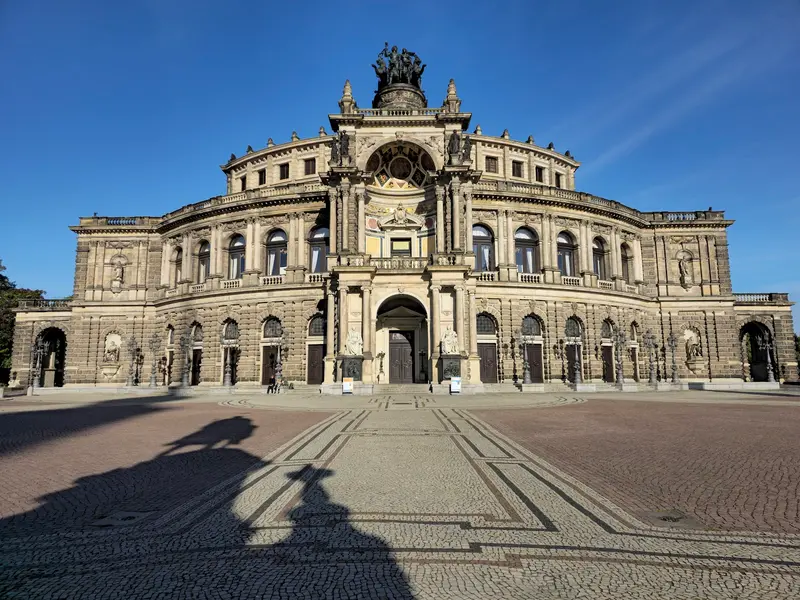
    Gottfried Semper built the present opera house at Theaterplatz 1871 to 1878 in the Neo-Renaissance style. After its reconstruction, it was reopened on February 13, 1985, the 40th anniversary of its destruction, with Weber's Freischütz; the house orchestra is the Sächsische Staatskapelle Dresden.
    Open in Google Maps
    Residence Palace with Green Vault
    Museum

    4Residence Palace with Green Vault

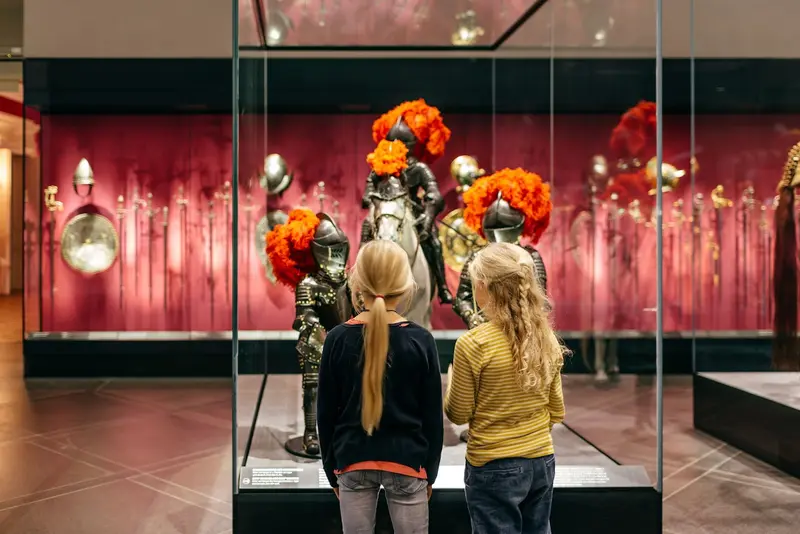
    The western part of the Residenzschloss houses the Historische Grüne Gewölbe with around 3000 exhibits in reconstructed Baroque rooms, and the Neue Grüne Gewölbe, where among other things Dinglingers Hofstaat zu Delhi and the 41-carat Dresdner Grüne Diamant can be seen. Also in the palace, the Rüstkammer displays armors, swords, and firearms of the Saxon Electors.
    Open in Google Maps
    Brühlsche Terrasse
    Historic Landmark

    5Brühlsche Terrasse

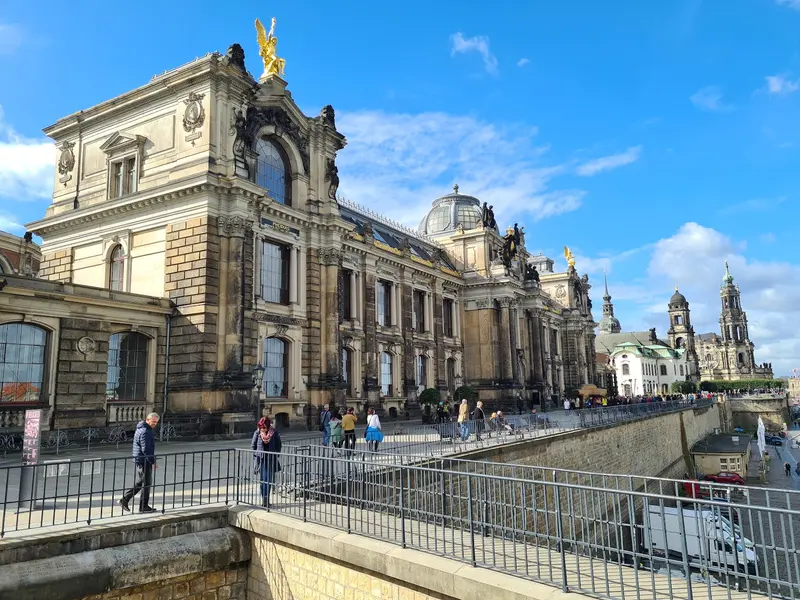
    The "Balcony of Europe" is about 500m long and up to 10m high along the Elbe. Heinrich von Brühl named it; on the terrace are the Albertinum and the Lipsius Building with the Academy of Fine Arts.
    Open in Google Maps
    Kunsthof Passage
    Attraction

    6Kunsthof Passage

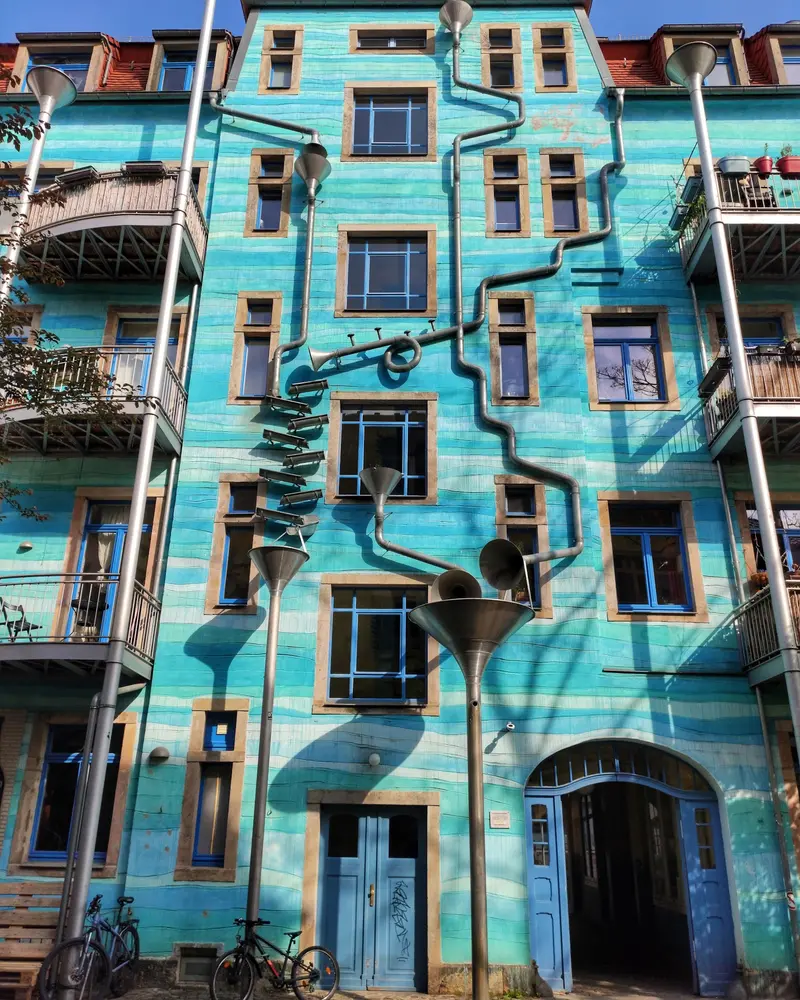
    Completed in 2001, the passage in Äußere Neustadt connects Görlitzer Straße with Alaunstraße via five courtyards, each with its own design theme. The most famous is the Hof der Elemente with its blue facade full of rain pipes.
    Open in Google Maps

    Restaurants in Dresden

    1

    Sophienkeller in the Taschenbergpalais

    Cellar restaurant in Taschenbergpalais with traditional cuisine, extensive drinks menu and baroque flair.
    Show on Google Maps
    2

    Pulverturm

    Restaurant with international dishes and historic flair in a centuries-old building near the Frauenkirche.
    Show on Google Maps
    3

    Sfizio

    Casual Italian trattoria in the Old Town with street terrace, pizzas, pasta and grilled dishes.
    Show on Google Maps

    Baroque, Art and Music

    Under August the Strong, Dresden flourished as a cultural center, marked by Dresden Baroque and lavish court festivals. The city owes its nickname Elbflorenz primarily to its art collections, now housed at the Zwinger, Residenzschloss, and Albertinum.The Sächsische Staatskapelle Dresden performs at the Semperoper. The Frauenkirche, its ruin a memorial on the Neumarkt during GDR times, has again served as both church and concert venue since its 2005 consecration.

    Nightlife

    1

    Chemical works

    Bar and live music venue on Petrikirchstraße.
    Show on Google Maps
    2

    Old Bookmakers

    Lively venue with cocktails, live music, Mediterranean and oriental dishes, and a colorful terrace.
    Show on Google Maps
    3

    Bautzen Gate

    A cozy, rustic pub in Neustadt, serving beers from the Neustadt Brewery with hearty food.
    Show on Google Maps

    On the go in Dresden

    Long-distance trains from Leipzig, Berlin, and Görlitz usually stop first at Neustadt station, which is only a few hundred meters from Innere Neustadt. The main station is about 1.2 kilometers from Altmarkt. From Dresden Airport in Klotzsche, about 9 kilometers north, the S-Bahn line S2 runs every 30 minutes via Neustadt to the main station.Within the city, it's best to use DVB's trams and buses or the MOBI-Bike rental system; the Elbe Cycle Path runs right through Dresden. From Terrassenufer, the historic paddle steamers of Sächsische Dampfschiffahrt depart, including to Pillnitz and Meißen. Note: The Carolabrücke partially collapsed and was demolished on the night of September 11, 2024; according to the city, the new construction should be completed by 2031. For traveling between Altstadt and Neustadt, use the other Elbe bridges, such as the Augustusbrücke.

    Accommodations in Dresden

    Find perfect stay in Dresden

    Booking.com* (Affiliate link)
    Search Hotels
    Agoda* (Affiliate link)
    Search Hotels
    Airbnb
    Vacation Rentals

    * Affiliate link: if you book through it, we earn a small commission. The price stays the same for you.

    Campgrounds in Dresden

    Find perfect campground in Dresden

    Search via Google Maps
    Campgrounds nearby (15km)
    Camping.info
    Find Campgrounds
    Park4Night
    RV Parks & Camping

    Plan your trip to Dresden

    Save places, build a route and plan your city trip, all in one place.

    1. 1
      1234

      Round trip

      12 days · 4 stops

      Saved

      Pick a route

      Pick a ready-made one or save places and plan your own.

      Open bookmarks
    2. 2

      Trip to Dresden

      Live
      • 1Frauenkirche3 days
      • 2Zwinger with Old Masters Picture Gallery4 days
      • 3Semperoper5 days
      Budget

      Plan your trip

      The planner sorts stops, days and budget. Plan together in real time.

      Start trip planning
    3. 3
      9:41 No signal
      Available offline

      Use it on the road

      Download the guide to your phone and use it on site, even offline.

    Nearby

    Saxony

    Saxony

    Saxony borders Poland to the east and the Czech Republic to the south. The Elbe is the Free State's most important and only navigable river, flowing through it from southeast to northwest. On its banks lies the state capital, Dresden, whose baroque cityscape, with the Frauenkirche, Zwinger, and Semperoper, attracts visitors from all over the world.Leipzig is Saxony's most populous city, a trade fair and university city with a rich musical tradition centered around Johann Sebastian Bach and Felix Mendelssohn Bartholdy. Those seeking nature will find it upstream along the Elbe in Saxon Switzerland, the Saxon part of the Elbe Sandstone Mountains, as well as in the Ore Mountains, Lusatia, and Vogtland.
    Saxon Switzerland / Bastei

    Saxon Switzerland / Bastei

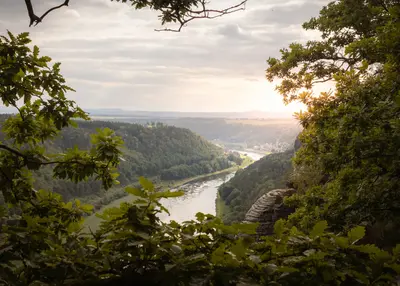
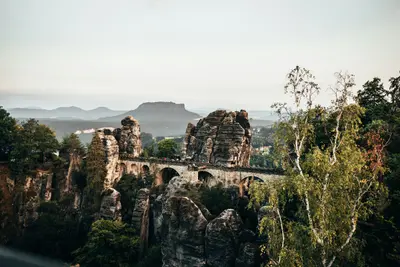
    Saxon Switzerland, the German part of the Elbe Sandstone Mountains, is located southeast of Dresden on both sides of the Elbe. Its bizarre rock formations are largely within the Saxon Switzerland National Park, established in September 1990, prior to German reunification. Climbing adheres to the Saxon Rules and is only allowed on designated climbing peaks.The most famous viewpoint is the Bastei near Rathen, which rises 194 meters above the Elbe. It is freely accessible year-round and at any time. Upriver on the Elbe, Königstein Fortress proudly sits atop its mesa, one of Europe's largest mountain fortresses.
    Görlitz

    Görlitz

    Görlitz on the Lusatian Neisse is Germany's easternmost city. Since 1945, the river has formed the border with Poland; its eastern districts are now the independent Polish city of Zgorzelec, reachable on foot via the Altstadtbrücke.During World War II, Görlitz remained almost entirely spared from destruction, and its historic Old Town, including Untermarkt and Obermarkt, is consequently well-preserved. This makes the city a popular and frequently used film set.
    Lübbenau

    Lübbenau

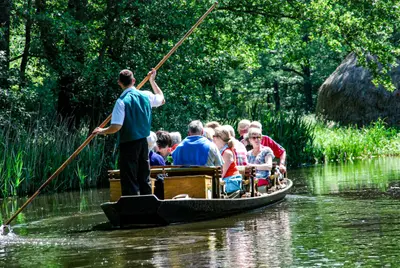
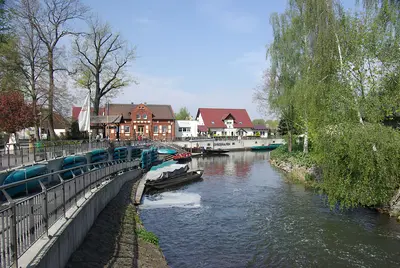
    Lübbenau (Lower Sorbian: Lubnjow) is the gateway to the Spreewald, 80 kilometers southeast of Berlin. From the Großer Spreewaldhafen, the region's biggest port, punted barges navigate the labyrinth of waterways; tourism began here in 1882.The old town, with St. Nikolai Church (built 1738-1741) and the neoclassical castle, is already within the Biosphere Reserve. In Lehde, where mail is delivered by barge from April to October, the Open-Air Museum illustrates Spreewald life of yesteryear.
    Burg (Spreewald)

    Burg (Spreewald)

    Burg, Lower Sorbian Bórkowy, is located in the heart of the Oberspreewald, about 20 kilometers northwest of Cottbus. The districts of Burg-Kauper and Burg-Kolonie developed as scattered settlements, with their farmsteads widely spread across the so-called Kaupen.Here you can rent paddle boats or be punted in a Spreewaldkahn, and the village is a starting point for water hiking tours. For the best views, head to the Bismarckturm on Schlossberg; for relaxation, the Spreewald-Therme, opened in 2005, entices with its brine water.