ExploreTravel GuidesPlan a trip
    de|en
    All Places & RegionsAbout FernwehFAQPrivacy PolicyImprint
    ExploreTravel GuidesPlan a trip
    • Places in the region
    • Round trips
    • Nearby
    Saxony

    Germany

    Saxony

    RegionCultureNature

    Saxony borders Poland to the east and the Czech Republic to the south. The Elbe is the Free State's most important and only navigable river, flowing through it from southeast to northwest.

    1. Home
    2. Destinations
    3. Germany
    4. Saxony
    Saxony borders Poland to the east and the Czech Republic to the south. The Elbe is the Free State's most important and only navigable river, flowing through it from southeast to northwest. On its banks lies the state capital, Dresden, whose baroque cityscape, with the Frauenkirche, Zwinger, and Semperoper, attracts visitors from all over the world.Leipzig is Saxony's most populous city, a trade fair and university city with a rich musical tradition centered around Johann Sebastian Bach and Felix Mendelssohn Bartholdy. Those seeking nature will find it upstream along the Elbe in Saxon Switzerland, the Saxon part of the Elbe Sandstone Mountains, as well as in the Ore Mountains, Lusatia, and Vogtland.
    Dresden

    Place 1 of 4

    Dresden

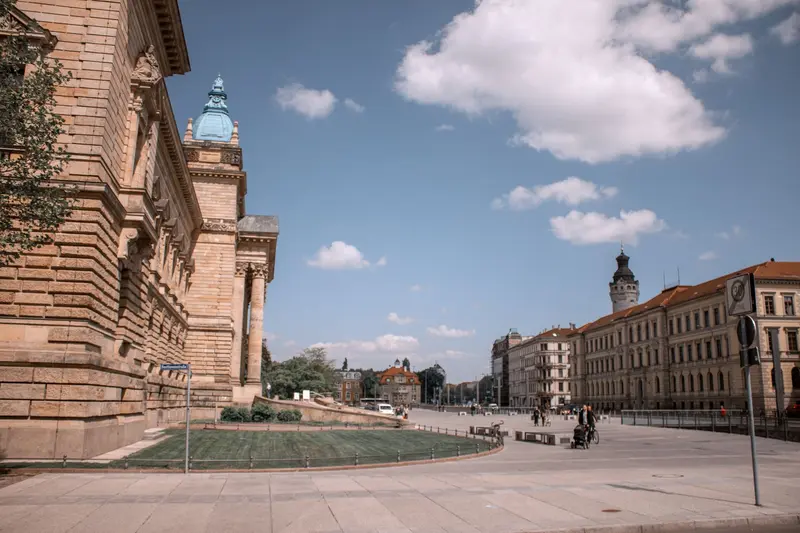
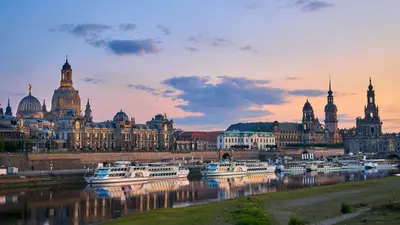
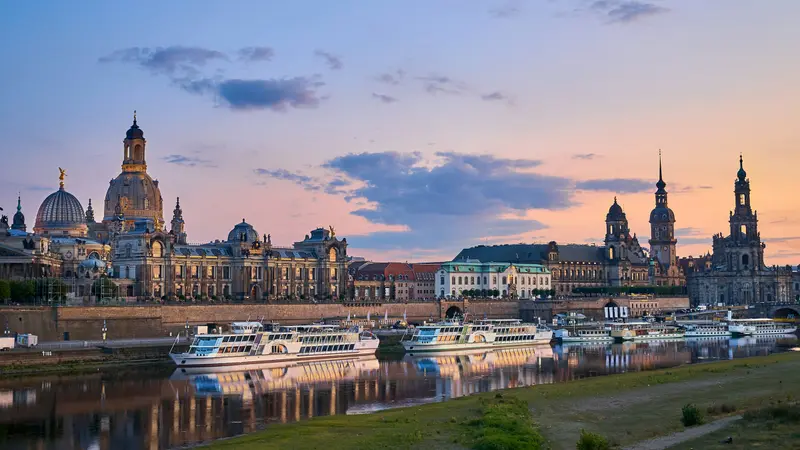
    Dresden lies on both sides of the Elbe in the Elbe Valley Basin and is known as 'Florence on the Elbe' due to its art collections. Under August the Strong, the city gained cultural significance through the Dresden Baroque.

    Dresden, with around 572,000 inhabitants, is located on both banks of the Elbe, which flows for 30 kilometers through the city. The major attractions of the Old Town are closely grouped together and can be easily explored on foot.

    Discover
    Leipzig

    Place 2 of 4

    Leipzig

    Leipzig is Saxony's most populous city, a trade fair and university city with a trade fair tradition dating back to 1190.

    Leipzig, with some 610,000 residents, is Saxony's largest city. Its compact center, with Thomaskirche, Nikolaikirche, and Auerbachs Keller, is easily walkable; the main station lies just north.

    Discover
    Saxon Switzerland / Bastei

    Place 3 of 4

    Saxon Switzerland / Bastei

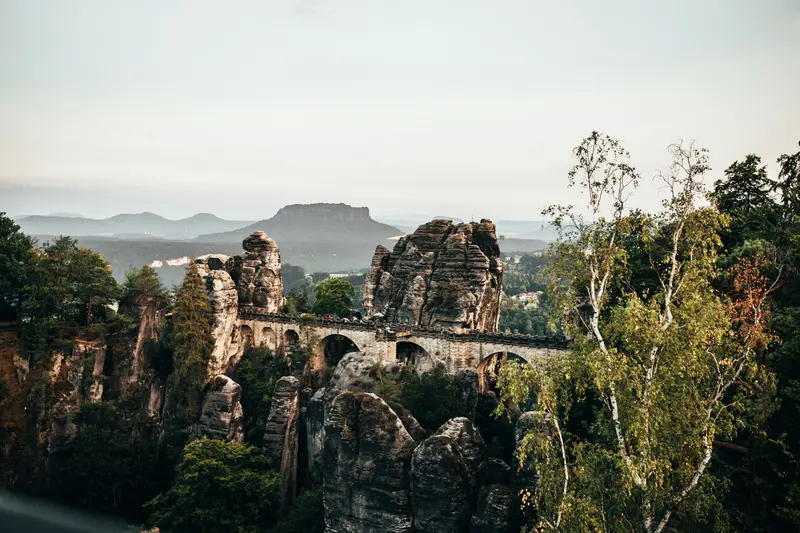
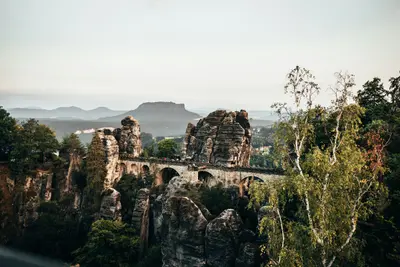
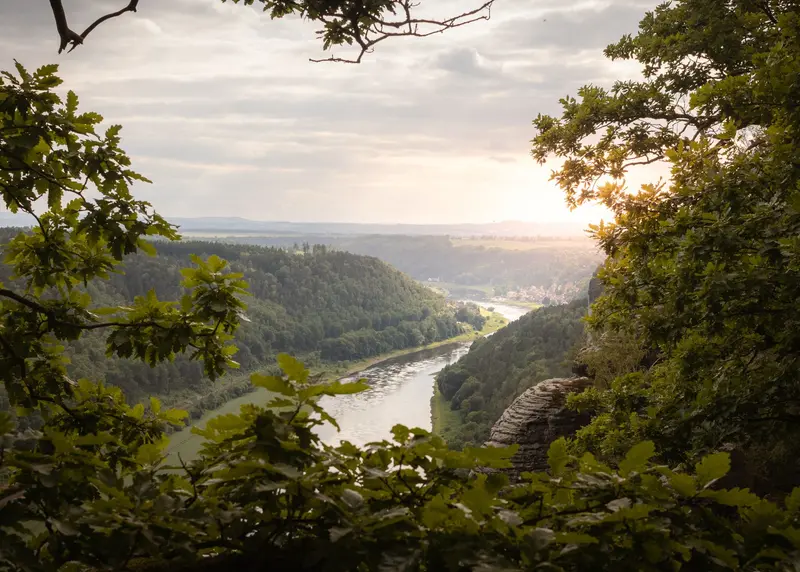
    Saxon Switzerland, the German part of the Elbe Sandstone Mountains, is located southeast of Dresden on both sides of the Elbe.

    Discover
    Görlitz
    Hoover5555 / Wikimedia Commons / CC BY 4.0

    Place 4 of 4

    Görlitz

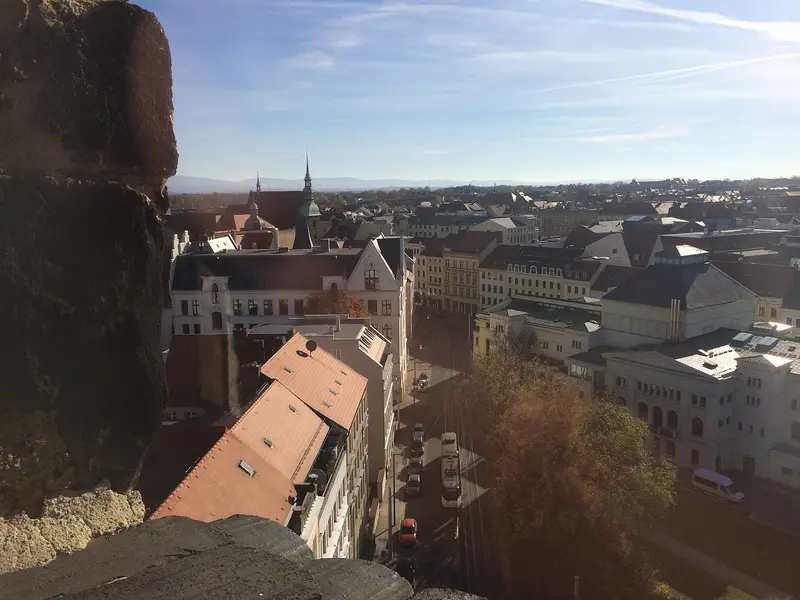
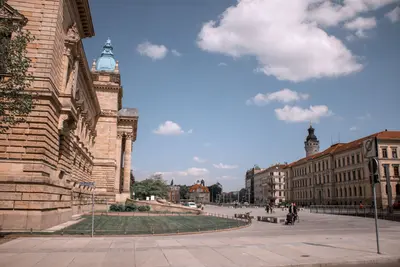
    Görlitz on the Lusatian Neisse is Germany's easternmost city. Since 1945, the river has formed the border with Poland; its eastern districts are now the independent Polish city of Zgorzelec, reachable on foot via the Altstadtbrücke.

    Discover

    Round trips through this region

    Classics in 14 Days

    This 14-day journey combines Germany's great cities and landscapes from Berlin to Cologne. From the capital, via Dresden to Franconia, whose Bamberg Old Town is a UNESCO World Heritage site since 1993, and further via Nuremberg to Munich. Near Füssen, you visit Schloss Neuschwanstein; the route then leads via Heidelberg to Koblenz at the Moselle estuary, the north end of the Upper Middle Rhine Valley World Heritage site. The journey ends in Cologne; from the main station, you can reach Köln/Bonn Airport in 11 minutes by Regional-Express.

    14 Days
    10 stops
    Open jaw

    Nearby

    Dresden

    Dresden

    Dresden lies on both sides of the Elbe in the Elbe Valley Basin and is known as 'Florence on the Elbe' due to its art collections. Under August the Strong, the city gained cultural significance through the Dresden Baroque. Following the air raids from February 13 to 15, 1945, the historic Old Town south of the Elbe was partially rebuilt; the Frauenkirche, however, only between 1993 and 2005.On the Old Town side, the Zwinger, Semperoper, Residenzschloss, and Brühl's Terrace stand together. Opposite, on the right bank of the Elbe, is the Neustadt. The Äußere Neustadt, almost undamaged in the war, is now the main entertainment district for Dresdeners, with cafés, pubs, bars, and small shops.
    Saxon Switzerland / Bastei

    Saxon Switzerland / Bastei

    Saxon Switzerland, the German part of the Elbe Sandstone Mountains, is located southeast of Dresden on both sides of the Elbe. Its bizarre rock formations are largely within the Saxon Switzerland National Park, established in September 1990, prior to German reunification. Climbing adheres to the Saxon Rules and is only allowed on designated climbing peaks.The most famous viewpoint is the Bastei near Rathen, which rises 194 meters above the Elbe. It is freely accessible year-round and at any time. Upriver on the Elbe, Königstein Fortress proudly sits atop its mesa, one of Europe's largest mountain fortresses.
    Leipzig

    Leipzig

    Leipzig is Saxony's most populous city, a trade fair and university city with a trade fair tradition dating back to 1190. Musically, Johann Sebastian Bach, who served as Thomaskantor from 1723 to 1750, and Felix Mendelssohn Bartholdy have left their mark on the city, today upheld by the Gewandhaus Orchestra and the Thomanerchor.In 1989, peace prayers at Nikolaikirche led to the Monday Demonstrations, which, under the slogan "No Violence," helped bring about the end of the GDR. Today, Leipzig boasts a compact city center with arcades and churches, the art complex of the former Baumwollspinnerei in the west, and lively nightlife districts in the south.
    Lübbenau

    Lübbenau

    Lübbenau (Lower Sorbian: Lubnjow) is the gateway to the Spreewald, 80 kilometers southeast of Berlin. From the Großer Spreewaldhafen, the region's biggest port, punted barges navigate the labyrinth of waterways; tourism began here in 1882.The old town, with St. Nikolai Church (built 1738-1741) and the neoclassical castle, is already within the Biosphere Reserve. In Lehde, where mail is delivered by barge from April to October, the Open-Air Museum illustrates Spreewald life of yesteryear.
    Spreewald

    Spreewald

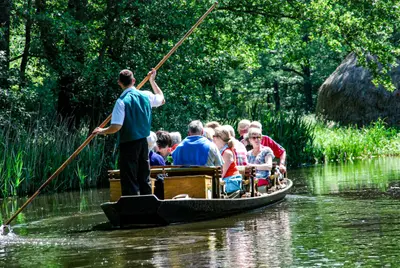
    The Spreewald is a water landscape southeast of Berlin, crisscrossed by over 970 kilometers of natural and artificial waterways. Since 1991, it has been recognized by UNESCO as a Biosphere Reserve. It is divided into the larger Oberspreewald in the south and the smaller Unterspreewald in the north, which meet near Lübben.The cultural landscape was significantly shaped by the Sorbs, and cucumbers are cultivated on approximately 500 hectares. The best way to experience the region is by punt: Punted trips depart from places including Lübbenau, Lübben, Lehde, and Burg.