ExploreTravel GuidesPlan a trip
    de|en
    All Places & RegionsAbout FernwehFAQPrivacy PolicyImprint
    ExploreTravel GuidesPlan a trip
    • Neighborhoods & highlights
    • Eat & drink
    • Culture
    • Nightlife
    • Getting around
    • Accommodation
    • Plan trip
    • Nearby
    Leipzig

    Germany

    Leipzig

    City

    Leipzig is Saxony's most populous city, a trade fair and university city with a trade fair tradition dating back to 1190.

    1. Home
    2. Destinations
    3. Germany
    4. Saxony
    5. Leipzig
    Leipzig is Saxony's most populous city, a trade fair and university city with a trade fair tradition dating back to 1190. Musically, Johann Sebastian Bach, who served as Thomaskantor from 1723 to 1750, and Felix Mendelssohn Bartholdy have left their mark on the city, today upheld by the Gewandhaus Orchestra and the Thomanerchor.In 1989, peace prayers at Nikolaikirche led to the Monday Demonstrations, which, under the slogan "No Violence," helped bring about the end of the GDR. Today, Leipzig boasts a compact city center with arcades and churches, the art complex of the former Baumwollspinnerei in the west, and lively nightlife districts in the south.
    Leipzig, with some 610,000 residents, is Saxony's largest city. Its compact center, with Thomaskirche, Nikolaikirche, and Auerbachs Keller, is easily walkable; the main station lies just north. Especially unique is its mix of music tradition, the 1989 Peaceful Revolution's history, and a vibrant art scene. In the west, Plagwitz and Lindenau, including the Spinnerei, became creative hubs; in the south, Südvorstadt and Connewitz shape the alternative scene.

    Sights in Leipzig

    Discover the most important sights and attractions

    Thomas Church
    Church

    1Thomas Church

    Johann Sebastian Bach worked here as Thomaskantor from 1723 until his 1750 death; his grave is in the church since 1950. Founded in 1212, the Thomanerchor is among Germany's oldest boys' choirs.
    Open in Google Maps
    Nikolai Church
    Church

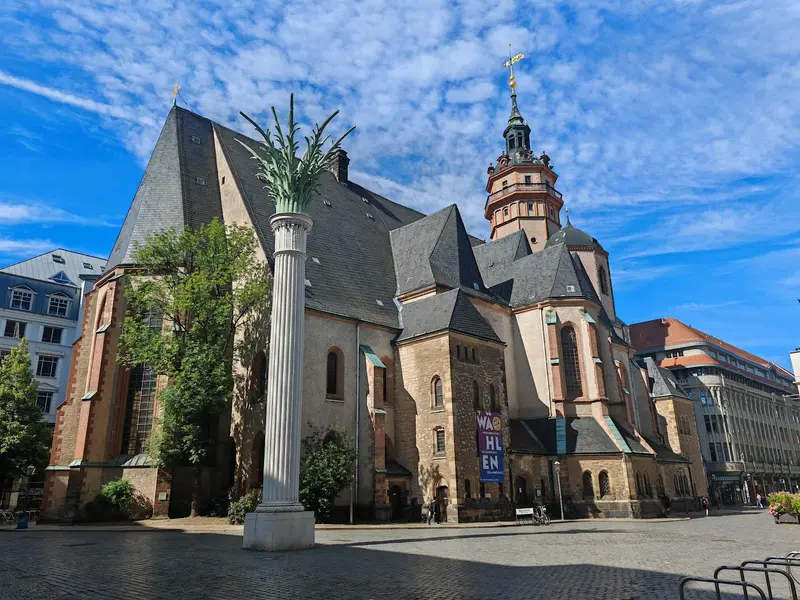
    2Nikolai Church

    The city center's oldest and largest church was the site of peace prayers, from which the Montagsdemonstrationen (Monday Demonstrations) emerged in 1989. Its classicist interior with columns and palm capitals was created between 1784 and 1797 under Johann Carl Friedrich Dauthe.
    Open in Google Maps
    Völkerschlachtdenkmal
    Museum

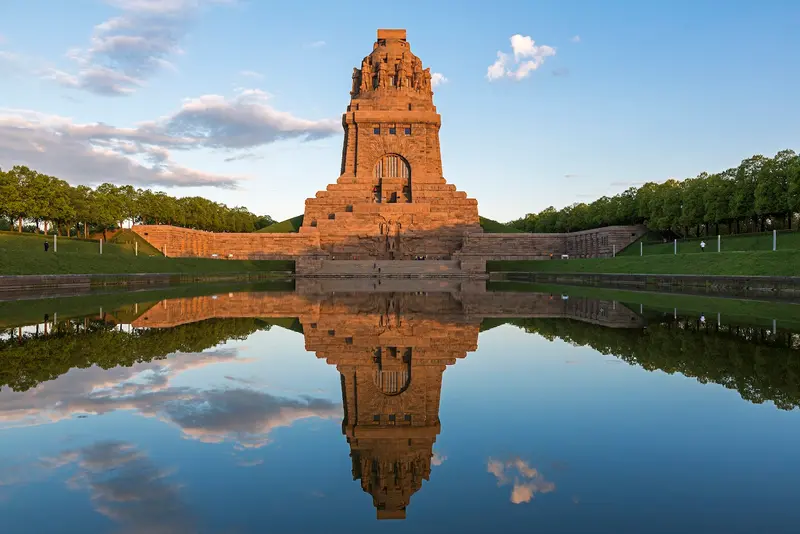
    3Völkerschlachtdenkmal

    This 91-meter-tall monument, designed by Bruno Schmitz, commemorates the Battle of the Nations (October 16-19, 1813) and was inaugurated on October 18, 1913. Five hundred steps, largely narrow spiral staircases, lead to the observation deck.
    Open in Google Maps
    Spinnerei
    Gallery

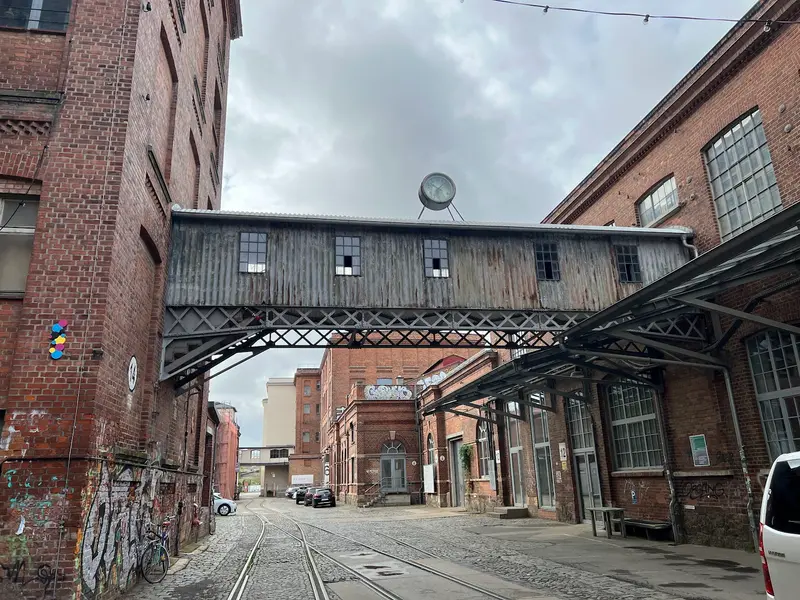
    4Spinnerei

    Founded in 1884, the Leipziger Baumwollspinnerei on the edge of Lindenau was once Continental Europe's largest cotton mill. Today, galleries, studios, and restaurants occupy the approximately 10-hectare site, where artists including Neo Rauch have settled.
    Open in Google Maps
    Forum for Modern History
    Museum

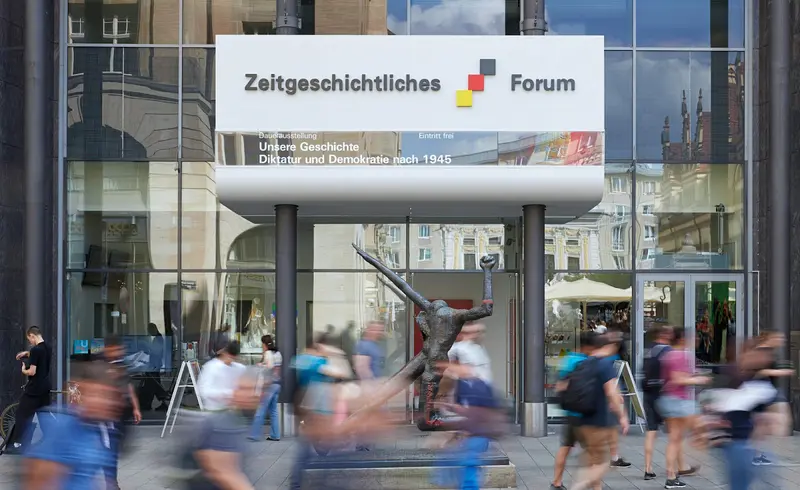
    5Forum for Modern History

    Opened on October 9, 1999, the Museum of the Stiftung Haus der Geschichte on Grimmaische Straße tells of life in the GDR up to the present. Admission is free.
    Open in Google Maps
    Mädler Passage
    Shopping Mall

    6Mädler Passage

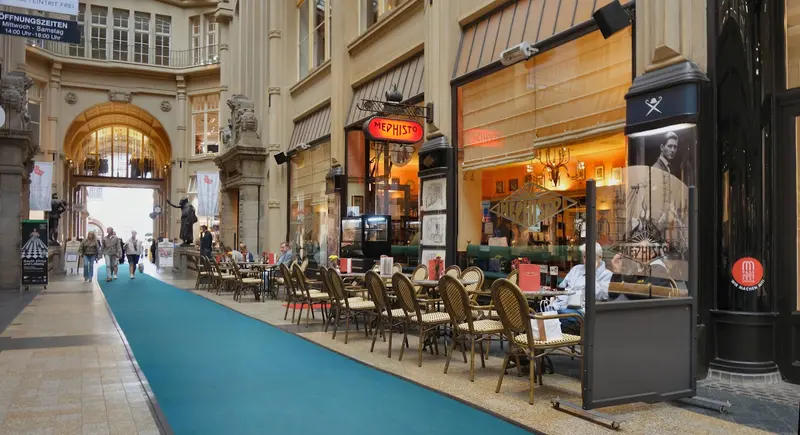
    The Mädler-Passage Exhibition Hall was built in 1912 on Grimmaische Street, a few steps from the Market. Beneath it lies Auerbachs Keller, at its entrance are the statue groups of the enchanted students, Mephisto, and Faust.
    Open in Google Maps

    Restaurants in Leipzig

    1

    Auerbachs Keller

    The wine tavern, first mentioned in 1438, under Mädler Passage, inspired Goethe's 'Auerbachs Keller' scene in Faust; at the entrance stand the statue groups of the enchanted students, as well as Mephisto and Faust. Saxon specialties and wines are served.
    Show on Google Maps
    2

    Thuringian Hof

    Downtown restaurant with a vaulted ceiling, serving Thuringian bratwurst, sauerkraut, and wild boar dishes.
    Show on Google Maps
    3

    To the Arabic Coffee Tree

    Traditional house with homely, rustic dining rooms, an upscale restaurant, café, and coffee museum.
    Show on Google Maps

    Bach, Mass and Peaceful Revolution

    Johann Sebastian Bach served as Thomaskantor in Leipzig from 1723 to 1750, and the Thomanerchor, founded in 1212, still sings in the Thomaskirche today. Felix Mendelssohn Bartholdy and the Gewandhaus Orchestra also represent the city's rich musical tradition, whose fair history dates back to 1190.The Monday Demonstrations of 1989 emerged from the peace prayers in the Nikolaikirche, at times gathering over 100,000 people in the streets. The Zeitgeschichtliche Forum tells this story with free admission.

    Nightlife

    1

    Spizz

    Jazz & music club at the market with bar, DJs & live jazz in cellar, by day a bistro with breakfast & burgers.
    Show on Google Maps
    2

    Horn's Heirs

    A pub, a stage and a live music venue situated on Arndtstraße.
    Show on Google Maps
    3

    Westhafen

    Bar, Biergarten and club with live music on Ernst-Keil-Straße in Leipzig West.
    Show on Google Maps

    On the Go in Leipzig

    The main station is just north of the city center, where two ICE lines meet. S-Bahn lines S5 and S5X run from Leipzig/Halle Airport to the main station approximately every 30 minutes, taking about 15 minutes. Since December 2013, the City-Tunnel has linked the main station with Bayrischer Bahnhof, serving six S-Bahn lines.Almost all of the 13 tram lines stop at the main station, running mostly every 10 minutes during the day. This flat city is also easy to explore by bike, for example with rental bikes from Nextbike.

    Accommodations in Leipzig

    Find perfect stay in Leipzig

    Booking.com* (Affiliate link)
    Search Hotels
    Agoda* (Affiliate link)
    Search Hotels
    Airbnb
    Vacation Rentals

    * Affiliate link: if you book through it, we earn a small commission. The price stays the same for you.

    Campgrounds in Leipzig

    Find perfect campground in Leipzig

    Search via Google Maps
    Campgrounds nearby (15km)
    Camping.info
    Find Campgrounds
    Park4Night
    RV Parks & Camping

    Plan your trip to Leipzig

    Save places, build a route and plan your city trip, all in one place.

    1. 1
      1234

      Round trip

      12 days · 4 stops

      Saved

      Pick a route

      Pick a ready-made one or save places and plan your own.

      Open bookmarks
    2. 2

      Trip to Leipzig

      Live
      • 1Thomas Church3 days
      • 2Nikolai Church4 days
      • 3Völkerschlachtdenkmal5 days
      Budget

      Plan your trip

      The planner sorts stops, days and budget. Plan together in real time.

      Start trip planning
    3. 3
      9:41 No signal
      Available offline

      Use it on the road

      Download the guide to your phone and use it on site, even offline.

    Nearby

    Luther City Wittenberg

    Luther City Wittenberg

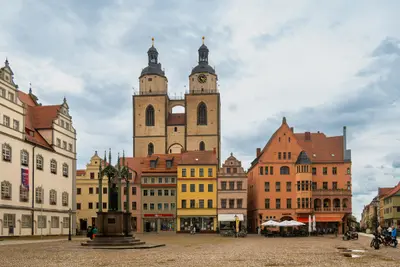
    Lutherstadt Wittenberg is located on the Elbe and is considered the starting point of the Reformation: The posting of the 95 Theses at the Castle Church in 1517 marks its start, though its actual occurrence is debated. St. Mary's Town Church, Castle Church, Luther House, and Melanchthon House are UNESCO World Heritage sites since 1996.The painter Lucas Cranach also worked here, serving the Elector from 1505. The Luther House is currently being renovated, with reopening set for the second half of 2027; its treasures are shown until then in the "Buchstäblich Luther" exhibition at the Augusteum.
    Saxony

    Saxony

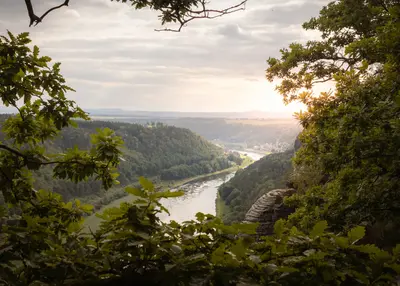
    Saxony borders Poland to the east and the Czech Republic to the south. The Elbe is the Free State's most important and only navigable river, flowing through it from southeast to northwest. On its banks lies the state capital, Dresden, whose baroque cityscape, with the Frauenkirche, Zwinger, and Semperoper, attracts visitors from all over the world.Leipzig is Saxony's most populous city, a trade fair and university city with a rich musical tradition centered around Johann Sebastian Bach and Felix Mendelssohn Bartholdy. Those seeking nature will find it upstream along the Elbe in Saxon Switzerland, the Saxon part of the Elbe Sandstone Mountains, as well as in the Ore Mountains, Lusatia, and Vogtland.
    Weimar

    Weimar

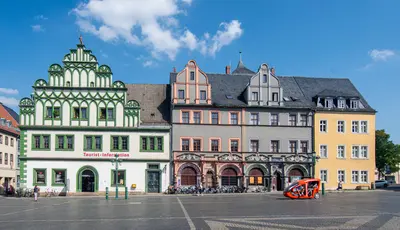
    Weimar lies on a bend of the Ilm and has around 66,000 inhabitants, yet hardly any city of its size has shaped German culture so significantly. With Wieland, Goethe, Herder, and Schiller, it became the center of Weimar Classicism; since 1998, the "Classical Weimar" ensemble has been a UNESCO World Heritage site. In 1999, Weimar was the European Capital of Culture.In 1919, the Bauhaus was founded here; in the same year, the National Assembly convened in the city that gave its name to the first German Republic. Its history also includes the Buchenwald concentration camp on the Ettersberg, where more than 56,000 people were murdered by 1945.
    Harz & Saxony-Anhalt

    Harz & Saxony-Anhalt

    The Harz is the low mountain range in western Saxony-Anhalt. Its highest peak is the Brocken at 1141 meters, making it also the highest mountain in Northern Germany. The Harz National Park extends around the summit, accessible via the Brocken Railway of the Harz Narrow Gauge Railways, which departs from Wernigerode.Along the northern edge of the range are half-timbered towns like Wernigerode, known as the "colourful town on the Harz", and Quedlinburg, whose old town, boasting over 2100 half-timbered houses, has been a UNESCO World Heritage site since 1994. Further east, by the Elbe, Lutherstadt Wittenberg and its World Heritage Sites recall the beginnings of the Reformation.
    Quedlinburg

    Quedlinburg

    Quedlinburg is located north of the Harz on the Bode and boasts over 2100 half-timbered houses from eight centuries. Since 1994, the Old Town, Castle Hill with the Collegiate Church, and the Münzenberg are listed as an ensemble on the UNESCO World Heritage list.The town was first mentioned in 922; King Heinrich I. was buried here after his death in 936. Perched on Castle Hill is the Collegiate Church of St. Servatius with its cathedral treasure; in the town, the Lyonel Feininger Gallery, opened in 1986, exhibits works by the Bauhaus artist.