ExploreTravel GuidesPlan a trip
    de|en
    All Places & RegionsAbout FernwehFAQPrivacy PolicyImprint
    ExploreTravel GuidesPlan a trip
    • Neighborhoods & highlights
    • Eat & drink
    • Accommodation
    • Plan trip
    • Nearby
    Luther City Wittenberg

    Germany

    Luther City Wittenberg

    CityUNESCO

    Lutherstadt Wittenberg is located on the Elbe and is considered the starting point of the Reformation: The posting of the 95 Theses at the Castle Church in 1517 marks its start, though its actual occurrence is debated.

    1. Home
    2. Destinations
    3. Germany
    4. Harz & Saxony-Anhalt
    5. Luther City Wittenberg
    Lutherstadt Wittenberg is located on the Elbe and is considered the starting point of the Reformation: The posting of the 95 Theses at the Castle Church in 1517 marks its start, though its actual occurrence is debated. St. Mary's Town Church, Castle Church, Luther House, and Melanchthon House are UNESCO World Heritage sites since 1996.The painter Lucas Cranach also worked here, serving the Elector from 1505. The Luther House is currently being renovated, with reopening set for the second half of 2027; its treasures are shown until then in the "Buchstäblich Luther" exhibition at the Augusteum.

    Sights in Luther City Wittenberg

    Discover the most important sights and attractions

    Castle Church
    Church

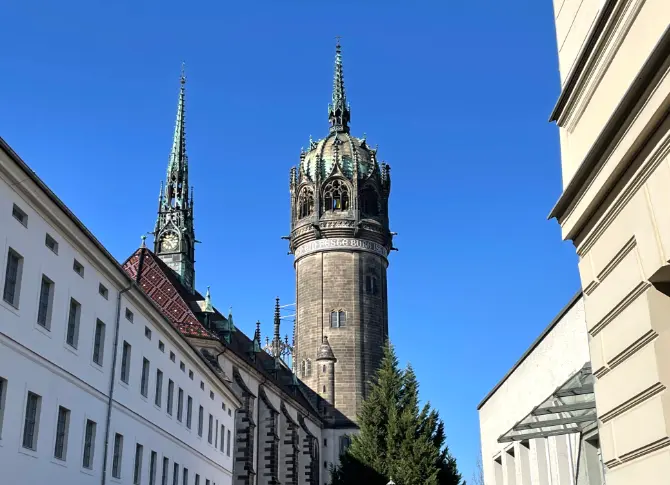
    1Castle Church

    Luther is said to have posted his 95 Theses in 1517 at this early 16th-century Gothic church, which also holds his grave and became a UNESCO World Heritage site in 1996.
    Open in Google Maps
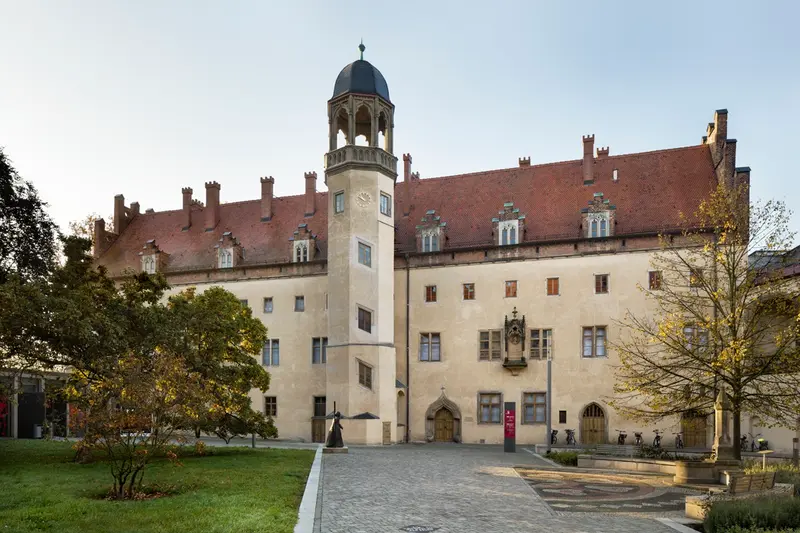
    Lutherhaus (under renovation)
    Museum

    2Lutherhaus (under renovation)

    The world's largest Reformation history museum, Luther's main place of activity at the former Augustinian Monastery, is currently being renovated and is set to reopen in late 2027. Until then, the Augusteum presents the exhibition "Buchstäblich Luther. Facetten eines Reformators".
    Open in Google Maps
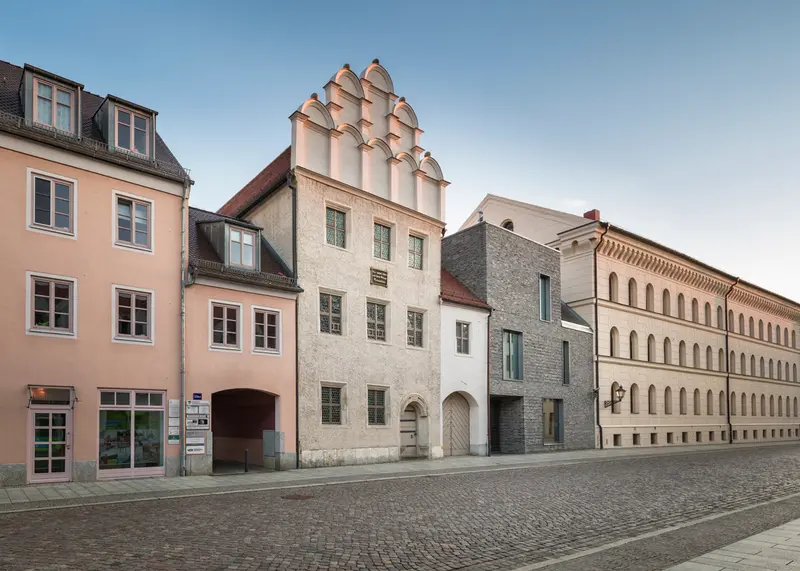
    Melanchthonhaus
    Museum

    3Melanchthonhaus

    Built 1536 for scholar Philipp Melanchthon, the townhouse is World Heritage and open, currently with the cabinet exhibition 'Cranach bei Melanchthon'.
    Open in Google Maps
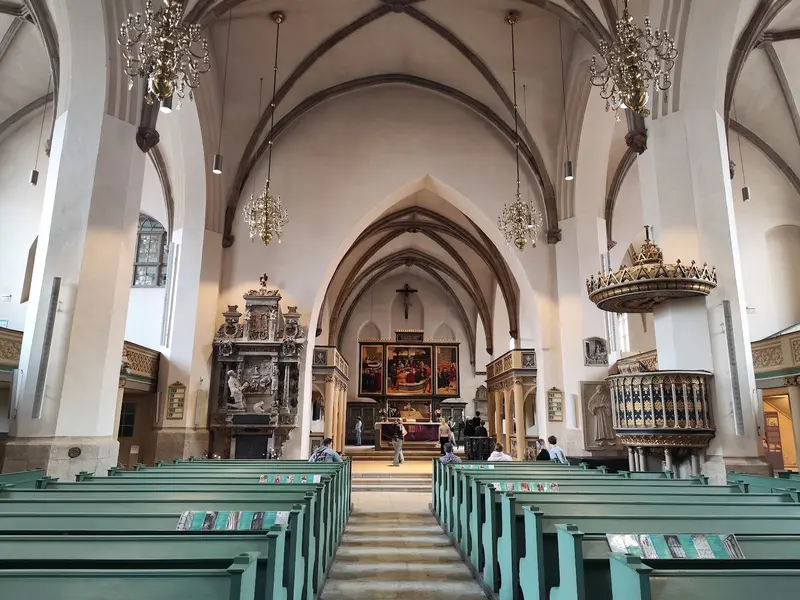
    St. Mary's City Church
    Church

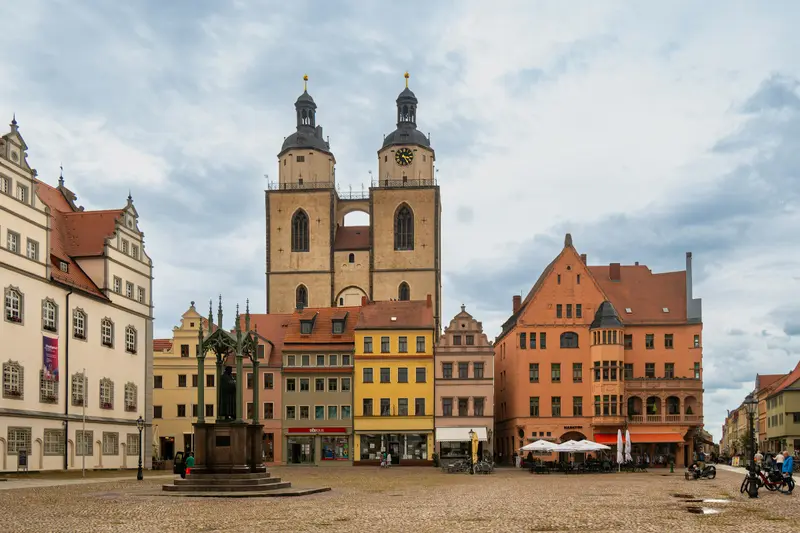
    4St. Mary's City Church

    Die Stadtkirche am Kirchplatz gehört gemeinsam mit Schlosskirche, Lutherhaus und Melanchthonhaus seit 1996 zum UNESCO-Welterbe der Luthergedenkstätten.
    Open in Google Maps

    Restaurants in Luther City Wittenberg

    1

    Independent

    Restaurant and bar with breakfast and brunch on Collegienstraße, near Melanchthon House and Luther House.
    Show on Google Maps
    2

    WittenBurger

    Burger restaurant, market.
    Show on Google Maps
    3

    Coswiger 4 Sushi

    Asian restaurant serving sushi on Coswiger Straße.
    Show on Google Maps

    Accommodations in Luther City Wittenberg

    Find perfect stay in Luther City Wittenberg

    Booking.com* (Affiliate link)
    Search Hotels
    Agoda* (Affiliate link)
    Search Hotels
    Airbnb
    Vacation Rentals

    * Affiliate link: if you book through it, we earn a small commission. The price stays the same for you.

    Campgrounds in Luther City Wittenberg

    Find perfect campground in Luther City Wittenberg

    Search via Google Maps
    Campgrounds nearby (15km)
    Camping.info
    Find Campgrounds
    Park4Night
    RV Parks & Camping

    Plan your trip to Luther City Wittenberg

    Save places, build a route and plan your city trip, all in one place.

    1. 1
      1234

      Round trip

      12 days · 4 stops

      Saved

      Pick a route

      Pick a ready-made one or save places and plan your own.

      Open bookmarks
    2. 2

      Trip to Luther City Wittenberg

      Live
      • 1Castle Church3 days
      • 2Lutherhaus (under renovation)4 days
      • 3Melanchthonhaus5 days
      Budget

      Plan your trip

      The planner sorts stops, days and budget. Plan together in real time.

      Start trip planning
    3. 3
      9:41 No signal
      Available offline

      Use it on the road

      Download the guide to your phone and use it on site, even offline.

    Nearby

    Leipzig

    Leipzig

    Leipzig is Saxony's most populous city, a trade fair and university city with a trade fair tradition dating back to 1190. Musically, Johann Sebastian Bach, who served as Thomaskantor from 1723 to 1750, and Felix Mendelssohn Bartholdy have left their mark on the city, today upheld by the Gewandhaus Orchestra and the Thomanerchor.In 1989, peace prayers at Nikolaikirche led to the Monday Demonstrations, which, under the slogan "No Violence," helped bring about the end of the GDR. Today, Leipzig boasts a compact city center with arcades and churches, the art complex of the former Baumwollspinnerei in the west, and lively nightlife districts in the south.
    Potsdam & Havelland

    Potsdam & Havelland

    Havelland, a historic Brandenburg landscape, broadly encircles the Havel west of Berlin. Lakes and lowlands define the area; much fruit and vegetables are grown around Werder. Theodor Fontane dedicated a volume of his "Wanderungen durch die Mark Brandenburg" to the Havelland.Potsdam, Brandenburg's capital and visitor hub, directly borders southwest Berlin. Its palaces and parks became UNESCO World Heritage in 1990. The S7 S-Bahn line offers easy access from Berlin.
    Potsdam

    Potsdam

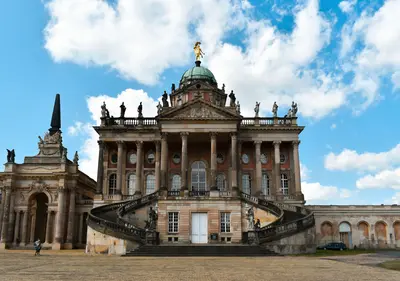
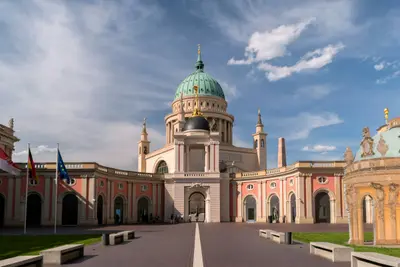
    Potsdam is Brandenburg's state capital and, with around 184,000 residents, the largest city in the state. It lies on the mid-course of the Havel in a landscape of forests and lakes, directly southwest of Berlin.Potsdam is famous for its palaces and gardens, recognized as a UNESCO World Heritage site in 1990: from Sanssouci and the New Palace to the New Garden with Cecilienhof Palace, where the Potsdam Conference was held in 1945. Other highlights include the Dutch Quarter with its brick houses and the Russian Colony Alexandrowka.
    Charlottenburg (City West)

    Charlottenburg (City West)

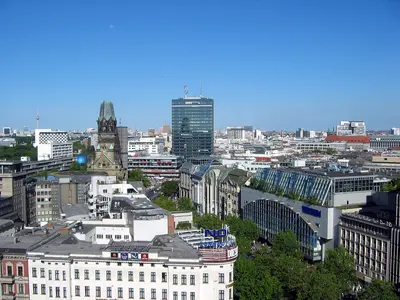
    Charlottenburg received city rights on April 5, 1705, and its name in honour of Queen Sophie Charlotte; in 1920, the city became part of Greater Berlin. After 1945, the area around Bahnhof Zoo, Breitscheidplatz, and Kurfürstendamm developed into City West, the new centre of West Berlin, because the historic city centre was located in the Soviet sector. Its landmark is the ruin of the Kaiser Wilhelm Memorial Church, whose tower was not demolished after citizen protests.You stroll along the Kurfürstendamm with its flagship stores and theatres, visit the Zoological Garden and the Memorial Church, and end your evening at Savignyplatz, where restaurants, bars, jazz clubs, and bookstores cluster. Through Charlottenburg run the U-Bahn lines U1, U2, U3, U7, and U9; S-Bahn trains of the Stadtbahn stop at Bahnhof Zoologischer Garten and Savignyplatz, as do regional trains at Zoo.
    Neukölln

    Neukölln

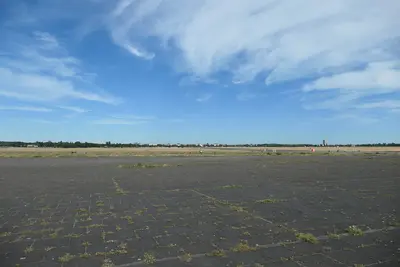
    Until 1912, Neukölln was called Rixdorf: A document from 1360 mentions the village, and in 1737 Friedrich Wilhelm I. settled Bohemian religious refugees who founded Böhmisch-Rixdorf. In 1899 Rixdorf became a city, in 1920 Neukölln joined Greater Berlin, and after the war, it belonged to West Berlin. Today, the densely built-up north with its Gründerzeit districts is vibrantly diverse; by mid-2021 almost half of its residents had a migration background from 155 countries.You can stroll along Sonnenallee and Karl-Marx-Straße, discover old Rixdorf around Richardplatz with its forge and Bethlehemskirche, and descend into the lower-lying Körnerpark. In Reuterkiez, which Berliners call Kreuzkölln, and in Schillerkiez, many bars and cafés have opened since the 2000s, and right next door, the expansive Tempelhofer Feld beckons. At Hermannplatz U-Bahn station, lines U7 and U8 intersect, and the S-Bahn lines S41, S42, S45, S46, and S47 also run through the district.