ExploreTravel GuidesPlan a trip
    de|en
    All Places & RegionsAbout FernwehFAQPrivacy PolicyImprint
    ExploreTravel GuidesPlan a trip
    • Neighborhoods & highlights
    • Eat & drink
    • Culture
    • Nightlife
    • Getting around
    • Accommodation
    • Plan trip
    • Nearby
    Potsdam

    Germany

    Potsdam

    City

    Potsdam is Brandenburg's state capital and, with around 184,000 residents, the largest city in the state. It lies on the mid-course of the Havel in a landscape of forests and lakes, directly southwest of Berlin.

    1. Home
    2. Destinations
    3. Germany
    4. Potsdam & Havelland
    5. Potsdam
    Potsdam is Brandenburg's state capital and, with around 184,000 residents, the largest city in the state. It lies on the mid-course of the Havel in a landscape of forests and lakes, directly southwest of Berlin.Potsdam is famous for its palaces and gardens, recognized as a UNESCO World Heritage site in 1990: from Sanssouci and the New Palace to the New Garden with Cecilienhof Palace, where the Potsdam Conference was held in 1945. Other highlights include the Dutch Quarter with its brick houses and the Russian Colony Alexandrowka.
    Potsdam, with approximately 184,000 inhabitants, is Brandenburg's most populous city, located just 36 kilometers from Berlin. From Berlin, reach the city via S-Bahn S7 or Regional Express RE1; local buses and trams transport you to the palaces. Its remarkable density of palaces and parks is considered Germany's largest UNESCO World Heritage ensemble. In the city center, visit the Dutch Quarter and Alter Markt; Nauener Vorstadt sits by the Neuer Garten, and Babelsberg is the largest district, featuring a villa colony and its historic film studio.

    Sights in Potsdam

    Discover the most important sights and attractions

    Sanssouci Palace
    Museum

    1Sanssouci Palace

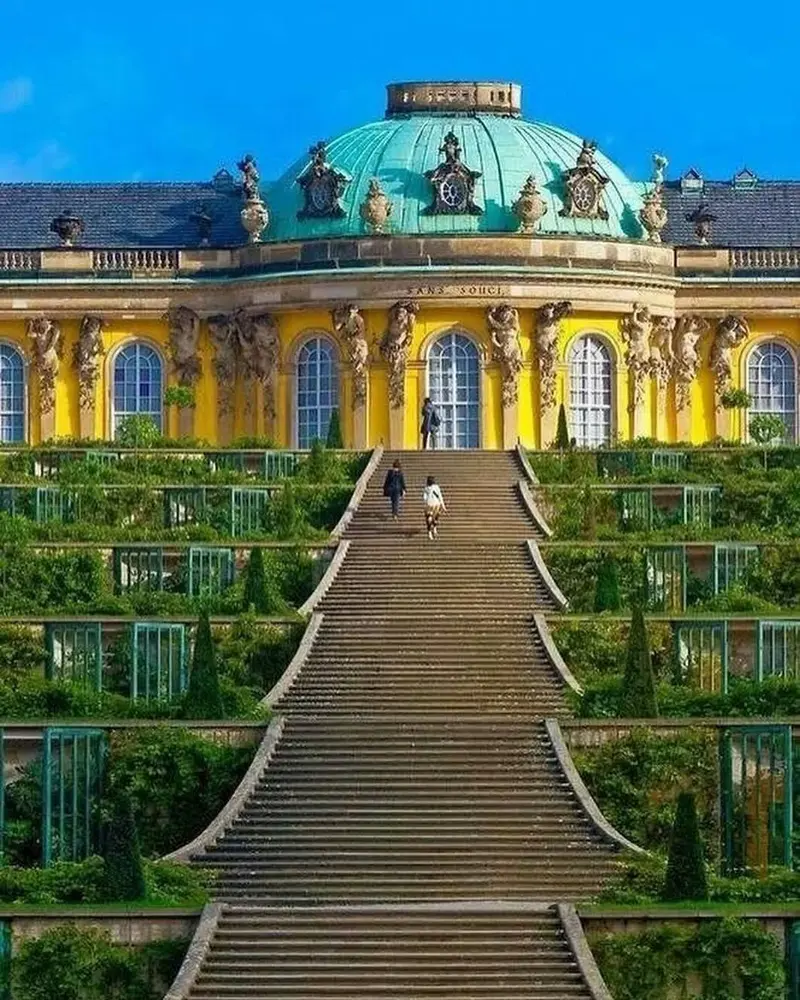
    Frederick II had his summer palace built from 1745 to 1747, based on designs by Georg Wenzeslaus von Knobelsdorff, above six vineyard terraces. The king's tomb has lain on the uppermost terrace since 1991.
    Open in Google Maps
    New Palace
    Museum

    2New Palace

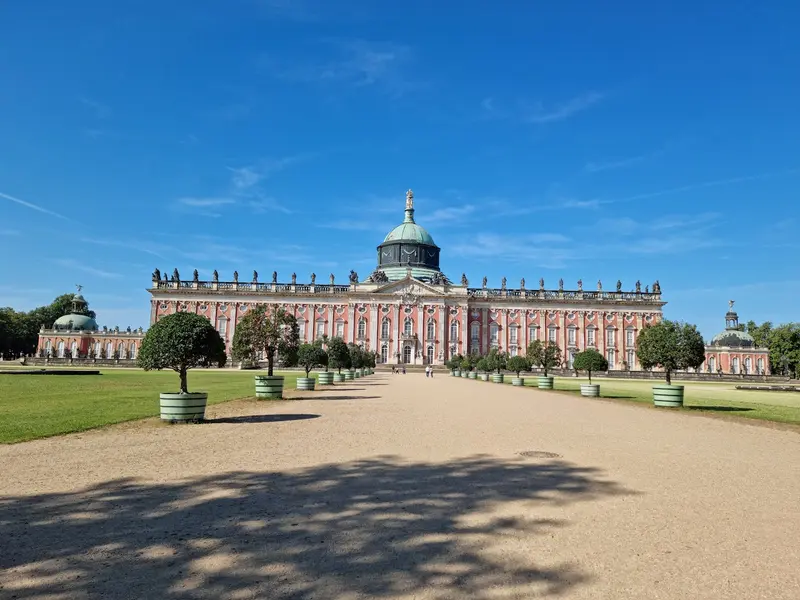
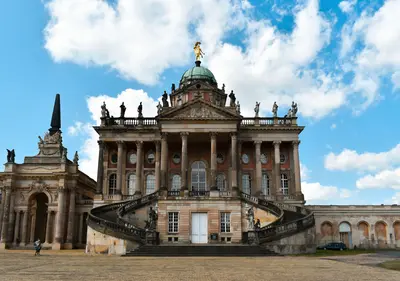
    Am westlichen Ende des Parks Sanssouci ließ Friedrich der Große 1763 bis 1769 das Neue Palais mit rund 200 Räumen, vier Festsälen und einem Rokokotheater errichten. In den ehemaligen Wirtschaftsgebäuden, den Communs, sind heute Teile der Universität Potsdam untergebracht.
    Open in Google Maps
    The Dutch Neighborhood
    Attraction

    3The Dutch Neighborhood

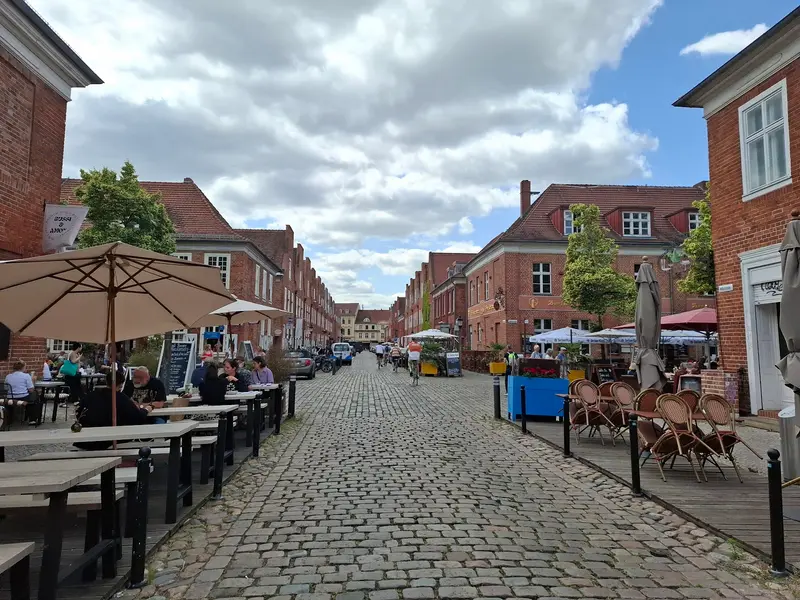
    134 brick houses were built here between 1733 and 1742, commissioned by Frederick William I. and under the direction of the Amsterdam master builder Jan Bouman. Mittelstraße and Benkertstraße divide the quarter into four blocks.
    Open in Google Maps
    New Garden with Cecilienhof Palace
    Historic Landmark

    4New Garden with Cecilienhof Palace

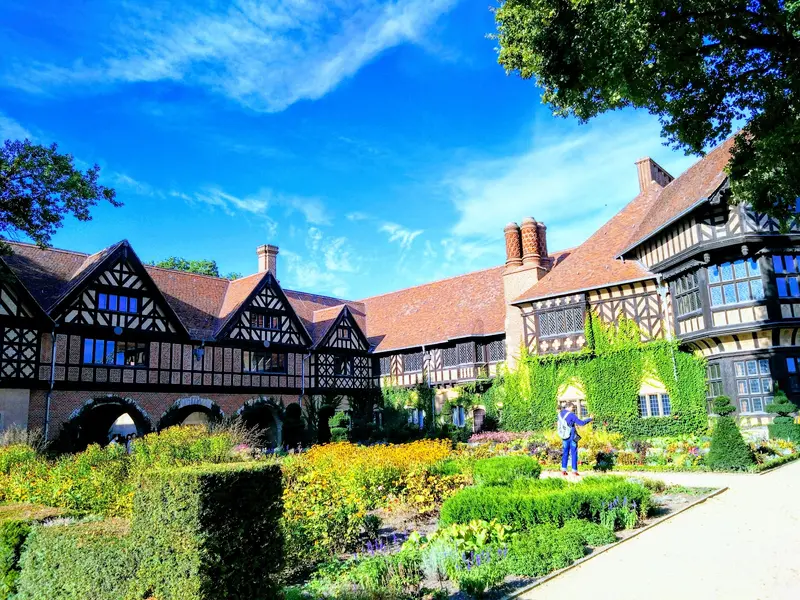
    In the northern part of the New Garden, near the Jungfernsee shore, stands Cecilienhof Palace, built 1913-1917 in English Tudor style. From July 17 to August 2, 1945, the Potsdam Conference of the victorious powers met here.
    Open in Google Maps
    Russian Colony Alexandrowka
    Attraction

    5Russian Colony Alexandrowka

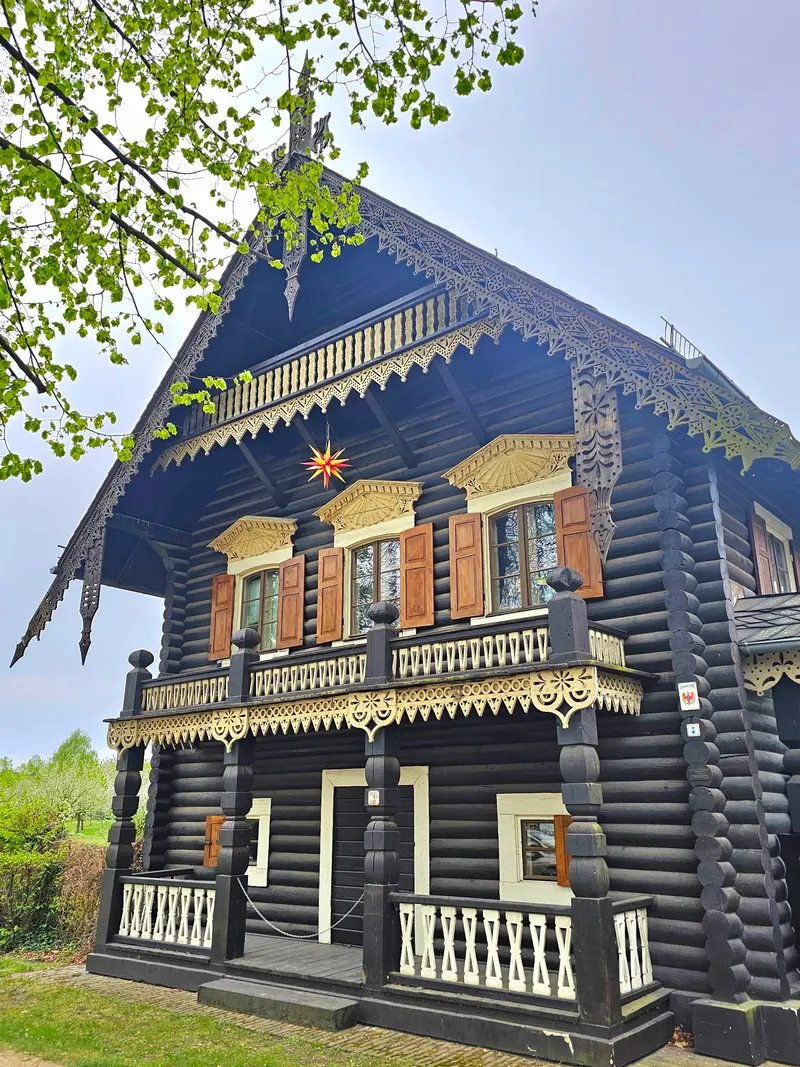
    King Friedrich Wilhelm III. established the colony in 1826/27 for the last twelve Russian singers of a soldiers' choir; it comprises twelve farmsteads and is a UNESCO World Heritage site. On Kapellenberg stands the Alexander Nevsky Church, consecrated in 1829, and the Alexandrowka Museum is in house No. 2.
    Open in Google Maps

    Restaurants in Potsdam

    1

    Ristorante & Trattoria Al Dente

    Classic Italian restaurant with pasta, meat, fish, pizza and wine, plus a terrace.
    Show on Google Maps
    2

    The Greek Taverna Tou Bakali

    Sociable tavern with classic Greek salads, grilled meat and fish, plus an outdoor area.
    Show on Google Maps
    3

    Restaurant Otto Hiemke

    Traditional, cozy eatery serving Schnitzel, other hearty regional dishes, and a beer garden.
    Show on Google Maps

    Culture in Potsdam

    The Potsdam cultural landscape, with its palaces and parks, was added to the UNESCO World Heritage List in 1990. Frederick II shaped the city with Sanssouci and the New Palace, Frederick William I had the Dutch Quarter built, and Frederick William III the Russian Colony Alexandrowka.At Cecilienhof Palace, the USA, Great Britain, and the Soviet Union convened for the Potsdam Conference from July 17 to August 2, 1945. Babelsberg Film Studio is considered the oldest large-scale film studio in the world.

    Nightlife

    1

    Bar Fritz'n

    Stylish cocktail bar with a cozy atmosphere, casino chairs, and a solid wood bar.
    Show on Google Maps
    2

    The Hafthorn Pub

    Quaint pub with a floating dragon, giant burgers and Bohemian beer, also in the leafy courtyard.
    Show on Google Maps
    3

    Casino FH;P

    Cultural center with a café, pub, and bar on Kiepenheuerallee.
    Show on Google Maps

    On the road in Potsdam

    From Berlin, the Regionalexpress RE1 runs every half hour to Potsdam Hauptbahnhof, and the S-Bahn line S7 also connects both cities. At the Hauptbahnhof, there is a Tourist Information, and buses and trams of Verkehrsbetrieb Potsdam make the city accessible.Cycling is largely prohibited in the palace parks; permitted routes are marked on the park maps. On the Havel, the ships of Weißen Flotte Potsdam operate, and for excursions into the surrounding area, such as to Caputh, a bicycle is ideal.

    Accommodations in Potsdam

    Find perfect stay in Potsdam

    Booking.com* (Affiliate link)
    Search Hotels
    Agoda* (Affiliate link)
    Search Hotels
    Airbnb
    Vacation Rentals

    * Affiliate link: if you book through it, we earn a small commission. The price stays the same for you.

    Campgrounds in Potsdam

    Find perfect campground in Potsdam

    Search via Google Maps
    Campgrounds nearby (15km)
    Camping.info
    Find Campgrounds
    Park4Night
    RV Parks & Camping

    Plan your trip to Potsdam

    Save places, build a route and plan your city trip, all in one place.

    1. 1
      1234

      Round trip

      12 days · 4 stops

      Saved

      Pick a route

      Pick a ready-made one or save places and plan your own.

      Open bookmarks
    2. 2

      Trip to Potsdam

      Live
      • 1Sanssouci Palace3 days
      • 2New Palace4 days
      • 3The Dutch Neighborhood5 days
      Budget

      Plan your trip

      The planner sorts stops, days and budget. Plan together in real time.

      Start trip planning
    3. 3
      9:41 No signal
      Available offline

      Use it on the road

      Download the guide to your phone and use it on site, even offline.

    Nearby

    Potsdam & Havelland

    Potsdam & Havelland

    Havelland, a historic Brandenburg landscape, broadly encircles the Havel west of Berlin. Lakes and lowlands define the area; much fruit and vegetables are grown around Werder. Theodor Fontane dedicated a volume of his "Wanderungen durch die Mark Brandenburg" to the Havelland.Potsdam, Brandenburg's capital and visitor hub, directly borders southwest Berlin. Its palaces and parks became UNESCO World Heritage in 1990. The S7 S-Bahn line offers easy access from Berlin.
    Charlottenburg (City West)

    Charlottenburg (City West)

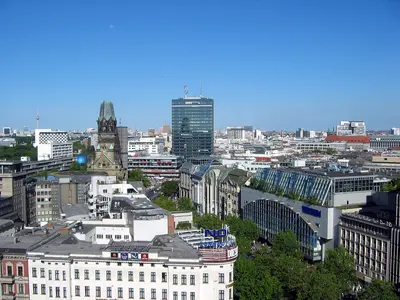
    Charlottenburg received city rights on April 5, 1705, and its name in honour of Queen Sophie Charlotte; in 1920, the city became part of Greater Berlin. After 1945, the area around Bahnhof Zoo, Breitscheidplatz, and Kurfürstendamm developed into City West, the new centre of West Berlin, because the historic city centre was located in the Soviet sector. Its landmark is the ruin of the Kaiser Wilhelm Memorial Church, whose tower was not demolished after citizen protests.You stroll along the Kurfürstendamm with its flagship stores and theatres, visit the Zoological Garden and the Memorial Church, and end your evening at Savignyplatz, where restaurants, bars, jazz clubs, and bookstores cluster. Through Charlottenburg run the U-Bahn lines U1, U2, U3, U7, and U9; S-Bahn trains of the Stadtbahn stop at Bahnhof Zoologischer Garten and Savignyplatz, as do regional trains at Zoo.
    Berlin

    Berlin

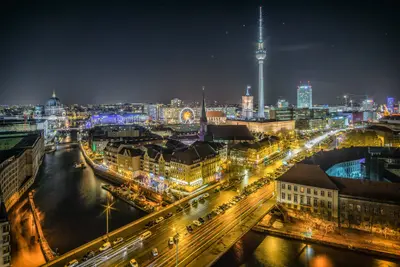
    With approximately 3.66 million inhabitants, Berlin is Germany's largest city and has been the federal capital since reunification in 1990; the federal government and the Bundestag have been based here since 1999. The Spree flows through the city from east to west, its banks are home to the Government District, Museum Island, and the East Side Gallery.Few cities tell the story of the 20th century so powerfully: On Bernauer Straße, you see the former border strip, at the Brandenburg Gate, the symbol of unity. Additionally, there are three opera houses, the museums of the World Heritage Museum Island, and districts like Kreuzberg, Friedrichshain, and Prenzlauer Berg, known for their bars, restaurants, and nightlife.
    Kreuzberg

    Kreuzberg

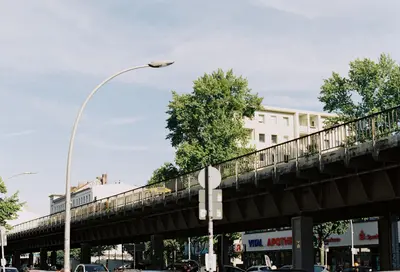
    Kreuzberg is a district in the Friedrichshain-Kreuzberg borough, named after the 66-meter-high Kreuzberg hill in Viktoriapark, where Schinkel's National Monument for the Liberation Wars has stood since 1821. During the time of the Berlin Wall, the eastern part, SO 36, was enclosed on three sides and became the hub of the alternative movement and squatting in the 1970s and 1980s. Today, around 160,000 people live here, many with Turkish roots, and its nightlife and cultural scene are well-known far beyond Berlin.During the day, you can visit the Jewish Museum or the German Museum of Technology, climb the Kreuzberg hill in Viktoriapark, or meet up at the Admiralbrücke over the Landwehrkanal, a popular meeting spot. In the evenings, the district's nightlife beckons. You can get here via U-Bahn lines U1 and U3, which largely follow the former Akzisemauer, with U6 and U8 running north-south, and also with U7; in total, there are 14 U-Bahn stations in the district.
    Berlin

    Berlin

    Berlin is the federal capital and, with around 3.66 million inhabitants, Germany's largest city. The city is completely surrounded by Brandenburg; the Spree flows through it from east to west and empties into the Havel in Spandau. Twelve districts with 97 localities structure the almost 892-square-kilometer urban area.Here are places that make German history come alive: from the Brandenburg Gate, over the remains of the Berlin Wall, to the Reichstag Building, where the Bundestag has met since 1999. Museum Island has been a UNESCO World Heritage site since 1999, and in neighborhoods like Kreuzberg, Friedrichshain, and Prenzlauer Berg, you'll find bars, restaurants, and a vibrant nightlife.